
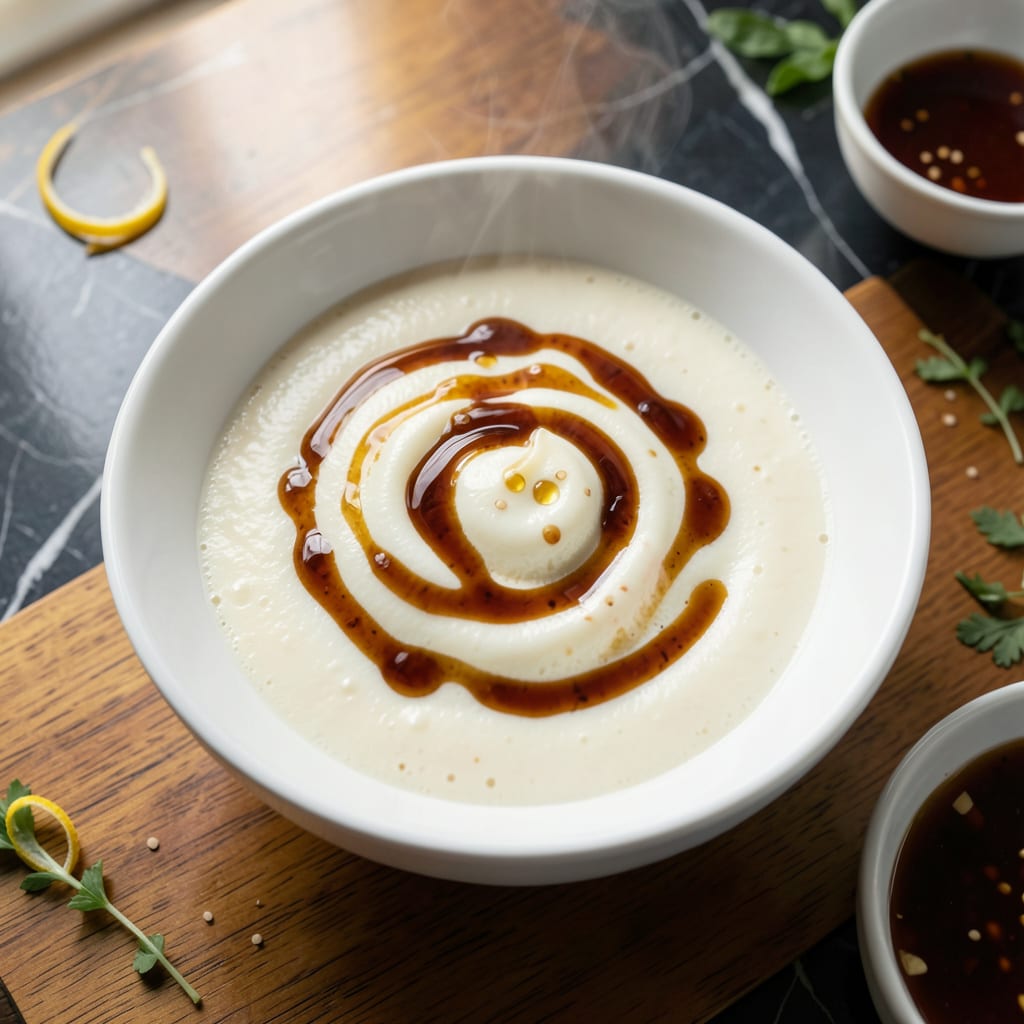
This traditional Chinese dish delivers a silk-smooth texture that’s both comforting and elegant. I’ve perfected the technique for achieving that signature custard-like consistency every time.
With just eggs, water, and a touch of seasoning, this method transforms simple ingredients into a delicate, savory delight. The key is gentle steaming and precise ratios for the perfect result.
Ingredients for Chinese Steamed Egg Custard
A handful of humble ingredients transforms into a delicate, restaurant-quality custard with perfect silkiness.
| Ingredient | Amount | Notes |
|---|---|---|
| Large Eggs 🥚 | 5 whole | Room temperature for smooth texture |
| Water 💧 | 2 cups | Filtered or distilled preferred |
| Chicken Broth 🍲 | ½ cup | Low-sodium for better control |
| Soy Sauce 🫕 | 1 tbsp | Light or all-purpose variety |
| Sesame Oil 🫒 | ½ tsp | Toasted for aroma |
| Salt 🧂 | ½ tsp | Fine sea salt preferred |
| White Pepper 🌶️ | ¼ tsp | Ground finely for even distribution |
| Green Onions 🧅 | 2 whole | Thinly sliced for garnish |
| Fresh Ginger 🌿 | ½ tsp | Grated or minced |
| Vegetable Oil 🫒 | ½ tsp | For greasing steaming dish |
[recipeingredientscaler]
The eggs are the foundation here—fresh, high-quality eggs yield the smoothest texture. Room temperature eggs blend more uniformly into the liquid, preventing separation. For the broth, homemade chicken stock adds depth, but store-bought low-sodium works fine. I prefer Kikkoman soy sauce for its balanced flavor, but any light soy sauce will do. The sesame oil should be toasted for that signature nutty aroma.
No chicken broth? Vegetable broth works too, though the flavor will be milder. Skip the ginger if you must, but it adds a subtle warmth. For a richer version, replace half the water with additional broth. The white pepper is traditional (black pepper changes the color), but a pinch of ground black pepper in a pinch won’t ruin it. Fresh green onions are ideal, but chives make a fine substitute.
This custard is best enjoyed fresh, but leftovers keep for 2 days in the fridge. Re-steam briefly to restore the silky texture. Don’t freeze—it’ll separate. Prep the ingredients the night before (except the eggs) to save time on the day. Always strain the egg mixture for that ultra-smooth finish.
Why You’ll Love This Recipe
- 5-Minute Prep: I crack the eggs, whisk with broth, and steam—no fancy steps, just simple ingredients like soy sauce and sesame oil doing the work.
- Silky Umami: The custard’s texture is like velvet, and that hint of chicken broth with sesame oil? Ridiculously good.
- Breakfast or Dinner: I serve it for a cozy weeknight dinner or pack leftovers for lunch—it’s unfussy like that.
- Pantry Hero: Eggs, broth, and a few staples I always have on hand. Honestly, it’s my go-to when the fridge looks bare.
Step-by-Step Instructions for Chinese Steamed Egg Custard
Master this technique for a custard so smooth it melts on the tongue.
Step 1: Prepare the Steaming Equipment and Aromatics
Fill a large pot or wok with 2 inches of the 2 cups Water and bring to a gentle boil. Meanwhile, grease a heatproof dish with the 0.5 tsp Vegetable Oil, ensuring the entire surface is coated to prevent sticking.
Finely mince the 0.5 tsp Fresh Ginger and thinly slice the 2 whole Green Onions, separating the white and green parts. The ginger will infuse the custard with subtle warmth, while the green onions add a fresh finish.
Step 2: Combine Liquids and Seasonings
In a large bowl, whisk together the remaining Water, the 0.5 cup Chicken Broth, 1 tbsp Soy Sauce, 0.5 tsp Sesame Oil, 0.5 tsp Salt, and 0.25 tsp White Pepper until fully dissolved. The soy sauce and sesame oil form the backbone of the savory flavor profile.
Taste the mixture and adjust seasoning if needed—it should be slightly saltier than you prefer, as the eggs will mellow the flavor. This liquid base ensures the custard stays moist and flavorful throughout steaming.
Step 3: Temper and Whisk the Eggs
Crack the 5 whole Large Eggs into a separate bowl and lightly beat them until just combined. Slowly pour the warm seasoned liquid into the eggs while whisking constantly. This tempering step prevents the eggs from curdling when exposed to heat.
Continue whisking until the mixture is completely smooth with no visible streaks. Strain the mixture through a fine-mesh sieve into your greased dish to remove any lumps, ensuring a velvety texture. The surface should be glossy, with tiny bubbles indicating proper aeration.
Step 4: Steam to Silky Perfection
Place the dish in a steamer basket or on a rack above the boiling water. Cover with a lid and steam over medium-low heat for 15-20 minutes. The custard is done when the edges are set but the center still has a slight jiggle, like gelatin.
Avoid high heat, which can cause the custard to rise too quickly and crack. If condensation forms on the lid, wipe it occasionally to prevent water droplets from falling onto the custard and creating dimples.
Step 5: Garnish and Serve
Remove the custard from the steamer and let it rest for 2 minutes. The surface should be smooth, with a delicate sheen. Drizzle with a touch of additional Sesame Oil if desired, then scatter the sliced Green Onions on top for color and a fresh allium bite.
Serve immediately while warm, as the custard firms up slightly as it cools. Each spoonful should glide effortlessly, offering a balance of umami from the soy, aroma from the sesame, and a hint of peppery warmth. This dish is best enjoyed fresh but can be reheated gently in a steamer for 5 minutes if needed.
Pro Tips For Making Chinese Steamed Egg Custard
- Strain the Eggs: I learned this the hard way—whisk your eggs and strain the mixture through a fine-mesh sieve to remove any lumps for that silky smooth texture everyone expects from a proper steamed egg custard.
- Use Warm Broth: Always mix your eggs with warm chicken broth, not cold, to prevent curdling and guarantee an even, custard-like consistency.
- Skip Boiling Water: Steaming over a rolling boil is a rookie mistake—keep the water at a gentle simmer to avoid turning your custard into scrambled eggs.
- Add Soy Last: Stir in the soy sauce and sesame oil after steaming, not before, to keep the custard pale and delicate while still packing in that savory depth.
Essential Equipment for chinese steamed egg custard
Steamer Setup
You’ll need a bamboo steamer or a stainless steel steamer basket that fits over your pot. I use a 12-inch bamboo steamer from EcoNest because it’s sturdy and breathable, allowing steam to circulate evenly. Ensure your lid fits tightly to trap steam effectively. 🌡️
Heatproof Dish
A shallow, wide dish works best for even cooking. I prefer a 9-inch glass pie dish or ceramic ramekins for individual servings. Avoid deep bowls—the custard needs a large surface area to cook uniformly. Grease lightly with vegetable oil to prevent sticking.
Fine-Mesh Sieve
Straining the egg mixture is crucial for that ultra-smooth texture. A fine-mesh sieve from OXO catches any lumps or unincorporated bits. Press the mixture gently with a spatula to ensure every drop of silky custard makes it through.
Whisk and Bowls
Use a balloon whisk for the smoothest egg mixture. A large mixing bowl gives you room to whisk vigorously without spills. I like Pyrex glass bowls because they’re heat-resistant and easy to clean.
Thermometer Check
While not mandatory, an instant-read thermometer helps ensure your water stays at a steady 180-200°F. I use the ThermoWorks Thermapen for accuracy. This prevents overheating, which can cause the custard to curdle or crack.
Steaming Rack
If you don’t have a steamer basket, a cooling rack placed inside a large pot works as a substitute. Make sure it sits at least 1 inch above the water to avoid direct contact. This setup mimics traditional steaming methods perfectly.
Nutrition Facts
Frequently Asked Questions
Why does my custard have bubbles on top?
Bubbles usually appear when the egg mixture isn’t strained properly or the heat is too high. Always strain through a fine-mesh sieve and steam on medium-low heat for the smoothest result.
Can I make this without a steamer?
Yes! Use a cooling rack inside a large pot with 1-2 inches of boiling water. Cover with a tight lid and steam as usual. The key is keeping the dish above water.
How do I know when it’s done?
The edges should be set but the center should still jiggle slightly, like gelatin. This takes about 15-20 minutes. Over-steaming will make it rubbery.
Can I use milk instead of water?
For a richer version, replace up to half the water with chicken broth or unsweetened almond milk. Avoid dairy milk as it may curdle when combined with the eggs.

- 6 Egg Cake Recipe with Oil: Light as Air With Buttery Moisture - October 4, 2026
- 4 Bean Casserole Recipe: One-Pan Heartiness With Smoky Paprika Depth - October 4, 2026
- 3-Ingredient Keto Mug Cake Recipe: Microwave Magic in 2 Minutes - October 4, 2026