
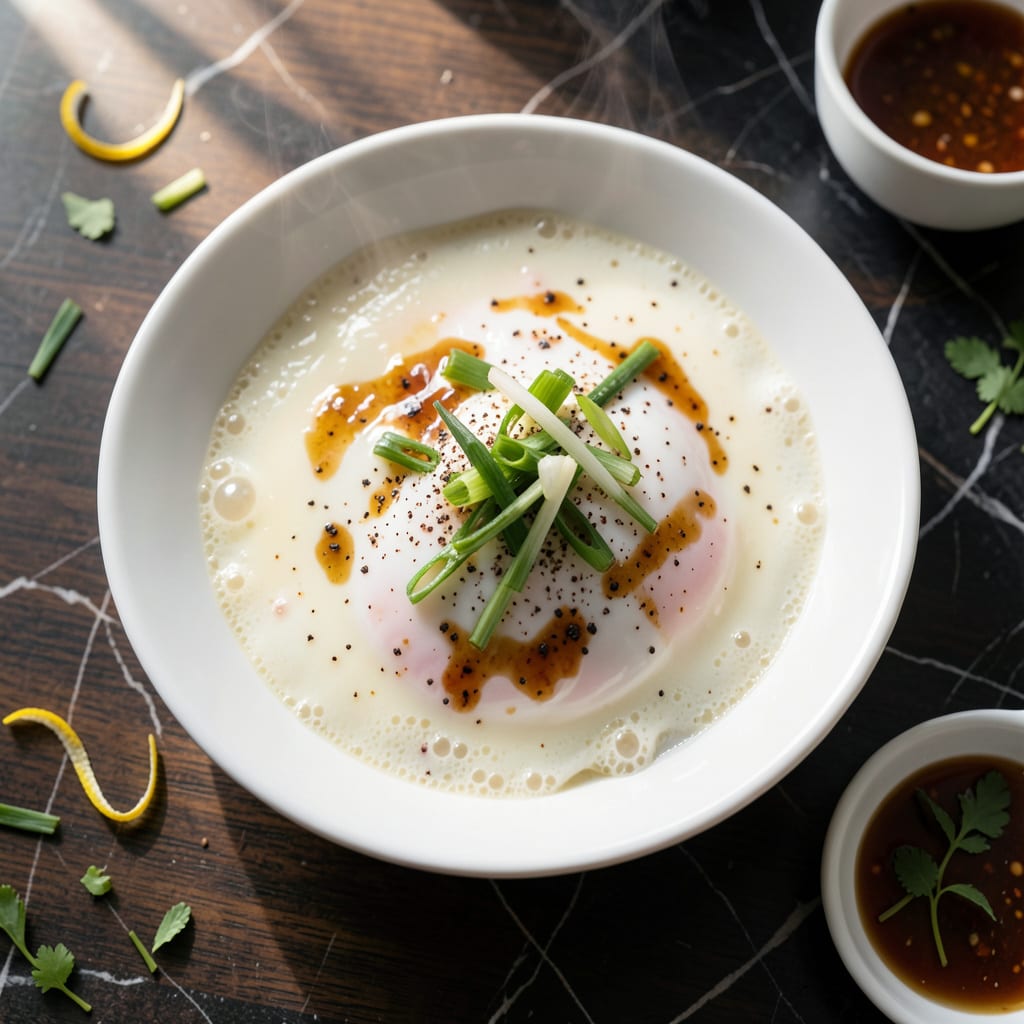
This Vietnamese steamed egg dish delivers a silky custard texture with delicate scallion aroma, a breakfast staple across homes in Vietnam.
Using just eggs, fish sauce, and gentle steam, this foolproof method creates a light, savory custard that pairs perfectly with rice or crusty bread.
Ingredients for Vietnamese Steamed Egg
Simple ingredients create a silky, aromatic custard that defines Vietnamese comfort food.
| Ingredient | Amount | Notes |
|---|---|---|
| Large Eggs 🥚 | 6 whole | Room temperature preferred |
| Fish Sauce 🐟 | 2 tbsp | Vietnamese variety recommended |
| Scallions 🧅 | 4 whole | Thinly sliced, green parts only |
| Water 💧 | 2 cups | For steaming custard |
| Ground Black Pepper 🌶️ | ¼ tsp | Freshly ground preferred |
| Granulated Sugar 🍚 | ½ tsp | Balances savory flavors |
| Neutral Cooking Oil 🫒 | 1 tsp | For greasing steaming dish |
| Salt 🧂 | ¼ tsp | Adjust to taste after steaming |
| Vegetable Broth 🥕 | ½ cup | Optional for extra depth |
| Cilantro 🌿 | 2 tbsp | Chopped, for garnish |
| Lime 🍋 | ½ whole | Cut into wedges for serving |
[recipeingredientscaler]
The fish sauce is non-negotiable here—Red Boat or Three Crabs are the gold standard for authentic flavor. Look for brands with minimal additives and a deep amber color. Eggs should be as fresh as possible (though room temperature is key for even texture). Most Asian markets carry the right fish sauce, but well-stocked supermarkets like H-Mart often have it too.
No fish sauce? Soy sauce with a pinch of salt in a pinch, but the flavor won’t be the same. Scallions can be swapped for chives if that’s what you’ve got. The broth is optional but adds depth—homemade or low-sodium store-bought works. If you’re watching sodium, reduce the fish sauce slightly and compensate with a squeeze of lime at the end.
This tastes best the day it’s made, but leftovers keep for 2 days refrigerated. Reheat gently in a steamer or microwave with a damp paper towel to prevent drying. The scallion oil on top? Don’t skip it—it’s the aromatic finish that makes this dish.
Why You’ll Love This Recipe
- One Pot Wonder: I just whisk eggs, water, and fish sauce, then steam—no fancy techniques, no mess.
- Umami Bomb: The fish sauce and scallions create this deep, savory flavor that’s ridicously addictive.
- Breakfast or Dinner: Honestly, I serve it for brunch, pack it for lunch, or pair it with rice for a light dinner.
- Penny Pincher: Five simple ingredients, most already in my pantry, and it feeds us for days.
Step-by-Step Instructions for Vietnamese Steamed Egg Custard
This method ensures a silky texture with balanced savory-sweet notes and aromatic garnishes.
Step 1: Prepare the Egg Mixture
Crack the 6 whole Large Eggs into a large bowl. I prefer room temperature eggs as they blend more smoothly into the custard base. Add the 2 tbsp Fish Sauce, 0.25 tsp Ground Black Pepper, 0.5 tsp Granulated Sugar, and 0.25 tsp Salt to the eggs.
Whisk vigorously until the mixture is completely homogeneous with no streaks of egg white or yolk visible. The fish sauce should be fully incorporated—this is what gives the dish its characteristic umami depth. For extra richness, whisk in the 0.5 cup Vegetable Broth until smooth.
Step 2: Strain and Prepare the Steaming Dish
Pour the egg mixture through a fine-mesh strainer into a heatproof dish that fits inside your steamer. This straining step removes any lumps or bits of egg membrane, ensuring that silky-smooth texture we want. I use a 9-inch glass pie plate for even cooking.
Lightly grease the dish with the 1 tsp Neutral Cooking Oil before adding the mixture to prevent sticking. Tap the dish gently on the counter to remove any air bubbles, which can create uneven texture in the finished custard.
Step 3: Steam to Perfection
Bring the 2 cups Water to a rolling boil in your steamer base. Place the dish with the egg mixture on the steamer rack, making sure it sits above the water level. Cover tightly with a lid and steam over medium heat for 15-18 minutes.
Check for doneness by gently shaking the dish—the custard should be set but still have a slight jiggle in the center, like firm gelatin. The edges will pull away slightly from the dish when it’s ready. Avoid oversteaming, as this can make the custard rubbery rather than silky.
Step 4: Garnish and Serve
While the custard steams, thinly slice the 4 whole Scallions (green parts only) and chop the 2 tbsp Cilantro. Cut the 0.5 whole Lime into wedges for serving. These garnishes add fresh, bright notes that balance the rich custard.
Once the custard is done, carefully remove it from the steamer. Let it rest for 2 minutes to firm up slightly. Sprinkle the sliced scallions and chopped cilantro evenly over the top. Serve immediately with lime wedges on the side for squeezing over each portion.
Pro Tips For Making Vietnamese Steamed Egg
- Steam Low and Slow: Use the lowest heat setting and keep the lid on tight—after ruining two batches with aggressive steam, I learned this prevents rubbery eggs and keeps the texture silky.
- Whisk the Eggs Well: Beat the eggs and water together until no streaks remain, almost like you’re making a light custard; this gives the dish that smooth, uniform consistency everyone loves.
- Skip the Boiling Water: I used to pour boiling water straight into the steamer, but it made the egg cook too fast and crack; warm water in the pot first, then add the bowl—gentler heat, better results.
- Add Fish Sauce Last: Stir in the fish sauce after steaming, not before; this keeps the flavor bright and prevents the eggs from turning an unappetizing gray during cooking.
Dietary Considerations for vietnamese steamed egg
Gluten-Free Friendly
This dish is naturally gluten-free since it relies on eggs, fish sauce, and simple seasonings without any wheat-based thickeners. Just ensure your fish sauce is pure—some cheaper brands add wheat as a stabilizer. I always check labels for 100% fish extract to be safe.
Low-Carb Option
With only 2g net carbs per serving from the minimal sugar and vegetables, this fits perfectly into keto or low-carb diets. The protein from 6 eggs keeps you full without spiking blood sugar. I often serve it with cauliflower rice instead of traditional rice.
Vegetarian Adaptation
Replace fish sauce with soy sauce or coconut aminos for a vegetarian version. Use 1.5 tbsp soy sauce plus ½ tsp salt to match the umami depth. The texture remains identical, though the flavor profile shifts slightly.
Dairy-Free Naturally
No dairy appears in the traditional recipe, making it safe for lactose-intolerant diners. The custard achieves its creamy texture purely from eggs and gentle steaming. I’ve served this to dairy-sensitive friends without any modifications needed.
Sodium Considerations
Fish sauce adds significant sodium, so those watching intake should reduce to 1 tbsp and boost flavor with extra lime and herbs. The Red Boat brand has 20% less sodium than generic options, which I appreciate for everyday cooking. 💡
Allergen Note
The primary allergen here is eggs—this dish isn’t suitable for those with egg allergies. For scallion allergies, chives or green onions work as substitutes. Always verify your fish sauce for shellfish cross-contamination if that’s a concern.
Nutrition Facts
Frequently Asked Questions
Can I use a different dish for steaming?
Yes, any heatproof dish that fits in your steamer works. A 9-inch pie plate or shallow bowl is ideal. Avoid deep containers as they may require longer steaming and can affect texture.
Why strain the egg mixture?
Straining removes lumps and egg membranes for a silky-smooth custard. This step ensures the final texture is velvety rather than uneven. It takes seconds but makes a noticeable difference.
How do I know when it’s done?
The custard is ready when it’s set but still has a slight jiggle in the center. The edges will pull away from the dish. Oversteaming makes it rubbery, so check at 15 minutes.
Can I make this ahead of time?
It’s best served fresh, but leftovers keep for 2 days refrigerated. Reheat gently in a steamer or microwave with a damp paper towel to prevent drying.

- 6 Egg Cake Recipe with Oil: Light as Air With Buttery Moisture - October 4, 2026
- 4 Bean Casserole Recipe: One-Pan Heartiness With Smoky Paprika Depth - October 4, 2026
- 3-Ingredient Keto Mug Cake Recipe: Microwave Magic in 2 Minutes - October 4, 2026