
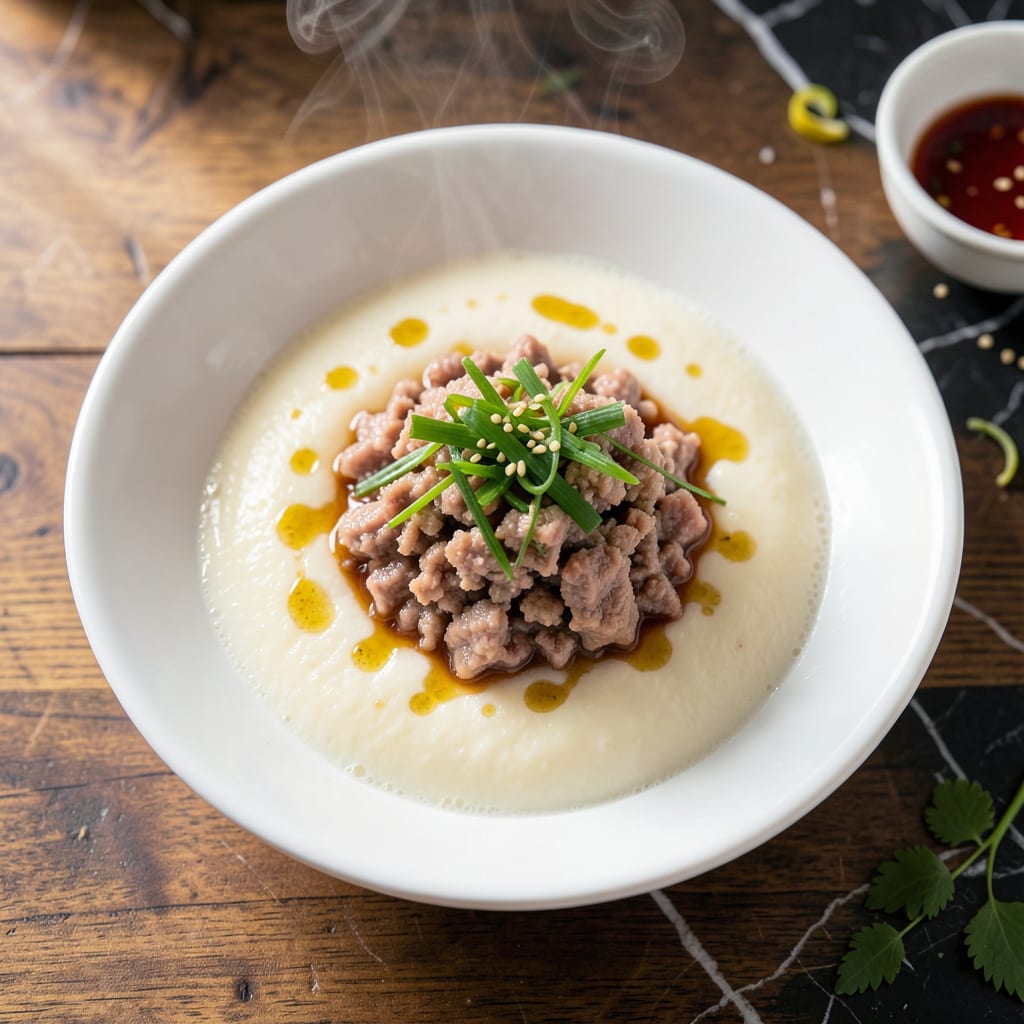
This Cantonese classic delivers a silky egg custard with savory pork in every bite. The steam transforms simple ingredients into a dish that’s light yet deeply satisfying.
I’ve perfected the ratio of eggs to pork and the steaming time to ensure a smooth texture every time. It’s home-style comfort with professional results.
Ingredients for Chinese Steamed Egg Minced Pork
Simple ingredients transform into a silky, savory Cantonese custard with minimal effort required.
| Ingredient | Amount | Notes |
|---|---|---|
| Large Eggs 🥚 | 6 whole | Room temperature for smooth texture |
| Ground Pork 🐖 | ½ lb | Prefer 80/20 fat ratio |
| Water 💧 | 1 ½ cups | For egg mixture consistency |
| Light Soy Sauce 🫒 | 1 tbsp | Low-sodium preferred for balance |
| Shaoxing Wine 🍷 | 1 tbsp | Dry sherry works as substitute |
| Sesame Oil 🫒 | ½ tsp | Toasted for aromatic depth |
| White Pepper 🌶️ | ¼ tsp | Freshly ground for best flavor |
| Salt 🧂 | ½ tsp | Adjust to taste after steaming |
| Green Onions 🧅 | 3 whole | Thinly sliced for garnish |
| Ginger 🌿 | 1 tbsp | Fresh, finely minced |
| Garlic Cloves 🧄 | 2 cloves | Minced for pork mixture |
| Cornstarch 🌾 | 1 tsp | For binding pork mixture |
The pork quality is paramount for this dish. Ground pork with 20% fat yields the juiciest results—avoid lean options as they produce dry minced pork. Asian grocery stores often carry pre-ground pork ideal for this recipe. For the eggs, room temperature ensures a smooth custard texture without streaks. Freshly ground white pepper (available at H Mart or online) offers superior aroma to pre-ground.
No Shaoxing wine? Dry sherry at equal measure works well, though the flavor profile differs slightly. Light soy sauce can be replaced with tamari for gluten-free. If avoiding pork, ground chicken or turkey (with extra fat added) can substitute, though the texture will be less rich. For extra umami, a dash of oyster sauce (or vegetarian oyster sauce) can be mixed into the pork.
This dish tastes best fresh but can be refrigerated for 2-3 days. Re-steam leftovers for 5-7 minutes to restore the silky texture. The mixture can be prepped and stored in the fridge (unsteamed) for 12 hours—cover tightly to prevent the eggs from absorbing odors.
Why You’ll Love This Recipe
- One Bowl Wonder: I just whisk eggs with water, mix in the pork, and steam—no fancy tools, no mess.
- Umami Bomb: The Shaoxing wine and light soy sauce give it that deep, savory richness I crave.
- Weeknight Hero: Honestly, it’s my go-to for busy evenings when I need something fast and filling.
- Stretches Far: A pound of ground pork and a few eggs feeds my family of four, with leftovers for lunch.
Step-by-Step Instructions for Chinese Steamed Egg Minced Pork
This Cantonese classic requires precise technique for its signature silky texture and balanced flavors.
Step 1: Prepare the Pork Mixture
In a bowl, combine the 0.5 lb ground pork with 1 tbsp light soy sauce, 1 tbsp Shaoxing wine, 1 tsp cornstarch, 0.5 tsp salt, 0.25 tsp white pepper, and 1 tbsp ginger.
Add the 2 cloves garlic cloves minced finely and mix thoroughly in one direction until the mixture becomes slightly sticky. This bind ensures the pork holds together during steaming. I press the mixture against the bowl sides to develop elasticity.
Step 2: Create the Egg Custard Base
Crack all 6 whole large eggs into a large bowl. Add the 1.5 cups water and whisk vigorously until no streaks remain. The water ratio is critical—too much makes it soupy, too little yields dense custard.
Strain the mixture through a fine mesh sieve to eliminate any lumps. This step guarantees the signature smooth, velvety texture that defines this dish. I always hold the sieve high above the bowl for better aeration.
Step 3: Assemble and Steam the Dish
Transfer the pork mixture to a heatproof dish, spreading it evenly across the bottom. Pour the egg mixture gently over the pork layer. The pork will rise slightly during steaming, creating a beautiful two-layer effect.
Cover the dish with plastic wrap, poking a few small holes to allow steam to penetrate. This prevents condensation from dripping onto the custard surface, which would create unsightly dimples in the finished product.
Step 4: Steam to Silky Perfection
Bring water to a rolling boil in a wok or large pot fitted with a steaming rack. Place the dish on the rack, ensuring the water level is below the dish bottom. Cover and steam over medium heat for 15-18 minutes.
The custard is done when it jiggles slightly in the center but feels set—like firm gelatin. Over-steaming causes the eggs to toughen, while under-steaming leaves them runny. I check at 15 minutes by gently shaking the dish.
Step 5: Finish and Serve
Remove the dish from the steamer and discard the plastic wrap. Drizzle with 0.5 tsp sesame oil and scatter the thinly sliced 3 whole green onions across the top. The residual heat will soften the onions slightly.
Let it rest for 2 minutes before serving. This brief pause allows the custard to set completely. Serve immediately while warm—the texture changes as it cools. Each spoonful should deliver tender pork pieces suspended in silky egg custard.
Pro Tips For Making Chinese Steamed Egg Minced Pork
- Pre-cook the Pork: Brown the ground pork with a splash of Shaoxing wine first—raw pork in the egg mixture can turn the texture grainy and uneven.
- Strain the Eggs: Whisk the eggs with water and strain through a fine mesh sieve to remove any stringy bits; this guarantees a silky smooth steamed egg every time.
- Steam on High: Use a rolling boil in your steamer before adding the dish, and keep the heat high—I learned this the hard way after ending up with a watery, undercooked mess.
- Skip Cold Water: Always use room temperature or warm water when mixing with eggs; cold water can cause the mixture to separate and lose that custard-like consistency.
Pro Cooking Tips for This Recipe
Egg Temperature Matters
Always use room temperature eggs to prevent streaks in your custard. Cold eggs can cause the fat in the pork to solidify, creating an uneven texture. I take mine out 30 minutes before starting. 💡
Perfect Water Ratio
The 1.5 cups water to 6 eggs ratio is sacred. Too much water makes it soupy; too little yields a dense, rubbery texture. Whisk vigorously until completely homogeneous.
Straining is Essential
Strain your egg mixture through a fine mesh sieve to remove any lumps. This guarantees the signature silky texture. I hold the sieve high for better aeration.
Steam Control
Use a wok with a tight-fitting lid to maintain consistent medium heat. The water should be at a rolling boil before adding the dish. Check at 15 minutes for doneness.
Plastic Wrap Trick
Cover your dish with plastic wrap and poke 3-4 small holes to allow steam to penetrate. This prevents condensation drips that create unsightly dimples on the custard surface.
Rest Before Serving
Let it rest for 2 minutes after steaming. This brief pause allows the custard to set completely. Serve immediately—the texture changes as it cools. 🔥
Nutrition Facts
Frequently Asked Questions
Why does my custard have streaks?
Streaks usually appear when using cold eggs. Always use room temperature eggs and whisk vigorously until smooth. Straining through a fine mesh sieve also helps achieve that perfect silky texture.
Can I use a different type of meat?
Yes, ground chicken or turkey can substitute pork. Add a bit of oil to compensate for lower fat content. The texture will be slightly less rich but still delicious.
How do I know when it’s done?
The custard should jiggle slightly in the center but feel set, like firm gelatin. Check at 15 minutes by gently shaking the dish. Over-steaming will make it tough.
Can I make this ahead of time?
Prepare the mixture and store it in the fridge (unsteamed) for up to 12 hours. Cover tightly to prevent odors. Re-steam leftovers for 5-7 minutes to restore texture.

- 6 Egg Cake Recipe with Oil: Light as Air With Buttery Moisture - October 4, 2026
- 4 Bean Casserole Recipe: One-Pan Heartiness With Smoky Paprika Depth - October 4, 2026
- 3-Ingredient Keto Mug Cake Recipe: Microwave Magic in 2 Minutes - October 4, 2026