
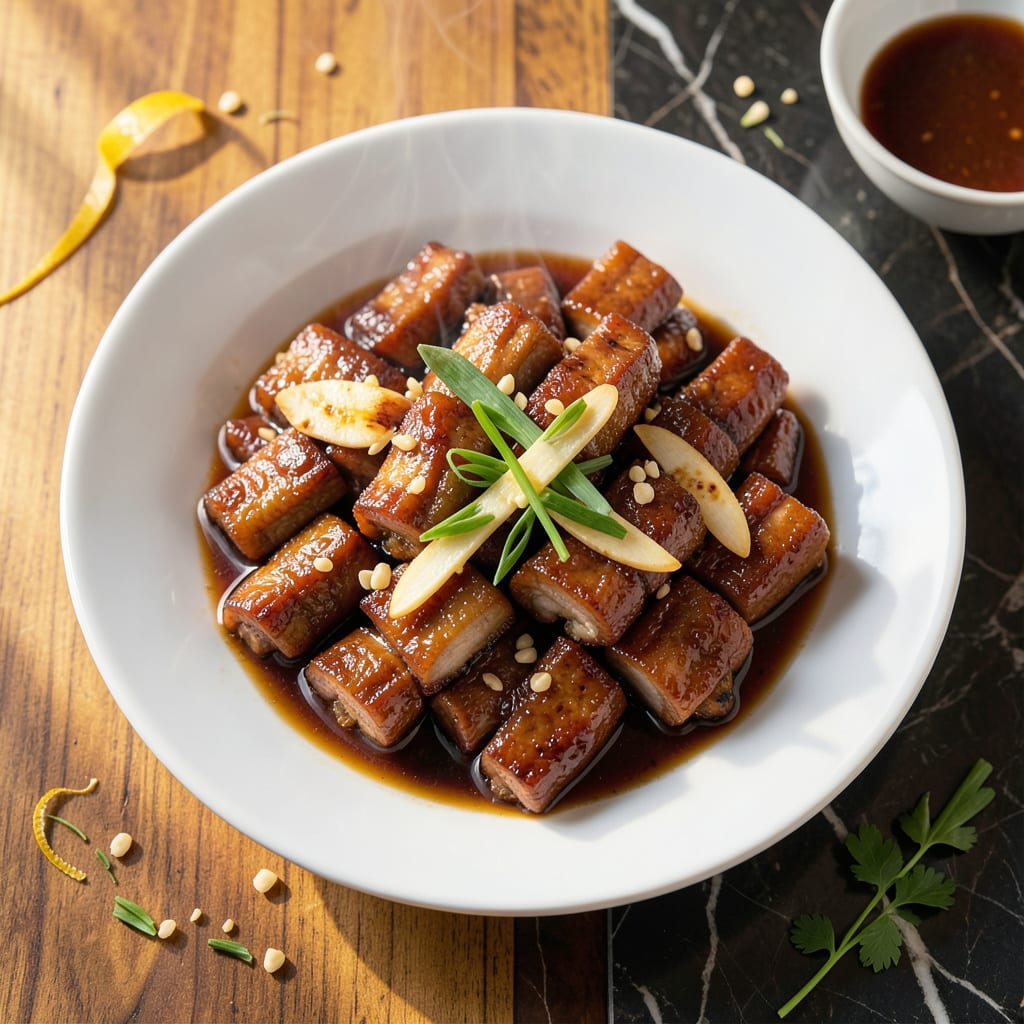
This Cantonese dim sum classic brings authentic flavors to your kitchen with a foolproof steaming method. The ribs become incredibly tender while absorbing the aromatic marinade of soy sauce, rice wine, and ginger.
Traditional Chinese techniques ensure juicy, fall-off-the-bone results. The dish delivers that signature dim sum taste with minimal effort, perfect for recreating restaurant quality at home.
Ingredients for Chinese Steamed Pork Spare Ribs
Authentic Cantonese ingredients for tender, aromatic steamed pork spare ribs at home.
| Ingredient | Amount | Notes |
|---|---|---|
| Pork Spare Ribs 🍖 | 1 ½ lb | Cut into individual ribs |
| Light Soy Sauce 🫒 | 3 tbsp | For marinade base |
| Dark Soy Sauce 🫒 | 1 tbsp | For color and depth |
| Shaoxing Rice Wine 🍶 | 2 tbsp | Or dry sherry substitute |
| Fresh Ginger 🌿 | 1 tbsp | Finely minced or grated |
| Granulated Sugar 🍚 | 1 tbsp | Balances the savory notes |
| Garlic Cloves 🧄 | 3 cloves | Minced finely |
| Green Onions 🧅 | 3 whole | Cut into 1-inch pieces |
| Cornstarch 🌾 | 1 tbsp | For velvety texture |
| Sesame Oil 🫒 | 1 tsp | For finishing aroma |
| White Pepper 🌶️ | ½ tsp | Ground, for subtle heat |
| Water 💧 | 2 cups | For steaming liquid |
| Fermented Black Beans ⚫ | 1 tbsp | Rinsed and chopped |
The pork spare ribs are the foundation—ask your butcher for the meatiest cut and have them pre-cut into individual ribs to save time. Asian markets often carry pre-cut ribs specifically for dim sum, but standard grocery store pork ribs work just as well. Look for ribs with a good amount of meat on them for the best texture. The fermented black beans add that signature umami depth, and Koon Chun is a reliable brand you’ll find in most Asian grocery aisles.
No Shaoxing wine? Dry sherry is the closest substitute, but in a pinch, mirin or even white wine can work—just reduce the sugar slightly. Light soy sauce can be swapped with regular soy sauce if needed, though the flavor will be slightly saltier. Fresh ginger is non-negotiable for authentic flavor, but ground ginger at half the amount will do in an emergency. The green onions can be replaced with chives if that’s what you have on hand.
Marinate the ribs for at least 2 hours for maximum flavor penetration, but overnight is even better. Leftovers keep for 3-4 days in the fridge and reheat beautifully by steaming again. The marinade can be prepped a day ahead, making this dish perfect for stress-free entertaining.
Why You’ll Love This Recipe
- I’ll be real: spare ribs are cheap, and a little goes a long way with these bold flavors.
- Minimal Effort: I just toss the ribs with the soy sauces, ginger, and rice wine, then let the steamer do the work.
- Umami Bomb: The combo of light and dark soy with Shaoxing wine gives these ribs a deep, savory punch that’s honestly addictive.
- Feeds the Crowd: Here’s what sold me—this recipe scales perfectly for family dinners or meal prep, and reheats beautifully.
Step-by-Step Instructions for Chinese Steamed Pork Spare Ribs
Master the technique for this dim sum staple with precise timing and proper steaming method.
Step 1: Prepare and Marinate the Ribs
Begin by cutting the 1.5 lb Pork Spare Ribs into individual pieces, trimming any excess fat. In a large bowl, combine the pork with 3 tbsp Light Soy Sauce, 1 tbsp Dark Soy Sauce, 2 tbsp Shaoxing Rice Wine, 1 tbsp Granulated Sugar, 1 tbsp Fresh Ginger, 3 cloves Garlic Cloves, 0.5 tsp White Pepper, and 1 tbsp Fermented Black Beans. Mix thoroughly to ensure every rib is evenly coated.
The dark soy sauce adds the characteristic deep color, while the Shaoxing rice wine tenderizes the meat. Let this marinate for at least 30 minutes at room temperature, or up to 2 hours in the refrigerator for deeper flavor penetration.
Step 2: Add Cornstarch and Finalize the Marinade
After marinating, stir in the 1 tbsp Cornstarch to the pork mixture. This creates a light coating that helps the ribs retain moisture during steaming while giving them a velvety texture. The cornstarch also helps the marinade cling better to the meat.
Add the 3 whole Green Onions cut into 1-inch pieces and mix once more. The green onions add a fresh, aromatic note that balances the rich, savory marinade. Your ribs should now be glossy and evenly coated, ready for the steamer.
Step 3: Arrange for Steaming
Line a steamer basket or rack with parchment paper (poke holes for steam circulation) or use a heatproof plate. Arrange the ribs in a single layer, ensuring they don’t overlap—this allows steam to circulate evenly around each piece.
Pour the 2 cups Water into your steaming pot or wok and bring to a rolling boil over high heat. The water level should be just below the steamer basket or rack to prevent the ribs from touching the water.
Step 4: Steam to Perfection
Place the steamer basket with the ribs over the boiling water, cover tightly with a lid, and steam for 20-25 minutes. Check at the 20-minute mark—the ribs should be tender enough that a knife slides in easily, with the meat pulling slightly away from the bone.
Avoid lifting the lid during steaming, as this releases precious heat and steam, which can affect the cooking time and texture. If your steamer is small, you may need to work in batches to avoid overcrowding.
Step 5: Finish and Serve
Once the ribs are cooked, carefully transfer them to a serving plate. Drizzle with the 1 tsp Sesame Oil for a fragrant finish. The oil should glisten on the surface, adding a subtle nutty aroma that complements the savory marinade.
Garnish with any remaining green onions and serve immediately while hot. The ribs should be tender and juicy, with a glossy, slightly sticky coating from the marinade. This dish is traditionally enjoyed as part of a dim sum spread or over steamed rice.
Pro Tips For Making Chinese Steamed Pork Spare Ribs
- Parboil First: I learned this the hard way—blanching the ribs in boiling water for 2-3 minutes first removes impurities and keeps the steamed meat clean and tender.
- Marinate 30 Minutes: Sounds weird, but letting the ribs soak in the soy sauce, Shaoxing wine, and ginger mix for at least 30 minutes makes the flavor actually penetrate the meat.
- Skip Overcrowding: After burning three batches, I finally figured out that leaving space between ribs on the steaming rack guarantees even cooking and proper heat circulation.
- Use Dark Soy: My grandmother swore by this, and she was right: a splash of dark soy sauce in the marinade gives the ribs that deep, caramelized color everyone expects.
Flavor Customization for chinese steamed pork spare ribs
Sweet and Savory
Add 2 tbsp hoisin sauce to the marinade for a sweeter profile that pairs beautifully with the pork’s natural richness. I also like to sprinkle 1 tsp toasted sesame seeds over the finished ribs for extra crunch and nutty flavor. 💛
Spicy Kick
For heat lovers, mix 1 tsp chili oil or ½ tsp crushed red pepper into the marinade. The spice complements the fermented black beans’ umami depth. Add 1 sliced fresh chili on top before steaming for visible flakes.
Herbal Notes
Boost aroma with 5-6 fresh cilantro sprigs or 2 star anise pods in the marinade. Remove the star anise before steaming. Cilantro stays in for a fresh, bright finish that cuts through the richness.
Citrus Twist
Brighten the dish with 1 tbsp orange zest or 2 tbsp fresh lime juice added to the marinade. The acidity balances the soy’s saltiness. I prefer lime for its sharp contrast to the meat’s savory notes. ✨
Umami Boosters
Deepens flavor with 1 tbsp oyster sauce or 1 tsp mushroom powder in the marinade. Oyster sauce adds thickness, while mushroom powder enhances the fermented black beans’ earthy tones.
Texture Variations
For extra crispiness, broil the steamed ribs for 2-3 minutes after cooking. Alternatively, add ½ cup chopped water chestnuts to the marinade for a satisfying crunch in every bite.
Nutrition Facts
Frequently Asked Questions
Can I use baby back ribs instead?
Yes, but they’ll need 5-10 minutes longer steaming. Baby backs are meatier and slightly tougher than spare ribs, so adjust cooking time accordingly.
Why do my ribs turn out dry?
Overcrowding or lifting the lid during steaming releases moisture. Use a large enough steamer and resist peeking for 20-25 minutes.
What’s the best substitute for Shaoxing wine?
Dry sherry works perfectly, or use 1 tbsp mirin + 1 tbsp water in a pinch. Avoid cooking wine—it’s too salty.
Can I make this ahead of time?
Marinate ribs overnight for deeper flavor. Steam just before serving, or reheat steamed ribs by steaming again for 5-8 minutes.

- 6 Egg Cake Recipe with Oil: Light as Air With Buttery Moisture - October 4, 2026
- 4 Bean Casserole Recipe: One-Pan Heartiness With Smoky Paprika Depth - October 4, 2026
- 3-Ingredient Keto Mug Cake Recipe: Microwave Magic in 2 Minutes - October 4, 2026