
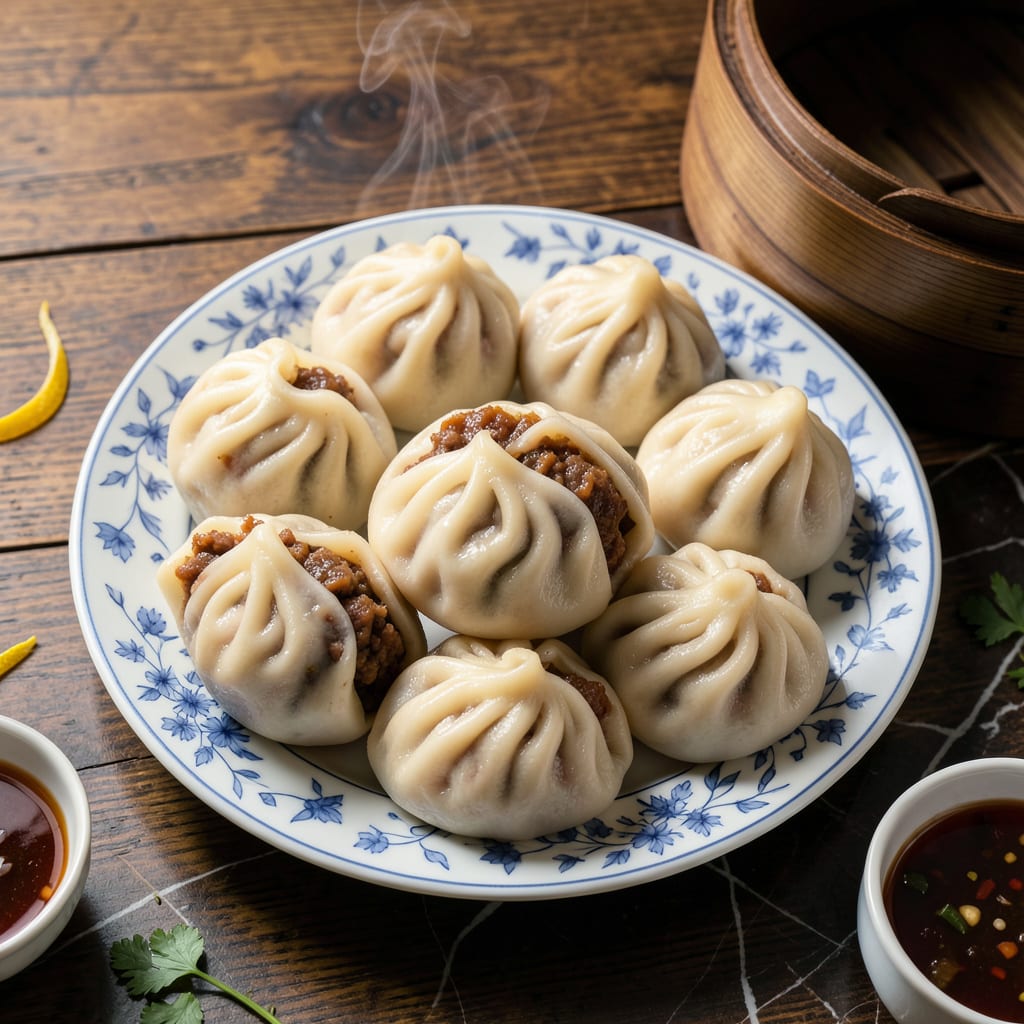
These soft, pillowy buns are a staple of dim sum, with a delicate dough that encases a rich, flavorful pork filling. The steaming process creates a tender texture that melts in your mouth.
I’ve refined this method to ensure fluffy results every time, with a filling that’s savory, juicy, and perfectly seasoned. The key is in the balance of the dough’s elasticity and the filling’s moisture.
Ingredients for Chinese Steamed Pork Buns
Pantry staples and fresh aromatics create these melt-in-your-mouth steamed buns with rich pork filling.
| Ingredient | Amount | Notes |
|---|---|---|
| All-Purpose Flour 🌾 | 3 cups | Plus extra for dusting |
| Active Dry Yeast 🍞 | 1 tsp | Instant yeast works too |
| Granulated Sugar 🍚 | 2 tbsp | For activating yeast |
| Warm Water 💧 | 1 ¼ cups | 110°F, divided use |
| Vegetable Oil 🫒 | 2 tbsp | Plus extra for greasing |
| Ground Pork 🥩 | 1 lb | 80/20 fat ratio preferred |
| Green Onions 🧅 | 3 whole | Finely chopped, white parts only |
| Fresh Ginger 🌿 | 1 tbsp | Minced or grated |
| Soy Sauce 🥢 | 2 tbsp | Low-sodium recommended |
| Sesame Oil 🫒 | 1 tbsp | Toasted for best flavor |
| Shaoxing Wine 🍶 | 1 tbsp | Dry sherry as substitute |
| Light Brown Sugar 🍚 | 1 tbsp | Packed, for filling |
| Garlic Cloves 🧄 | 2 cloves | Minced for filling |
| Salt 🧂 | ½ tsp | Divided for dough and filling |
| White Pepper 🌶️ | ¼ tsp | Ground, for filling |
The pork filling requires 80/20 ground pork—any leaner and the buns will be dry. Asian markets often have better quality pork for filling, but most supermarkets carry suitable ground pork. For the dough, instant yeast saves time since it doesn’t need proofing first. The Shaoxing wine is key for authentic flavor—look for it in the international aisle or at H Mart.
No Shaoxing wine? Dry sherry works in a pinch. For a vegetarian version, swap the pork for finely chopped mushrooms (shiitake or cremini work best) with the same seasoning. Green onions can be replaced with chives if needed. The dough is forgiving—if it’s too sticky, add flour 1 tbsp at a time (don’t overdo it).
Assembled buns can rest in the fridge for 1 hour before steaming. Cooked buns keep for 3 days in the fridge—reheat by steaming again. Freeze uncooked buns on a tray first, then transfer to a bag for up to 1 month.
Why You’ll Love This Recipe
- Minimal Kneading: I mix the dough in one bowl, let the yeast work its magic, and the fluffy texture practically makes itself.
- Sweet-Savory Bite: The sugar in the dough balances the rich pork filling so well—every bite is this perfect harmony of flavors.
- Freezer Friendly: I steam a big batch, freeze the extras, and reheat whenever I need a quick snack or appetizer.
- Pantry Staples: Honestly, I already have all the ingredients on hand—flour, yeast, sugar, water, oil—no special shopping required.
Step-by-Step Instructions for Chinese Steamed Pork Buns
Master the technique for perfect fluffy bao with a savory filling every time.
Step 1: Activate the Yeast and Prepare the Dough
In a small bowl, combine the 1 tsp Active Dry Yeast with 2 tbsp Granulated Sugar and ¼ cup of the 1.25 cups Warm Water. Let it sit for 5-7 minutes until the mixture becomes frothy and bubbly—this confirms the yeast is active and ready to work.
In a large mixing bowl, pour the remaining 1 cup Warm Water, the 2 tbsp Vegetable Oil, and the yeast mixture. Gradually add 3 cups All-Purpose Flour while stirring with a wooden spoon until a shaggy dough forms. The dough should pull away from the sides of the bowl but still feel slightly sticky to the touch.
Step 2: Knead and Proof the Dough
Turn the dough out onto a lightly floured surface and knead for 8-10 minutes until smooth and elastic. I press my thumb into the dough to test its readiness—if it springs back slowly, it’s properly kneaded. The surface should feel slightly tacky but not stick to your hands.
Lightly grease the mixing bowl with additional vegetable oil, place the dough inside, and cover with a damp kitchen towel. Let it rise in a warm, draft-free place for 1-1.5 hours or until it has doubled in size. The dough should look puffy and jiggle slightly when gently shaken.
Step 3: Prepare the Pork Filling
In a medium bowl, combine the 1 lb Ground Pork, 3 whole Green Onions (finely chopped), 1 tbsp Fresh Ginger (minced), 2 tbsp Soy Sauce, 1 tbsp Sesame Oil, 1 tbsp Shaoxing Wine, 1 tbsp Light Brown Sugar, 2 cloves Garlic Cloves (minced), 0.5 tsp Salt, and 0.25 tsp White Pepper. Mix well in one direction until the filling is sticky and uniform.
The filling should have a glossy appearance and a balanced sweet-savory aroma. For best texture, cover and refrigerate for 20-30 minutes to allow the flavors to meld while you shape the dough.
Step 4: Shape the Buns and Add Filling
Punch down the risen dough to release the air and divide it into 12 equal pieces. Roll each piece into a 3-inch circle, keeping the edges thinner than the center. This ensures the buns will have a proper pleated seal and won’t burst during steaming.
Place 1-2 tablespoons of the pork filling in the center of each dough circle. Pleat the edges by pinching and twisting in a circular motion until the bun is fully sealed. The pleats should look neat and uniform, with no gaps where filling might escape.
Step 5: Steam to Perfection
Line a bamboo steamer with parchment paper, poking small holes to allow steam to circulate. Arrange the buns 1 inch apart to give them room to expand. Bring 2 inches of water to a boil in a wok or large pot, then place the steamer on top. Cover and steam for 15-18 minutes.
Turn off the heat and let the buns sit covered for 2-3 minutes before removing the lid. This prevents them from collapsing due to sudden temperature changes. The buns should be glossy, puffed, and slightly translucent at the top when ready to serve.
Pro Tips For Making Chinese Steamed Pork Buns
- Proof the Yeast: Always activate the yeast in warm water (around 110°F) with a pinch of sugar first—I learned this the hard way after wasting flour on dough that never rose.
- Knead Thoroughly: Spend at least 10 minutes kneading the dough until it’s smooth and elastic; under-kneading makes the buns dense instead of fluffy.
- Skip Cold Ingredients: Make sure your water and oil are at room temperature or slightly warm, or the yeast will slow down and your buns won’t rise properly.
- Use Parchment Squares: Cut small parchment paper squares to place under each bun before steaming—it prevents sticking and makes them easier to lift out without tearing.
Health Benefits of This Dish
Rich Protein Source
Each bun packs about 15 grams of protein from the 80/20 ground pork, making these a satisfying meal option. Protein is essential for muscle repair and growth, and the pork provides all nine essential amino acids your body needs. 💪
Low-Fat Option
Despite the rich flavor, these buns are relatively low in fat compared to fried dim sum. The steaming process requires no additional oil, keeping the fat content in check. A single bun contains about 8-10 grams of fat, mostly from the pork itself.
Vitamin B Boost
Pork is an excellent source of B vitamins, particularly B12, which supports nerve function and red blood cell production. You’ll also get thiamine (B1) and niacin (B3) from both the pork and the enriched flour in the dough.
Iron and Zinc
The pork filling provides heme iron, which your body absorbs more easily than plant-based iron. Each serving also contains zinc, important for immune function. The combination helps prevent fatigue and supports your immune system.
Balanced Carbs
The dough offers about 30 grams of carbohydrates per bun, providing steady energy. The all-purpose flour gives you a mix of simple and complex carbs, while the small amount of sugar in the dough aids in the fermentation process. 🥗
Minimal Processing
Unlike many store-bought versions, homemade buns contain no preservatives or artificial additives. You control the ingredients, from the Shaoxing wine in the filling to the sesame oil that adds its distinctive aroma. This means cleaner fuel for your body.
Nutrition Facts
Frequently Asked Questions
Why is 80/20 pork recommended for the filling?
The 80/20 fat ratio ensures juicy, flavorful buns. Leaner pork dries out during steaming. The fat keeps the filling moist and tender.
Can I make the dough ahead of time?
Yes! Prepare the dough, let it rise, then refrigerate for up to 24 hours. This slows fermentation for better flavor. Bring to room temperature before shaping.
What if my buns don’t rise during steaming?
Check your yeast first—it may have been inactive. Also ensure the water is boiling vigorously before steaming. Overproofed dough can also cause this issue.
How do I prevent the buns from sticking?
Line your steamer with parchment paper and poke holes for steam circulation. Space buns 1 inch apart to allow expansion. Never skip the parchment!

- 6 Egg Cake Recipe with Oil: Light as Air With Buttery Moisture - October 4, 2026
- 4 Bean Casserole Recipe: One-Pan Heartiness With Smoky Paprika Depth - October 4, 2026
- 3-Ingredient Keto Mug Cake Recipe: Microwave Magic in 2 Minutes - October 4, 2026