
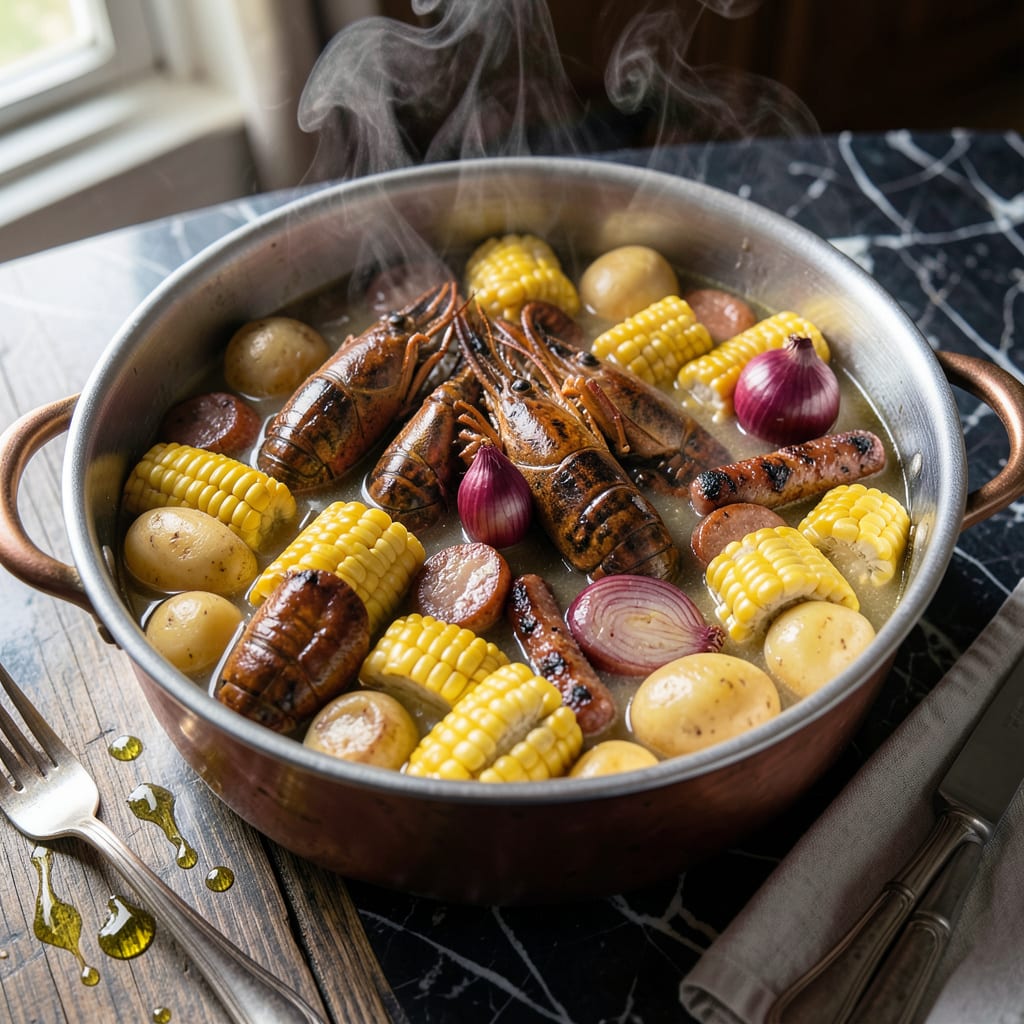
There’s nothing like a New England lobster steam pot to bring the coast to your kitchen. This method locks in the sweet, briny flavor of fresh lobster while infusing complementary ingredients with oceanic richness.
With a simple broth and precise timing, you’ll achieve tender lobster meat and perfectly cooked vegetables in one pot. It’s a straightforward yet impressive way to serve a seafood feast.
Ingredients for Lobster Steam Pot
Fresh seafood and garden vegetables create this coastal classic at home with ease.
| Ingredient | Amount | Notes |
|---|---|---|
| Live Lobsters 🦞 | 4 whole | 1.25-1.5 lb each, hard shell preferred |
| Sea Salt 🧂 | ½ cup | Coarse, for steaming water |
| New Potatoes 🥔 | 1 ½ lb | Baby potatoes, halved if large |
| Fresh Corn on the Cob 🌽 | 4 pieces | Husked, cut into thirds |
| Kielbasa Sausage 🌭 | 1 lb | Smoked, cut into 2-inch pieces |
| Red Onion 🧅 | 1 whole | Cut into wedges |
| Fresh Clams 🐚 | 12 pieces | Littleneck or steamers, scrubbed |
| Fresh Mussels 🐚 | 12 pieces | De-bearded, scrubbed |
| Butter 🧈 | ½ cup | Unsalted, melted for serving |
| Fresh Parsley 🌿 | ¼ cup | Chopped, for garnish |
| Lemon 🍋 | 1 whole | Cut into wedges for serving |
| Old Bay Seasoning 🌶️ | 2 tbsp | For traditional New England flavor |
| Bay Leaves 🍃 | 2 pieces | Dried, for steaming broth |
| Water 💧 | 2 cups | For steaming base |
| White Wine 🍷 | 1 cup | Dry, optional for broth |
The lobster quality is non-negotiable. Hard-shell lobsters from a trusted seafood market yield the sweetest meat. Look for lively movement and a weight that feels heavy for their size. Maine or Canadian lobsters are ideal if available. For the kielbasa, Polish smoked sausage adds authentic flavor, but any smoked sausage works. Buy clams and mussels the day of cooking—they should smell clean and close when tapped.
No live lobsters? Frozen lobster tails can work, but they lack the full experience. Skip the sausage for a seafood-only version. Littleneck clams at double the quantity substitute well for steamers. Fresh corn can be swapped for frozen (no need to thaw). Old Bay is essential—don’t substitute with generic seafood seasoning. The white wine adds depth, but seafood stock works in a pinch.
Cook immediately upon returning from the market. Leftover lobster meat keeps 2-3 days refrigerated, but the shellfish is best eaten fresh. The broth can be strained and frozen for 1 month. Serve with extra melted butter and crusty bread to soak up the juices.
Why You’ll Love This Recipe
- One Pot Wonder: It’s all in there—lobsters, potatoes, corn, and sausage—steaming together in one big pot with just sea salt and water.
- Buttery Sweet Bite: The lobster soaks up the corn and sausage flavors while staying tender, and the potatoes turn out perfectly salty.
- Feeds a Hungry Table: I’ve served this for summer birthdays and lazy Sundays, and it’s always a hit with a crowd.
- Leftovers? None.: Honestly, between the lobster and that smoky kielbasa, there’s never a bite left—even with a big group.
Step-by-Step Instructions for Lobster Steam Pot
Master the art of New England seafood boiling with this precise, time-tested method.
Step 1: Prepare the Steaming Broth
In a large stockpot, combine the 2 cups Water, 1 cup White Wine, 0.5 cup Sea Salt, 2 tbsp Old Bay Seasoning, and 2 pieces Bay Leaves. Bring to a rolling boil over high heat.
The wine adds depth to the broth, while the Old Bay provides that signature New England flavor. I always let it boil for 5 minutes before adding the seafood to ensure all the flavors meld together properly.
Step 2: Layer the Heartier Ingredients
Carefully add the 1.5 lb New Potatoes, 4 pieces Fresh Corn on the Cob, 1 lb Kielbasa Sausage, and 1 whole Red Onion to the pot. These take longest to cook, so they go in first. Cover and return to a boil.
Once boiling, reduce heat to medium-high and cook for 10 minutes. This head start ensures the potatoes become tender and the sausage heats through before adding the more delicate seafood.
Step 3: Add the Seafood in Stages
Place the 12 pieces Fresh Clams and 12 pieces Fresh Mussels on top of the potatoes and sausage. Cover and steam for 5 minutes. You’ll see the shells begin to open—this is your visual cue they’re nearly done.
Finally, add the 4 whole Live Lobsters headfirst into the pot. Cover and steam for an additional 8-10 minutes until the lobster shells turn bright red and the clams and mussels have fully opened.
Step 4: Serve with Traditional Accompaniments
Using long tongs, transfer the lobsters to a large platter. Remove the remaining seafood and vegetables with a slotted spoon and arrange around the lobsters. Discard any clams or mussels that didn’t open during cooking.
Serve immediately with the 0.5 cup Butter (melted), 0.25 cup Fresh Parsley (chopped), and 1 whole Lemon (cut into wedges) on the side. The butter is essential for dipping, while the lemon adds a bright finish that cuts through the richness.
Pro Tips For Making Lobster Steam Pot
- Boil Water First: Start with a rolling boil before adding lobsters—this guarantees even cooking and prevents the meat from turning rubbery. I learned this the hard way after pulling out undercooked tails more times than I’d like to admit.
- Layer by Density: Place potatoes and corn on the bottom, sausage in the middle, and lobsters on top so everything cooks through without overcooking the seafood. Sounds obvious, but I used to just toss it all in and ended up with mushy potatoes.
- Skip the Saltwater: Use fresh water and about ¼ cup sea salt per gallon instead of seawater—it’s cleaner and gives you better control over the seasoning. Seawater can be inconsistent, and I’ve had batches taste off because of it.
- Shock the Corn: Plunge the corn into ice water for 1-2 minutes after steaming to stop the cooking process and lock in that sweet, crisp bite. My grandmother swore by this, and she was right.
Make-Ahead Tips for lobster steam pot
Prep the Seafood
Buy your lobsters, clams, and mussels the morning of cooking. I keep them in a cooler with wet newspaper to maintain freshness. Scrub the clams and mussels under cold water, removing any beards from the mussels. 🦞
Pre-Cook Vegetables
Parboil the 1.5 lb New Potatoes for 5 minutes to get a head start. This ensures they’ll be perfectly tender when the seafood finishes. Cool them in ice water to stop cooking.
Prep the Broth Base
Mix the 2 cups Water, 1 cup White Wine, and seasonings in advance. Store this in the fridge until ready to use. The flavors will meld beautifully as it sits.
Organize Serving Essentials
Melt the 0.5 cup Butter and chop the 0.25 cup Fresh Parsley beforehand. Set out large bowls for shells and plates for the meat. I also warm the butter to keep it liquid during serving. 🧈
Set Up Your Station
Have long tongs, a slotted spoon, and large serving platters ready. I arrange everything near the stove since timing is critical. A trash bowl for shells keeps the workspace clean.
Timing Strategy
Start the broth 30 minutes before serving. The potatoes go in first, followed by corn and sausage. This sequence ensures everything finishes together perfectly.
Nutrition Facts
Frequently Asked Questions
What size pot do I need?
A 12-quart stockpot is ideal for 4 lobsters and all the vegetables. This gives enough room for proper steaming without crowding, which is key for even cooking.
Can I use frozen lobster tails instead?
Yes, but adjust the time to 6-8 minutes for tails. Thaw them completely first. Note that fresh lobsters provide the best flavor and texture for this dish.
How do I know when the clams and mussels are done?
They’re ready when the shells open fully during steaming. Discard any that remain closed after cooking, as they may not be safe to eat.
What can I substitute for Old Bay seasoning?
While Old Bay is traditional, a mix of 1 tsp paprika, 1/2 tsp salt, 1/4 tsp cayenne, and 1/4 tsp black pepper works in a pinch. The flavor won’t be identical but will still be tasty.

- 6 Egg Cake Recipe with Oil: Light as Air With Buttery Moisture - October 4, 2026
- 4 Bean Casserole Recipe: One-Pan Heartiness With Smoky Paprika Depth - October 4, 2026
- 3-Ingredient Keto Mug Cake Recipe: Microwave Magic in 2 Minutes - October 4, 2026