
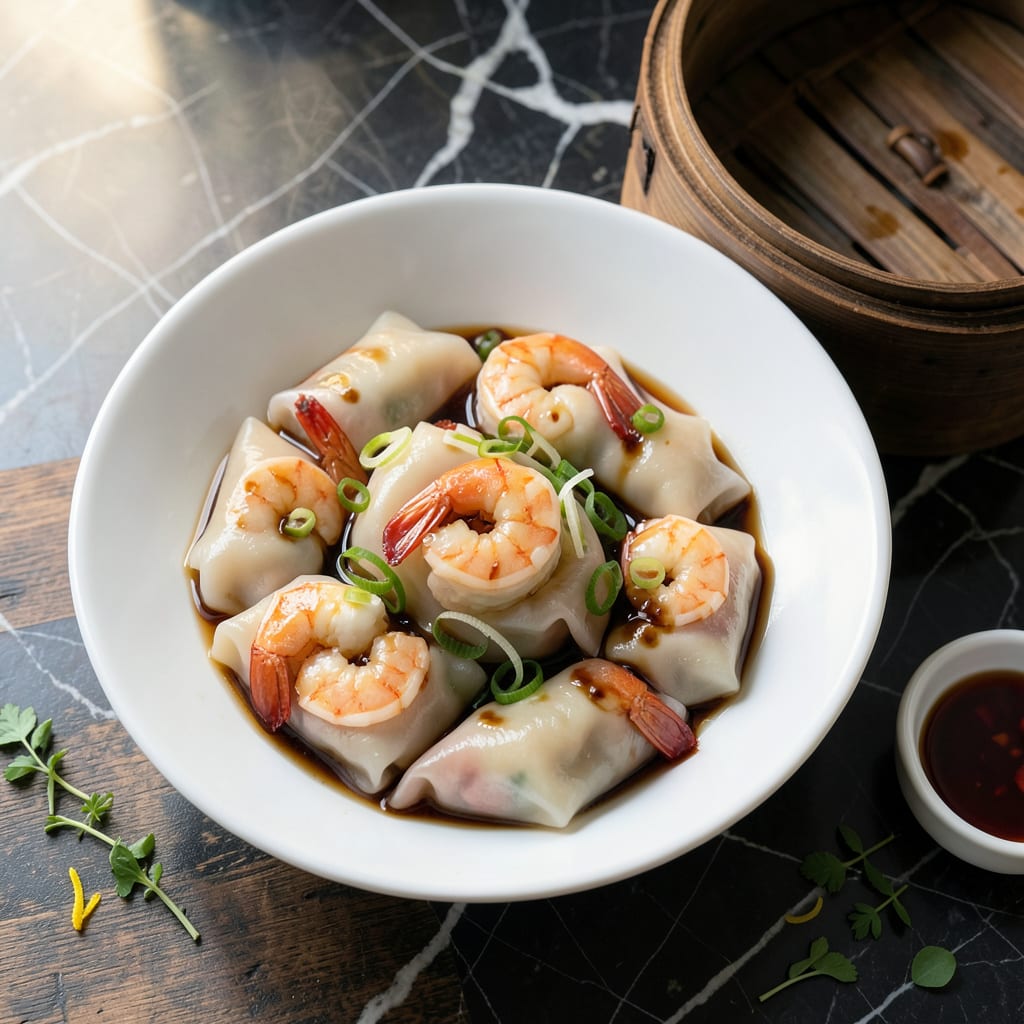
This classic Cantonese dish delivers silky-smooth rice noodle rolls with a delicate texture that’s hard to resist. I’ve refined this method to ensure the sheets steam perfectly every time, creating a tender yet sturdy base for the shrimp filling.
The key lies in the batter consistency and proper steaming. With just a few simple ingredients and precise timing, you’ll achieve restaurant-quality results that rival any dim sum house. Serve warm with your favorite dipping sauce.
Ingredients for Chinese Steamed Rice Noodle Rolls
A handful of pantry staples and fresh shrimp create these restaurant-quality noodle rolls.
| Ingredient | Amount | Notes |
|---|---|---|
| Rice Flour 🌾 | 2 cups | Glutinous or sweet variety |
| Tapioca Starch 🌾 | ½ cup | For elasticity in sheets |
| Water 💧 | 3 ½ cups | Room temperature for batter |
| Salt 🧂 | ½ tsp | Fine sea salt preferred |
| Neutral Oil 🫒 | 1 tbsp | For greasing steamer pans |
| Large Shrimp 🦐 | 1 lb | Peeled, deveined, chopped |
| Ground Pork 🥩 | ½ lb | Optional for richer filling |
| Scallions 🧅 | 4 whole | Finely chopped for filling |
| Garlic Cloves 🧄 | 3 cloves | Minced for filling seasoning |
| Soy Sauce 🥫 | 2 tbsp | Light or all-purpose variety |
| Sesame Oil 🫒 | 1 tsp | Toasted for aroma |
| White Pepper 🌶️ | ½ tsp | Ground for authentic flavor |
| Sugar 🧈 | 1 tsp | Balances savory filling |
| Cornstarch 🌾 | 1 tbsp | Slurry thickener for filling |
The rice flour is non-negotiable here—look for glutinous or sweet rice flour (not the same as regular rice flour) at Asian markets or the international aisle. Bob’s Red Mill carries it if you’re shopping stateside. Tapioca starch adds the stretch that makes these rolls silky rather than brittle. I always buy it in bulk since it keeps indefinitely in a cool, dry spot.
Swapping the shrimp? Chicken or tofu work great—just dice them small so they cook through quickly. No pork? Skip it entirely or double up on shrimp. For gluten-free, ensure your soy sauce is labeled as such (most San-J tamari works). The sesame oil can be omitted, but it adds that classic dim sum aroma—Kadoya is my go-to brand.
Batter keeps in the fridge for 24 hours if you want to prep ahead, but the rolls themselves are best fresh. Leftovers reheat decently in a steamer for 2-3 minutes. Freezing? Stack with parchment between layers, then steam from frozen (add 5 minutes).
Why You’ll Love This Recipe
- Minimal Ingredients: I love that it only needs rice flour, tapioca starch, water, salt, and a little oil—no last-minute grocery runs.
- Silky Texture: The combo of rice flour and tapioca starch gives that smooth, slightly chewy bite I crave in every roll.
- Breakfast to Dinner: Honestly, I serve these for dim sum brunch or as a light dinner with soy sauce and veggies.
- Budget Stretcher: A bag of rice flour makes a huge batch, and leftovers reheat beautifully for lazy lunches.
Step-by-Step Instructions for Chinese Steamed Rice Noodle Rolls
Here’s how I make these delicate rolls with a perfectly balanced shrimp filling.
Step 1: Prepare the Batter for Silky Sheets
In a large mixing bowl, whisk together the 2 cups rice flour, 0.5 cup tapioca starch, 0.5 tsp salt, and 3.5 cups water until completely smooth. I use a fine-mesh strainer for the dry ingredients to avoid lumps. The batter should have the consistency of heavy cream.
Let the batter rest for 15-20 minutes at room temperature. This resting period allows the flours to fully hydrate, which is crucial for achieving that signature silky texture. Stir once more before using—you’ll notice the batter thickens slightly during this rest.
Step 2: Create the Shrimp and Pork Filling
In a bowl, combine the 1 lb large shrimp, 0.5 lb ground pork, 4 whole scallions (finely chopped), 3 cloves garlic cloves (minced), 2 tbsp soy sauce, 1 tsp sesame oil, 0.5 tsp white pepper, 1 tsp sugar, and 1 tbsp cornstarch. Mix well in one direction until sticky.
This filling should look glossy and hold together when pinched. The cornstarch acts as a binder while the soy sauce and sesame oil provide depth. I always taste and adjust the seasoning here—it’s your last chance to balance the flavors before steaming.
Step 3: Steam the Noodle Sheets
Lightly grease a 9-inch round cake pan with the 1 tbsp neutral oil and place it in a steamer over boiling water. Pour about ½ cup of batter into the pan, swirling immediately to create an even, thin layer. Cover and steam for 2-3 minutes until the sheet is set and slightly translucent.
You’ll know it’s ready when the surface looks matte and doesn’t stick to your finger when touched. Remove the pan from the steamer and let it cool for 30 seconds before adding the filling. I keep the remaining batter stirred between uses to prevent separation.
Step 4: Assemble and Roll
Spoon about ¼ cup of the shrimp filling onto the steamed sheet, spreading it in a thin line about 1 inch from one edge. Gently lift that edge and roll it tightly, using a thin spatula to help release the sheet from the pan as you go. The roll should be firm but not bursting.
Transfer the completed roll to a serving plate. Repeat with the remaining batter and filling—you should get about 8-10 rolls total. The key is working quickly while the sheets are still pliable; they become more fragile as they cool.
Step 5: Final Steam and Serve
Arrange the rolls seam-side down on a heatproof plate and steam for an additional 5-7 minutes to cook the filling through. The rolls should appear slightly glossy when done, with the filling fully set and heated.
Slice into bite-sized pieces just before serving. I like to drizzle a little extra sesame oil over the top and garnish with additional chopped scallions for freshness. Serve immediately while warm—the texture is best right out of the steamer.
Pro Tips For Making Chinese Steamed Rice Noodle Rolls
- Steam Evenly: Use a wide, shallow steamer so the batter cooks uniformly—I learned this the hard way after pulling out half-raw centers from a crowded setup.
- Rest the Batter: Let the rice flour and tapioca starch mixture sit for 10 minutes before steaming; it smooths out lumps and guarantees a silky texture.
- Skip Cold Water: Always use room-temperature water for the batter, or the starches won’t hydrate properly and you’ll end up with a gummy, uneven roll.
- Oil the Cloth: Lightly brush your steaming cloth with neutral oil before pouring the batter—it prevents sticking and makes peeling the rolls effortless.
Pro Cooking Tips for chinese steamed rice noodle rolls
Batter Consistency
The batter should resemble heavy cream—too thick and your sheets will be dense, too thin and they’ll tear. I strain my dry ingredients through a fine-mesh sieve to avoid lumps. Whisk vigorously for 2 minutes to fully combine the rice flour and tapioca starch. 💡
Steamer Setup
Use a wide, shallow steamer with a tight-fitting lid to prevent condensation drips. I recommend a bamboo steamer lined with parchment paper for easy removal. Ensure water is at a rolling boil before adding the pan—this creates the right steam environment for 2-3 minute cooking.
Temperature Control
Maintain consistent, high heat throughout steaming. If the water isn’t boiling vigorously, your sheets will cook unevenly. I check the water level every 10 minutes and add hot water as needed to avoid temperature fluctuations. The steam should be visible but not excessive.
Rolling Technique
Work quickly while sheets are still warm and pliable. Use a thin, flexible spatula to lift the edge with filling. Roll tightly but gently—too much pressure will burst the delicate sheet. I practice the motion on a cool surface first to build confidence.
Final Steam
After rolling, steam the completed rolls for 5-7 minutes to cook the filling through. Place them seam-side down to prevent unrolling. The filling should reach 165°F internally. Test by slicing one open—it should be opaque and firm. 🔥
Timing Efficiency
Prepare all fillings and equipment before starting the sheets—they cool fast. I set up a production line: batter station, steamer, filling bowl, and serving plate. This workflow lets me steam, fill, and roll continuously without delays.
Nutrition Facts
Frequently Asked Questions
What can I use instead of shrimp in the filling?
Chopped chicken, tofu, or mushrooms work well. For best texture, cut into small pieces so they cook through during the 5-7 minute final steam.
Why did my rice sheets tear when rolling?
This usually happens if the batter is too thin or the sheets cool too much before rolling. Keep batter at heavy cream consistency and work quickly while sheets are still warm and pliable.
How do I store leftovers?
Stack rolls with parchment between layers in an airtight container. Refrigerate for 2 days or freeze for 1 month. Reheat by steaming for 3-5 minutes from frozen.

- 6 Egg Cake Recipe with Oil: Light as Air With Buttery Moisture - October 4, 2026
- 4 Bean Casserole Recipe: One-Pan Heartiness With Smoky Paprika Depth - October 4, 2026
- 3-Ingredient Keto Mug Cake Recipe: Microwave Magic in 2 Minutes - October 4, 2026