
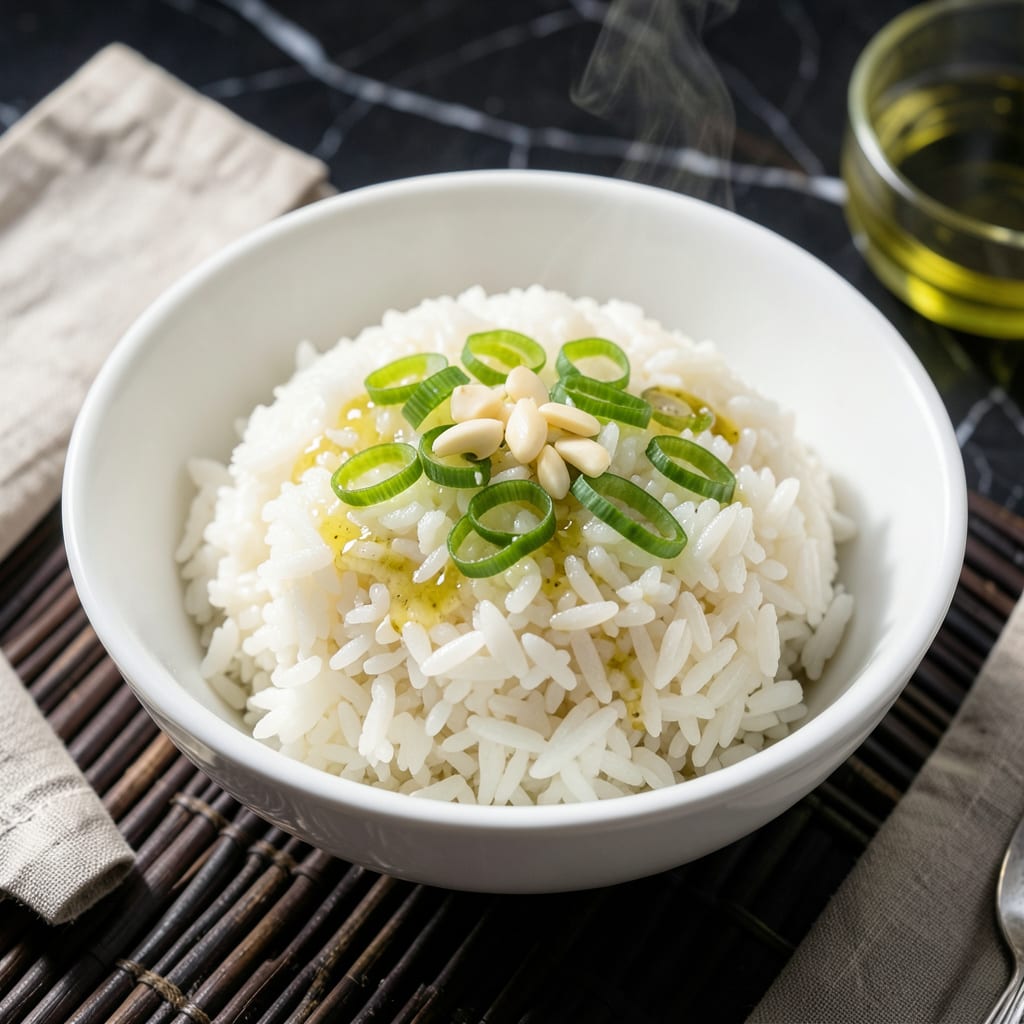
Mastering perfectly fluffy Chinese steamed rice comes down to precise water ratios and gentle heat. This method delivers consistent results with every batch.
Using a rice cooker or steamer basket, the grains absorb just enough moisture to become tender yet distinct. The aroma alone signals you’ve achieved authentic texture and flavor.
Ingredients for Chinese Steamed White Rice
Precise ingredients deliver authentic texture and aroma with every fluffy batch.
| Ingredient | Amount | Notes |
|---|---|---|
| Jasmine Rice 🌾 | 2 cups | Long grain, rinsed thoroughly |
| Water 💧 | 2 ½ cups | Filtered for best results |
| Neutral Oil 🫒 | 1 tsp | Optional, for aroma |
| Salt 🧂 | ½ tsp | Kosher or sea salt |
| Garlic Cloves 🧄 | 2 cloves | Minced, optional for flavor |
| Green Onions 🧅 | 2 whole | Thinly sliced for garnish |
| Sesame Oil 🫒 | 1 tsp | For finishing, optional |
The rice quality is paramount. Jasmine rice from Thai brands like Elephant or Three Ladies yields the most authentic results. Look for unbroken grains and a fresh, slightly floral scent (stale rice smells dusty). Rinse until the water runs clear—this removes excess starch that would make the rice gummy. A rice cooker with a tight-fitting lid ensures even steam distribution.
No jasmine rice? Long-grain white rice works at a 1:1.25 rice-to-water ratio. Skip the oil if you prefer purist steamed rice. For extra fragrance, swap the neutral oil for toasted sesame oil (use sparingly). The garlic is optional but adds depth—freshly minced releases more aroma than powdered. Green onions are traditional but can be omitted.
Uncooked rice stores in an airtight container for 6-12 months. Cooked rice keeps in the fridge for 4-5 days or freezes for 3 months. Reheat with a splash of water to restore moisture. Always use a clean, damp cloth under the lid to catch excess steam and prevent soggy rice.
Why You’ll Love This Recipe
- Set and Forget: I just rinse the jasmine rice, dump it in the pot with water, and let the steam do all the work—no stirring, no fuss.
- Garlic Aroma: The garlic cloves infuse the rice with this subtle, warm fragrance that makes every bite taste like home.
- Pairs With Anything: I serve it under stir-fries, alongside roasted veggies, or even as a simple base for fried eggs on lazy mornings.
- Budget Stretch: A two-pound bag of jasmine rice costs pennies per serving, and leftovers reheat beautifully for days.
Step-by-Step Instructions for Chinese Steamed White Rice
Master this fundamental technique for perfectly fluffy, fragrant rice every time.
Step 1: Rinse and Soak the Jasmine Rice
Place the 2 cups Jasmine Rice in a fine-mesh strainer and rinse under cold running water, gently agitating with your hand. The water should run nearly clear after 3-4 rinses—this removes excess starch that would otherwise make the rice gummy.
Transfer the rinsed rice to a bowl and cover with fresh cold water by 1 inch. Let it soak for 20-30 minutes; this hydrates the grains evenly and prevents cracking during cooking. Drain thoroughly in the strainer before proceeding.
Step 2: Prepare the Aromatics and Rice Cooker
While the rice soaks, mince the 2 cloves Garlic Cloves and thinly slice the 2 whole Green Onions. In a rice cooker pot, combine the drained rice, 2.5 cups Water, 1 tsp Neutral Oil, and 0.5 tsp Salt. Add the minced garlic and stir gently to distribute evenly.
The neutral oil enhances aroma and prevents sticking, while the salt and garlic infuse subtle flavor into each grain. Ensure the water level is even across the pot—tilt it slightly to check for any dry spots before cooking.
Step 3: Cook the Rice to Perfection
Insert the pot into the rice cooker and select the standard white rice setting. Most modern cookers will automatically adjust time and temperature, but expect the cycle to take 20-25 minutes total. Do not open the lid during cooking—releasing steam disrupts the process and can result in uneven texture.
Listen for the cooker’s click to switch to “keep warm” mode. At this point, the rice should have absorbed all the water, and the surface will appear slightly dimpled. Let it steam, covered, for an additional 10 minutes to ensure the grains are fully tender.
Step 4: Fluff and Finish with Aromatic Oils
After steaming, gently fold the rice from the bottom to the top with a rice paddle or large spoon. This separates the grains and releases excess moisture. Drizzle the 1 tsp Sesame Oil over the surface and fold again to coat evenly. The sesame oil adds a nutty depth and glossy sheen.
Sprinkle the sliced green onions on top for a fresh, vibrant finish. The rice should be light and fluffy, with each grain distinct and glistening. Serve immediately while hot, as the texture is best right after cooking.
Pro Tips For Making Chinese Steamed White Rice
- Rinse the Rice: Wash jasmine rice under cold water until it runs clear—this removes excess starch and guarantees fluffy, separate grains. I learned this the hard way after serving mushy rice at a dinner party.
- Soak 30 Minutes: Let the rinsed rice soak in water for at least 30 minutes before steaming. Sounds tedious but it actually changes the outcome—shorter cook time and more even texture.
- Skip the Peek: Resist the urge to lift the lid while steaming—releasing the steam drops the temperature and can leave you with unevenly cooked rice. My grandmother swore by this, and she was right.
- Toast the Garlic: Heat the neutral oil in your steamer or pot, then add crushed garlic cloves for 20-30 seconds until fragrant before adding rice and water. This isn’t the prettiest method, but it’s the tastiest.
Wine and Beer Pairings for This chinese steamed white rice
Light Beer Pairings
I love pairing this dish with a crisp Asian lager like Tsingtao or Sapporo. The light, slightly sweet profile complements the rice’s subtle aroma without overpowering it. The carbonation also cleanses your palate between bites. 🍺
White Wine Options
A chilled Riesling with its mild sweetness and bright acidity works beautifully. Try a German Kabinett for a lighter style or an Alsace Riesling for more body. The citrus notes enhance the rice’s natural fragrance.
Green Tea Harmony
For a non-alcoholic option, Jasmine green tea mirrors the rice’s floral notes. Brew it at 175°F for 2-3 minutes to avoid bitterness. The delicate tea flavor won’t compete with the rice’s simplicity.
Sake Complement
A dry Junmai sake like Dassai offers a clean, crisp pairing. Serve it chilled in small cups to appreciate its subtle rice-based notes. The umami in sake enhances the savory aspects of your meal.
Dark Beer Contrast
For bolder flavors, a German Schwarzbier brings roasted malt notes that contrast nicely with the rice’s purity. The light body prevents it from overwhelming the dish. I find Köstritzer particularly accessible.
Sparkling Water
Sometimes simplicity wins. Try San Pellegrino with a squeeze of lime. The effervescence refreshes your palate, while the lime adds a bright citrus note that pairs well with the rice’s clean taste.
Nutrition Facts
Frequently Asked Questions
What’s the best rice for this method?
Use Jasmine rice for authentic flavor. Thai brands like Elephant or Three Ladies work best. Long-grain white rice can substitute at a 1:1.25 rice-to-water ratio.
Why rinse the rice before cooking?
Rinsing removes excess starch that would make the rice gummy. Stop when the water runs nearly clear, usually after 3-4 rinses. This ensures fluffy, separate grains.
Can I skip the soaking step?
Soaking hydrates the grains evenly and prevents cracking. Without it, you may get uneven texture. Aim for 20-30 minutes in cold water for best results.
How do I fix mushy rice?
Mushy rice usually means too much water. Next time, reduce water slightly and ensure you’re using the correct ratio. Spread cooked rice on a tray to dry out excess moisture.

- 6 Egg Cake Recipe with Oil: Light as Air With Buttery Moisture - October 4, 2026
- 4 Bean Casserole Recipe: One-Pan Heartiness With Smoky Paprika Depth - October 4, 2026
- 3-Ingredient Keto Mug Cake Recipe: Microwave Magic in 2 Minutes - October 4, 2026