
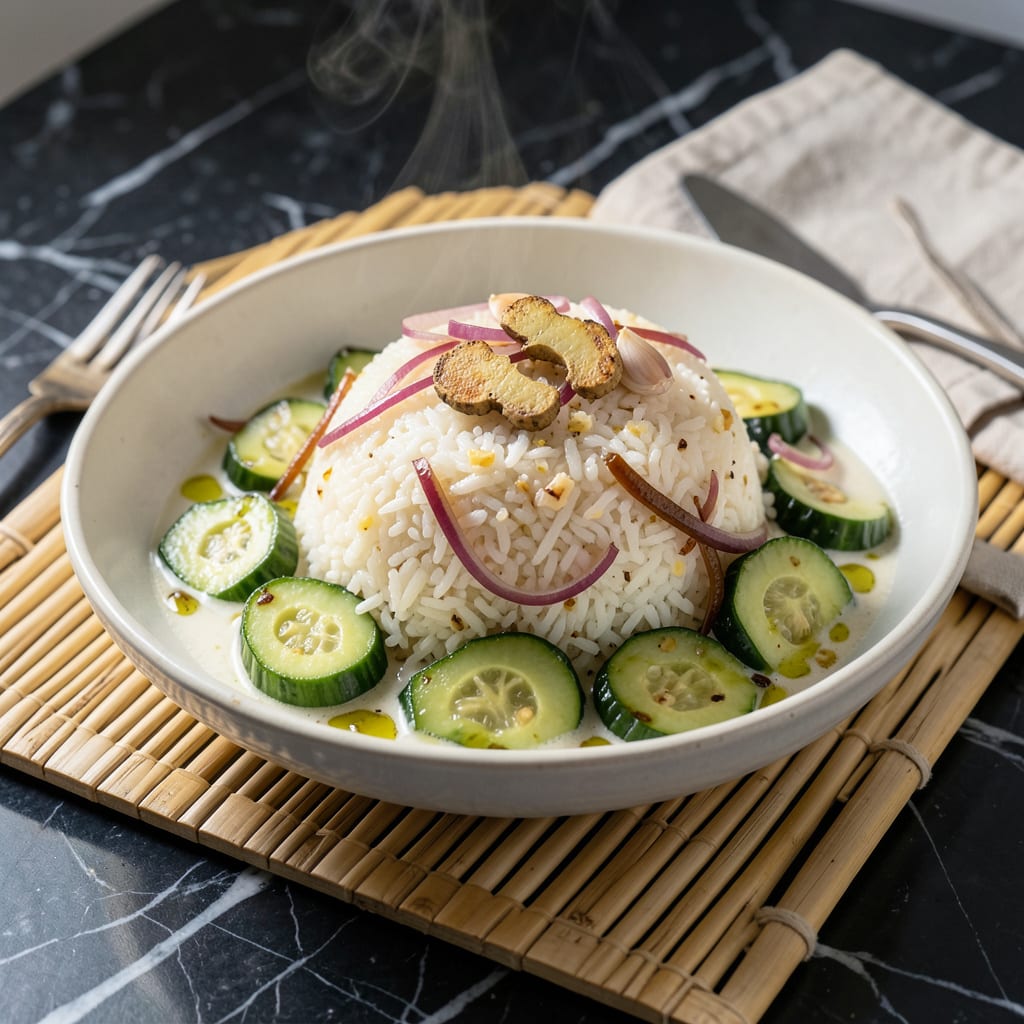
This fragrant Filipino dish transforms humble bitter melon and rice into a comforting one-pot meal. The coconut milk infuses every grain with rich, creamy flavor.
I’ve perfected the balance of bitter and sweet, creating a vegan dish that’s both nourishing and deeply satisfying. Simple ingredients deliver complex taste.
Ingredients for Ding Qua Qua Steamed Rice
Fragrant coconut milk and bitter melon make this one-pot meal deeply satisfying and nourishing.
| Ingredient | Amount | Notes |
|---|---|---|
| Bitter Melon 🥒 | 2 whole | Medium-sized, halved and seeded |
| Jasmine Rice 🍚 | 2 cups | Rinsed until water runs clear |
| Coconut Milk 🥥 | 1 ½ cups | Full-fat for creaminess |
| Red Onion 🧅 | 1 whole | Medium-sized, thinly sliced |
| Garlic Cloves 🧄 | 4 cloves | Minced finely |
| Fresh Ginger 🌿 | 1 tbsp | Peeled and minced |
| Tomatoes 🍅 | 2 whole | Medium-sized, diced |
| Vegetable Broth 💧 | 1 cup | Low-sodium preferred |
| Soy Sauce 🫙 | 2 tbsp | Or tamari for gluten-free |
| Brown Sugar 🍚 | 1 tbsp | Light or dark |
| Salt 🧂 | ½ tsp | To taste |
| Black Pepper 🌶️ | ½ tsp | Freshly ground |
| Olive Oil 🫒 | 2 tbsp | For sautéing aromatics |
Bitter melon is non-negotiable for authentic flavor. Asian markets carry the best selection—look for firm, bright green melons with minimal blemishes. The coconut milk should be full-fat (Thai Kitchen or Native Forest are reliable brands) for that creamy texture. Jasmine rice is traditional, but basmati works if that’s what you have. Rinse it well to remove excess starch.
No bitter melon? Zucchini or green papaya can substitute, though the flavor profile changes. Out of coconut milk? Coconut cream thinned with water at a 1:1 ratio works. For extra depth, add a splash of rice vinegar. The soy sauce can be replaced with coconut aminos for a gluten-free version. Brown sugar can be swapped with coconut sugar.
Leftovers keep well, as the flavors deepen overnight. Store in an airtight container in the fridge for up to 4 days. Reheat gently on the stove with a splash of water to prevent drying out. Freezes beautifully for up to 3 months.
Why You’ll Love This Recipe
- One Pot Wonder: I love that I can dump everything—jasmine rice, coconut milk, bitter melon—into one pot and let the steam do the work.
- Crazy Good Contrast: The bitterness of the melon plays against the creamy coconut rice in a way that’s honestly addictive.
- Meal Prep MVP: This keeps beautifully for days, and the flavors just get richer. I’ll be real: it’s my lunchbox hero.
- Budget Stretcher: A handful of rice and a single bitter melon feeds my whole family. No fancy ingredients, no waste.
Step-by-Step Instructions for Ding Qua Qua Steamed Rice
Master the technique for perfectly balanced flavors and textures in this traditional dish.
Step 1: Prepare and Sauté the Aromatics
Heat the 2 tbsp olive oil in a large pot over medium heat. Add the 1 whole red onion, and sauté for 3-4 minutes until translucent and just beginning to soften at the edges. This builds the flavor base for the entire dish.
Add the 4 cloves garlic cloves and 1 tbsp fresh ginger, stirring constantly for 30-45 seconds until fragrant. Be careful not to let them burn—this would introduce a bitter note to your creation. The aroma should be rich and inviting.
Step 2: Incorporate Bitter Melon and Tomatoes
Add the 2 whole bitter melon (halved, seeded, and sliced) to the pot, stirring to coat in the aromatic oil. Cook for 5 minutes until the edges begin to soften slightly. The bitter melon should retain some firmness at this stage.
Stir in the 2 whole tomatoes and cook for another 2-3 minutes until they begin to break down and release their juices. This creates a flavorful foundation for the rice to absorb during cooking.
Step 3: Toast the Jasmine Rice
Add the 2 cups jasmine rice to the pot, stirring to coat each grain in the oil and aromatics. Toast for 2-3 minutes until the rice becomes slightly translucent at the edges and emits a nutty aroma. This step enhances the depth of flavor in the final dish.
Toasting also helps prevent the rice from becoming mushy during the steaming process. The grains should glisten slightly when ready for the next step.
Step 4: Add Liquids and Seasonings
Pour in the 1.5 cups coconut milk, 1 cup vegetable broth, 2 tbsp soy sauce, 1 tbsp brown sugar, 0.5 tsp salt, and 0.5 tsp black pepper. Stir thoroughly to combine all ingredients and distribute the rice evenly in the liquid.
The liquid should cover the rice by about ½ inch. Bring the mixture to a gentle boil, then reduce heat to low and cover the pot with a tight-fitting lid.
Step 5: Steam to Perfection
Allow the rice to steam undisturbed for 15-18 minutes. Resist the urge to lift the lid—releasing steam will disrupt the cooking process and can result in unevenly cooked rice.
After the time has elapsed, turn off the heat and let the rice sit covered for an additional 5-10 minutes. This final rest allows the grains to absorb any remaining liquid and achieve the ideal tender yet firm texture. Fluff with a fork before serving to separate the grains and release the fragrant coconut aroma.
Pro Tips For Making Ding Qua Qua Steamed Rice
- Parboil the Bitter Melon: Soak bitter melon slices in salted hot water for 10 minutes before cooking—I learned this the hard way after my first few batches came out unpleasantly bitter.
- Toast the Rice First: Lightly toast the jasmine rice in the pot for 2-3 minutes before adding liquids; it brings out a nutty depth that balances the coconut milk’s sweetness.
- Don’t Overcrowd the Steamer: Leave space between rice portions in the steamer or the coconut milk won’t absorb evenly, and you’ll end up with a mushy, uneven texture.
- Use Full-Fat Coconut Milk: After trying the light version, I finally figured out that the full-fat coconut milk is what actually changes the outcome, giving the rice that rich, creamy consistency.
Perfect Pairings for This Dish
Vegetable Sides
Steamed bok choy or baby spinach pairs perfectly with this dish—their mild flavors complement the bold coconut and bitter melon. I toss 4 cups spinach with 1 tsp sesame oil for extra depth. 🥗
Fresh Garnishes
Top your rice with fresh cilantro and thinly sliced scallions for brightness. A squeeze of lime juice adds a zesty contrast to the creamy coconut. I always keep these on hand for last-minute garnishes.
Protein Additions
For non-vegans, grilled shrimp or crispy tofu adds satisfying texture. Marinate 1 lb shrimp in 2 tbsp soy sauce and 1 tbsp garlic before grilling. Tofu should be pressed and pan-fried for best results.
Beverage Pairings
A cold Thai iced tea balances the dish’s bitterness with sweetness. For alcohol, try a crisp Riesling or Sauvignon Blanc—their acidity cuts through the coconut richness beautifully. 🍹
Condiment Options
Serve with sriracha for heat lovers or sweet chili sauce for a sweeter contrast. A side of pickled vegetables adds tangy crunch. I always set out small bowls for customization.
Nutrition Facts
Frequently Asked Questions
How do I reduce the bitterness of the melon?
Soak the slices in salted water for 10-15 minutes before cooking. Rinse well afterward to remove excess salt. This draws out some of the bitterness while keeping the flavor.
Can I use a rice cooker for this?
Yes! Sauté the aromatics in a pan first, then transfer everything to your rice cooker. Use the standard 1:1.5 rice-to-liquid ratio and cook as usual. The result will be just as flavorful.
What if my rice turns out mushy?
This usually means too much liquid or lifting the lid during cooking. Stick to 15-18 minutes of undisturbed steaming with the exact liquid measurements. Resist peeking!

- 6 Egg Cake Recipe with Oil: Light as Air With Buttery Moisture - October 4, 2026
- 4 Bean Casserole Recipe: One-Pan Heartiness With Smoky Paprika Depth - October 4, 2026
- 3-Ingredient Keto Mug Cake Recipe: Microwave Magic in 2 Minutes - October 4, 2026