
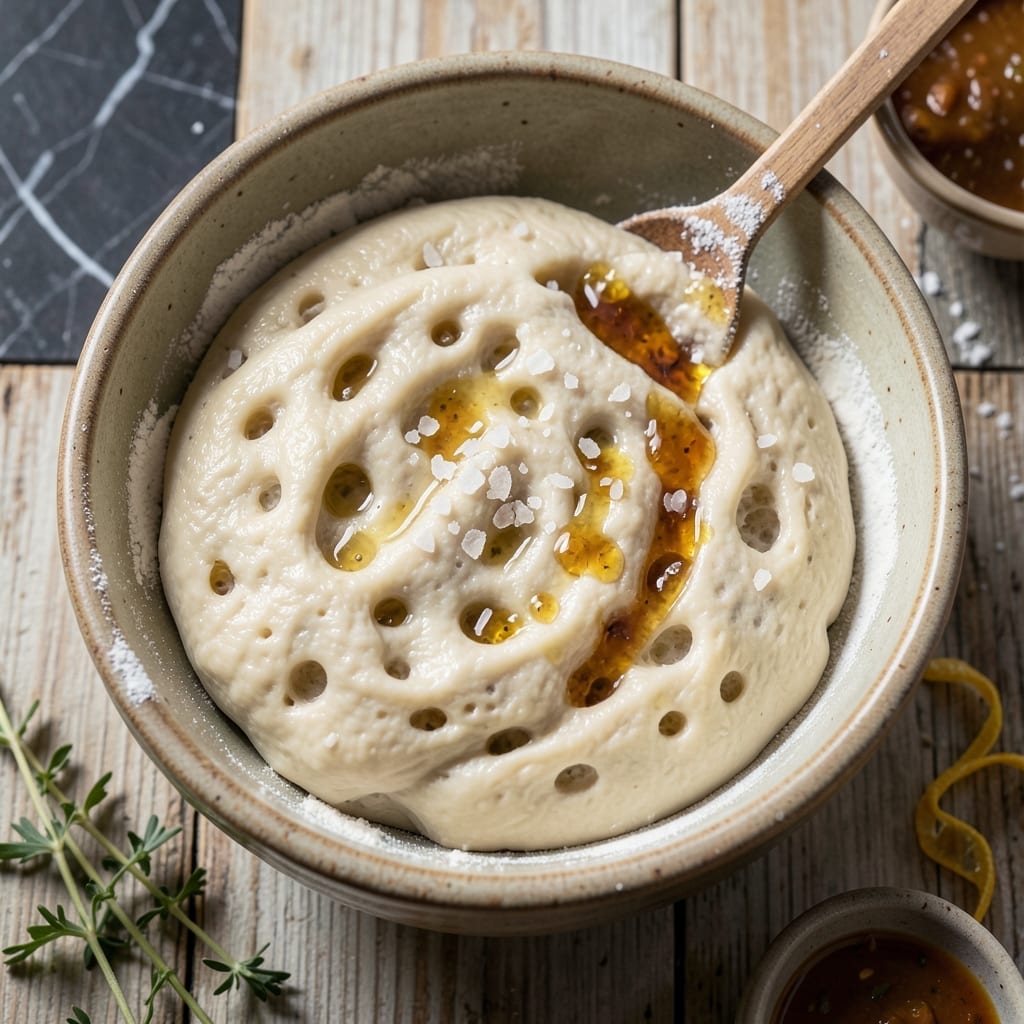
There’s an art to crafting ciabatta that delivers that signature chewy texture and open crumb structure we all love. This recipe focuses on a high-hydration dough and a specific mixing technique to create those characteristic air pockets.
The secret lies in the slow fermentation process, which develops complex flavors while maintaining the light, airy texture. Olive oil enriches the dough, adding depth and a subtle richness that sets this bread apart from standard loaves.
What emerges from the oven is a rustic loaf with a crisp crust and a soft, elastic interior filled with irregular holes. The olive oil contributes to both the flavor and the tender crumb, making every bite satisfying.
Perfect for sandwiches, dipping in olive oil, or enjoying on its own. Here’s how to make this Italian classic at home.
Ingredients for Ciabatta Bread Recipe Jamie Oliver
High-hydration dough meets olive oil richness for that signature airy crumb and chewy bite.
| Ingredient | Amount | Notes |
|---|---|---|
| Bread Flour 🌾 | 4 cups | High-protein for structure |
| Water 💧 | 2 ¼ cups | Room temperature, about 75°F |
| Active Dry Yeast 🍞 | 1 ½ tsp | Or 0.5 tsp instant yeast |
| Sea Salt 🧂 | 2 tsp | Fine grain preferred |
| Extra-Virgin Olive Oil 🫒 | ½ cup | Plus extra for bowl and pan |
| Honey 🍯 | 1 tsp | Optional, helps yeast activation |
| Semolina Flour 🌾 | ½ cup | For dusting work surface |
| All-Purpose Flour 🌾 | ½ cup | For stretching and folding |
| Cornmeal 🌽 | 2 tbsp | For baking sheet dusting |
| Ice Cubes ❄️ | 4 pieces | For steam in oven |
The flour is non-negotiable here. King Arthur Bread Flour (12.7% protein) gives you the structure needed for high-hydration dough. Bob’s Red Mill works too. Yeast freshness matters—check the expiration date and store it in the freezer if you don’t bake often. For olive oil, California Olive Ranch or any good extra-virgin with a fruity finish adds depth to the dough.
No bread flour? All-purpose at a 1:1 ratio works in a pinch, but the crumb won’t be as open. Skip the honey? Sugar or agave at the same amount. The semolina and cornmeal can be swapped for more all-purpose flour, but they add texture. If you’re missing a baking stone, an inverted baking sheet on the oven rack works just as well.
Dough keeps in the fridge for 24-48 hours—actually improves flavor. Baked loaves stay fresh for 2-3 days in a paper bag (never plastic). Freeze slices in a zip-top bag for up to 1 month. Reheat in a 350°F oven for 5-10 minutes to revive.
Why You’ll Love This Recipe
- No-Knead Magic: I love that this recipe skips the tedious kneading—just mix, fold, and let the yeast do its thing.
- Olive Oil Richness: That drizzle of extra-virgin olive oil gives it a golden crust and a depth of flavor that’s honestly hard to beat.
- Sandwich Star: Between us, this ciabatta holds up to anything—from hearty meats to just a smear of butter and jam.
- Budget Baker: Five simple ingredients, and I get two huge loaves that cost pennies compared to store-bought.
Step-by-Step Instructions for Ciabatta Bread
Follow this tested method for a professional-quality loaf with an open crumb and crisp crust.
Step 1: Activate the Yeast and Mix the Dough
In a large mixing bowl, combine the 2.25 cups Water with the 1.5 tsp Active Dry Yeast and 1 tsp Honey. Let it sit for 5-10 minutes until the mixture becomes frothy and cloudy—this confirms the yeast is active and ready to work.
Add the 4 cups Bread Flour and 2 tsp Sea Salt to the bowl. Using a wooden spoon or dough whisk, mix until a shaggy dough forms. It will look rough and sticky at this stage. Pour in the 0.5 cup Extra-Virgin Olive Oil and continue mixing until fully incorporated.
Step 2: Perform Stretch and Folds for Structure
Cover the bowl with a damp towel and let the dough rest for 30 minutes. After resting, sprinkle your work surface with 0.5 cup Semolina Flour to prevent sticking. Wet your hands to handle the sticky dough, then perform a stretch and fold: grab one side of the dough, stretch it up, and fold it over the top.
Rotate the bowl and repeat this process on all four sides. This builds strength in the dough without overworking it. Dust with 0.5 cup All-Purpose Flour as needed to prevent sticking during the folds. Repeat this stretch and fold sequence 3 more times, spacing them 30 minutes apart.
Step 3: Shape and Proof the Dough
After the final fold, let the dough rest for another 30 minutes. Then, transfer it to a work surface dusted with Semolina Flour. Gently shape the dough into a rectangle, about 12×8 inches, being careful not to deflate it. The dough should be soft and slightly sticky.
Place the shaped dough on a baking sheet lined with parchment paper and dusted with 2 tbsp Cornmeal. Cover with a damp towel and let it proof at room temperature for 1-2 hours, or until it has doubled in size and looks puffy with visible air pockets beneath the surface.
Step 4: Bake with Steam for a Crisp Crust
Preheat your oven to 450°F with a baking stone or inverted baking sheet inside. Just before baking, use your fingers to dimple the surface of the dough deeply, creating the signature ciabatta holes. This helps the bread expand properly in the oven.
Slide the dough onto the preheated stone or sheet. Immediately toss the 4 pieces Ice Cubes into a pan on the lower oven rack to create steam. Bake for 20-25 minutes until the crust is deep golden brown and the loaf sounds hollow when tapped on the bottom. The steam ensures a crisp, glossy crust.
Pro Tips For Making Ciabatta Bread Recipe Jamie Oliver
- Use High-Protein Flour: Jamie’s recipe works best with bread flour—its higher protein content gives ciabatta that chewy, open crumb. I learned this the hard way after my first few loaves turned out dense with all-purpose. —
- Let It Rise Longer: Resist the urge to rush the first rise—give it at least 1.5-2 hours at room temp until doubled. Sounds weird, but the extra time develops flavor and that signature airy texture. —
- Wet Your Hands: When shaping the dough, wet your hands thoroughly to prevent sticking—this stuff is sticky. My grandmother swore by this, and she never had dough clinging to her fingers. —
- Bake on a Stone: Plop the dough onto a preheated baking stone or inverted tray for a crispier crust. I was skeptical until I tried it, and now I won’t bake ciabatta any other way.
Creative Variations of These Flavors
Rosemary Garlic Infusion
Add 2 tbsp chopped fresh rosemary and 3 minced garlic cloves to the dough during the final stretch and fold. This creates a fragrant, savory loaf perfect for dipping in olive oil or pairing with Italian dishes. I love this version with roasted vegetables. 🌿
Cheesy Herb Variation
Fold in ½ cup grated Parmesan and 1 tbsp dried oregano during the last stretch and fold. The cheese creates delicious pockets of melted goodness, while the oregano adds an authentic Italian touch. This works especially well for sandwiches.
Olive and Sun-Dried Tomato
Incorporate ½ cup pitted Kalamata olives and ¼ cup chopped sun-dried tomatoes after the second stretch and fold. These add a briny, umami depth that elevates the bread to a meal on its own. Drain the olives and tomatoes well to avoid excess moisture.
Whole Wheat Blend
Replace 1 cup bread flour with 1 cup whole wheat flour for a nuttier, more rustic version. The whole wheat adds fiber and depth while maintaining the open crumb. You may need an extra 1-2 tbsp water to compensate for the drier flour.
This version pairs wonderfully with hearty soups and stews. 💛
Sweet Ciabatta
Reduce the olive oil to ¼ cup and add ¼ cup honey to the dough for a lightly sweet version. This works beautifully for French toast or as a base for fruit-based desserts. The honey also enhances the bread’s golden color.
Nutrition Facts
Frequently Asked Questions
Why is my dough so sticky?
High-hydration dough is naturally sticky—that’s normal! Use wet hands and semolina flour to prevent sticking during handling. Avoid adding extra flour, as it will make the bread dense.
Can I use all-purpose flour instead?
Yes, but bread flour’s higher protein creates better structure. If substituting, expect a slightly tighter crumb. For best results, use at least 3 cups bread flour and 1 cup all-purpose.
How do I know when it’s done?
Look for a deep golden-brown crust and a hollow sound when tapped. The internal temperature should reach 205-210°F. Overbaking dries it out, so check at 20 minutes.
Why didn’t my bread get big holes?
Insufficient proofing or overworking the dough can prevent air pockets. Ensure the dough doubles in size during proofing and avoid kneading—stretch and fold gently.

- 6 Egg Cake Recipe with Oil: Light as Air With Buttery Moisture - October 4, 2026
- 4 Bean Casserole Recipe: One-Pan Heartiness With Smoky Paprika Depth - October 4, 2026
- 3-Ingredient Keto Mug Cake Recipe: Microwave Magic in 2 Minutes - October 4, 2026