
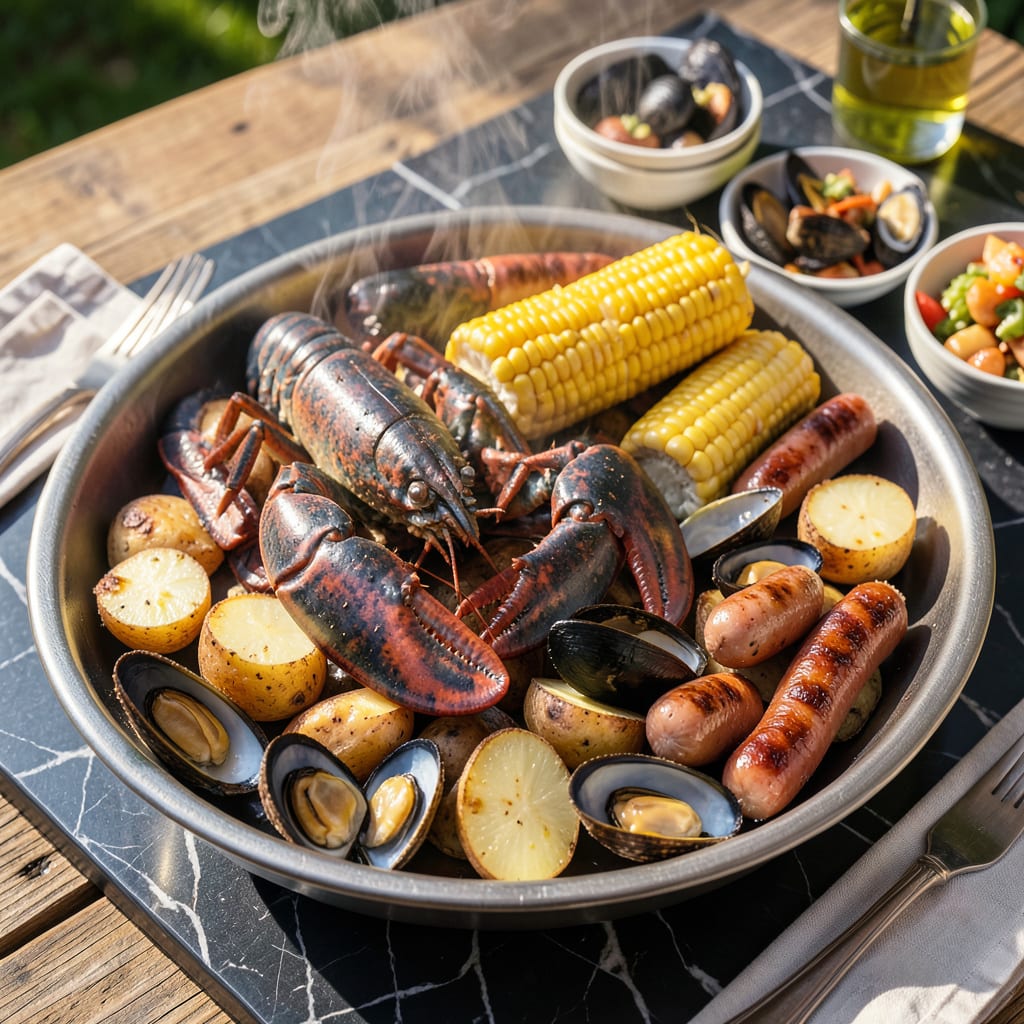
This New England clambake brings the coast to your backyard with a steamer pot full of fresh seafood, corn, and potatoes.
Traditional techniques ensure perfectly cooked lobster, clams, and mussels every time. The result is a feast that captures the essence of a classic seaside gathering.
Ingredients for Clambake Recipe Steamer Pot
Fresh seafood, corn, and potatoes layered in a steamer pot for a coastal feast.
| Ingredient | Amount | Notes |
|---|---|---|
| Live Lobsters 🦞 | 2 whole | 1.5 lb each, hard-shell preferred |
| Fresh Clams 🐚 | 36 whole | Little neck or steamers, scrubbed clean |
| Fresh Mussels 🐚 | 36 whole | De-bearded and cleaned |
| New Potatoes 🥔 | 2 lb | Baby red or Yukon Gold, halved |
| Fresh Corn on the Cob 🌽 | 6 pieces | Husked and halved |
| Smoked Sausage 🌭 | 1 lb | Kielbasa or linguiça, sliced |
| Old Bay Seasoning 🌶️ | ½ cup | Divided for layering |
| Seaweed 🌊 | 1 lb | Fresh or dried kelp |
| Unsalted Butter 🧈 | 1 cup | Melted for serving |
| Fresh Lemon 🍋 | 2 whole | Cut into wedges for serving |
| Fresh Parsley 🌿 | ½ cup | Chopped, for garnish |
| Beer or Seawater 🍺 | 2 cups | For steaming liquid |
| Kosher Salt 🧂 | ¼ cup | For seasoning water |
The lobsters are the star—source them from a reputable seafood market like Whole Foods or a local fishmonger. Look for hard-shell varieties weighing about 1.5 lb each, as they hold up better to steaming. Clams and mussels should be fresh, with tightly closed shells (discard any that are open before cooking). Ipswich or PEI mussels are excellent choices if available.
No live lobster? Frozen lobster tails can work in a pinch, but fresh is ideal for authenticity. For the sausage, linguiça adds a traditional Portuguese flair, but kielbasa is a fine substitute. If seaweed is hard to find, skip it—it adds flavor but isn’t essential. Short on Old Bay? Mix paprika, salt, and cayenne for a quick replacement, though the original is worth keeping on hand.
This is best served immediately, but leftovers (excluding mussels and clams, which don’t reheat well) keep for 2 days in the fridge. The butter and lemon can be prepped ahead and stored separately. For a true clambake experience, serve everything on a large platter lined with newspaper—just like at the shore.
Why You’ll Love This Recipe
- One Pot Wonder: Honestly, everything cooks together in the steamer—lobsters, clams, corn, potatoes—no extra pans, no fuss.
- Ocean in a Bite: That first taste of briny clams and sweet corn with buttery lobster? It’s like summer on the coast in every mouthful.
- Feeds a Hungry Crew: I’ve served this for family reunions and lazy Sundays alike. Between us, it’s the only meal that silences a table of ten.
- Leftover Luxury: The potatoes soak up all the seafood flavor overnight. I’ll be real: sometimes the next-day clam chowder I make from the leftovers is even better.
Step-by-Step Instructions for New England-Style Seafood Feast
Master the layers and timing for a perfectly steamed clambake with professional results.
Step 1: Prepare the Steaming Liquid and Base Layer
In a large steamer pot, combine the 2 cups beer or seawater with the 0.25 cup kosher salt and 0.25 cup Old Bay Seasoning. Bring this to a rolling boil over high heat. The liquid should be aggressively bubbling before adding any ingredients.
While the liquid heats, place the 1 lb seaweed in the bottom of the steamer basket. This creates a natural platform for the other ingredients and infuses the steam with briny flavor. The seaweed should cover the base completely to prevent smaller items from falling through.
Step 2: Layer Potatoes and Sausage for Even Cooking
Arrange the 2 lb new potatoes (halved) directly on top of the seaweed in a single layer. These will take the longest to cook, so they go in first. Sprinkle lightly with some of the remaining Old Bay Seasoning—about 2 tablespoons should suffice.
Place the 1 lb smoked sausage (sliced) on top of the potatoes. The sausage will render its fat during steaming, adding richness to the potatoes below. Ensure pieces are spaced to allow steam circulation. The potatoes should be nearly tender when pierced with a knife before moving to the next layer.
Step 3: Add Corn and Shellfish in Strategic Order
Lay the 6 pieces fresh corn on the cob (halved) over the sausage. The corn will steam perfectly in the time it takes the shellfish to cook. Now comes the critical timing: place the 36 whole fresh clams and 36 whole fresh mussels on top, hinged-side down for clams.
Finally, position the 2 whole live lobsters on the very top. The lobsters will cook through as the steam rises, protecting the more delicate shellfish below. Cover the pot immediately with a tight-fitting lid to trap all steam.
Step 4: Steam to Perfection and Verify Doneness
Steam for 15-20 minutes from the moment the lid is secured. The exact time depends on the size of your lobsters, but you’ll know it’s done when the lobster shells turn bright red and the clams and mussels have fully opened.
Discard any shellfish that remain closed after cooking. The potatoes should be fork-tender, the corn sweet and crisp, and all seafood properly cooked through. The seaweed at the bottom will have infused everything with its oceanic essence.
Step 5: Serve with Traditional Accompaniments
Transfer everything to a large platter or serve directly from the steamer basket. Provide the 1 cup unsalted butter (melted) in small ramekins for dipping, along with the 2 whole fresh lemon (cut into wedges) and 0.5 cup fresh parsley (chopped) for garnish.
The remaining Old Bay Seasoning can be passed at the table for those who want extra spice. Serve immediately while hot, with plenty of napkins and empty bowls for shells. This communal presentation is half the experience of a proper clambake.
Pro Tips For Making Clambake Recipe Steamer Pot
- Layer by Density: Put potatoes and corn on the bottom, shellfish on top—steam rises, so the clams and mussels cook faster while the potatoes soften without turning to mush.
- Purge the Clams: Soak clams in salted water for 20-30 minutes before cooking to get rid of sand; I learned this the hard way after crunching on grit in my first few clambakes.
- Skip the Overcrowding: If you pack the pot too tight, the steam can’t circulate and everything ends up unevenly cooked—give each layer a little breathing room.
- Use Beer or Wine: Instead of plain water, add a bottle of light beer or white wine to the pot; it adds depth to the broth that soaks into every bite.
Flavor Customization for These Flavors
Spice Level Adjustments
For those who love heat, add 1-2 chopped jalapeños or 1 tbsp crushed red pepper flakes to the steaming liquid. This infuses the entire pot with subtle spice. I’ve found that 1 tsp cayenne pepper in the butter creates a perfect kick without overwhelming the seafood. 🌶️
Herb Infusions
Enhance the briny flavors with fresh herbs. Toss 4-5 sprigs of thyme or 2 bay leaves into the steaming liquid. For a Mediterranean twist, add 1 tbsp dried oregano to the Old Bay seasoning blend. These herbs complement the seafood beautifully.
Sausage Variations
Swap the smoked sausage for chorizo to add a smoky, spicy depth. Alternatively, andouille sausage brings a Cajun flair that pairs wonderfully with the shellfish. For a lighter option, use chicken sausage and boost the seasoning with extra Old Bay.
Citrus and Aromatics
Add 2 halved lemons or 1 orange to the steaming liquid for a bright, citrusy note. The acidity cuts through the richness of the seafood. I also love adding 4 smashed garlic cloves to the base layer for an aromatic touch.
Vegetable Additions
For extra color and texture, layer in 1 lb baby carrots or 1 sliced fennel bulb with the potatoes. These vegetables absorb the flavors beautifully and add variety to the spread. Just ensure they’re cut into even pieces for consistent cooking.
Dipping Sauce Upgrades
Beyond melted butter, offer garlic aioli or lemon-dill sauce for dipping. Mix ½ cup mayo with 1 minced garlic clove and 1 tbsp lemon juice for a quick aioli. The sauces elevate the meal and give guests options. 💛
Nutrition Facts
Frequently Asked Questions
Do I need a special pot for this?
A large steamer pot with a basket is ideal, but any tall, wide pot with a tight lid works. Just ensure it can hold all layers without crowding.
Can I use frozen seafood instead?
Fresh is best, but thawed frozen clams and mussels can work. Avoid frozen lobster—it becomes rubbery. Always check shellfish are fully thawed before steaming.
How do I know when everything is done?
Lobsters turn bright red, and all shellfish open completely. Potatoes should pierce easily with a fork, and corn will be tender. Discard any unopened shellfish.
What if my pot isn’t big enough?
Cook in batches, starting with potatoes and sausage, then adding shellfish and lobster last. Keep finished items warm in a low oven while the rest cooks.

- 6 Egg Cake Recipe with Oil: Light as Air With Buttery Moisture - October 4, 2026
- 4 Bean Casserole Recipe: One-Pan Heartiness With Smoky Paprika Depth - October 4, 2026
- 3-Ingredient Keto Mug Cake Recipe: Microwave Magic in 2 Minutes - October 4, 2026