
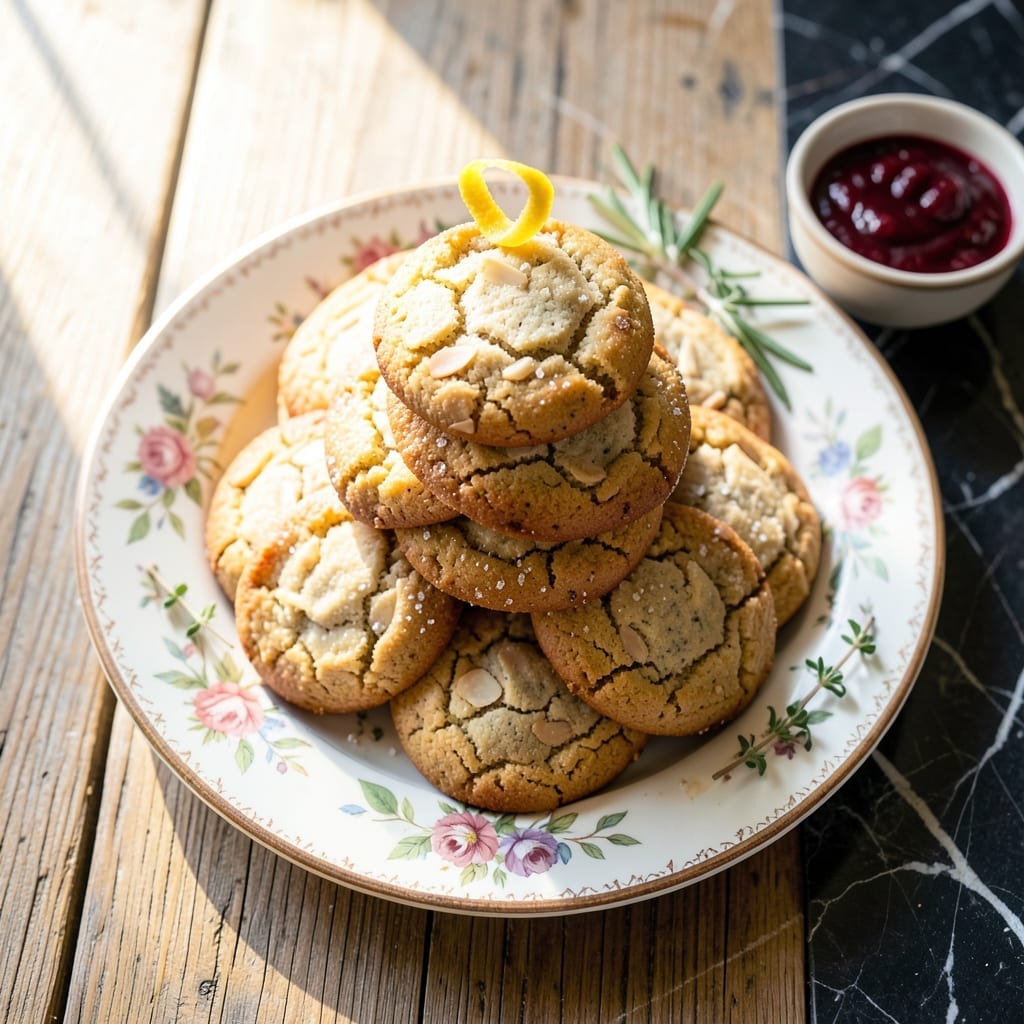
This almond flour cookie recipe delivers sugar-free sweetness without sacrificing flavor or texture. The natural richness of almonds creates a buttery base that pairs perfectly with your preferred low-glycemic sweetener.
Each bite offers the comforting satisfaction of a classic cookie, with the added benefit of being diabetic-friendly. The recipe maintains the chewy edges and tender centers you expect from traditional versions.
Ingredients for Cookie Recipe for Diabetics
Almond flour and low-glycemic sweeteners create a diabetic-friendly treat with classic cookie texture and taste.
| Ingredient | Amount | Notes |
|---|---|---|
| Almond Flour 🌰 | 2 ½ cups | Blanched, fine ground preferred |
| Erythritol 🍬 | ¾ cup | Granulated, zero-calorie sweetener |
| Unsalted Butter 🧈 | ½ cup | Melted and cooled slightly |
| Large Egg 🥚 | 1 whole | Room temperature for best texture |
| Vanilla Extract 🌿 | 1 tsp | Pure extract, not imitation |
| Baking Soda 🧂 | ½ tsp | Ensures proper rise |
| Salt 🧂 | ¼ tsp | Fine sea salt preferred |
| Sugar-Free Chocolate Chips 🍫 | ½ cup | Lily’s or similar brand |
| Chopped Almonds 🌰 | ¼ cup | Lightly toasted for crunch |
| Almond Extract 🌰 | ¼ tsp | Optional, enhances almond flavor |
The almond flour is critical—Bob’s Red Mill or King Arthur brands deliver consistent fine texture. Erythritol provides the sugar-free sweetness without aftertaste, available at Whole Foods or online. For the butter, organic unsalted gives the cleanest almond-forward flavor. Always check that your chocolate chips are truly sugar-free, as some brands add hidden sugars.
No erythritol? Monk fruit sweetener at a 1:1 ratio works equally well. Almond flour can’t be swapped for coconut flour due to moisture differences, but sunflower seed flour is a good nut-free alternative. The egg binds everything—flax egg (1 tbsp ground flax + 3 tbsp water) can substitute if needed, though texture may vary slightly.
Store cookies in an airtight container at room temperature for up to 5 days. For longer storage, freeze for 3 months—they’ll stay fresh and maintain their chewy texture. The dough itself can be refrigerated for 24 hours before baking if you want to prep ahead.
Why You’ll Love This Recipe
- One Bowl Wonder: I just dump the almond flour, erythritol, butter, egg, and vanilla in one bowl—no mixer, no fuss.
- Buttery Vanilla Magic: The unsalted butter and vanilla extract give these cookies that warm, rich flavor without any sugar crash.
- Crowd Pleaser: Honestly, even my non-diabetic friends devour these. Perfect for parties or a quiet treat with tea.
- Stays Fresh: They stay soft for days in an airtight container—no sad, stale cookies here.
Step-by-Step Instructions for Sugar-Free Almond Flour Cookies
This method delivers perfectly textured cookies with rich flavor and no added sugar.
Step 1: Cream Butter and Sweeteners
In a large mixing bowl, beat the 0.5 cup Unsalted Butter with the 0.75 cup Erythritol until light and fluffy, about 2-3 minutes on medium speed. The mixture should appear pale and slightly aerated, which creates the base for tender cookies.
This step is crucial for proper texture—under-creaming results in dense cookies. I always scrape the bowl halfway through to ensure even mixing.
Step 2: Incorporate Wet Ingredients
Add the 1 whole Large Egg, 1 tsp Vanilla Extract, and 0.25 tsp Almond Extract to the butter mixture. Beat on low for 30 seconds until fully emulsified. The egg should be room temperature to prevent the butter from seizing up.
Watch for the mixture to take on a smooth, glossy appearance. If it looks separated, continue mixing for another 10-15 seconds—this ensures a uniform batter.
Step 3: Combine Dry Ingredients and Fold
In a separate bowl, whisk together the 2.5 cups Almond Flour, 0.5 tsp Baking Soda, and 0.25 tsp Salt. Gradually add this to the wet ingredients, mixing just until combined. Almond flour is dense, so avoid overmixing to prevent toughness.
Fold in the 0.5 cup Sugar-Free Chocolate Chips and 0.25 cup Chopped Almonds by hand with a spatula. The dough will be thick and slightly sticky—this is normal for almond flour batters.
Step 4: Chill and Portion Dough
Cover the dough and refrigerate for 30-45 minutes. Chilling firms the dough, making it easier to handle and preventing excessive spreading during baking. This step also allows the almond flour to fully hydrate.
Using a cookie scoop or spoon, portion the dough into 1.5-tablespoon balls (about the size of a golf ball) and place them 2 inches apart on a parchment-lined baking sheet. Flatten slightly with your palm—they won’t spread much on their own.
Step 5: Bake to Golden Perfection
Preheat your oven to 350°F. Bake the cookies for 10-12 minutes until the edges are just beginning to turn light golden brown. Almond flour burns easily, so start checking at 9 minutes.
Let the cookies cool on the baking sheet for 5 minutes before transferring to a wire rack. They’ll firm up as they cool. The centers should remain soft with a delicate crumb—perfect for a sugar-free treat that doesn’t compromise on taste or texture.
Pro Tips For Making Cookie Recipe For Diabetics
- Chill the Dough: After mixing, refrigerate the dough for 20-30 minutes—almond flour cookies spread less and hold their shape better when cold.
- Toast the Almond Flour: Spread almond flour on a baking sheet and toast at 350°F for 5-7 minutes until lightly golden. It deepens the nutty flavor and removes any raw taste.
- Skip Cold Butter: Use room-temperature butter, about 65-68°F, so it creams smoothly with erythritol. Cold butter leaves lumps, and melted butter flattens the cookies too much.
- Check at 10 Minutes: Almond flour burns faster than regular flour, so start checking for golden edges at 10 minutes. They’ll firm up as they cool, so pull them out a shade lighter than you think.
Serving Suggestions for cookie recipe for diabetics
🥘 Plating Styles
For a casual presentation, arrange your sugar-free cookies on a rustic wooden board or a simple white platter. This works well for family gatherings or a cozy afternoon snack. For a formal setting, use a tiered serving tray lined with parchment paper to create an elegant display. If serving at a buffet, place cookies in small baskets or on decorative stands for easy access.
🎯 Garnishing Techniques
Enhance the visual appeal with a light dusting of powdered erythritol or a drizzle of sugar-free chocolate for a touch of sophistication. Fresh berries like raspberries or strawberries add a pop of color and a hint of natural sweetness. For a festive touch, sprinkle with chopped nuts or shredded coconut.
✨ Portion Sizes
For individual servings, offer 1-2 cookies per person to keep portions controlled and blood sugar-friendly. If serving family-style, arrange a dozen cookies on a platter and let guests help themselves. Smaller, bite-sized cookies are ideal for parties, while larger cookies work well for a satisfying dessert.
🌡️ Serving Temperature
These cookies are best enjoyed at room temperature, allowing the flavors to fully develop. If stored, let them rest for 10-15 minutes after baking to firm up before serving. For a warm treat, briefly reheat in the oven at 300°F for 5 minutes, but avoid over-baking to maintain their soft texture.
Nutrition Facts

- 6 Egg Cake Recipe with Oil: Light as Air With Buttery Moisture - October 4, 2026
- 4 Bean Casserole Recipe: One-Pan Heartiness With Smoky Paprika Depth - October 4, 2026
- 3-Ingredient Keto Mug Cake Recipe: Microwave Magic in 2 Minutes - October 4, 2026