
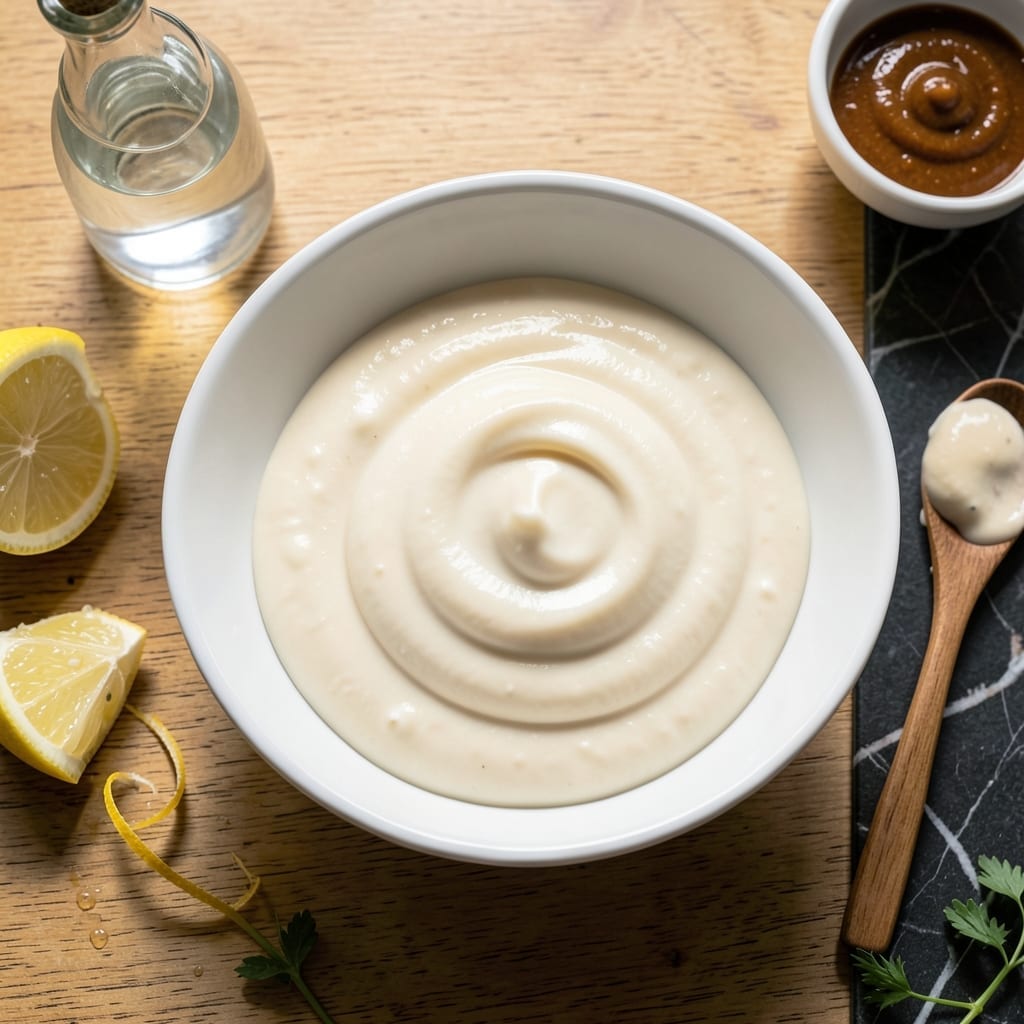
There’s a reason Duke’s mayonnaise has such a devoted following in the South—its perfect balance of tang and creaminess is unmatched. This homemade version captures that signature flavor without any preservatives or additives.
The secret lies in using fresh egg yolks and the right ratio of vinegar to mustard. I’ve tested countless variations to nail the tangy taste that makes this mayonnaise so special. The process is simpler than you might think.
What you’ll get is a smooth, rich condiment that elevates sandwiches, salads, and dips. It keeps beautifully in the fridge for up to two weeks, so you can always have that Southern flavor on hand.
No special equipment required—just a whisk and a little patience. Here’s how to make it.
Ingredients for Copycat Duke’s Mayonnaise
Seven simple ingredients recreate that signature Southern tang everyone loves so much.
| Ingredient | Amount | Notes |
|---|---|---|
| Large Egg Yolks 🥚 | 2 whole | Fresh, room temperature preferred |
| Dijon Mustard 🟡 | 1 tsp | Smooth, not grainy variety |
| White Vinegar 💧 | 2 tbsp | Distilled for clean flavor |
| Lemon Juice 🍋 | 1 tbsp | Freshly squeezed preferred |
| Neutral Oil 🫒 | 1 ½ cups | Light olive or avocado oil |
| Granulated Sugar 🍚 | ½ tsp | Fine white sugar works best |
| Kosher Salt 🧂 | ½ tsp | Diamond Crystal preferred for texture |
The egg yolks are non-negotiable here—fresh, high-quality eggs make all the difference in texture and flavor. I get mine from local farmers markets when I can (the yolks are richer, more vibrant). The mustard needs to be Dijon for that sharp tang that balances the creaminess. For the oil, any neutral variety works, but avoid strongly flavored oils like extra-virgin olive oil (it’ll overpower the delicate taste).
No Dijon? Yellow mustard at half the amount gets you close, though the flavor won’t be as complex. The vinegar can be apple cider vinegar for a slightly fruitier note. If you’re out of fresh lemon juice, bottled works (but fresh is brighter). The sugar is optional if you prefer a less sweet mayo—just reduce to a pinch or omit entirely.
This keeps beautifully in the fridge for about 2 weeks. Store it in a clean jar with a tight lid. The flavor actually improves after a day or two as it melds. Don’t leave it out at room temperature for more than 2 hours (safety first).
Why You’ll Love This Recipe
- No Fuss Blending: I just dump egg yolks, Dijon, and vinegar in the blender, then slowly drizzle in the oil—no whisking arm cramps here.
- Tangy Kick: That sharp pop of lemon juice and Dijon gives it that signature Duke’s zing I crave on sandwiches.
- Endless Uses: Honestly, I slather it on burgers, mix into potato salad, even use it as a base for dressings.
- Pantry Staples: Between us, I always have these ingredients on hand, so I can make fresh mayo whenever the mood strikes.
Step-by-Step Instructions for Tangy Southern Mayonnaise
This method delivers that signature creamy texture and bright tang you expect from the classic.
Step 1: Whisk the Yolks and Mustard
In a medium bowl, add the 2 whole Large Egg Yolks and 1 tsp Dijon Mustard. I always use room temperature yolks—they emulsify more readily and create a smoother base. Whisk vigorously for 30-45 seconds until the mixture becomes pale yellow and slightly thickened.
The mustard acts as an emulsifier, helping bind the oil and liquids together. Don’t skip this step—it’s the foundation for a stable mayo. You’ll notice the color lighten as air incorporates, which is exactly what you want.
Step 2: Combine Acidic Liquids and Sweeten
In a small bowl, whisk together the 2 tbsp White Vinegar, 1 tbsp Lemon Juice, 0.5 tsp Granulated Sugar, and 0.5 tsp Kosher Salt. The sugar balances the acidity, and the salt enhances the flavors. Stir until the sugar and salt fully dissolve—this takes about 1 minute.
I prefer distilled white vinegar for its clean, sharp flavor, but any white vinegar will work. The lemon juice adds brightness, which is key to that signature tang. Pour this mixture into the egg yolk base and whisk for another 20-30 seconds to combine.
Step 3: Slowly Add the Oil
Here’s the most critical part: adding the 1.5 cups Neutral Oil. Start with 1 tablespoon at a time, whisking constantly until each addition is fully incorporated. The mixture will begin to thicken and turn opaque as the emulsion forms.
Once about ¼ cup has been added and the mixture looks stable, you can increase to a thin, steady stream while whisking vigorously. Keep the bowl steady—I like to place it on a damp towel to prevent slipping. If the mayo starts to separate, stop adding oil and whisk until it comes back together before continuing.
Step 4: Adjust Consistency and Flavor
After all the oil is incorporated, you’ll have a thick, creamy mayonnaise. Taste and adjust if needed—I sometimes add a pinch more salt or a splash more lemon juice to brighten the flavor. If it’s too thick, whisk in 1 teaspoon of water at a time until it reaches your desired consistency.
This is where you ensure it’s perfect. The texture should be smooth and spreadable, not runny or greasy. If you’ve added the oil too quickly and it breaks, don’t panic—whisk in 1 teaspoon of hot water and it should come back together.
Transfer to a jar, seal, and refrigerate for at least 1 hour before using to let the flavors meld. It will keep for up to 1 week in the fridge.
Pro Tips For Making Copycat Duke’S Mayonnaise
- Room Temp Yolks: Pull your egg yolks out of the fridge 30 minutes before starting—cold yolks resist emulsifying, and I learned this the hard way after three failed batches.
- Drizzle Slowly: Add the oil in a thin, steady stream, especially at the beginning. I was skeptical until I tried it, but this actually changes the outcome from broken mess to creamy perfection.
- Acid Balance: Use exactly 1 tablespoon each of white vinegar and lemon juice—the combo mimics Duke’s tang. Skip the extra lemon; it throws off the flavor.
- Neutral Oil Only: Stick to a light oil like avocado or canola. I tried olive oil once, and the mayo turned bitter—lesson learned.
Make-Ahead Tips for This Recipe
Prep Ahead for Best Results
I always set my 2 egg yolks out 30 minutes before starting—they emulsify better at room temperature. Measure all your liquids and dry ingredients beforehand so you can focus solely on whisking during the critical oil addition phase. 💡
Storage Container Choice
Use a clean 16-ounce mason jar with a tight-fitting lid for storage. The glass won’t absorb odors, and you can see the beautiful creamy texture through the sides. I label mine with the date using a chalkboard marker for easy tracking.
Fridge Life Expectancy
Your mayo will stay fresh for up to 2 weeks in the refrigerator. The flavor actually improves after 24-48 hours as the ingredients meld together. Always use a clean, dry spoon when scooping to prevent contamination.
Doubling the Batch
This recipe scales perfectly if you want to make more. Simply double all ingredients and use a larger bowl. The key is maintaining the slow oil addition—don’t rush it even with larger quantities. I find a stand mixer with whisk attachment helpful for bigger batches.
Freezing Not Recommended
Mayonnaise doesn’t freeze well—the emulsion can separate, and the texture becomes grainy. If you end up with too much, share it with neighbors or use it in recipes like potato salad where the texture is less critical. 🥗
Quick Revival Tip
If your mayo has been in the fridge and seems thick, let it sit at room temperature for 10-15 minutes before using. A quick whisk with 1 tsp warm water can restore its creamy consistency if needed.
Nutrition Facts
Frequently Asked Questions
Why use Dijon mustard instead of regular?
Dijon has a sharper, more complex flavor that perfectly balances the tang. Regular yellow mustard works in a pinch but may taste slightly sweeter. The key is its emulsifying power to bind the ingredients.
Can I substitute the vinegar?
Apple cider vinegar adds a fruitier note, but stick to white vinegar for the closest match. The acidity level is crucial for flavor and preservation. Avoid balsamic—it’s too strong.
What if my mayo breaks while whisking?
Don’t worry! Stop adding oil and whisk in 1 tsp hot water. This usually re-emulsifies the mixture. If needed, start over with a fresh yolk and slowly whisk in the broken mayo.
How can I make it thicker?
Whisk in 1 tsp more oil at a time until reaching your preferred consistency. For a lighter texture, add a splash of water instead. The emulsion should hold firmly.

- 6 Egg Cake Recipe with Oil: Light as Air With Buttery Moisture - October 4, 2026
- 4 Bean Casserole Recipe: One-Pan Heartiness With Smoky Paprika Depth - October 4, 2026
- 3-Ingredient Keto Mug Cake Recipe: Microwave Magic in 2 Minutes - October 4, 2026