
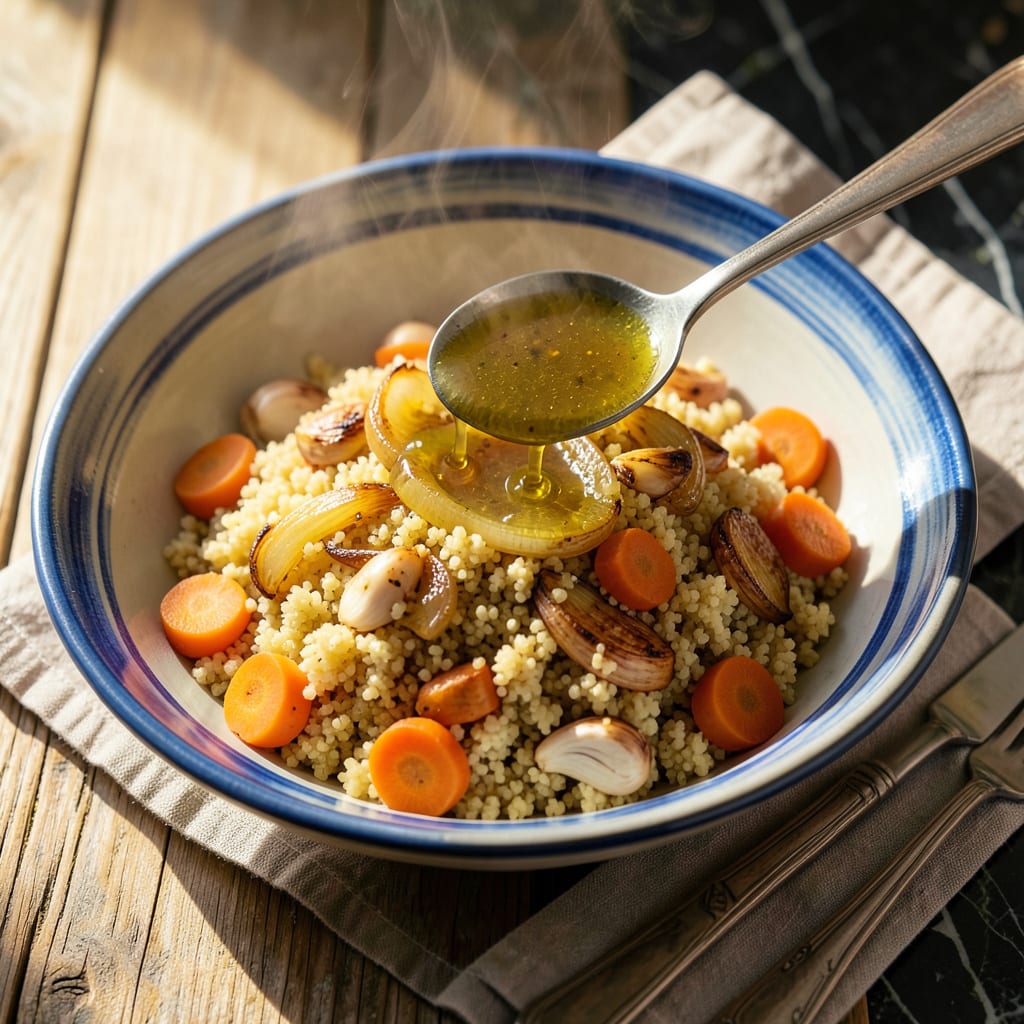
Couscous doesn’t have to be boring—this method transforms simple pantry staples into a vibrant, restaurant-worthy dish in just 15 minutes. Inspired by Jamie Oliver’s approach to bold flavors, this recipe focuses on proper technique and smart seasoning to deliver perfectly fluffy grains every time.
The secret lies in blooming the couscous in hot, flavorful broth rather than plain water, then letting it steam off-heat. A quick sauté of aromatic vegetables and a bright lemon-herb finish elevate this from side dish to centerpiece. It’s the kind of versatile recipe that works as a base for proteins or stands alone as a satisfying vegetarian meal.
Ingredients for Couscous Recipe Jamie Oliver
Transform pantry staples into restaurant-quality couscous with these carefully selected ingredients for maximum flavor impact.
| Ingredient | Amount | Notes |
|---|---|---|
| Couscous 🌾 | 1 ½ cups | Medium or fine grain preferred |
| Vegetable Broth 🍲 | 2 cups | Low-sodium for better control |
| Extra-Virgin Olive Oil 🫒 | 3 tbsp | Divided for cooking and finishing |
| Yellow Onion 🧅 | 1 whole | Finely diced for even cooking |
| Garlic Cloves 🧄 | 3 cloves | Minced for aromatic base |
| Carrot 🥕 | 1 whole | Small dice for texture |
| Zucchini 🥒 | 1 whole | Medium dice for balance |
| Ground Cumin 🌿 | 1 tsp | Toasted for depth of flavor |
| Ground Coriander 🌿 | 1 tsp | Freshly ground optimal |
| Turmeric 🌶️ | ½ tsp | For vibrant color and warmth |
| Fresh Flat-Leaf Parsley 🌿 | ½ cup | Chopped for bright finish |
| Fresh Mint Leaves 🌿 | ¼ cup | Torn for delicate flavor |
| Lemon 🍋 | 1 whole | Zested and juiced |
| Salt 🧂 | 1 tsp | Diamond Crystal kosher preferred |
| Black Pepper 🌶️ | ½ tsp | Freshly cracked for best flavor |
The couscous quality determines final texture. Opt for medium or fine grain from brands like Near East or Bob’s Red Mill—avoid instant varieties as they yield mushy results. Vegetable broth forms the flavor foundation; Better Than Bouillon paste diluted to 2 cups provides superior depth compared to canned. Olive oil selection matters: California Olive Ranch or Colavita offer consistent quality for both cooking and finishing. Fresh herbs are non-negotiable—flat-leaf parsley and mint must be vibrant green without wilting for optimal bright finish.
Substitutions require careful balance. Chicken broth can replace vegetable broth if dietary restrictions permit, though it alters the vegetarian profile. Zucchini may be swapped for eggplant or bell peppers at equal volume, adjusting dice size to maintain even cooking. For spice variations, fennel seeds at half the cumin quantity add complexity, while smoked paprika introduces depth. Lemon may be supplemented with preserved lemon paste at 1 teaspoon for intensified citrus notes without excess liquid.
Storage demands attention to moisture control. Uncooked couscous keeps in an airtight container for 6-12 months in a cool pantry. Prepared couscous holds 4-5 days refrigerated but benefits from reheating with a splash of broth to restore fluffiness. Fresh herbs maintain integrity when wrapped in damp paper towels and sealed for 5-7 days. Spices retain potency longest when stored in opaque containers away from direct light and heat sources.
Why You’ll Love This Recipe
- No Boiling Required: I love that this couscous cooks in minutes just by soaking in hot veg broth—no watching pots or worrying about overcooking. The steam does all the work while I focus on sizzling the onions and garlic in that glorious olive oil.
- Garlic-Infused Comfort: That first bite where the crispy golden garlic hits the fluffy couscous? Ridiculously good. The olive oil carries all those savory notes from the onions straight into every grain, making it taste way fancier than the effort involved.
- My Lunchbox Hero: Between us, this makes the best meal-prep base. I’ll toss in roasted veggies one day, chickpeas the next, and it never gets boring. The flavors actually improve overnight—like it was meant to be packed for work.
- Pantry Magic: Five core ingredients, most of which I always have on hand. Honestly, it’s saved me more than once when I’m staring at an almost-empty fridge. A box of couscous, some broth, and that trusty olive oil? Dinner’s sorted.
Instructions
This streamlined method delivers perfectly fluffy couscous with vibrant vegetables and aromatic spices in record time.
Step 1: Bloom the Spices and Sauté Aromatics
Heat 1 tablespoon of the extra-virgin olive oil in a medium saucepan over medium heat. Add the ground cumin, ground coriander, and turmeric, stirring constantly for 30-45 seconds until the spices become fragrant and slightly darker in color. This toasting process intensifies their flavors and creates a warm, aromatic foundation for the dish.
Immediately add the finely diced yellow onion and cook for 3-4 minutes until translucent and softened. Stir in the minced garlic cloves and cook for an additional 30 seconds until fragrant but not browned. The garlic should release its aroma without developing any color, which would make it bitter.
Step 2: Cook the Vegetables to Perfect Texture
Add the small-diced carrot to the pan and cook for 2 minutes, stirring occasionally. The carrots should begin to soften but retain some bite. Then incorporate the medium-diced zucchini and cook for another 2-3 minutes until both vegetables are tender-crisp.
Season the vegetable mixture with ½ teaspoon salt and ¼ teaspoon black pepper. This initial seasoning builds flavor layers in the vegetables. The vegetables should be vibrant in color and slightly caramelized at the edges, indicating they’ve developed good flavor through proper browning.
Step 3: Hydrate the Couscous with Flavorful Broth
Pour in the 2 cups vegetable broth and bring the mixture to a gentle boil over medium-high heat. Once boiling, immediately remove the pan from the heat and stir in the 1.5 cups couscous. The liquid should just cover the couscous with a thin layer visible above it.
Cover the pan with a tight-fitting lid and let it stand undisturbed for 5 minutes. This steaming process allows the couscous to absorb all the liquid and swell to its full size. After the resting time, the couscous should be tender with no remaining liquid at the bottom of the pan.
Step 4: Fluff and Finish with Fresh Elements
Remove the lid and use a fork to gently fluff the couscous, breaking up any clumps and distributing the vegetables evenly throughout. Drizzle with the remaining 2 tablespoons extra-virgin olive oil and add the zest of the lemon and 1 tablespoon lemon juice. This brightens the dish and adds a fresh, citrusy dimension.
Fold in the chopped fresh flat-leaf parsley and torn fresh mint leaves, reserving a small amount for garnish. The herbs should be distributed evenly but still visible as distinct green flecks throughout the couscous. Taste and adjust the final seasoning with the remaining ½ teaspoon salt and ¼ teaspoon black pepper if needed.
Step 5: Rest and Serve for Optimal Texture
Transfer the couscous to a serving platter and let it rest for 2-3 minutes before serving. This brief resting period allows the flavors to meld and the grains to achieve their final, ideal texture. The couscous should appear light and separate, with each grain distinct yet part of the cohesive whole.
Garnish with the reserved herbs and additional lemon wedges if desired. Serve immediately while warm, when the textures are at their peak—the couscous fluffy, the vegetables tender-crisp, and the herbs vibrant. The dish should present with golden flecks from the turmeric, bright green herbs, and the colorful vegetables distributed throughout.
Storing and Reheating This couscous recipe jamie oliver
Short-Term Refrigeration
After cooking, let the couscous cool completely—about 30 minutes at room temperature—before transferring to an airtight container. I use glass containers with snap-tight lids to prevent moisture buildup. Properly stored, this dish keeps beautifully in the fridge for 4-5 days, though I find the flavors peak within 2 days. ✨
Freezing for Longer Storage
For meal prep, portion cooled couscous into freezer-safe bags, squeezing out excess air before sealing. It freezes well for up to 3 months without texture loss. My trick: freeze in 1-cup portions on a tray first, then transfer to bags. This prevents clumping and lets you grab exactly what you need later.
Stovetop Reheating Method
Place refrigerated couscous in a skillet with 2 tablespoons water or broth over medium-low heat. Cover and warm for 3-4 minutes, stirring occasionally. The steam revives the grains beautifully. For frozen portions, thaw overnight in the fridge first, then reheat with an extra splash of liquid.
Microwave Revival Technique
Transfer couscous to a microwave-safe dish and sprinkle with 1 tablespoon water. Cover loosely with a damp paper towel and heat on 50% power for 1-2 minutes, then fluff with a fork. This gentle approach prevents the grains from turning rubbery. I always check halfway to adjust timing.
Texture Restoration Tips
If your reheated couscous seems dry, stir in 1 teaspoon olive oil and a splash of warm broth. For extra fluffiness, spread it on a baking sheet and warm at 300°F for 5 minutes. The herbs may dull in color, so I often add fresh parsley or mint after reheating for that just-made brightness.
Make-Ahead Strategy
Prepare the vegetable-spice base a day ahead and store separately from the uncooked couscous. When ready, simply heat the broth mixture, add couscous, and proceed with the recipe. This method preserves the ideal texture while letting flavors develop overnight. I use this trick for dinner parties—it’s a game-changer for stress-free hosting. 💡
Nutrition Facts

- 6 Egg Cake Recipe with Oil: Light as Air With Buttery Moisture - October 4, 2026
- 4 Bean Casserole Recipe: One-Pan Heartiness With Smoky Paprika Depth - October 4, 2026
- 3-Ingredient Keto Mug Cake Recipe: Microwave Magic in 2 Minutes - October 4, 2026