
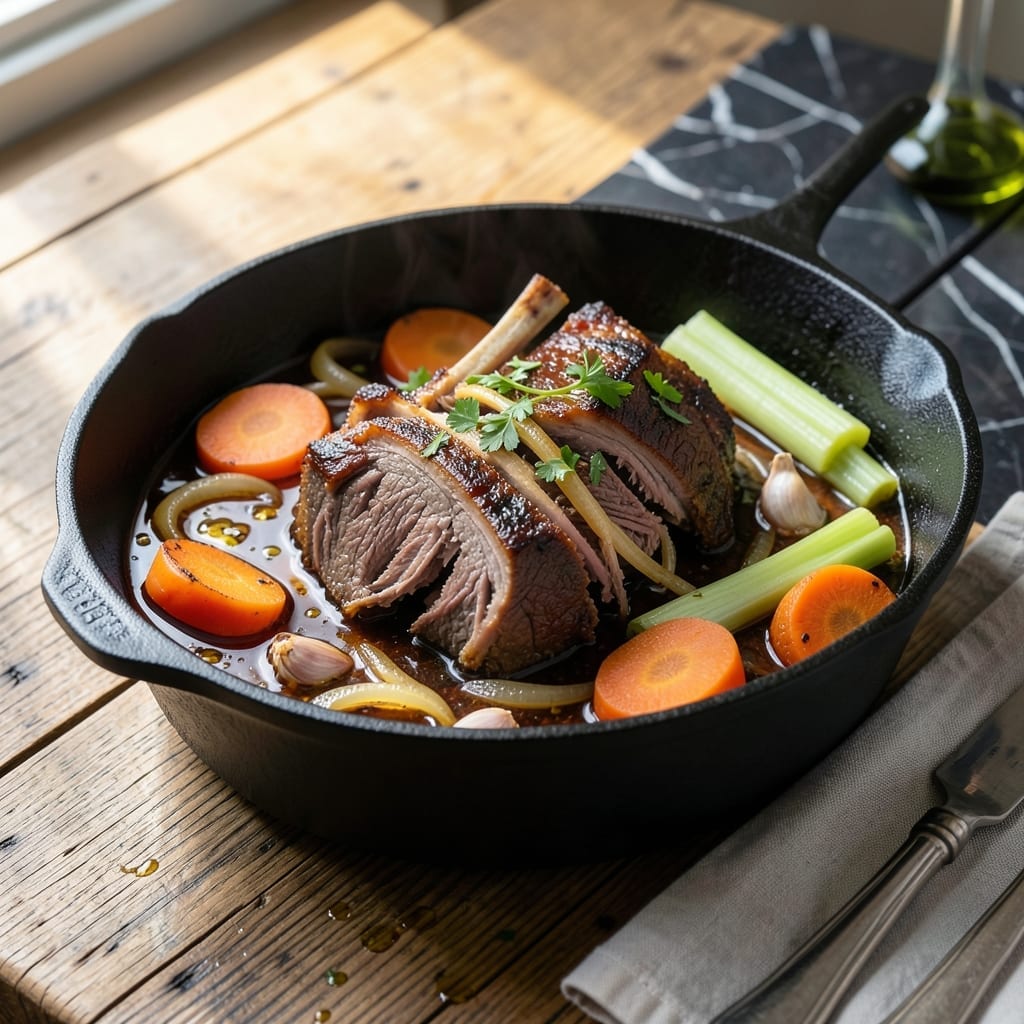
Cross-cut shank delivers unmatched depth of flavor, with rich marrow and collagen that transforms into velvety gravy during slow cooking. This cut rewards patience with fall-off-the-bone tenderness and a sauce that coats every bite.
The bone-in pieces release gelatin as they braise, creating a luxurious texture that elevates the entire dish. Low and slow is the only way to coax maximum richness from this economical yet impressive cut.
You’ll end up with meat that’s tender enough to cut with a spoon, swimming in a dark, intensely savory gravy. The cross-cut exposes more surface area to the cooking liquid, ensuring every mouthful bursts with flavor.
Serve this over mashed potatoes or polenta to soak up every drop of that collagen-rich sauce. The results justify the wait.
Ingredients for Cross Cut Shank
Rich, slow-cooked beef shank with deep, savory vegetables and herbs for unmatched flavor.
| Ingredient | Amount | Notes |
|---|---|---|
| Beef Shank 🥩 | 3 lb | Cross-cut, bone-in pieces |
| Olive Oil 🫒 | 2 tbsp | Divided for searing and sauce |
| Yellow Onion 🧅 | 1 whole | Large, diced |
| Carrots 🥕 | 3 whole | Medium, peeled and chopped |
| Celery Stalks 🌿 | 3 whole | Chopped for mirepoix |
| Garlic Cloves 🧄 | 6 cloves | Minced for deep flavor |
| Tomato Paste 🍅 | 3 tbsp | For rich umami base |
| Red Wine 🍷 | 1 ½ cups | Dry variety preferred |
| Beef Stock 🥫 | 4 cups | Low-sodium for control |
| Bay Leaves 🍃 | 2 whole | Dried for aromatics |
| Fresh Thyme Sprigs 🌿 | 4 whole | Tied with kitchen twine |
| Fresh Rosemary Sprig 🌿 | 1 whole | For earthy aroma |
| Salt 🧂 | 2 tsp | Kosher or sea salt |
| Black Pepper 🌶️ | 1 tsp | Freshly ground preferred |
The beef shank is everything here. Ask your butcher for cross-cut, bone-in pieces—this exposes more marrow and surface area for maximum flavor. Most Whole Foods or local butchers will cut it to order. Look for pieces with good marbling and a thick bone; they’ll break down beautifully. Don’t trim the fat cap; it renders into the sauce and adds incredible richness.
No red wine? Beef broth with a splash of balsamic vinegar works in a pinch. Out of fresh herbs? Dried thyme and rosemary at one-third the amount will do. If you’re missing tomato paste, 1/4 cup crushed tomatoes cooked down gets you close. The vegetables can be swapped—parsnips for carrots, leeks for onions—but keep the total volume similar.
This tastes even better the next day once the collagen fully sets. Keeps in the fridge for 4-5 days or freezes for 3 months. Reheat gently to preserve the velvety texture (the microwave can make the sauce separate a bit).
Why You’ll Love This Recipe
- Minimal Effort: I toss the beef shank, onions, carrots, and celery in one pot and let the oven do the work.
- Rich Depth: The slow-cooked beef shank soaks up the olive oil and veggies, giving every bite a hearty, savory punch.
- Weeknight Hero: Between us, this is my go-to for Sunday dinner that reheats perfectly for lunch all week.
- Budget Stretch: One affordable beef shank feeds my family for days, with leftovers tasting even better.
Step-by-Step Instructions for Cross Cut Shank
Here’s my tested method for fall-off-the-bone beef shank with rich, velvety gravy.
Step 1: Sear the Beef Shank to Build Flavor
Pat the 3 lb beef shank dry with paper towels—this is crucial for a good sear. Season generously with 2 tsp salt and 1 tsp black pepper on all sides. Heat 1 tbsp olive oil in a large Dutch oven over medium-high heat until shimmering.
Add the beef shank in a single layer and sear for 4-5 minutes per side until deeply browned. You’re looking for a rich, caramelized crust that’ll form the base of your gravy. Don’t rush this—let the meat develop that dark, flavorful crust before turning.
Transfer the browned shank to a plate and set aside. The fond (browned bits) left in the pot is pure flavor gold for your gravy.
Step 2: Sauté the Aromatics for Depth
In the same Dutch oven, add the remaining 1 tbsp olive oil. Toss in the diced yellow onion, chopped 3 carrots, and chopped 3 celery stalks. Cook for 5-7 minutes until the vegetables soften and start to brown.
Add the minced 6 cloves garlic cloves and cook for 30 seconds until fragrant—don’t let it burn. Stir in the 3 tbsp tomato paste and cook for 1-2 minutes, stirring constantly. The tomato paste should darken slightly and coat the vegetables.
This mirepoix base is your flavor foundation. The caramelization here adds complexity to your final dish.
Step 3: Deglaze and Build the Braising Liquid
Pour in the 1.5 cups red wine and scrape up all those beautiful browned bits from the bottom of the pot with a wooden spoon. Bring to a simmer and let it cook for 3-4 minutes until the liquid reduces by about half.
Add the 4 cups beef stock, 2 whole bay leaves, 4 whole fresh thyme sprigs, and 1 whole fresh rosemary sprig. Return the beef shank to the pot, along with any accumulated juices. The liquid should come about halfway up the meat.
This combination of wine and stock creates a braising liquid that’ll break down the collagen in the shank, resulting in that unctuous, melt-in-your-mouth texture.
Step 4: Braise Low and Slow to Perfection
Bring the liquid to a gentle simmer, then reduce the heat to low. Cover the pot and let it braise for 3 to 3.5 hours. You want a very gentle simmer—just a few bubbles breaking the surface occasionally.
Check the shank occasionally and turn it if needed to ensure even cooking. You’ll know it’s done when the meat pulls away from the bone easily and a fork slides in with no resistance. The collagen will have rendered into the liquid, creating that signature rich, velvety texture.
If the liquid level gets too low during cooking, add a splash of water or additional beef stock to maintain the level.
Step 5: Reduce the Sauce and Serve
Once the shank is tender, carefully remove it to a serving platter and tent with foil to keep warm. Skim any excess fat from the surface of the cooking liquid, then bring it to a boil over medium-high heat.
Let it cook for 8-10 minutes until reduced by about a third and coats the back of a spoon. Taste and adjust seasoning if needed—the flavors should be rich and concentrated. Pour this luscious gravy over the shank and serve immediately.
The sauce should be thick enough to cling to the meat but still fluid. Each bite should deliver tender beef, rich gravy, and the deep, complex flavors from your long, slow braise.
Pro Tips For Making Cross Cut Shank
- Sear the Shank First: I learned this the hard way—browning the beef shank in olive oil over medium-high heat before braising adds depth of flavor that simmering alone just can’t match.
- Cut Veggies Evenly: Dice the onion, carrots, and celery into uniform pieces so they cook at the same rate and melt into the sauce instead of turning to mush.
- Don’t Rush the Simmer: After adding liquid, keep it at a gentle bubble, not a rolling boil, or the meat will toughen up—2.5 to 3 hours is the sweet spot for fall-apart tenderness.
- Skim the Foam: In the first 30 minutes, skim off the scum that rises to the top; it’s not pretty, but it keeps the broth clean and the flavor pure.
Flavor Customization for This cross cut shank
Spice It Up
Add 1 tsp smoked paprika and ½ tsp cayenne with the tomato paste for a subtle smoky heat. I love how this deepens the dish without overpowering the rich beef flavor. The warmth builds gradually as you eat. 🌶️
Herb Variations
Swap the rosemary for 3 sprigs fresh oregano and add 1 tsp fennel seeds with the aromatics. This gives an Italian-inspired twist that pairs wonderfully with the collagen-rich sauce.
Umami Boost
Stir in 2 tbsp soy sauce and 1 tbsp fish sauce when deglazing for an Asian fusion approach. The umami compounds will make your gravy taste even more complex and satisfying.
Sweet and Tangy
Add 2 tbsp brown sugar and ¼ cup apple cider vinegar with the wine for a sweet-tart balance. This works particularly well if you’re serving the shank with roasted root vegetables.
Mushroom Depth
Brown 8 oz cremini mushrooms with the mirepoix for an earthy dimension. The mushrooms soak up the braising liquid and add meaty texture to every bite.
Citrus Brightness
Finish with zest of 1 orange and 2 tbsp fresh parsley right before serving. This brightens the rich dish beautifully. I always add this at the end to preserve the fresh flavor. 💛
Nutrition Facts
Frequently Asked Questions
What’s the ideal cooking time?
Plan for a 3 to 3.5 hour braise at a gentle simmer. This low-and-slow approach breaks down the collagen, yielding fork-tender meat and a rich, velvety sauce. Avoid rushing it—patience is key.
Can I use a slow cooker instead?
Yes! Sear the meat first, then transfer everything to a slow cooker. Cook on low for 8 hours or high for 5-6 hours. The results will be just as tender.
Why is cross-cut better than whole shank?
Cross-cut pieces expose more bone and surface area, which means more marrow and collagen release. This creates a richer sauce and more flavor in every bite. The bone-in cuts also stay juicier.
How do I know when it’s done?
The meat should pull away from the bone effortlessly, and a fork should slide in with no resistance. If it’s not quite there, keep braising and check every 30 minutes.

- 6 Egg Cake Recipe with Oil: Light as Air With Buttery Moisture - October 4, 2026
- 4 Bean Casserole Recipe: One-Pan Heartiness With Smoky Paprika Depth - October 4, 2026
- 3-Ingredient Keto Mug Cake Recipe: Microwave Magic in 2 Minutes - October 4, 2026