
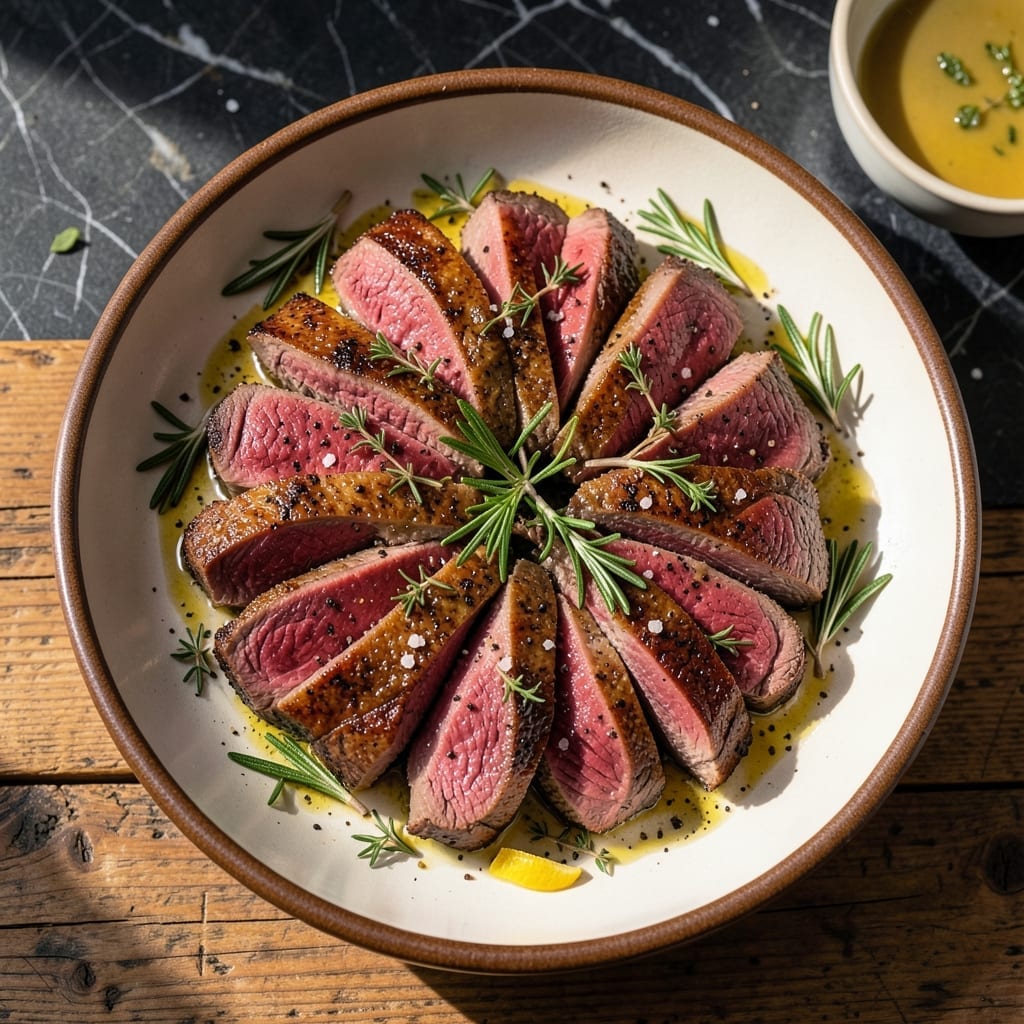
This elk sirloin roast delivers wild game richness with a fragrant herb crust that elevates every bite. The lean, robust meat benefits from careful preparation to maintain tenderness and enhance its natural depth.
I’ve refined this method to ensure the roast stays juicy while developing a perfectly seared exterior. A simple herb blend and precise cooking technique bring out the best in this distinctive cut.
The result is a centerpiece dish that’s both impressive and approachable. The herb crust adds aroma and texture, complementing the elk’s bold flavor without overpowering it.
Serve with roasted root vegetables or a bold red wine to complete the meal.
Ingredients for Elk Sirloin Roast
Lean elk sirloin plus aromatic herbs create this impressive yet approachable centerpiece dish.
| Ingredient | Amount | Notes |
|---|---|---|
| Elk Sirloin Roast 🦌 | 2 lb | Bone-in or boneless, trimmed |
| Kosher Salt 🧂 | 2 tsp | Diamond Crystal preferred for even seasoning |
| Freshly Ground Black Pepper 🌶️ | 1 tsp | Coarse grind for texture |
| Olive Oil 🫒 | 2 tbsp | Extra-virgin for richness |
| Fresh Rosemary 🌿 | 2 tbsp | Finely chopped, stems removed |
| Fresh Thyme 🍃 | 2 tbsp | Leaves only, finely chopped |
| Garlic Cloves 🧄 | 4 cloves | Minced for herb crust |
| Dijon Mustard 🟡 | 2 tbsp | For binding herb crust |
| Red Wine 🍷 | ½ cup | Bold variety like Cabernet |
| Beef Stock 🥩 | 1 cup | Low-sodium preferred for control |
| Unsalted Butter 🧈 | 2 tbsp | For basting roast |
| Shallot 🧅 | 1 whole | Finely minced for sauce |
| All-Purpose Flour 🌾 | 1 tbsp | For thickening pan sauce |
The elk sirloin is the star—source from specialty butchers like Snake River Farms or local game purveyors for optimal quality. Look for deep red color and minimal marbling (elk is naturally lean). The herb crust relies on fresh rosemary and thyme; dried herbs won’t deliver the same aromatic impact. For the wine, a bold Cabernet or Syrah complements the wild game flavor without overpowering it.
No elk? Beef sirloin tip roast works as a substitute, though cooking time may vary. Short on fresh herbs? Double the amount of dried (they’re less potent), but fresh is ideal. For the wine substitution, beef broth with a splash of balsamic vinegar mimics the acidity. The Dijon mustard can be swapped for whole-grain mustard for a rustic texture.
Store elk roast in the coldest part of your fridge for up to 3 days before cooking. Leftovers keep well for 4-5 days and reheat beautifully—ideal for sandwiches. The pan sauce can be made ahead and reheated gently. Always bring meat to room temperature before cooking for even doneness.
Why You’ll Love This Recipe
- Minimal Effort: I just rub it with salt, pepper, rosemary, and olive oil, then let the oven do the rest.
- Rich and Wild: The elk sirloin soaks up the rosemary and olive oil for a deep, earthy flavor that’s hard to beat.
- Feeds a Crowd: One roast makes enough for a family dinner with leftovers for sandwiches the next day.
- Budget Stretcher: Honestly, it’s a lean, flavorful cut that goes further than pricier meats.
Step-by-Step Instructions for Elk Sirloin Roast
Master this technique for a perfectly medium-rare roast with a fragrant herb crust.
Step 1: Season and Sear the Elk Sirloin
Pat the 2 lb elk sirloin roast completely dry with paper towels. This ensures a proper sear. Season all sides aggressively with the 2 tsp kosher salt and 1 tsp freshly ground black pepper, pressing the seasoning into the meat so it adheres.
Heat the 2 tbsp olive oil in a large oven-safe skillet or Dutch oven over high heat until it shimmers. Sear the roast on all sides for 1-2 minutes per side until deeply browned. The surface should develop a rich, dark crust. Transfer the seared roast to a plate and set aside.
Step 2: Prepare and Apply the Herb Crust
In a small bowl, combine the 2 tbsp fresh rosemary, 2 tbsp fresh thyme, 4 cloves minced garlic cloves, and 2 tbsp Dijon mustard. Stir until the herbs and garlic are evenly distributed throughout the mustard, creating a thick paste.
Brush this herb mixture all over the seared elk sirloin roast, covering every surface completely. The mustard acts as a binder, helping the herbs form a crust that locks in moisture and imparts intense flavor. Let the roast sit with the herb crust for 10 minutes at room temperature before roasting.
Step 3: Roast to Medium-Rare Perfection
Preheat your oven to 375°F. Place the herb-crusted roast back into the same skillet or Dutch oven. Add the 2 tbsp unsalted butter on top of the roast to baste it as it cooks.
Transfer to the oven and roast for 25-30 minutes for medium-rare, or until an instant-read thermometer inserted into the thickest part registers 130-135°F. Baste the roast with the melted butter and pan juices halfway through cooking to enhance the crust and ensure even browning.
Step 4: Rest and Prepare the Pan Sauce
Remove the roast from the oven and transfer it to a cutting board. Tent loosely with foil and let it rest for 15 minutes—this allows the juices to redistribute for a moist, tender result. The internal temperature will rise 5-10°F during this time.
Place the skillet over medium heat and add the 1 whole finely minced shallot. Cook for 1-2 minutes until softened. Sprinkle the 1 tbsp all-purpose flour over the shallot and stir for 1 minute to cook out the raw flavor.
Step 5: Deglaze and Finish the Sauce
Pour in the 0.5 cup red wine and scrape up all the browned bits from the bottom of the pan with a wooden spoon. Let the wine reduce by half, about 3-4 minutes. Add the 1 cup beef stock and simmer for another 5 minutes until the sauce thickens slightly.
Strain the sauce through a fine-mesh sieve into a small bowl, pressing on the solids to extract all the flavor. Slice the roast against the grain into ½-inch thick slices and serve with the sauce spooned over the top. The elk should be tender and slightly pink in the center.
Pro Tips For Making Elk Sirloin Roast
- Rest the Roast: Pull the elk sirloin from the oven at 130°F and let it rest for 15 minutes under foil—it’ll rise to a perfect medium-rare while the juices redistribute.
- Dry the Meat: Pat the elk sirloin bone-dry with paper towels before seasoning; I learned this the hard way after my first roast steamed instead of seared.
- Skip Cold Oil: Heat the olive oil in the pan until it shimmers before adding the roast—sounds simple, but it’s the only way to get that deep, golden crust on elk.
- Crush the Rosemary: Lightly crush the fresh rosemary between your fingers before rubbing it on the roast to release more of its piney aroma into the meat.
Creative Variations of This Recipe
Juniper and Coffee Rub
Swap the herb crust for a bold juniper berry and coffee rub. Crush 1 tbsp juniper berries and mix with 2 tbsp finely ground coffee, 1 tbsp brown sugar, and 1 tsp smoked paprika. The earthy, piney notes complement elk perfectly. 🌲
Balsamic Glaze Finish
After searing, brush the roast with a balsamic reduction instead of the herb crust. Simmer ½ cup balsamic vinegar with 1 tbsp honey until syrupy. This adds a sweet-tart contrast to the rich meat.
Smoked Version
For deeper flavor, smoke the roast at 225°F for 1-1.5 hours with hickory or cherry wood until internal temp hits 125°F. Finish in a 400°F oven for 10-15 minutes to develop the crust.
Asian-Inspired Marinade
Marinate the elk overnight in ¼ cup soy sauce, 2 tbsp rice vinegar, 1 tbsp grated ginger, and 2 minced garlic cloves. Sear as usual, then roast. The umami-rich marinade tenderizes the lean meat.
Mushroom and Red Wine Sauce
Enhance the pan sauce by sautéing 1 cup sliced cremini mushrooms with the shallots. Deglaze with 1 cup red wine and reduce by half before adding 1 cup beef stock. The mushrooms add earthy depth.
Slow Cooker Method
For hands-off cooking, sear the roast, then transfer to a slow cooker with 1 cup beef stock, 1 sliced onion, and 2 carrots. Cook on low for 6-7 hours until tender. Shred for sandwiches or slice. 💡
Nutrition Facts
Frequently Asked Questions
Can I use beef instead of elk?
Yes, beef sirloin tip roast works well as a substitute. Adjust cooking time since beef may need 5-10 minutes longer to reach doneness. The herb crust pairs equally well with beef’s rich flavor.
Why rest the roast before slicing?
Resting for 15 minutes lets juices redistribute throughout the meat. Slicing too soon causes precious moisture to spill out, leaving the roast dry. This step ensures every bite stays tender and flavorful.
How do I know when it’s done?
Use an instant-read thermometer: 130-135°F for perfect medium-rare. The meat will continue cooking while resting, rising to 140°F. Elk is best served slightly pink in the center.
Can I make the sauce ahead?
The pan sauce can be prepared 1-2 days in advance. Reheat gently over low heat and whisk in a pat of butter for a glossy finish before serving.

- 6 Egg Cake Recipe with Oil: Light as Air With Buttery Moisture - October 4, 2026
- 4 Bean Casserole Recipe: One-Pan Heartiness With Smoky Paprika Depth - October 4, 2026
- 3-Ingredient Keto Mug Cake Recipe: Microwave Magic in 2 Minutes - October 4, 2026