
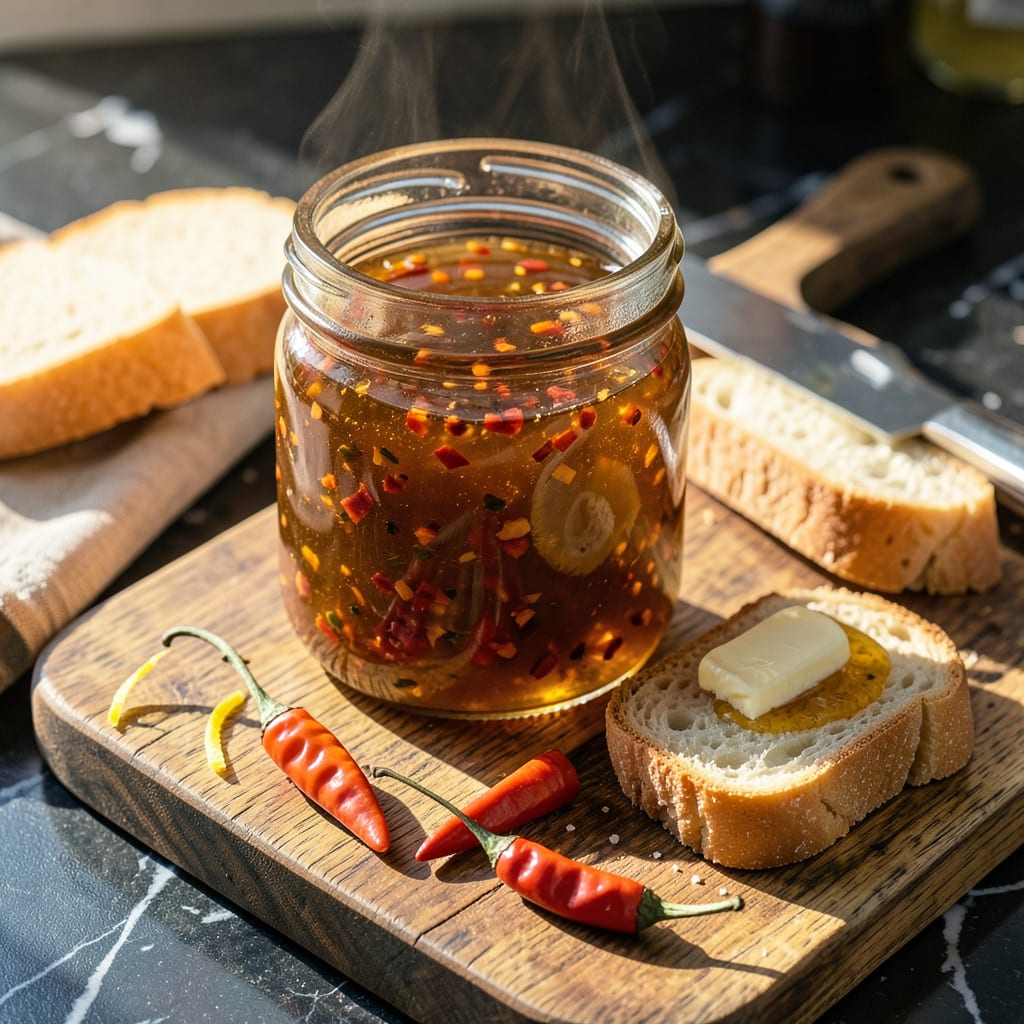
Few condiments capture Florida’s culinary spirit like datil pepper jelly—a perfect balance of fruity sweetness and fiery heat. This recipe transforms fresh datil peppers into a vibrant, golden jelly that preserves their unique citrusy punch. The process requires precision but rewards you with a versatile preserve that elevates everything from cheese boards to glazed meats.
The key lies in proper pepper preparation and controlled cooking to achieve the ideal gel. Unlike generic pepper jellies, datil’s distinctive flavor shines through when paired with the right sugar-to-vinegar ratio. Once jarred, this jelly keeps its bright color and complex heat profile for up to a year, making it a pantry staple worth the effort.
Ingredients for Datil Pepper Jelly
Seven essential ingredients transform Florida’s signature pepper into a jewel-toned jelly with perfect sweet-heat balance.
| Ingredient | Amount | Notes |
|---|---|---|
| Fresh Datil Peppers 🌶️ | ½ lb | Stems removed, finely chopped |
| Apple Cider Vinegar 🍏 | 1 ½ cups | 5% acidity for proper gelling |
| Granulated Sugar 🍚 | 5 cups | White sugar for clear jelly |
| Liquid Pectin 🧪 | 6 oz | One standard package |
| Lemon Juice 🍋 | ¼ cup | Freshly squeezed, strained |
| Unsalted Butter 🧈 | ½ tsp | Optional, reduces foam |
| Yellow Food Coloring 🎨 | 2 drops | Optional for vibrant color |
The datil peppers are non-negotiable—St. Augustine farmers markets or Florida specialty shops are ideal sources. Look for firm, glossy peppers with vibrant orange-yellow color (avoid green ones). Their unique citrusy heat profile cannot be replicated with other peppers. Ball or Sure-Jell liquid pectin ensures reliable gelling; powdered pectin requires different ratios. For vinegar, Bragg’s or Heinz apple cider vinegar (5% acidity) is critical for both flavor and preservation.
No datil peppers? Habaneros at half the quantity provide similar heat but lack the citrus notes. Substitute white vinegar at a 1:1 ratio if needed, though flavor will be sharper. Sugar quantity is precise—reducing it risks poor gelling. The butter is optional but reduces foam by 80% during cooking. For testing doneness, use the saucer method (place a spoonful on a chilled plate; it should wrinkle when pushed).
Unopened jars keep 12-18 months in a cool, dark pantry. Once opened, refrigerate and use within 3 months. The jelly’s heat intensifies slightly over time. For gift-giving, sterilize jars by boiling 10 minutes before filling. Always use a water bath canner for 10 minutes to ensure shelf stability. Label jars with the date—color fading indicates flavor degradation.
Why You’ll Love This Recipe
- That first taste is everything: bright, fruity heat from the datils, balanced by the sugar’s caramel-like sweetness, with a tangy kick from the vinegar. It’s the kind of flavor that makes you pause mid-bite and think, “Yep, I’m putting this on everything.”
- Five-Ingredient Magic: I love recipes where I don’t have to hunt down obscure ingredients. Here, it’s just datil peppers, vinegar, sugar, pectin, and lemon juice—no specialty stores, no fuss. The hardest part is waiting for it to set.
- Sweet Heat Obsession: That first taste is everything: bright, fruity heat from the datils, balanced by the sugar’s caramel-like sweetness, with a tangy kick from the vinegar. It’s the kind of flavor that makes you pause mid-bite and think, “Yep, I’m putting this on everything.”
- Gift It or Hoard It: Between us, I make double batches—one for charcuterie boards, one for holiday gifts (because who doesn’t love homemade jelly?), and one just for my morning biscuits. A single jar somehow disappears in three days at my house.
Step-by-Step Instructions for Datil Pepper Jelly
Follow this precise method to achieve the perfect balance of sweetness and heat in every batch.
Step 1: Prepare the Datil Peppers
Begin by thoroughly washing the 0.5 lb fresh datil peppers under cool running water. Remove all stems and any blemished areas. For consistent texture and heat distribution, finely chop the peppers using a sharp chef’s knife or pulse in a food processor until you achieve small, uniform pieces.
I recommend wearing gloves during this process, as datil peppers contain capsaicin that can irritate skin and eyes. The finely chopped peppers should yield about 1 cup of prepared pepper mixture. Transfer the chopped peppers to a large, heavy-bottomed saucepan or preserving pot.
Step 2: Create the Sugar-Vinegar Syrup
To the saucepan containing the chopped peppers, add the 1.5 cups apple cider vinegar and 5 cups granulated sugar. Stir the mixture well to combine, ensuring the sugar begins to dissolve. Place the saucepan over medium-high heat and bring the mixture to a full rolling boil that cannot be stirred down.
This initial boiling stage is crucial for dissolving all sugar crystals completely. Use a silicone spatula to stir occasionally, scraping the bottom of the pan to prevent scorching. You’ll notice the mixture will become clearer as the sugar dissolves, typically taking 5-7 minutes to reach the proper consistency.
Step 3: Incorporate Pectin and Final Ingredients
Once the sugar is fully dissolved and the mixture reaches a vigorous boil, add the 6 oz liquid pectin while stirring constantly. The pectin must be added precisely at this stage to ensure proper gelling. Continue stirring as you add the 0.25 cup lemon juice, which provides necessary acidity for both flavor and gel formation.
At this point, you may add the 0.5 tsp unsalted butter to reduce foaming, though this is optional. For a more vibrant appearance, incorporate the 2 drops yellow food coloring. Return the mixture to a full rolling boil and boil hard for exactly 1 minute, stirring constantly to prevent sticking.
Step 4: Test for Proper Gel Set
After the hard boil, remove the saucepan from heat. To test for proper gel formation, place a small spoonful of the jelly on a chilled plate and let it sit for 1 minute. Push the edge of the jelly with your finger – it should wrinkle slightly when properly set. If it remains liquid, return to heat and boil for an additional 30-60 seconds, then test again.
The finished jelly should have a glossy appearance and coat the back of a spoon thickly. You’ll notice the color deepens slightly during cooking, becoming a beautiful golden hue with visible pepper flecks throughout. The texture should be syrupy but with noticeable body before it sets completely.
Step 5: Process and Store the Jelly
Ladle the hot jelly into sterilized half-pint jars, leaving ¼-inch headspace. Wipe the rims clean with a damp cloth to ensure proper sealing. Process the jars in a boiling water bath for 10 minutes to create a vacuum seal. The processing time begins once the water returns to a full boil.
After processing, let the jars cool undisturbed for 12-24 hours. You’ll hear satisfying “pings” as the lids seal. Check the seals by pressing the center of each lid – it should not flex. Store properly sealed jars in a cool, dark place for up to 1 year, or refrigerate after opening for up to 3 months.
Flavor Customization for This Dish
Mild Heat Version
For those who prefer gentle warmth, remove all seeds and membranes from the 0.5 lb datil peppers before chopping. This reduces capsaicin content by about 70%. You can also decrease peppers to ¼ lb while keeping other ingredients the same. The result maintains the signature citrusy flavor with just a whisper of heat. 💛
I love this version for breakfast—it pairs beautifully with cream cheese on bagels or as a glaze for French toast. The reduced heat lets the pepper’s fruity notes shine through, making it more versatile for everyday use.
Extra Fiery Kick
To intensify the heat, increase datil peppers to ¾ lb and include all seeds/membranes. For maximum fire, add 1 tsp cayenne powder with the pectin. The jelly will develop a slower-building heat that lingers pleasantly. This version is perfect for spicy food lovers who want to feel the burn.
This fiery batch works wonderfully as a meat glaze—try it on grilled shrimp or chicken wings. The extra heat balances beautifully with the sugar’s sweetness, creating a complex flavor profile.
Citrus-Infused Twist
Enhance the natural citrus notes by adding 1 tbsp orange zest and 2 tbsp fresh orange juice with the lemon juice. This brightens the flavor profile significantly. For a tropical variation, substitute pineapple vinegar for half the apple cider vinegar. The result is a jelly with vibrant, sunny flavors.
This citrusy version is my go-to for summer entertaining. It pairs exceptionally well with goat cheese on crostini or as a glaze for grilled salmon.
Smoky Depth Addition
For a barbecue-friendly version, add ½ tsp smoked paprika and ¼ tsp liquid smoke with the pectin. This creates a jelly with campfire-like complexity that works beautifully with meats. The smokiness complements the pepper’s natural heat without overpowering it.
I recommend this variation for burger toppings or as a glaze for smoked ribs. The smoky notes make it feel like a gourmet barbecue sauce with Florida flair.
Herbal Complexity
Infuse subtle sophistication by adding 1 tbsp fresh thyme leaves or 1 tsp dried rosemary to the pepper-vinegar mixture. Strain before adding pectin for a smooth texture. These herbs add an aromatic layer that elevates the jelly’s versatility for savory applications.
This herbal version becomes my secret weapon for charcuterie boards. It pairs especially well with aged cheddar and prosciutto, adding an unexpected depth to simple appetizers.
Sweet Heat Reduction
For a more balanced sweet-to-heat ratio, reduce sugar to 4 cups and add ½ cup honey. This creates a jelly with deeper caramel notes and less cloying sweetness. The honey also enhances the pepper’s natural fruitiness while maintaining proper gelling.
This adjusted sweetness level makes the jelly more versatile for cooking applications. I use it frequently in stir-fry sauces where I want heat without overwhelming sweetness.
Nutrition Facts
Frequently Asked Questions
How long does homemade datil pepper jelly last?
Unopened jars keep for 12-18 months in a cool, dark pantry. Once opened, refrigerate and use within 3 months for best flavor. The jelly’s heat may intensify slightly over time, while color fading signals flavor degradation.
Can I substitute other peppers if datils aren’t available?
Habaneros at half the quantity work, but lack datil’s citrus notes. For closer flavor, mix ¼ lb habaneros with ¼ lb orange bell peppers. Always wear gloves when handling—capsaicin levels remain high in substitutes.
Why did my jelly not set properly?
Underboiling or incorrect pectin ratios are common causes. Always boil hard for 1 full minute after adding pectin. Test doneness using the chilled plate method—jelly should wrinkle when pushed. If too runny, reprocess with 1 tbsp additional pectin.
What’s the best way to reduce foam during cooking?
The ½ tsp butter in the recipe reduces foam by about 80%. For butter-free versions, skim foam with a metal spoon before jarring. Avoid over-stirring once pectin is added—this creates excess bubbles.
Can I make this without canning equipment?
Yes! Skip water bath processing and store jelly in the fridge for 3-4 weeks. Use clean jars with tight lids. For longer storage, freeze in ice cube trays, then transfer to bags for 6 months.

- 6 Egg Cake Recipe with Oil: Light as Air With Buttery Moisture - October 4, 2026
- 4 Bean Casserole Recipe: One-Pan Heartiness With Smoky Paprika Depth - October 4, 2026
- 3-Ingredient Keto Mug Cake Recipe: Microwave Magic in 2 Minutes - October 4, 2026