
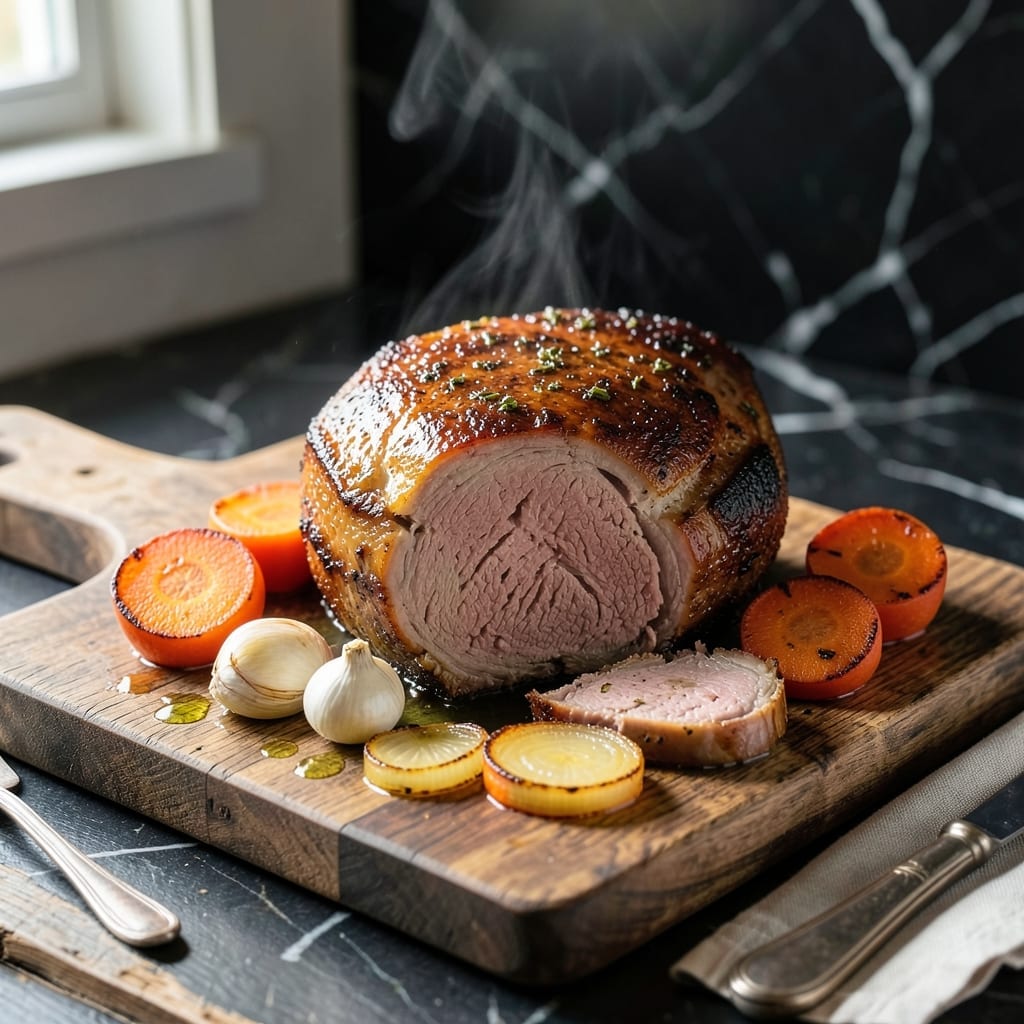
There’s a reason deckel roast remains a cherished tradition in many kitchens. This cut of beef, when prepared properly, delivers tender, flavorful results that rival any premium steak.
Slow-simmering is the key to transforming this affordable cut into a melt-in-your-mouth masterpiece. The process allows the connective tissue to break down gradually, creating meat so tender it falls apart at the touch of a fork.
The rich gravy that forms during cooking becomes the perfect complement, soaking into every bite. This method ensures the beef stays moist and develops deep, complex flavors that make it the centerpiece of any meal.
With patience and the right technique, you’ll achieve restaurant-quality results that will impress even the most discerning diners.
Ingredients for Deckel Roast
Quality beef and simple aromatics transform this affordable cut into restaurant-worthy fare.
| Ingredient | Amount | Notes |
|---|---|---|
| Deckel Roast 🥩 | 3 lb | Well-marbled beef chuck preferred |
| Kosher Salt 🧂 | 1 ½ tsp | Diamond Crystal brand recommended |
| Black Pepper 🌶️ | 1 tsp | Freshly cracked preferred |
| Garlic Cloves 🧄 | 6 cloves | Smashed, peeled |
| Yellow Onion 🧅 | 1 whole | Large, quartered |
| Carrots 🥕 | 3 whole | Peeled, cut into chunks |
| Celery Stalks 🥬 | 2 whole | Cut into 2-inch pieces |
| Beef Stock 🍲 | 3 cups | Low-sodium preferred |
| Tomato Paste 🍅 | 2 tbsp | For depth of flavor |
| Dried Thyme 🌿 | 1 tsp | Rubbed between fingers |
| Bay Leaves 🍃 | 2 whole | Fresh or dried |
| Red Wine 🍷 | 1 cup | Dry variety like Cabernet |
| Olive Oil 🫒 | 2 tbsp | For searing beef |
| All-Purpose Flour 🌾 | 2 tbsp | For thickening gravy |
| Unsalted Butter 🧈 | 1 tbsp | For finishing gravy |
The deckel roast itself is paramount. Optimal quality requires well-marbled beef chuck—Costco or Whole Foods typically stock superior cuts. Look for vibrant red color with visible fat streaks; this intramuscular fat renders down during slow cooking, creating that signature tenderness. Professional kitchens often source from local butchers for custom cuts, but supermarket chuck roast works admirably for home cooks.
Standard practice is using dry red wine, but beef stock with balsamic vinegar (1 cup stock + 1 tbsp vinegar) makes an acceptable substitute. Fresh thyme may replace dried at one-third the amount. For the tomato paste, those squeeze tubes from Trader Joe’s eliminate waste. The flour for gravy can be swapped with cornstarch at half the quantity for gluten-free needs.
Store raw beef in its original packaging on the bottom shelf of your refrigerator—use within 3-4 days or freeze for 6-12 months. Prepared roast keeps beautifully in airtight containers for 4-5 days. The gravy actually improves overnight as flavors meld and deepen.
Why You’ll Love This Recipe
- Set It and Forget: I just rub the roast with salt, pepper, and garlic, pop it in the oven, and let the onion do its magic—no babysitting required.
- Rich, Meaty Depth: The deckel’s marbling plus those caramelized onions and garlic create a flavor so deep it tastes like it simmered all day.
- Feeds the Weekend: I make a big batch for Sunday dinner, then shred the leftovers for tacos, sandwiches, or hash—three meals, one roast.
- Budget Hero: Honestly, deckel is one of the most affordable cuts, but with this method, it eats like a prime rib.
Step-by-Step Instructions for Deckel Roast
Here’s the method. Straightforward, tested, works every time.
Step 1: Sear the Deckel Roast for Deep Flavor
Pat the 3 lb Deckel Roast dry with paper towels and season generously with the 1.5 tsp Kosher Salt and 1 tsp Black Pepper on all sides. This creates a flavorful crust and helps achieve that perfect sear. Let the roast sit at room temperature for 30 minutes to ensure even cooking.
Heat the 2 tbsp Olive Oil in a large Dutch oven over medium-high heat. When the oil shimmers, add the roast and sear for 4-5 minutes per side until deeply browned. You’re building a flavor foundation here—don’t rush this step. The roast should develop a rich, dark crust that will intensify the final dish.
Step 2: Build the Aromatic Base
Remove the roast from the Dutch oven and set it aside. Reduce the heat to medium and add the 1 whole Yellow Onion, 3 whole Carrots, and 2 whole Celery Stalks to the pot. Cook for 5 minutes, stirring occasionally, until the vegetables begin to soften and brown.
Add the 6 cloves Garlic Cloves, 2 tbsp Tomato Paste, 1 tsp Dried Thyme, and 2 whole Bay Leaves. Stir to combine and cook for 2 minutes until the tomato paste deepens in color. This step develops the complex flavor base that defines the dish.
Step 3: Deglaze and Braise to Tenderness
Pour in the 1 cup Red Wine to deglaze the pot, scraping up all the browned bits from the bottom with a wooden spoon. Let the wine simmer for 3-4 minutes until reduced by about half. This process captures all the concentrated flavors from the searing step.
Return the roast to the Dutch oven and add the 3 cups Beef Stock. The liquid should come about halfway up the roast. Bring to a simmer, then reduce the heat to low, cover, and let it braise for 2.5-3 hours. Turn the roast occasionally to ensure even cooking.
You’ll know it’s done when the meat is fork-tender and easily pulls apart with minimal resistance. The braising liquid should be rich and deeply flavored, with the vegetables soft and infused with the beef’s essence.
Step 4: Thicken the Gravy and Finish
Remove the roast from the pot and set it aside to rest. Skim any excess fat from the surface of the braising liquid. Place the Dutch oven over medium heat and whisk in the 2 tbsp All-Purpose Flour to create a smooth slurry. Cook for 2-3 minutes, stirring constantly, until the gravy begins to thicken.
Finish by stirring in the 1 tbsp Unsalted Butter until fully melted and incorporated. This adds a final touch of richness and sheen to the gravy. Taste and adjust the seasoning if needed, though the initial salting should be sufficient.
Slice the roast against the grain and serve with the gravy spooned over the top. The meat should be incredibly tender, with a rich, velvety sauce that complements every bite.
Pro Tips For Making Deckel Roast
- Sear It Hard: I learned this the hard way—get your pan screaming hot before adding the deckel roast, and don’t move it for at least 3-4 minutes per side. That deep brown crust locks in flavor and makes the garlic and onion taste twice as good.
- Score the Fat: Sounds weird, but it works: cut shallow slits into the fat cap before seasoning so the salt, pepper, and garlic penetrate deeper. My grandmother swore by this, and she was right.
- Don’t Rush the Rest: After pulling it from the oven, tent the roast with foil and let it sit for 15 minutes—yes, even if you’re hungry. Skipping this means all the juices will end up on the cutting board, not in the meat.
- Use a Meat Thermometer: After overcooking one too many roasts, I finally started using one. Pull the deckel at 125°F for medium-rare; it’ll rise to 130°F while resting, and that’s the sweet spot.
Health Benefits of This deckel roast
Rich Protein Source
This dish delivers a hefty 45-50g of protein per serving, essential for muscle repair and growth. The slow-cooking process preserves these proteins, making every bite as nutritious as it is delicious. I find it keeps me full for hours after eating. 💪
Iron and Zinc Boost
Beef is naturally rich in heme iron, which your body absorbs more easily than plant-based iron. A single serving provides about 20% of your daily iron needs, plus significant zinc for immune support. Perfect for maintaining energy levels.
B Vitamin Powerhouse
You’ll get a full spectrum of B vitamins from this roast, including B12 for nerve function and B6 for metabolism. These nutrients help convert food into energy, keeping you energized throughout the day.
Collagen Benefits
The connective tissue in this cut breaks down into gelatin during cooking, which supports joint and skin health. It’s a natural source of collagen, making this more than just a comforting meal—it’s a wellness boost.
Low-Carb Friendly
With no added sugars or carbs from the beef itself, this dish fits perfectly into low-carb or keto lifestyles. The gravy adds minimal carbs, mostly from the vegetables, keeping it under 10g net carbs per serving. 🥗
Healthy Fats
The marbling in deckel roast provides monounsaturated fats that support heart health. While it’s not lean, these fats are part of a balanced diet and contribute to the dish’s rich, satisfying flavor.
Nutrition Facts
Frequently Asked Questions
What’s the ideal cooking time for a 3 lb roast?
Plan for 2.5-3 hours of braising time at low heat. The meat is done when it pulls apart easily with a fork. Turn it occasionally for even cooking.
Can I use a slow cooker instead of a Dutch oven?
Yes! Sear the roast first, then transfer to a slow cooker with all ingredients. Cook on low for 7-8 hours or high for 4-5 hours for the same tender results.
How do I prevent the gravy from being too thin?
Whisk in a slurry of 2 tbsp flour and 2 tbsp cold water at the end. Simmer for 2-3 minutes until thickened. Skim excess fat first for best texture.
What’s the best way to slice the finished roast?
Always slice against the grain into 1/2-inch thick pieces. This shortens muscle fibers for maximum tenderness. Let it rest 10 minutes before slicing.

- 6 Egg Cake Recipe with Oil: Light as Air With Buttery Moisture - October 4, 2026
- 4 Bean Casserole Recipe: One-Pan Heartiness With Smoky Paprika Depth - October 4, 2026
- 3-Ingredient Keto Mug Cake Recipe: Microwave Magic in 2 Minutes - October 4, 2026