
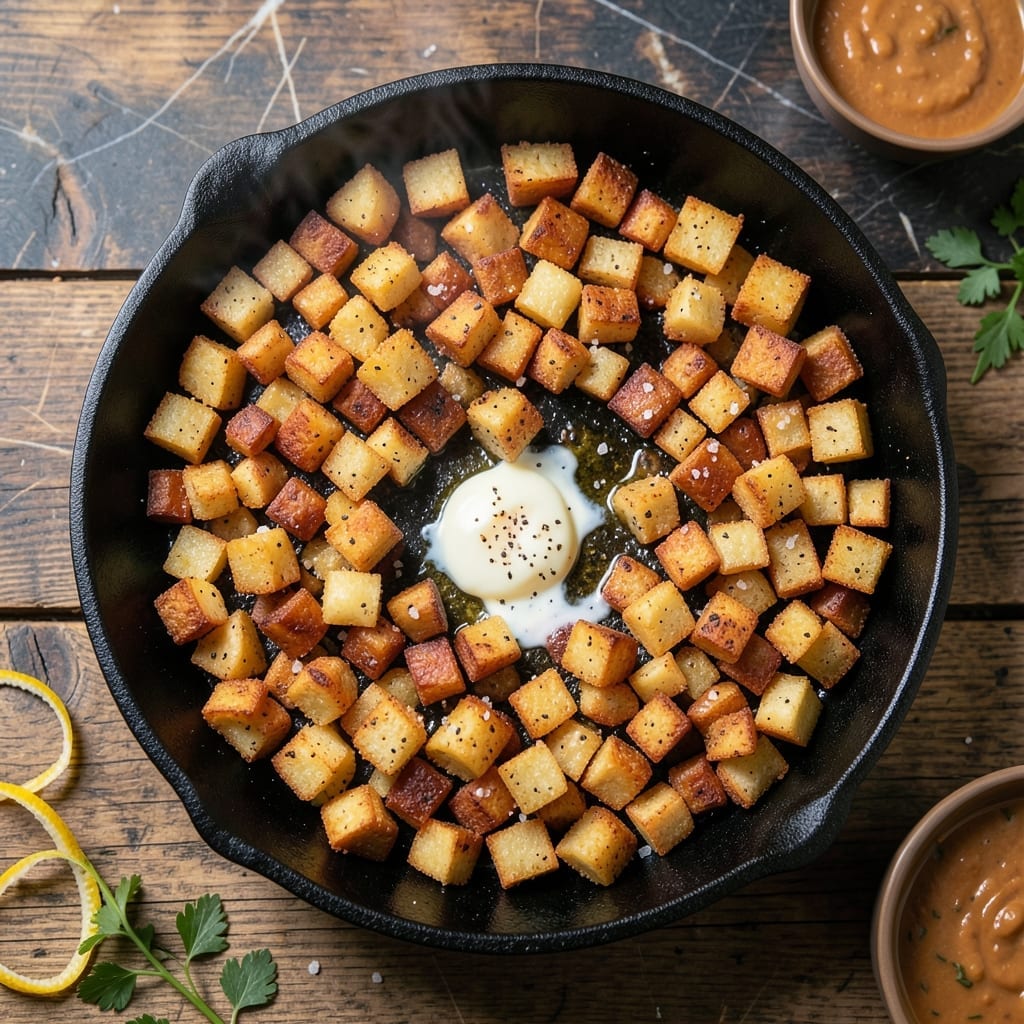
Achieving crispy diced hash browns at home is simpler than you think with the right technique. This method delivers golden, shatteringly crisp edges and tender centers every time without sticking to the pan.
The secret is in the prep: pressing excess moisture from the potatoes and using medium-high heat with just enough oil. A well-seasoned cast iron skillet works best, but any heavy pan will do the job.
You’ll end up with evenly browned cubes that stay intact when flipped, creating a perfect balance of textures. The potatoes develop a deep golden crust outside while remaining fluffy inside, making them ideal for breakfast or brunch.
Serve as a side dish or use as a base for loaded hash browns with eggs and cheese. Here’s how to make them flawlessly.
Ingredients for Diced Hash Browns
Simple pantry staples and fresh potatoes create these golden, crispy breakfast bites in no time.
| Ingredient | Amount | Notes |
|---|---|---|
| Russet Potatoes 🥔 | 2 lb | Peeled and diced into 1/2-inch cubes |
| Vegetable Oil 🫒 | ½ cup | Divided for cooking in batches |
| Unsalted Butter 🧈 | 2 tbsp | Optional for extra richness |
| Kosher Salt 🧂 | 1 tsp | Adjust to taste after cooking |
| Freshly Ground Black Pepper 🌶️ | ½ tsp | Adds depth to flavor |
| Onion Powder 🧅 | ½ tsp | Enhances savory notes |
| Garlic Powder 🧄 | ½ tsp | Balances the seasoning blend |
| Sweet Paprika 🌶️ | ¼ tsp | For color and mild sweetness |
| Dried Parsley 🌿 | ½ tsp | Optional for garnish |
| Large Eggs 🥚 | 4 whole | For serving as loaded hash browns |
| Shredded Cheddar Cheese 🧀 | 1 cup | Optional for loaded hash browns |
The potatoes are the foundation here. Russet potatoes give you that fluffy interior and crisp exterior—avoid waxy varieties like red or Yukon Gold. Most supermarkets stock them year-round. Look for firm, smooth-skinned spuds without sprouts or green spots. For the oil, vegetable or canola oil handles high heat without smoking, which is key for achieving that deep golden crust.
No Russets? Idaho potatoes work the same way. Out of onion or garlic powder? Fresh minced onion or garlic at half the amount will do, but powders blend more evenly into the potatoes. Want extra crunch? Add a pinch of cornstarch to the diced potatoes before cooking. The eggs and cheese are optional but transform this into a hearty meal—use whatever melty cheese you have on hand.
Cooked hash browns keep in the fridge for up to 3 days, though they’re best eaten fresh. Reheat in a dry skillet to restore some crispness. For longer storage, freeze cooked and cooled hash browns on a tray before transferring to a bag—they’ll keep for 2 months.
Why You’ll Love This Recipe
- Five-Ingredient Wonder: I love that it only needs potatoes, oil, butter, salt, and pepper—nothing fancy, just simple staples.
- Crispy Outside, Soft Inside: That buttery crunch on the edges with the tender potato center? Honestly, it’s my favorite part of breakfast.
- Breakfast or Dinner: I serve these with eggs for breakfast or alongside steak for dinner—so versatile.
- Budget-Friendly Side: Russet potatoes are cheap, and this recipe stretches them into a filling side that feeds my whole family.
Step-by-Step Instructions for Diced Hash Browns
This method ensures perfectly crispy, golden-brown potatoes with a tender interior every time.
Step 1: Prepare and Soak the Russet Potatoes
Peel the 2 lb Russet Potatoes and dice them into ½-inch cubes. As you work, transfer the diced potatoes to a large bowl of cold water. This soaking step removes excess starch, which is critical for achieving maximum crispiness rather than gummy hash browns.
Let the potatoes soak for 10 minutes, then drain and rinse them under cold water. Spread them on a clean kitchen towel and pat completely dry. Any remaining moisture will cause steaming instead of frying, preventing that coveted crisp texture.
Step 2: Season the Potatoes Thoroughly
In a large bowl, combine the dried potatoes with 1 tsp Kosher Salt, ½ tsp Freshly Ground Black Pepper, ½ tsp Onion Powder, ½ tsp Garlic Powder, and ¼ tsp Sweet Paprika. Toss until every cube is evenly coated.
The seasoning blend enhances the natural flavor of the potatoes while the paprika adds a subtle sweetness and color. I always taste a cube at this stage—if it needs more salt, add a pinch, but remember the flavor will concentrate as the potatoes cook.
Step 3: Pan-Fry in Batches for Even Browning
Heat ¼ cup of the Vegetable Oil in a large, heavy skillet over medium-high heat until it shimmers. Add half the seasoned potatoes in a single layer, ensuring they’re not crowded. Crowding the pan will cause them to steam rather than crisp.
Cook undisturbed for 5-6 minutes until the bottoms are deep golden brown. Flip the potatoes with a spatula and cook for another 5-6 minutes until all sides are crispy and evenly browned. Transfer to a paper towel-lined plate and repeat with the remaining ¼ cup Vegetable Oil and potatoes.
Step 4: Add Optional Butter for Richness
If using, melt 2 tbsp Unsalted Butter in the skillet after removing the last batch of potatoes. Return all the potatoes to the pan and toss to coat in the butter. This step adds a rich, savory depth to the hash browns.
Cook for an additional 1-2 minutes until the butter is fully incorporated and the potatoes are heated through. The butter will also help achieve a deeper, more uniform golden color.
Step 5: Serve Immediately with Optional Toppings
Transfer the hash browns to a serving platter. For a loaded presentation, top with 4 whole Large Eggs fried sunny-side up and sprinkle with 1 cup Shredded Cheddar Cheese. The residual heat will soften the cheese slightly without melting it completely.
Garnish with ½ tsp Dried Parsley for a touch of color and freshness. Serve immediately while the potatoes are still crispy. These hash browns are best enjoyed fresh, as they lose their crispness over time.
Pro Tips For Making Diced Hash Browns
- Parboil the Potatoes: Soak diced russets in cold water for 10 minutes, then parboil for 3-4 minutes—this removes excess starch so they crisp instead of steam.
- High Heat Only: Crank the burner to medium-high and don’t touch the potatoes for at least 5 minutes after adding them to the oil—butter mix. I learned this the hard way after flipping too soon and ending up with soggy spuds.
- Dry Them Well: After parboiling, spread the diced potatoes on a towel and press out every bit of moisture—even a little water turns your pan into a steam chamber instead of a frying surface.
- Butter Last: Start with just oil in the pan, then add the butter once the potatoes are already browning—this keeps the butter from burning and adds that rich finish without bitterness.
Pro Cooking Tips for diced hash browns
Press Out Moisture
After soaking and drying, press the potatoes between paper towels or a clean kitchen towel. I use 3-4 paper towels and apply firm pressure to extract every drop of moisture. This prevents steaming and ensures crispy results. 💡
Heat Your Pan Properly
Heat your cast iron skillet over medium-high heat for 2-3 minutes before adding oil. A properly heated pan creates a non-stick surface naturally. Look for the oil to shimmer before adding potatoes.
Don’t Overcrowd
Cook in batches with at least ½ inch between potato cubes. Overcrowding drops pan temperature, causing potatoes to steam rather than crisp. I never exceed 2 cups of potatoes per batch in my 12-inch skillet.
Resist the Urge
Let potatoes cook undisturbed for 5-6 minutes before flipping. This allows a deep golden crust to form. Use a thin metal spatula to flip—plastic can break the crust.
Season in Layers
Season potatoes again lightly after flipping. The salt enhances flavor and helps draw out remaining moisture. I sprinkle an extra pinch of Kosher Salt at this stage for perfect seasoning.
Butter Last
Add butter only after potatoes are crispy. Adding it too early can cause burning. Toss with 2 tbsp at the end for rich flavor without sacrificing texture. 🔥
Nutrition Facts
Frequently Asked Questions
Why do my potatoes turn out soggy?
Not pressing out enough moisture is the main culprit. After soaking and drying, use 3-4 paper towels to apply firm pressure. Any remaining water will steam the potatoes instead of frying them.
Can I use a nonstick pan instead of cast iron?
Yes, but cast iron retains heat better for even browning. If using nonstick, preheat thoroughly and avoid metal utensils. The results will still be crispy with proper technique.
How do I keep them warm while cooking in batches?
Place cooked potatoes on a wire rack set over a baking sheet in a 200°F oven. This keeps them crispy without steaming. Never cover them, as that traps moisture.
Can I add vegetables to the potatoes?
Dice onions, bell peppers, or mushrooms into small pieces. Sauté them separately first, then add to the potatoes during the last 2-3 minutes of cooking.

- 6 Egg Cake Recipe with Oil: Light as Air With Buttery Moisture - October 4, 2026
- 4 Bean Casserole Recipe: One-Pan Heartiness With Smoky Paprika Depth - October 4, 2026
- 3-Ingredient Keto Mug Cake Recipe: Microwave Magic in 2 Minutes - October 4, 2026