
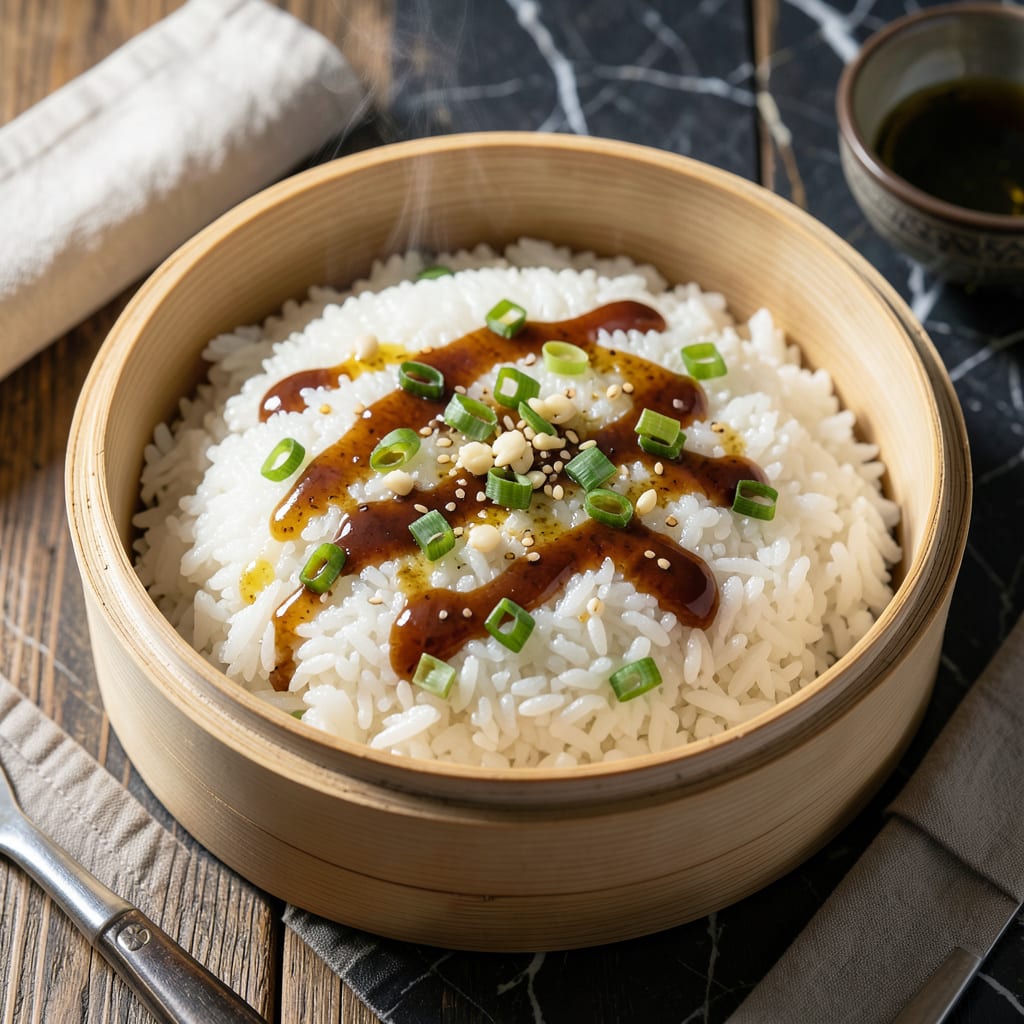
Achieving perfectly pillowy dim sum rice at home requires just a few simple techniques. This method delivers the soft, slightly sticky texture that’s the hallmark of authentic dim sum houses.
With basic ingredients and a bamboo steamer, you can create restaurant-quality results. The key is using the right rice-to-water ratio and allowing it to rest before steaming for even texture every time.
Ingredients for Dim Sum Steamed Rice
Simple ingredients transform into restaurant-quality dim sum rice with perfect texture every time.
| Ingredient | Amount | Notes |
|---|---|---|
| Jasmine Rice 🌾 | 2 cups | Long-grain, rinsed thoroughly |
| Water 💧 | 2 ½ cups | Filtered or spring water preferred |
| Vegetable Oil 🫒 | 1 tsp | Neutral flavor, for greasing |
| Salt 🧂 | ½ tsp | Fine sea salt or kosher salt |
| Soy Sauce 🥢 | 1 tbsp | Light or all-purpose variety |
| Sesame Oil 🫒 | ½ tsp | Toasted for authentic flavor |
| Green Onions 🧅 | 3 whole | Thinly sliced for garnish |
| Shaoxing Wine 🍶 | 1 tbsp | Dry sherry as substitute |
| Ginger Root 🌿 | 1 piece | Fresh, about 1-inch, grated |
| Garlic Cloves 🧄 | 2 cloves | Minced for aroma |
The rice quality is non-negotiable. Jasmine rice from Thai brands like Elephant or Dynasty delivers authentic texture—avoid instant or parboiled varieties. Look for grains that are uniform in size and color, with no broken pieces. Most Asian markets carry multiple options, but even well-stocked supermarkets like Whole Foods have decent selections. Rinsing removes excess starch, which is crucial for that pillowy finish.
No Shaoxing wine? Dry sherry works in a pinch. For a non-alcoholic option, use rice vinegar with a pinch of sugar. The ginger and garlic are flexible—powdered versions at one-fourth the amount work if fresh isn’t available. Green onions can be swapped with chives (use half as much). For extra richness, some dim sum chefs add a dash of white pepper—worth trying if you have it.
Uncooked rice keeps in a sealed container for 6-12 months in a cool, dark place. Once steamed, it’s best served immediately but can be reheated with a splash of water. Leftovers? Store in the fridge for up to 3 days—reheat by steaming again to restore that soft texture.
Why You’ll Love This Recipe
- Five Ingredients: I love that this only needs jasmine rice, water, oil, salt, and soy sauce—nothing fancy.
- Pillowy Texture: The steam turns the rice so fluffy it melts in your mouth.
- Weeknight Friendly: Honestly, I can prep this while the kids do homework.
- Budget Stretch: A pound of jasmine rice makes multiple meals for pennies per serving.
Step-by-Step Instructions for Dim Sum Steamed Rice
Master this technique and you’ll achieve consistently perfect, restaurant-quality results every time.
Step 1: Rinse and Soak the Jasmine Rice
Place the 2 cups Jasmine Rice in a fine-mesh strainer and rinse under cold running water until the water runs clear. I agitate the grains with my fingers to ensure all surface starch is removed—this prevents gummy texture in the final dish.
Transfer the rinsed rice to a bowl and cover with the 2.5 cups Water. Let it soak for 20-30 minutes. Soaking hydrates the grains evenly, which is critical for that signature pillowy texture dim sum rice is known for. You’ll notice the grains plump slightly during this time.
Step 2: Prepare the Aromatic Infusion
While the rice soaks, mince the 2 cloves Garlic Cloves and grate the 1 piece Ginger Root (about 1-inch) into a fine paste. Thinly slice the 3 whole Green Onions, separating the white and green parts—you’ll use the whites for cooking and reserve the greens for garnish.
In a small bowl, combine the 1 tbsp Soy Sauce, 0.5 tsp Salt, 1 tsp Vegetable Oil, 0.5 tsp Sesame Oil, and 1 tbsp Shaoxing Wine. This aromatic mixture will infuse the rice with depth of flavor. The Shaoxing wine adds a subtle complexity that’s traditional in dim sum preparations.
Step 3: Steam the Rice to Perfection
Drain the soaked rice thoroughly in the strainer, shaking gently to remove excess water. Transfer it to a heatproof dish that fits inside your steamer—leave at least 1 inch of headspace for expansion. I use a wide, shallow dish for even steaming.
Drizzle the aromatic mixture evenly over the rice and sprinkle the minced garlic and grated ginger on top. Give it a gentle stir to distribute the aromatics. Place the dish in a steamer over boiling water, cover tightly, and steam for 25-30 minutes until the grains are tender and the liquid is fully absorbed.
Step 4: Rest and Garnish for Service
Once the rice is cooked, turn off the heat but leave the dish in the steamer with the lid on for an additional 5 minutes. This resting period allows the grains to settle and absorb any remaining moisture, ensuring that perfect fluffy texture.
Transfer the rice to a serving dish and fluff gently with a fork. Sprinkle the reserved green onion tops over the surface for a pop of color and freshness. The rice should be light, separate easily, and carry the subtle aroma of the garlic, ginger, and Shaoxing wine throughout.
Pro Tips For Making Dim Sum Steamed Rice
- Rinse the Rice: Soak jasmine rice for 20-30 minutes before cooking, then rinse until the water runs clear—this removes excess starch and gives you fluffier, separate grains.
- Use Boiling Water: I learned this the hard way—pouring boiling water over the rice before steaming cuts the cooking time in half and helps prevent a gummy texture.
- Skip Overcrowding: Leave at least an inch of space between rice portions in the steamer, or they’ll stick together and steam unevenly.
- Add Oil Last: Drizzle the vegetable oil over the rice just before serving—it keeps the grains from clumping and adds a subtle sheen that makes it look like restaurant dim sum rice.
Health Benefits of This dim sum steamed rice
Energy Boost
Jasmine rice provides complex carbohydrates that release energy slowly, keeping you full and focused. A 1-cup serving offers about 200 calories, making it a light yet satisfying base for any dim sum spread. This steady energy is perfect for powering through busy afternoons.
Digestive Health
This dish is naturally low in fat and contains fiber from the jasmine rice, aiding digestion. The ginger in the recipe is a traditional remedy for soothing upset stomachs and reducing nausea. I always feel lighter after enjoying this steamed rice. 💪
Rich in B Vitamins
Jasmine rice is packed with B vitamins, particularly thiamine and niacin, which support metabolism and nervous system function. These nutrients help your body convert food into energy efficiently. A serving provides about 15% of your daily B vitamin needs.
Heart-Friendly
With 0g cholesterol and minimal sodium (especially if you use low-sodium soy sauce), this dish supports heart health. The garlic in the recipe has been linked to reduced blood pressure and improved cholesterol levels. It’s a flavorful way to care for your cardiovascular system.
Antioxidant Properties
The green onions and garlic contain antioxidants that combat oxidative stress. These compounds help protect your cells from damage and may reduce the risk of chronic diseases. Plus, the sesame oil adds a dose of healthy fats that support overall wellness. ✨
Hydration Support
Steamed rice retains more moisture than other cooking methods, helping with hydration. The dish’s light, fluffy texture encourages mindful eating, allowing you to savor each bite. I find it pairs perfectly with herbal teas for a hydrating, satisfying meal.
Nutrition Facts
Frequently Asked Questions
What kind of rice works best?
Use long-grain jasmine rice for authentic texture. Thai brands like Elephant or Dynasty deliver the perfect pillowy finish. Avoid instant or parboiled varieties as they won’t absorb flavors properly.
Can I use a metal steamer instead of bamboo?
Yes, a metal steamer works fine, but add a damp cloth between the pot and steamer to prevent scorching. Bamboo allows better airflow, but metal is more durable and easier to clean.
How do I fix mushy steamed rice?
Mushiness usually means too much water. Drain excess liquid immediately and spread rice on a tray to dry. Next time, reduce water by 1/4 cup and ensure proper rinsing.
Is soaking the rice really necessary?
Yes, soaking for 20-30 minutes ensures even hydration. Skipping this step can result in unevenly cooked grains with a harder center.

- 6 Egg Cake Recipe with Oil: Light as Air With Buttery Moisture - October 4, 2026
- 4 Bean Casserole Recipe: One-Pan Heartiness With Smoky Paprika Depth - October 4, 2026
- 3-Ingredient Keto Mug Cake Recipe: Microwave Magic in 2 Minutes - October 4, 2026