
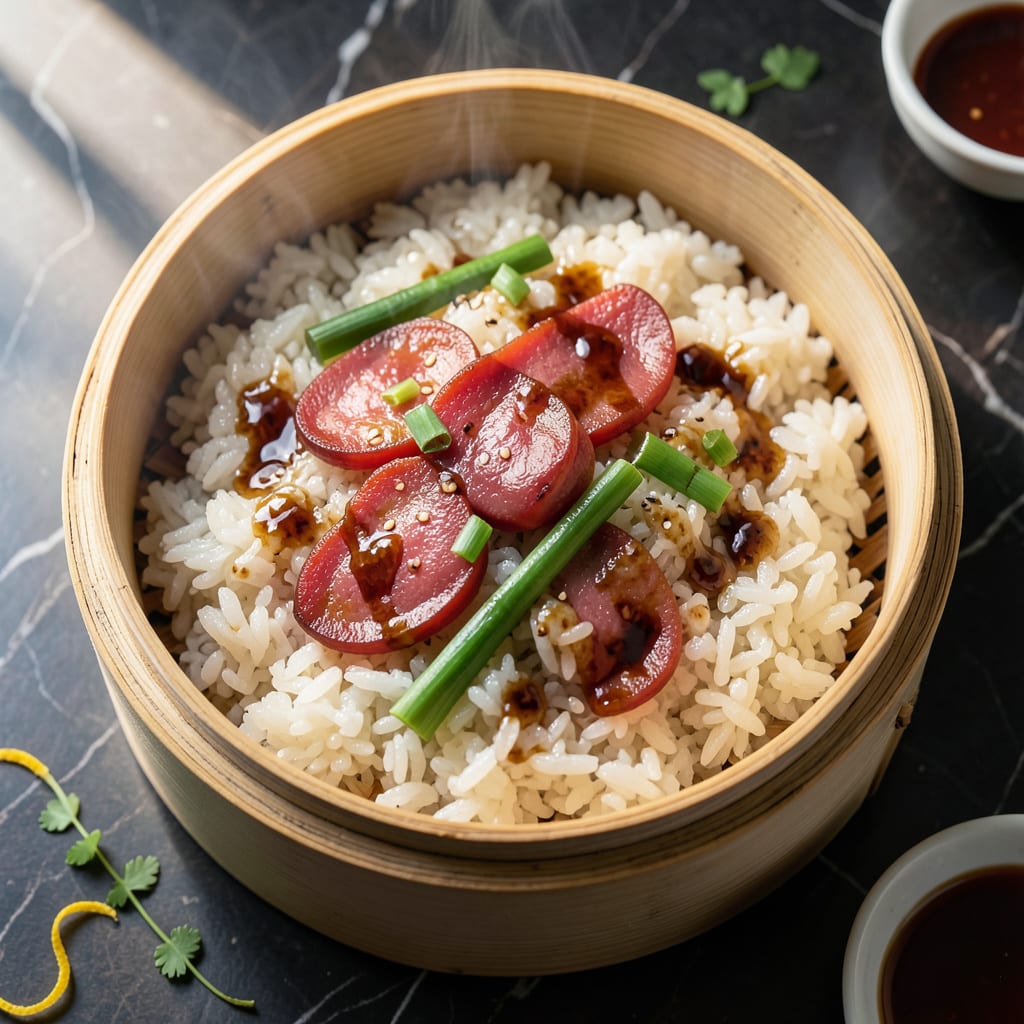
This traditional method produces fluffy, fragrant sticky rice that pairs perfectly with any Chinese dish. The key is soaking the rice and using the right water ratio for ideal texture.
Steaming ensures even cooking and preserves the natural sweetness of the grains. I’ve refined this technique over years to guarantee consistent results every time.
Ingredients for Chinese Steamed Sticky Rice
Minimal ingredients, maximum aroma. This foundation pairs with any Chinese dish beautifully.
| Ingredient | Amount | Notes |
|---|---|---|
| Glutinous Rice 🍚 | 2 cups | Also called sweet rice, uncooked |
| Water 💧 | 2 ½ cups | For soaking and steaming |
| Vegetable Oil 🫒 | 1 tsp | For greasing steam basket |
| Salt 🧂 | ¼ tsp | Optional, for seasoning |
| Soy Sauce 🥫 | 1 tbsp | Light or all-purpose variety |
| Sesame Oil 🫒 | ½ tsp | For finishing, optional |
| Green Onions 🧅 | 2 whole | Thinly sliced for garnish |
| Garlic Cloves 🧄 | 2 cloves | Minced, optional for aroma |
| Ginger Root 🌿 | 1 whole | 1-inch piece, grated, optional |
| White Sesame Seeds 🌰 | 1 tsp | Toasted, for garnish |
Glutinous rice is non-negotiable—look for labels reading ‘sweet rice’ or ‘sticky rice’ at Asian markets or the international aisle. Brands like Koda Farms or Three Rings are reliable. Avoid jasmine or long-grain; their lower amylose content won’t deliver the signature stickiness. The rice should be opaque white, not translucent. Soaking time directly impacts texture, so don’t rush this step.
No glutinous rice? There’s no perfect substitute, but short-grain sushi rice gets closest (reduce water by 10%). Skip the oil if using a non-stick steamer basket. For extra fragrance, toast the rice in a dry pan for 2 minutes before soaking. Soy sauce can be swapped for tamari (gluten-free) or coconut aminos. The green onions are flexible—chives or scallions work equally well.
Uncooked rice keeps in a sealed container for 6-12 months. Cooked sticky rice is best eaten fresh but can be refrigerated for 2-3 days. Reheat by steaming with a damp towel to prevent drying. For make-ahead, par-cook the rice (80% done), cool, then finish steaming when ready to serve. Always store rice in a cool, dark place to prevent rancidity.
Why You’ll Love This Recipe
- Set It and Forget: I soak the glutinous rice overnight, then steam it while I prep the rest of dinner—hands-off doesn’t get easier.
- Umami in Every Bite: The soy sauce I drizzle at the end adds that salty-sweet depth that makes me sneak extra bites straight from the steamer.
- Feeds a Hungry Table: This sticky rice stretches a small piece of protein into a full meal for my family of four.
- Budget Stretcher: A two-pound bag of glutinous rice costs pennies and lasts us for multiple dinners.
Step-by-Step Instructions for Chinese Steamed Sticky Rice
Master this technique for consistently fluffy, fragrant sticky rice with minimal effort and maximum flavor.
Step 1: Soak the Glutinous Rice Thoroughly
Place the 2 cups glutinous rice in a large bowl and cover completely with the 2.5 cups water. The water level should be about 1 inch above the rice. Soak for at least 4 hours or up to overnight—this extended soaking is critical for achieving the characteristic soft, sticky texture.
Properly soaked glutinous rice grains will appear plump and slightly translucent at the edges. Drain the rice completely in a fine-mesh sieve before steaming; excess water would dilute the flavor and create a mushy result.
Step 2: Prepare the Steaming Apparatus
Select a steamer basket that fits snugly over a pot with a tight-fitting lid. Lightly grease the basket with the 1 tsp vegetable oil using a paper towel to prevent the rice from sticking. This step ensures easy release and preserves the rice’s integrity when transferring to a serving dish.
Bring 1-2 inches of water to a rolling boil in the pot beneath the steamer. The water should not touch the bottom of the basket. Maintain a consistent, vigorous boil throughout the steaming process to generate the steady heat needed for even cooking.
Step 3: Steam the Rice to Perfection
Spread the drained glutinous rice evenly in the prepared steamer basket, creating a single layer if possible. If your basket is small, divide the rice into batches. Cover with the lid and steam over boiling water for 20-25 minutes.
Resist the urge to peek during the first 15 minutes—releasing steam interrupts the cooking process. The rice is done when it appears translucent and slightly glossy, with no hard, white centers remaining. Taste a grain to confirm it’s tender throughout.
Step 4: Add Flavor and Finish
Transfer the steamed rice to a serving bowl. While still hot, drizzle with the 1 tbsp soy sauce and, if using, the 0.5 tsp sesame oil and 0.25 tsp salt. Gently fold with a rice paddle or silicone spatula to distribute the seasonings without breaking the grains.
The rice should have a subtle sheen from the oils and a light, savory aroma. Allow it to sit covered for 5 minutes before serving to let the flavors meld and the texture settle.
Step 5: Garnish and Serve
Thinly slice the 2 whole green onions and, if using, mince the 2 cloves garlic cloves and grate a 1-inch piece of the ginger root. Sprinkle these aromatics over the rice along with the 1 tsp white sesame seeds for a fresh, vibrant finish.
Serve immediately while the rice is hot and at its most fragrant. The grains should cling together slightly but separate cleanly when scooped, with a delicate sweetness that’s the hallmark of properly prepared glutinous rice.
Pro Tips For Making Chinese Steamed Sticky Rice
- Soak Overnight: Glutinous rice needs at least 4 hours in cold water—overnight is better. I learned this the hard way after ending up with crunchy bits in my first few batches.
- Use a Steamer Basket: Skip the makeshift setups and use a proper bamboo steamer. It distributes heat evenly and prevents water from dripping back into the rice.
- Don’t Overpack: Leave room for the rice to expand—packing it too tightly turns it into a dense, gummy block. About 1 inch of space at the top of the bowl works.
- Add Soy Last: Drizzle the soy sauce over the rice after steaming, not before. Adding it early can make the grains mushy and unevenly colored.
Essential Equipment for This Dish
Steamer Basket
A bamboo steamer basket is ideal for even heat distribution and traditional flavor. I use a 10-inch diameter basket that fits perfectly over my 5-quart pot. Look for one with multiple tiers to steam rice and dumplings simultaneously. 🥢
Pot with Lid
Choose a wide, heavy-bottomed pot to hold the steamer basket. A stainless steel or enameled cast iron pot works best. The lid must fit tightly to trap steam. My All-Clad 5-quart pot has served me perfectly for years.
Fine-Mesh Sieve
Draining soaked rice requires a fine-mesh sieve to prevent grains from slipping through. I recommend a 12-inch diameter sieve for handling 2 cups of rice comfortably. Stainless steel versions last forever and won’t rust.
Rice Paddle
A wooden rice paddle or silicone spatula gently folds seasonings without crushing grains. The flat surface helps spread rice evenly in the steamer. I keep a dedicated paddle just for rice to avoid flavor transfer.
Damp Towel
Place a clean kitchen towel over the steamer lid to catch condensation. This prevents water drips from making your rice soggy. Use a lint-free towel and replace it if it becomes too saturated during steaming.
Kitchen Scale
For perfect water-to-rice ratios, a digital kitchen scale ensures accuracy. I use an OXO Good Grips 11lb scale for precise measurements. Weighing rice is especially helpful when scaling the recipe up or down.
Nutrition Facts
Frequently Asked Questions
What kind of rice works best?
Use glutinous rice (also called sweet rice) for authentic sticky texture. Look for brands like Koda Farms or Three Rings. Avoid jasmine or long-grain varieties—they won’t achieve the same stickiness.
Why is soaking important?
Soaking for 4 hours (or overnight) softens the grains, ensuring even cooking. Without proper soaking, the rice may turn out unevenly cooked or too firm. The grains should look plump and slightly translucent when ready.
Can I steam rice without a bamboo basket?
Yes! A metal steamer insert or heatproof colander works too. Just ensure it fits snugly over a pot with 1-2 inches of boiling water. Line with parchment paper to prevent sticking.
How do I prevent soggy rice?
Use a damp towel over the lid to catch condensation drips. Also, avoid lifting the lid during the first 15 minutes of steaming. This keeps the steam consistent and the texture perfect.

- 6 Egg Cake Recipe with Oil: Light as Air With Buttery Moisture - October 4, 2026
- 4 Bean Casserole Recipe: One-Pan Heartiness With Smoky Paprika Depth - October 4, 2026
- 3-Ingredient Keto Mug Cake Recipe: Microwave Magic in 2 Minutes - October 4, 2026