
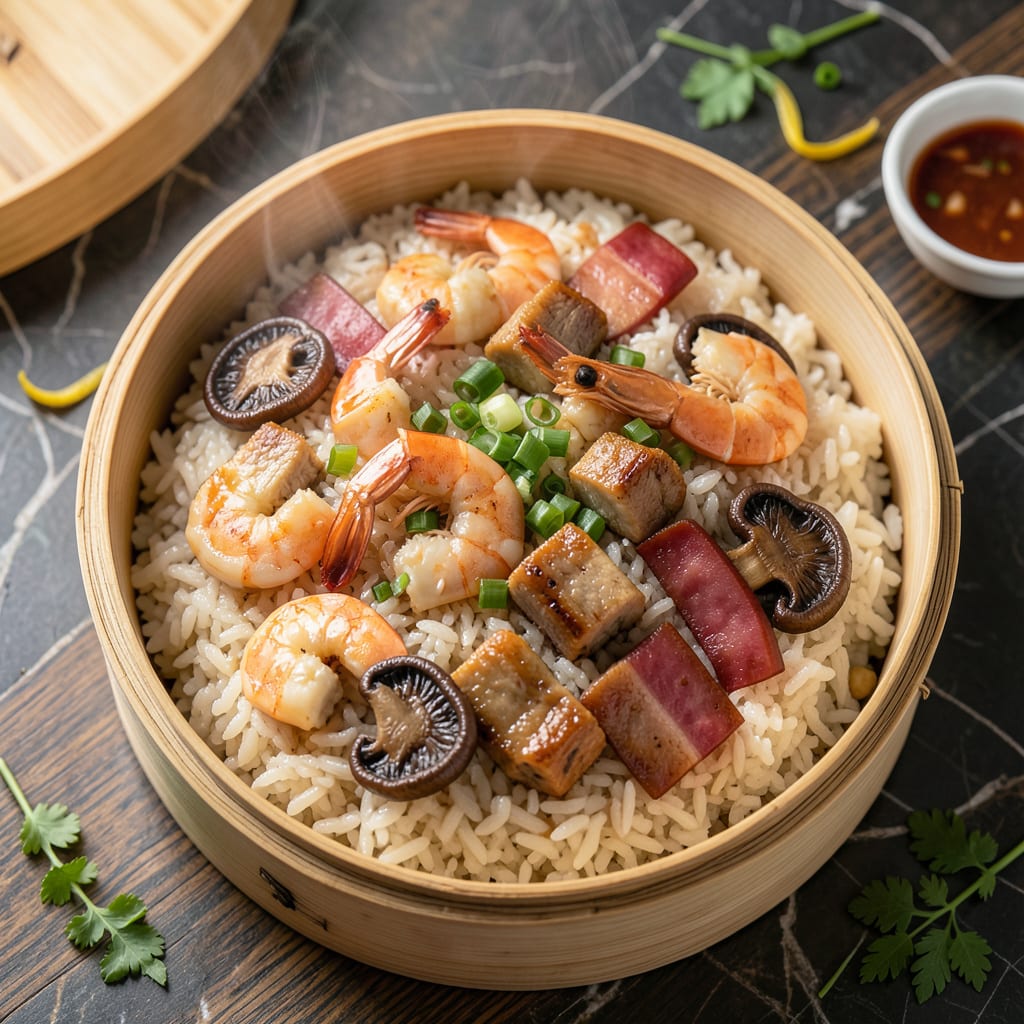
This dim sum steamed rice delivers fluffy, tender bites with savory fillings that melt in your mouth. The secret lies in the perfect balance of rice texture and seasoning.
Using a simple steaming technique, this recipe achieves restaurant-quality results at home. The process ensures each piece stays soft, moist, and packed with flavor.
Ingredients for Dimsum Steamed Rice
Quality glutinous rice and savory fillings create these restaurant-style steamed bites at home.
| Ingredient | Amount | Notes |
|---|---|---|
| Glutinous Rice 🍚 | 2 cups | Soaked overnight for best texture |
| Pork Shoulder 🥩 | ½ lb | Diced into small cubes |
| Shrimp 🍤 | ½ lb | Peeled, deveined, chopped |
| Chinese Sausage 🌭 | 2 pieces | Diced, Lap Cheong preferred |
| Shiitake Mushrooms 🍄 | 4 whole | Dried, soaked and diced |
| Green Onions 🧅 | 3 whole | Thinly sliced, white and green parts separated |
| Light Soy Sauce 🫒 | 2 tbsp | For seasoning the fillings |
| Oyster Sauce 🫒 | 1 tbsp | Adds depth to savory flavor |
| Sesame Oil 🫒 | 1 tsp | For finishing aroma |
| Shaoxing Wine 🍶 | 1 tbsp | Or substitute dry sherry |
| Garlic Cloves 🧄 | 3 cloves | Minced finely for fillings |
| Ginger Root 🌿 | 1 piece | 1-inch, minced or grated |
| White Pepper 🌶️ | ½ tsp | Ground, for authentic flavor |
| Sugar 🍚 | ½ tsp | Balances savory notes |
| Cornstarch 🌾 | 1 tsp | For thickening fillings |
The glutinous rice must be short-grain and sticky—look for brands like Koda Farms or Bob’s Red Mill at Asian markets or well-stocked supermarkets. The pork shoulder should have good marbling for tenderness, while the shrimp should be fresh or previously frozen (thawed completely). For the Chinese sausage, Lap Cheong is traditional, found at any Asian grocery. Shiitake mushrooms add umami depth—dried is preferred for concentrated flavor.
No shrimp? Chicken or tofu work well as substitutes. Missing Chinese sausage? Ham or char siu can stand in. For a vegetarian version, mushrooms and bamboo shoots add great texture. Shaoxing wine is ideal, but dry sherry is an acceptable substitute. If you can’t find light soy sauce, regular soy sauce at half the amount works, though it may darken the filling slightly.
Soaked rice can be refrigerated overnight if needed. The fillings keep in the fridge for 1-2 days before steaming. Once cooked, these are best eaten fresh but can be reheated by steaming for 3-5 minutes. Leftovers keep for 3 days refrigerated.
Why You’ll Love This Recipe
- One Pot Wonder: I just dump everything—soaked glutinous rice, diced pork, shrimp, sausage, and mushrooms—into the steamer and let it work its magic.
- Umami Bomb: The mix of shrimp, Chinese sausage, and shiitakes creates this deep, savory richness that’s honestly hard to resist.
- Crowd Pleaser: I serve this at family gatherings, and even the picky eaters go back for seconds.
- Leftovers Dream: It tastes even better the next day, and reheating is just a quick steam away—no fuss.
Step-by-Step Instructions for Dimsum Steamed Rice
Master the technique for achieving the perfect texture and flavor balance in these traditional bites.
Step 1: Prepare and Soak the Glutinous Rice
Begin by rinsing the 2 cups Glutinous Rice under cold water until the water runs clear. This removes excess starch that could make the finished product gummy. Drain thoroughly in a fine-mesh sieve, shaking gently to remove all surface moisture.
Transfer the drained rice to a large bowl and cover with cold water by at least 2 inches. The rice must soak overnight (minimum 8 hours) to achieve the proper soft, sticky texture essential for dimsum. I always prepare this the night before to streamline the process the next day.
Step 2: Create the Savory Filling Mixture
In a large bowl, combine the 0.5 lb Pork Shoulder (diced into small cubes), 0.5 lb Shrimp (peeled, deveined, chopped), 2 pieces Chinese Sausage (diced), and 4 whole Shiitake Mushrooms (soaked and diced). Add the minced 3 cloves Garlic Cloves and 1 piece Ginger Root (1-inch, minced).
In a small bowl, whisk together the 2 tbsp Light Soy Sauce, 1 tbsp Oyster Sauce, 1 tbsp Shaoxing Wine, 0.5 tsp White Pepper, 0.5 tsp Sugar, and 1 tsp Cornstarch. Pour this over the meat mixture and mix thoroughly until all ingredients are evenly coated. The cornstarch helps bind the filling while the soy and oyster sauces create depth of flavor.
Step 3: Assemble the Dimsum Bites
Drain the soaked glutinous rice completely and divide it equally among 16-20 small squares of parchment paper (about 2 tablespoons per portion). Using your fingers, create a small well in the center of each rice portion for the filling.
Spoon approximately 1 tablespoon of the filling mixture into each rice well. The amount should be generous but not overflowing. Gather the edges of the parchment paper and twist gently to create a small pouch, leaving the top open for steaming.
Step 4: Steam to Perfection
Arrange the dimsum pouches in a bamboo steamer lined with additional parchment (to prevent sticking). Ensure there’s at least 1 inch of space between each piece for even steam circulation. Bring 2 inches of water to a rolling boil in a wok or large pot, then place the steamer on top.
Cover with the steamer lid and steam for 25-30 minutes over high heat. Check the water level halfway through and add more boiling water if needed. The dimsum is done when the rice is tender and translucent, and the filling reaches an internal temperature of 165°F.
Step 5: Finish and Serve
Carefully remove the dimsum from the steamer using tongs or a spatula. Place each on a serving dish, still in their parchment wrappers. Drizzle each piece with a few drops of 1 tsp Sesame Oil for aroma, and garnish with the thinly sliced 3 whole Green Onions (white and green parts separated).
Serve immediately while hot, with the parchment still on for easy handling. The parchment prevents sticking and makes these delightful bites easy to enjoy without utensils. The rice should be soft and slightly chewy, with the filling juicy and flavorful.
Pro Tips For Making Dimsum Steamed Rice
- Soak the Rice: Glutinous rice needs at least 4 hours in warm water—any less and it stays hard and undercooked, even after steaming.
- Par-cook the Pork: I learned this the hard way—simmer the pork shoulder for 15-20 minutes first so it’s tender and fully cooked when the rice finishes steaming.
- Skip the Raw Shrimp: Sounds weird, but it works: lightly pan-fry the shrimp before adding them to avoid a rubbery texture after steaming.
- Press Down Firmly: When packing the rice into the steamer, press it down hard so it holds its shape and doesn’t fall apart when you serve it.
Regional Styles of This Dish
Cantonese Tradition
In Cantonese dim sum houses, this dish is called lo mai gai and features sticky rice wrapped in lotus leaves. The filling often includes Lap Cheong sausage, chicken, and mushrooms. I love the earthy aroma the lotus leaf imparts. 🌿
Shanghai Adaptation
Shanghai-style versions use glutinous rice with a sweeter profile, sometimes adding dried shrimp or salted pork to the filling. The rice is often shaped into small pyramids rather than pouches. The texture is slightly firmer.
Fujian Influence
Fujian cuisine introduces seafood-heavy variations, with shrimp and scallops taking center stage. The rice is typically steamed in small bamboo cups called zongzi molds. I find the presentation particularly elegant.
Sichuan Spicy Version
For heat lovers, Sichuan-style adds chili oil and Sichuan peppercorns to the filling. The rice maintains its sticky texture while delivering a numbing spice. Use 1 tsp chili oil for authentic heat without overpowering. 🌶️
Taiwanese Twist
Taiwanese versions often include shitake mushrooms and bamboo shoots for extra crunch. The rice is sometimes mixed with five-spice powder before steaming. I appreciate the added complexity of flavors.
Modern Fusion
Contemporary chefs are experimenting with fillings like duck confit or foie gras. The rice base remains traditional, but the fillings push culinary boundaries. I’ve seen versions with truffle oil that are absolutely divine.
Nutrition Facts
Frequently Asked Questions
What type of rice works best?
Use short-grain glutinous rice for authentic texture. Brands like Koda Farms or Bob’s Red Mill work well. Avoid long-grain varieties as they won’t achieve the sticky consistency needed.
How do I prevent the rice from sticking?
Line your steamer with parchment paper and use individual parchment squares for each piece. This ensures easy removal and prevents the rice from sticking to the steamer.
Can I make this ahead of time?
Soaked rice can be refrigerated overnight. Assemble the dimsum up to 1 day ahead and refrigerate. Steam just before serving for best texture and freshness.
What if my filling is too wet?
Add an extra 1 teaspoon cornstarch to bind the mixture. If the filling is still loose, chill it for 30 minutes before assembling to firm it up.

- 6 Egg Cake Recipe with Oil: Light as Air With Buttery Moisture - October 4, 2026
- 4 Bean Casserole Recipe: One-Pan Heartiness With Smoky Paprika Depth - October 4, 2026
- 3-Ingredient Keto Mug Cake Recipe: Microwave Magic in 2 Minutes - October 4, 2026