
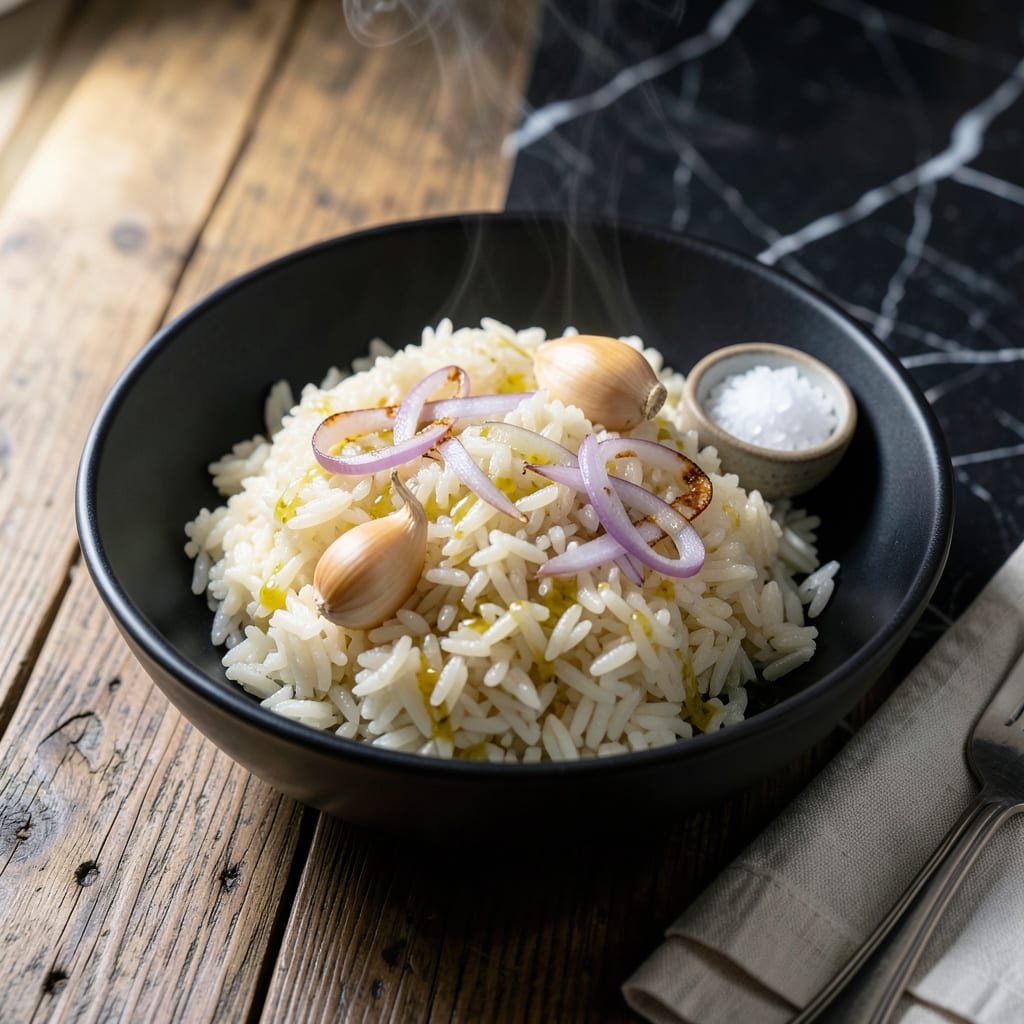
There’s a reason jasmine rice is the foundation of countless meals—its delicate floral aroma and fluffy texture elevate any dish it accompanies. This method ensures each grain stays separate and fragrant, never mushy or dry.
With the right water-to-rice ratio and gentle steaming, you’ll achieve perfectly tender results every time. Simple, precise, and foolproof, it’s the side dish that makes the meal.
Ingredients for Jasmine Steamed Rice
Fragrant jasmine rice plus a few simple additions creates the perfect fluffy, separate-grained side.
| Ingredient | Amount | Notes |
|---|---|---|
| Jasmine Rice 🍚 | 2 cups | Rinsed until water runs clear |
| Water 💧 | 2 ½ cups | Filtered or tap, room temperature |
| Sea Salt 🧂 | ½ tsp | Fine grain preferred |
| Garlic Cloves 🧄 | 2 cloves | Minced, optional for aroma |
| Shallot 🧅 | 1 whole | Finely diced, optional |
| Coconut Oil 🥥 | 1 tbsp | Or neutral oil for toasting |
| Fresh Cilantro 🌿 | ¼ cup | Chopped, for garnish |
| Lime 🍈 | 1 whole | Zested, optional garnish |
| Green Onions 🧅 | 2 whole | Thinly sliced, for garnish |
| Sesame Oil 🫒 | ½ tsp | Toasted, optional drizzle |
The rice itself is non-negotiable—look for Thai jasmine rice (brands like Elephant or Golden Phoenix are reliable). Rinsing removes excess starch, which is key for that separate-grain texture. I always buy in 5-lb bags from Asian markets; it’s cheaper and stays fresh for 6-12 months in an airtight container. The water ratio here is precise: too much and it’s mushy, too little and it’s dry.
No jasmine rice? Basmati works at a 1:1.25 rice-to-water ratio, but the floral aroma won’t be the same. Skip the garlic and shallot if you want plain rice—the oil is still worth using to prevent sticking. For extra fragrance, toast the rice in the oil for 1-2 minutes before adding water. The garnishes are flexible: Thai basil or mint can stand in for cilantro if that’s not your thing.
Cooked rice keeps well in the fridge for 4-5 days in a sealed container. To reheat, sprinkle a few drops of water and microwave covered. For freezing, spread in a single layer first, then transfer to bags—lasts 3 months. Always rinse before cooking; it’s worth the extra minute.
Why You’ll Love This Recipe
- Hands-Off Cooking: I just rinse the rice, add the ingredients, and let the steam do all the work—no stirring, no fuss.
- Aroma Heaven: The garlic and shallot infuse the jasmine rice with a fragrance that fills my kitchen before the first bite.
- Pairs With Anything: I serve it with grilled chicken one night and stir-fry the next—it’s my reliable side for any protein or veggie.
- Budget Stretch: A pound of jasmine rice feeds my family for days, and the garlic and shallot add flavor without breaking the bank.
Step-by-Step Instructions for Jasmine Steamed Rice
Master the technique that transforms simple ingredients into perfectly fragrant, fluffy grains every time.
Step 1: Rinse and Prepare the Rice
Place the 2 cups Jasmine Rice in a fine-mesh strainer and rinse under cold running water, using your fingers to agitate the grains. Continue until the water runs completely clear—this removes excess starch and prevents gummy rice.
Let the rice drain for 5 minutes while you gather your remaining ingredients. I always use a large bowl to catch the rinse water, which helps me see when it’s truly clear. This step is non-negotiable for achieving separate, fluffy grains.
Step 2: Toast the Aromatics
In a medium saucepan with a tight-fitting lid, heat the 1 tbsp Coconut Oil over medium heat. Add the 2 cloves Garlic Cloves and 1 whole Shallot, if using, and sauté for 1-2 minutes until fragrant but not browned.
The garlic and shallot should release their aroma without taking on color—this builds a subtle flavor foundation. If using the shallot, ensure it’s finely diced so it distributes evenly through the rice. Remove from heat once fragrant to prevent burning.
Step 3: Combine and Steam the Rice
Add the drained rice to the saucepan and stir to coat the grains with the coconut oil and aromatics. Pour in the 2.5 cups Water and add the 0.5 tsp Sea Salt. Bring to a boil over medium-high heat—this should take 3-4 minutes.
Once boiling, immediately reduce the heat to low, cover with the lid, and let it simmer undisturbed for 15 minutes. The steam trapped inside is what cooks the rice evenly. Resist the urge to peek—every time you lift the lid, you release precious steam and extend the cooking time.
Step 4: Rest and Fluff the Rice
After 15 minutes, turn off the heat but keep the lid on. Let the rice rest for an additional 10 minutes—this allows the grains to absorb any remaining moisture and finish cooking through carryover heat.
Gently fluff the rice with a fork, breaking up any clumps while preserving the individual grains. The texture should be light and airy, with each grain distinct yet tender. If the rice seems undercooked, let it rest for another 5 minutes with the lid on.
Step 5: Garnish and Serve
Transfer the rice to a serving bowl. For garnish, sprinkle with the 0.25 cup Fresh Cilantro, thinly sliced 2 whole Green Onions, and lime zest if desired. For an extra layer of flavor, drizzle with the 0.5 tsp Sesame Oil just before serving.
The cilantro and green onions add freshness, while the sesame oil provides a nutty aroma. Serve immediately while the rice is hot and at its most fragrant. The grains should glisten slightly and separate easily with no stickiness.
Pro Tips For Making Jasmine Steamed Rice
- Rinse the Rice: Always rinse jasmine rice until the water runs clear—this removes excess starch so your grains stay fluffy and don’t clump together.
- Soak for 20 Minutes: After rinsing, let the rice soak in fresh water for 20 minutes; I learned this the hard way—it shortens cooking time and guarantees even tenderness.
- Skip the Peek: Resist the urge to lift the lid while steaming—every time you do, you drop the temperature and risk undercooked or mushy rice.
- Toast the Aromatics: Sauté the garlic and shallot in a little oil before adding water; sounds weird, but it works—deepens the flavor in every bite.
Dietary Considerations for This Recipe
Gluten-Free Safe
Jasmine rice is naturally gluten-free, making this recipe safe for anyone with celiac disease or gluten sensitivity. Just ensure your sea salt and other ingredients haven’t been cross-contaminated with gluten-containing products. I always double-check labels on seasonings. 💪
Vegan and Vegetarian
This recipe is inherently vegan and vegetarian—no animal products required. The coconut oil adds richness without dairy, and the optional garnishes like cilantro and lime keep it plant-based. It pairs perfectly with tofu or vegetable stir-fries.
Low-Fat and Light
With only 1 tbsp coconut oil for the entire batch, this is a low-fat side dish. Each serving contains minimal calories from fat, making it ideal for heart-healthy or weight-conscious diets. The garlic and shallot add flavor without extra fat.
Allergen Considerations
Jasmine rice itself is hypoallergenic, but watch for potential allergens in optional garnishes. Sesame oil could be problematic for those with sesame allergies. For nut-free versions, skip any nut-based toppings or substitutes.
Low Sodium Option
To reduce sodium, simply omit the sea salt or replace it with ½ tsp salt-free seasoning blend. The coconut oil and aromatics still provide plenty of flavor. I often use a pinch of white pepper for depth without sodium. ✨
Diabetic Friendly
Jasmine rice has a moderate glycemic index, so portion control is key. Stick to a ½ cup serving and pair it with protein and fiber-rich vegetables to balance blood sugar. The fluffy texture makes it satisfying in smaller amounts.
Nutrition Facts
Frequently Asked Questions
Why do I need to rinse the rice first?
Rinsing removes excess starch from the grains. This prevents the rice from becoming sticky or gummy during cooking. The clearer the water, the fluffier your final result will be.
Can I use a rice cooker instead of a saucepan?
Use the same 1:1.25 rice-to-water ratio and follow your cooker’s instructions. Most models automatically switch to “keep warm” after cooking, which mimics the resting period.
What if my rice turns out undercooked?
If it’s still firm after 15 minutes, add 2 tbsp water, cover, and cook for another 5 minutes on low. Let it rest 10 minutes off heat before checking again.
How do I store leftovers?
Cool completely, then transfer to an airtight container. Refrigerate for up to 5 days or freeze for 3 months. Reheat with a splash of water to restore moisture.

- 6 Egg Cake Recipe with Oil: Light as Air With Buttery Moisture - October 4, 2026
- 4 Bean Casserole Recipe: One-Pan Heartiness With Smoky Paprika Depth - October 4, 2026
- 3-Ingredient Keto Mug Cake Recipe: Microwave Magic in 2 Minutes - October 4, 2026