
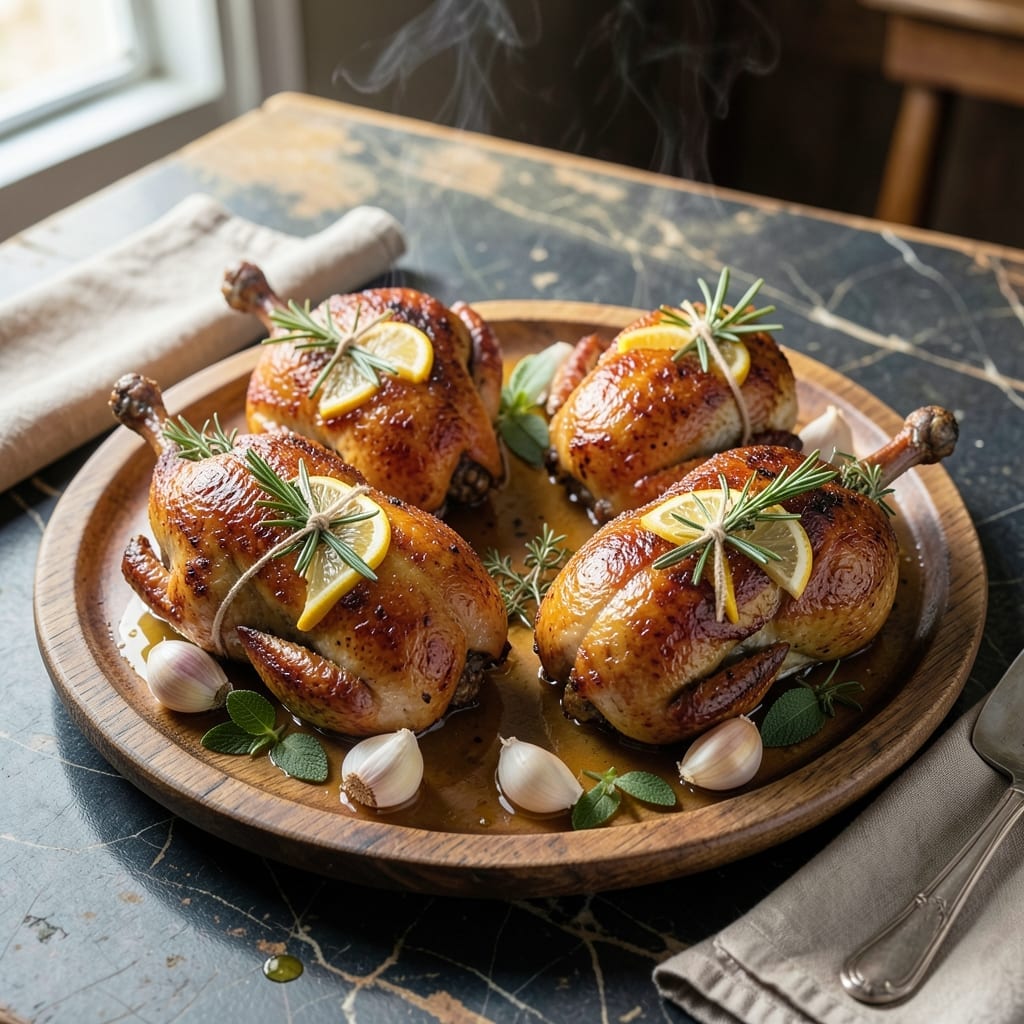
This Cornish hen recipe brings the show-stopping flavors of Dixie Stampede to your home kitchen with minimal effort.
A simple herb butter under the skin transforms each bird into a golden-brown masterpiece with tender, juicy meat. The technique is foolproof—just season, roast, and let the oven do the work.
You’ll love how the herbs infuse every bite while the skin crisps to perfectly golden perfection. It’s elegant enough for special occasions yet simple enough for Sunday dinner.
Serve with classic sides to recreate the full Dixie Stampede experience. Here’s how to make it.
Ingredients for Dixie Stampede Cornish Hen
Elegant yet effortless. These ingredients deliver that signature Dixie Stampede experience at home.
| Ingredient | Amount | Notes |
|---|---|---|
| Cornish Hens 🍗 | 4 whole | Thawed if frozen, patted dry |
| Unsalted Butter 🧈 | ¾ cup | Softened to room temperature |
| Fresh Rosemary 🌿 | 2 tbsp | Finely chopped, stems discarded |
| Fresh Thyme 🍃 | 2 tbsp | Leaves stripped from stems |
| Fresh Sage 🌿 | 1 tbsp | Finely minced for herb butter |
| Garlic Cloves 🧄 | 4 cloves | Minced to a fine paste |
| Kosher Salt 🧂 | 1 ½ tsp | Divided for seasoning inside and out |
| Ground Black Pepper 🌶️ | 1 tsp | Freshly cracked preferred |
| Lemon 🍋 | 1 whole | Zested and juiced for brightness |
| Olive Oil 🫒 | 1 tbsp | For rubbing skin before roasting |
| Onion 🧅 | 1 whole | Quartered for aromatic base |
| Carrots 🥕 | 2 whole | Peeled, cut into chunks |
| Celery Stalks 🥬 | 2 pieces | Cut into large pieces |
| Chicken Stock 💧 | ½ cup | Low-sodium preferred for pan sauce |
The hens are the star. Look for 1.25-1.5 lb each—this size roasts evenly and serves one per person. Most Whole Foods or Costco locations carry them frozen, so plan to thaw overnight. The butter needs to be room temperature to mix properly with herbs (cold butter won’t incorporate well). For herbs, organic bunches from the store have the most fragrance, but dried in a pinch works at half the amount.
No fresh herbs? Dried at half the quantity—but fresh really shines here. Out of rosemary? Thyme can pick up the slack. The lemon zest is non-negotiable for that bright pop (skip the juice if you must). Chicken stock can be swapped for vegetable stock, but the flavor depth won’t be as rich. Trader Joe’s has great pre-minced garlic if you’re short on time.
Hens keep in the fridge 1-2 days before cooking, or freeze up to 9 months. Herb butter can be made ahead—store it in the fridge for 3 days or freeze for 1 month. Leftovers? The meat pulls off the bone beautifully for sandwiches the next day.
Why You’ll Love This Recipe
- One Pan Wonder: I love that I can roast these Cornish hens with butter and herbs all on a single sheet pan—minimal cleanup, maximum flavor.
- Herb-Infused Magic: The rosemary, thyme, and sage melt into the butter, creating a rich, aromatic crust that makes every bite irresistible.
- Crowd-Pleasing Star: This dish feels fancy enough for a dinner party but simple enough for a cozy Sunday supper with the family.
- Leftovers? Yes Please: The hens taste even better the next day, and the bones make a killer stock—so nothing goes to waste.
Step-by-Step Instructions for Buttery Herb-Roasted Cornish Hens
Here’s the method I use to get crispy skin and juicy meat every time.
Step 1: Prepare and Season the Cornish Hens
Pat the 4 whole Cornish Hens completely dry with paper towels inside and out. Season the cavities with ½ tsp Kosher Salt and ½ tsp Ground Black Pepper, then stuff each with 1 tbsp Fresh Rosemary, 1 tbsp Fresh Thyme, and a quarter of the 1 whole Lemon.
In a small bowl, mix the 0.75 cup Unsalted Butter with the 1 tbsp Fresh Sage, 4 cloves Garlic Cloves, and remaining 1 tsp Kosher Salt and ½ tsp Ground Black Pepper. Gently loosen the skin over the breasts and thighs, then rub the herb butter underneath and all over the outside. Drizzle with the 1 tbsp Olive Oil.
Step 2: Prepare the Roasting Pan with Aromatics
Preheat your oven to 425°F. Scatter the 1 whole Onion (quartered), 2 whole Carrots (cut into chunks), and 2 pieces Celery Stalks (cut into large pieces) in the bottom of a roasting pan. These will create a flavorful base and lift the hens for even cooking.
Place the hens breast-side up on top of the vegetables. This elevation allows hot air to circulate underneath, ensuring the skin crisps all the way around. The vegetables will also soak up the rendering fat and juices, which you’ll use later for a simple pan sauce.
Step 3: Roast to Golden Perfection
Roast the hens in the preheated oven for 25 minutes. Then reduce the heat to 375°F and continue roasting for another 25-30 minutes, or until the skin is deep golden brown and crispy, and the juices run clear when you pierce the thickest part of the thigh.
Start checking the internal temperature with a meat thermometer after 45 minutes total. You’re aiming for 165°F in the thickest part of the thigh, not touching bone. If the skin browns too quickly, tent the pan loosely with foil to prevent burning while the meat finishes cooking.
Step 4: Rest and Make a Simple Pan Sauce
Transfer the hens to a cutting board and tent loosely with foil. Let them rest for 10-15 minutes—this allows the juices to redistribute throughout the meat, ensuring every bite is moist and flavorful. The internal temperature will also rise a few degrees during this rest (carryover cooking).
Meanwhile, place the roasting pan on the stovetop over medium heat. Add the 0.5 cup Chicken Stock and the juice from the remaining lemon. Simmer for 3-4 minutes, scraping up all the browned bits from the bottom of the pan. Strain if desired, then serve this simple but flavorful sauce alongside the carved hens.
Pro Tips For Making Dixie Stampede Cornish Hen
- Pat Hens Dry: Use paper towels to thoroughly dry the Cornish hens before seasoning—this guarantees crispy skin, since moisture is the enemy of browning. I learned this the hard way after pulling out pale, soggy hens twice.
- Soften the Butter: Let the unsalted butter sit at room temperature for 30 minutes before mixing with rosemary, thyme, and sage. Cold butter won’t coat the hens evenly, and you’ll end up with uneven flavor.
- Don’t Overcrowd: Roast the hens on a rack or spaced apart on the pan—crowding steams them instead of roasting. After burning a few batches from packed pans, I finally got the hint.
- Rest Before Carving: Let the hens rest for 10 minutes under foil after roasting. It keeps the juices inside where they belong, not all over your cutting board. Yes, it’s hard to wait, but it’s worth it.
Wine and Beer Pairings for These Flavors
White Wine Pairings
A crisp Chardonnay from California pairs beautifully with the herb butter—its bright acidity cuts through the richness. I love Kendall-Jackson Vintner’s Reserve for its balance of citrus and vanilla notes that complement the rosemary and thyme. 🍷
Red Wine Options
For red lovers, a light Pinot Noir from Oregon works wonderfully. Try Domaine Serene or Eyrie Vineyards—their earthy, fruit-forward profiles enhance the savory notes without overpowering the dish.
Sparkling Choices
A dry Prosecco or Cava offers a refreshing contrast to the dish’s richness. The bubbles cleanse your palate between bites. I recommend La Marca Prosecco for its consistent quality and approachable price point.
Beer Pairings
A malty Amber Ale like Fat Tire from New Belgium Brewing complements the roasted flavors. Its caramel notes harmonize with the golden skin, while the moderate bitterness balances the herbs. 🍺
Non-Alcoholic Options
For a non-alcoholic pairing, try sparkling apple cider with a cinnamon stick. The effervescence and sweetness mirror the wine pairings, while the cinnamon adds a cozy touch perfect for this dish.
Nutrition Facts
Frequently Asked Questions
Can I use dried herbs instead of fresh?
Yes, but use half the amount. Dried herbs are more concentrated, so 1 tbsp fresh equals 1.5 tsp dried. The flavor will be slightly different but still delicious.
How do I know when the hens are done?
Use a meat thermometer to check the thickest part of the thigh. It should read 165°F. The juices should run clear, and the skin should be golden-brown and crispy.
Can I make this ahead of time?
Season the hens up to 24 hours ahead and refrigerate. Roast just before serving for best results. Leftovers keep 3-4 days in the fridge.
What if the skin isn’t crispy?
Broil for 2-3 minutes at the end or pat the hens drier before roasting. Avoid overcrowding the pan to ensure even browning.

- 6 Egg Cake Recipe with Oil: Light as Air With Buttery Moisture - October 4, 2026
- 4 Bean Casserole Recipe: One-Pan Heartiness With Smoky Paprika Depth - October 4, 2026
- 3-Ingredient Keto Mug Cake Recipe: Microwave Magic in 2 Minutes - October 4, 2026