
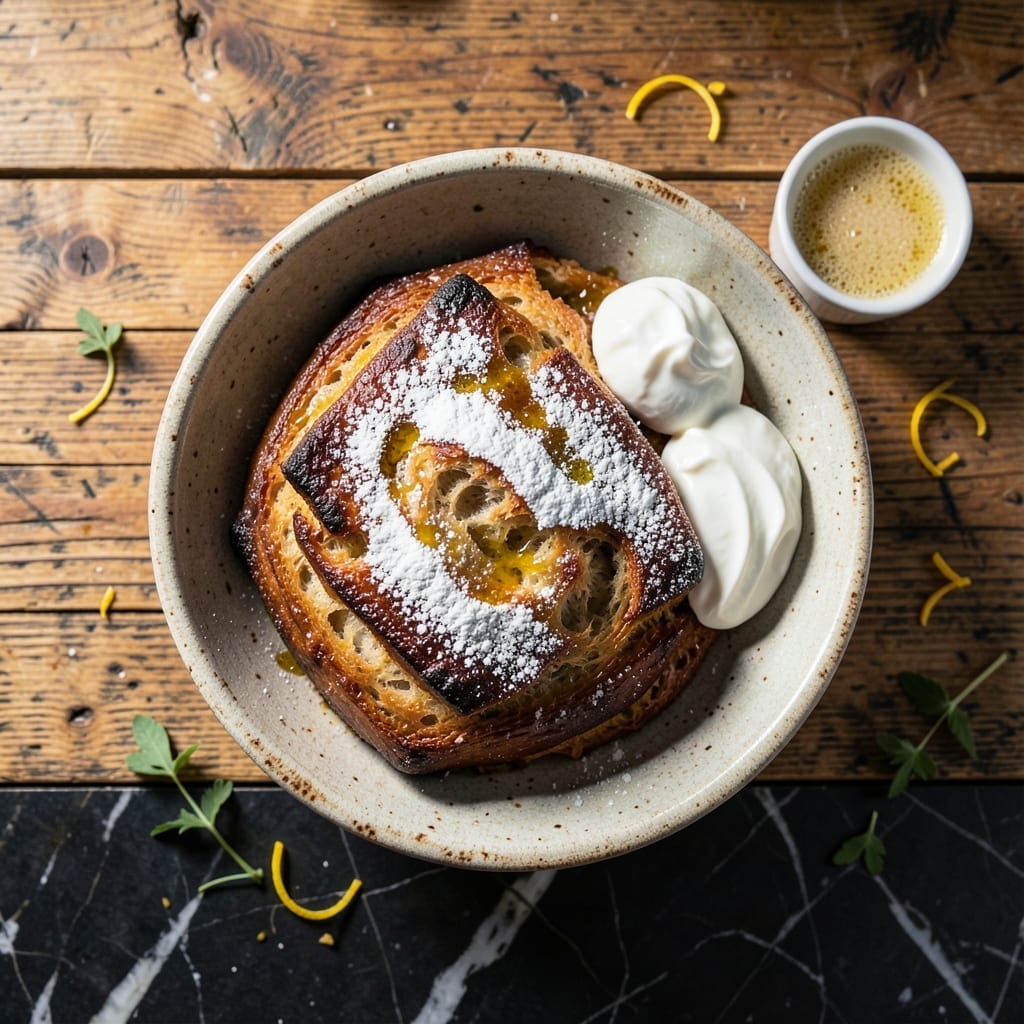
This soft, pillowy flatbread is the foundation of authentic kebab dishes, delivering the perfect texture to complement bold flavors. I developed this recipe after testing countless variations to achieve the right balance of chewiness and softness.
The key lies in the dough’s hydration and a two-hour rest period, which allows the gluten to relax fully. This creates a bread that’s tender yet sturdy enough to hold hearty fillings without tearing.
When cooked on a hot skillet, the bread puffs slightly and develops beautiful charred spots. The result is a warm, authentic flatbread that transforms any kebab into a restaurant-quality meal.
Use it for traditional doner kebabs or modern sandwiches. Here’s how to make it perfectly every time.
Ingredients for Doner Bread
A few simple ingredients create this authentic, pillowy flatbread perfect for kebabs.
| Ingredient | Amount | Notes |
|---|---|---|
| All-Purpose Flour 🌾 | 4 cups | Plus extra for dusting |
| Active Dry Yeast 🍞 | 2 ¼ tsp | One standard packet |
| Granulated Sugar 🍚 | 1 tsp | Activates the yeast |
| Warm Water 💧 | 1 ¼ cups | 110°F to 115°F ideal |
| Plain Greek Yogurt 🥛 | ½ cup | Full-fat for tenderness |
| Olive Oil 🫒 | 2 tbsp | Extra-virgin for flavor |
| Salt 🧂 | 1 ½ tsp | Diamond Crystal preferred |
| Baking Powder 🧂 | 1 tsp | Ensures rise and softness |
| Milk 🥛 | ½ cup | Warm, whole milk ideal |
| Cornstarch 🌾 | 2 tbsp | For dusting work surface |
The flour is the backbone—King Arthur All-Purpose gives consistent results. Yeast freshness is non-negotiable; check the expiration date on the packet. Full-fat Greek yogurt adds the necessary tang and tenderness. For water temperature, use a thermometer for precision (110°F to 115°F). Warm milk enhances the dough’s softness, and whole milk yields the best texture for this application.
No Greek yogurt? Plain yogurt strained overnight works, though the texture may vary slightly. For a dairy-free version, unsweetened almond yogurt can substitute, but expect a denser crumb. Cornstarch can be replaced with all-purpose flour for dusting, though the dough may stick slightly more. Ensure yeast is active—if it doesn’t foam after 5 minutes in warm water and sugar, start over.
Store yeast in the freezer to extend shelf life (up to 1 year). Dough rests best in a warm, draft-free spot. Prepared flatbreads keep at room temperature for 2 days in an airtight container or freeze for up to 1 month. Reheat on a dry skillet to restore freshness.
Why You’ll Love This Recipe
- No-Knead Magic: The Greek yogurt in this dough means I can skip the arm workout—just mix, let it rise, and bake.
- Warm Pillow Softness: That first bite with its tender crumb and barely-there sweetness makes every sandwich feel like a hug.
- Weeknight Hero: I throw these together for quick dinners, then use leftovers for lunch wraps the next day.
- Pantry Staples: Honestly, I always have flour, yeast, and yogurt on hand, so this is my last-minute lifesaver.
Step-by-Step Instructions for Doner Bread
This method ensures authentic, pillowy flatbread with the perfect texture for kebabs.
Step 1: Activate the Yeast and Prepare Wet Ingredients
In a large mixing bowl, combine the 2.25 tsp Active Dry Yeast with 1 tsp Granulated Sugar and 1.25 cups Warm Water. Stir gently and let sit for 5-7 minutes until the mixture becomes frothy and opaque—this confirms the yeast is active and ready to work.
Add the 0.5 cup Plain Greek Yogurt, 2 tbsp Olive Oil, and 0.5 cup Milk to the yeast mixture. Whisk until fully combined and smooth. The yogurt adds tenderness to the dough, while the olive oil ensures a soft, pliable texture. The milk enhances richness and contributes to the authentic flavor profile.
Step 2: Incorporate Dry Ingredients and Knead the Dough
In a separate bowl, whisk together the 4 cups All-Purpose Flour, 1.5 tsp Salt, and 1 tsp Baking Powder. The baking powder provides additional lift, ensuring the bread remains light and airy.
Gradually add the dry ingredients to the wet mixture, stirring with a wooden spoon until a shaggy dough forms. Turn the dough out onto a surface dusted with 2 tbsp Cornstarch and knead for 8-10 minutes until smooth and elastic. The dough should be slightly tacky but not sticky—add a bit more flour if needed, but avoid over-flouring.
Step 3: First Rise for Optimal Flavor Development
Place the kneaded dough in a lightly oiled bowl, turning to coat all sides. Cover with a damp kitchen towel and let rise in a warm, draft-free place for 1 to 1.5 hours, or until doubled in volume. This first rise allows the yeast to ferment the sugars, developing the complex flavors characteristic of authentic doner bread.
For best results, ensure the rising environment is consistently warm—ideally around 75-80°F. If your kitchen is cooler, place the bowl near a warm oven or use a proofing setting if available. The dough is ready when it springs back slowly when pressed lightly with a finger.
Step 4: Shape, Second Rise, and Cook the Flatbread
Punch down the risen dough to release excess air and divide it into 8 equal portions. Roll each portion into a ball, then flatten into a thin oval or round shape, about ¼-inch thick. Place the shaped dough on a parchment-lined baking sheet, cover, and let rest for an additional 20-30 minutes.
Heat a large skillet or griddle over medium-high heat. Cook each flatbread for 2-3 minutes per side, until puffed in spots and light golden brown with charred spots. Press down gently with a spatula if the bread puffs too much—this ensures even cooking. Brush with additional olive oil if desired for extra richness.
Step 5: Rest and Serve Warm
Transfer the cooked flatbreads to a clean kitchen towel and cover to keep warm. Let them rest for 2-3 minutes before serving. This brief rest allows the internal steam to redistribute, ensuring a soft and pliable texture.
Serve the bread warm, either whole or torn into pieces. For an authentic doner experience, use it to wrap kebabs with fresh vegetables and sauces. The bread should be tender yet sturdy enough to hold fillings without tearing.
Pro Tips For Making Doner Bread
- Check Yeast First: Always proof your active dry yeast in the warm water with sugar for 5-10 minutes until frothy—I learned this the hard way after wasting flour on dead yeast more than once.
- Use Room Temp Yogurt: Cold Greek yogurt can shock the dough, so take it out of the fridge 30 minutes before mixing. Sounds fussy, but it makes the texture noticeably smoother.
- Don’t Over-Flour: Resist the urge to dust your surface with too much flour when kneading; a slightly sticky dough now means softer, more pliable doner bread later.
- Rest Twice: After kneading, let the dough rise once in the bowl, then again after shaping—skipping the second rest gives you dense, tough bread instead of light, pillowy layers.
Perfect Pairings for This Recipe
Traditional Fillings
For an authentic experience, fill this bread with sliced doner kebab meat, crisp lettuce, diced tomatoes, and a drizzle of garlic yogurt sauce. The soft texture perfectly complements the bold flavors of the meat and sauces.
Mediterranean Sides
Serve with hummus and baba ganoush for a complete meal. I love pairing with tabbouleh salad—the fresh parsley and lemon cut through the richness of the kebabs. A simple cucumber-tomato salad also works beautifully. 🥗
Sauce Pairings
Beyond garlic yogurt, try tahini sauce for a nutty depth, or spicy red pepper sauce for heat. My go-to is a mix of 2 tbsp tahini, 1 tbsp lemon juice, and 1 minced garlic clove thinned with water. 🌶️
Drink Recommendations
A cold Turkish ayran (yogurt drink) balances the meal’s richness. For beer lovers, a crisp pilsner like Efes cleanses the palate. I also enjoy mint lemonade for a refreshing, non-alcoholic option.
Modern Twists
Use this bread for grilled chicken wraps or veggie falafel. The sturdy yet soft texture holds up to any filling. A favorite in my kitchen is spicy lamb with pickled onions and tzatziki. 🔥
Nutrition Facts
Frequently Asked Questions
Can I use instant yeast instead of active dry?
Yes, use 2 tsp of instant yeast and skip the activation step. Just mix it directly with the dry ingredients. The dough may rise slightly faster, so monitor it closely.
Why did my bread turn out dense?
Underproofing or insufficient kneading are common culprits. Ensure the dough doubles in size during rising and is kneaded until smooth. Also, check that your yeast is active and within expiration date.
How thin should I roll the dough?
Aim for ¼-inch thickness for the best texture. Too thin and it may tear; too thick and it won’t cook evenly. Use a rolling pin for consistent results.
Can I make the dough ahead of time?
Prepare the dough and refrigerate it overnight for a slow rise. This enhances flavor development. Let it come to room temperature before shaping and cooking.

- 6 Egg Cake Recipe with Oil: Light as Air With Buttery Moisture - October 4, 2026
- 4 Bean Casserole Recipe: One-Pan Heartiness With Smoky Paprika Depth - October 4, 2026
- 3-Ingredient Keto Mug Cake Recipe: Microwave Magic in 2 Minutes - October 4, 2026