
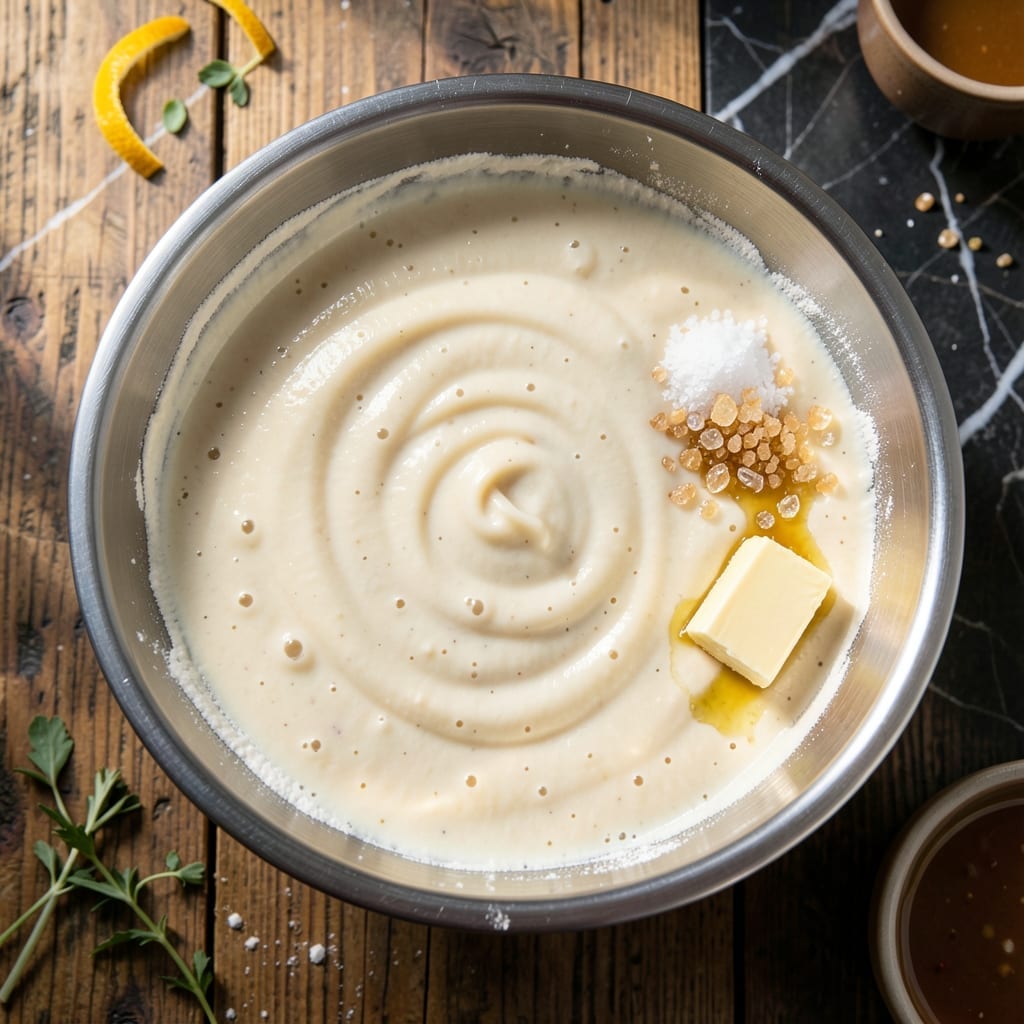
Achieving perfect donuts starts with the right batter consistency for your dispenser. This recipe delivers a smooth, pipeable mixture that flows effortlessly while maintaining structure for clean rings.
The key is balancing liquid and dry ingredients precisely to prevent clogging or overly thin batter. A resting period ensures the flour fully hydrates, creating the ideal texture for consistent dispensing.
You’ll get uniform donuts with golden edges and a tender crumb, every time. The batter holds its shape in the fryer, eliminating misshapen results that plague other recipes.
Works with standard donut dispensers and requires no special adjustments. Here’s how to master it.
Ingredients for Donut Batter Recipe for Dispenser
Precise ratios of dry and liquid ingredients create the ideal pipeable texture for consistent results.
| Ingredient | Amount | Notes |
|---|---|---|
| All-Purpose Flour 🌾 | 4 cups | Sifted for smooth texture |
| Granulated Sugar 🍚 | ¾ cup | Fine grain for even distribution |
| Whole Milk 🥛 | 1 cup | Room temperature for best results |
| Large Eggs 🥚 | 2 whole | Beaten until homogeneous |
| Unsalted Butter 🧈 | 4 tbsp | Melted and cooled slightly |
| Baking Powder 🧂 | 2 tsp | Fresh for optimal rise |
| Salt 🧂 | ½ tsp | Fine sea salt preferred |
| Vanilla Extract 🌿 | 1 tsp | Pure extract for best flavor |
| Ground Nutmeg 🌰 | ¼ tsp | Freshly ground for potency |
| Vegetable Shortening 🧈 | 2 tbsp | For added tenderness |
| Water 💧 | ¼ cup | Adjust for desired consistency |
The flour quality is paramount here. King Arthur or Gold Medal all-purpose provides the right protein content for structure without toughness. Use fresh baking powder—test it by dropping a spoonful in hot water; it should bubble vigorously. The milk should be whole for richness, but 2% works in a pinch. Always weigh your flour if possible—1 cup should be approximately 4.5 oz for accuracy.
Need a dairy-free version? Oat milk or soy milk substitutes well for whole milk. No baking powder? Baking soda plus cream of tartar at a 1:2:2 ratio (baking soda:cream of tartar:cornstarch) gets you close. The eggs are essential for binding, but in emergencies, flax eggs can work (though texture may vary). For flavor variation, swap vanilla for almond extract or add a pinch of cinnamon.
The batter should rest at room temperature for 30 minutes before use. Store unused batter in the fridge for up to 24 hours—it may thicken, so thin with a splash of milk before piping. For best results, use the batter immediately after resting for optimal flow through the dispenser.
Why You’ll Love This Recipe
- One-Bowl Wonder: I just dump everything in, mix, and pour into the dispenser—no extra dishes to wash.
- Buttery Sweetness: The melted butter and sugar create this rich, melt-in-your-mouth base that’s hard to resist.
- Breakfast or Dessert: I’ve used this batter for morning donuts and late-night treats, and it never fails.
- Budget Friendly: Honestly, these pantry staples cost pennies compared to store-bought donuts, and I get double the batch.
Step-by-Step Instructions for Donut Batter for Dispenser
Achieve the ideal consistency for smooth dispensing with this precise method.
Step 1: Combine Dry Ingredients for Uniform Texture
In a large mixing bowl, whisk together the 4 cups All-Purpose Flour, 0.75 cup Granulated Sugar, 2 tsp Baking Powder, 0.5 tsp Salt, and 0.25 tsp Ground Nutmeg until fully integrated. Sift the flour first if you notice any lumps—this ensures a silky batter that flows effortlessly through the dispenser.
The baking powder must be fresh to guarantee proper rise, so check the expiration date. This dry mix creates the structural foundation, and the nutmeg adds a subtle warmth that enhances the overall flavor profile.
Step 2: Incorporate Wet Ingredients Gradually
In a separate bowl, combine the 1 cup Whole Milk, 2 whole Large Eggs, 4 tbsp Unsalted Butter (melted and cooled), and 1 tsp Vanilla Extract. Whisk until the mixture is smooth and homogeneous. The milk and eggs should be at room temperature to prevent the melted butter from solidifying.
Create a well in the center of your dry ingredients and pour in the wet mixture. Use a silicone spatula to gently fold everything together, taking care not to overmix—this prevents developing gluten, which would make the batter too dense for dispensing.
Step 3: Add Shortening and Adjust Consistency
Fold in the 2 tbsp Vegetable Shortening until it’s fully incorporated. The shortening adds tenderness to the final donuts and helps maintain the batter’s fluidity. If the mixture appears too thick, gradually add the 0.25 cup Water, 1 tablespoon at a time, until it reaches a smooth, pourable consistency.
The ideal texture should resemble thick pancake batter—it needs to flow steadily through the dispenser without clogging or dripping too quickly. Test by lifting the spatula: the batter should ribbon off slowly and hold its shape briefly before settling.
Step 4: Rest and Finalize for Dispensing
Cover the bowl with a clean kitchen towel and let the batter rest at room temperature for 15-20 minutes. This allows the flour to fully hydrate and the baking powder to activate, ensuring a consistent flow and even rise during cooking.
Give the batter a final gentle stir before transferring it to your dispenser. If it has thickened too much during resting, add a splash of water and mix until it returns to the correct consistency. The batter should now be ready for smooth, uninterrupted dispensing.
Pro Tips For Making Donut Batter Recipe For Dispenser
- Chill the Batter: After mixing, refrigerate the batter for at least 30 minutes—I learned this the hard way when my first batch spread into flat, greasy puddles in the dispenser.
- Use Room-Temp Eggs: Take the eggs out 30 minutes before mixing, or the cold ones will cause the butter to clump, and you’ll spend forever trying to smooth it out.
- Skip Overmixing: Stir just until the flour disappears; any longer and you’ll get dense, chewy donuts instead of light, airy ones.
- Melt Butter Slowly: Heat the butter over low until just melted, then let it cool slightly before adding to the milk—hot butter will cook the eggs prematurely.
Regional Styles of This Recipe
Southern Style
In the South, we add a touch of cornmeal (¼ cup) to the dry mix for a subtle crunch and golden color. I also increase the sugar to 1 full cup for a sweeter donut that pairs perfectly with strong coffee. This variation holds its shape beautifully in a dispenser. 💛
French Beignet Approach
For a French twist, use bread flour instead of all-purpose and add 1 tbsp brandy to the wet ingredients. The higher protein creates a chewier texture, while the brandy adds depth. Rest the batter for 1 hour to develop flavor before dispensing.
Midwest Cake Donuts
The Midwest style calls for sour cream (½ cup) in place of milk, creating a denser, cake-like batter. Reduce the water to 2 tbsp for the right consistency. These donuts have a tender crumb that dispensers handle well.
Pacific Northwest
West Coast bakers often add 1 tsp cardamom and zest of 1 orange to the batter for bright, aromatic flavor. The citrus keeps the batter loose enough to flow smoothly through dispensers. I love this variation for its unique, sophisticated taste. ✨
Nutrition Facts
Frequently Asked Questions
What’s the ideal batter consistency for a dispenser?
It should resemble thick pancake batter. Test by lifting the spatula—the batter should ribbon off slowly and hold its shape briefly. Adjust with 1 tablespoon of water at a time if too thick.
Can I make this batter ahead of time?
Yes, but use it within 24 hours. Store covered in the fridge, then thin with a splash of milk before dispensing. Resting improves flavor and texture.
Why does my batter clog the dispenser?
Clogging usually means the batter is too thick. Add 1-2 tablespoons of water or milk, mix well, and test again. Avoid overmixing to prevent gluten development.

- 6 Egg Cake Recipe with Oil: Light as Air With Buttery Moisture - October 4, 2026
- 4 Bean Casserole Recipe: One-Pan Heartiness With Smoky Paprika Depth - October 4, 2026
- 3-Ingredient Keto Mug Cake Recipe: Microwave Magic in 2 Minutes - October 4, 2026