
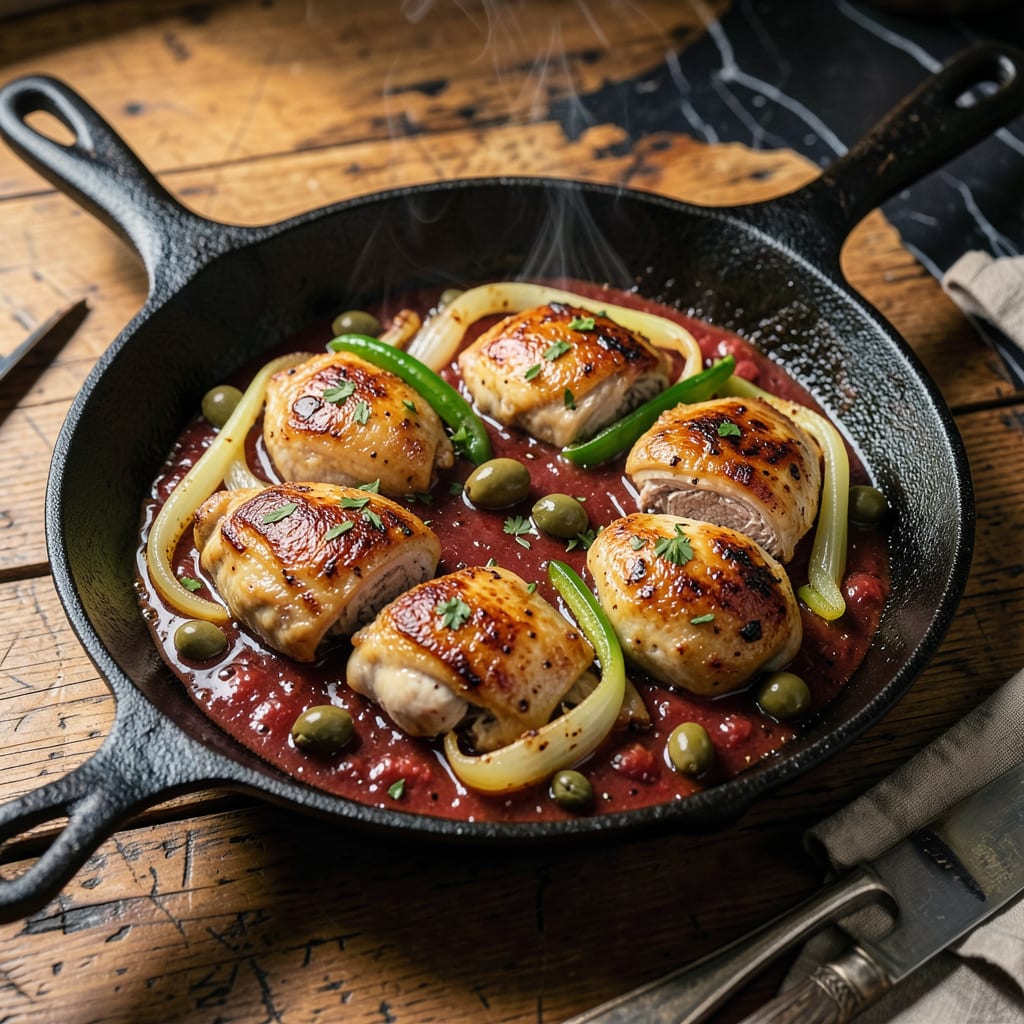
New Orleans’ legendary Dooky Chase restaurant transformed traditional Italian chicken cacciatore into a Creole masterpiece. This one-pan dish combines the rustic charm of Italian braising with the bold flavors of Louisiana cooking—tender chicken simmered in a rich tomato sauce with the Holy Trinity of bell peppers, onions, and celery.
The secret lies in layering flavors: first browning the chicken for depth, then building a sauce with white wine, tomatoes, and herbs. What emerges is a comforting dish that balances acidity, sweetness, and spice. Serve over pasta or with crusty bread to soak up every drop of that velvety sauce.
Ingredients for Dooky Chase Chicken Cacciatore
This Creole-Italian fusion relies on quality staples and the Holy Trinity for its signature depth of flavor.
| Ingredient | Amount | Notes |
|---|---|---|
| Chicken Thighs 🍗 | 2 ½ lb | Bone-in, skin-on for best flavor |
| All-Purpose Flour 🌾 | ½ cup | For dredging chicken pieces |
| Olive Oil 🫒 | 3 tbsp | Divided for browning and sauce |
| Green Bell Pepper 🌶️ | 1 whole | Diced, part of Holy Trinity |
| Yellow Onion 🧅 | 1 whole | Medium, finely chopped |
| Celery Stalks 🌿 | 3 whole | Diced, completes Holy Trinity |
| Garlic Cloves 🧄 | 4 cloves | Minced for aromatic base |
| Dry White Wine 🍷 | ½ cup | Sauvignon Blanc or Pinot Grigio |
| Canned Diced Tomatoes 🍅 | 1 can | 28 oz can with juices |
| Tomato Paste 🍅 | 2 tbsp | For concentrated tomato flavor |
| Dried Oregano 🌿 | 1 tsp | Mediterranean variety preferred |
| Dried Thyme 🌿 | 1 tsp | French thyme if available |
| Bay Leaf 🍃 | 1 whole | For aromatic depth |
| Red Pepper Flakes 🌶️ | ½ tsp | Adjust for preferred heat |
| Chicken Stock 💧 | 1 cup | Low-sodium preferred |
| Kosher Salt 🧂 | 1 ½ tsp | Diamond Crystal recommended |
| Freshly Ground Black Pepper 🌶️ | 1 tsp | Coarse grind preferred |
| Fresh Flat-Leaf Parsley 🌿 | ¼ cup | Chopped, for garnish |
The chicken thighs are essential for this dish’s character. Bone-in, skin-on thighs from Whole Foods or a trusted butcher provide the richest flavor and remain juicy during the long braise. The Holy Trinity (bell pepper, onion, celery) should be fresh and firm—avoid pre-diced mixes as they lose texture. For the wine, select a dry white you’d drink; Sauvignon Blanc offers the right acidity balance without overpowering the sauce.
Substitutions can adapt to your pantry: boneless thighs reduce cooking time by 10 minutes, while chicken breasts (though less ideal) should be brined first to prevent drying. For alcohol-free versions, white grape juice with a splash of vinegar mimics wine’s acidity. Canned tomatoes vary—San Marzano brands offer superior sweetness, but standard diced tomatoes work in a pinch. The herbs are flexible: fresh oregano and thyme at triple the dried amount brighten the dish.
This cacciatore develops flavor over time. Refrigerate leftovers in airtight containers for up to 4 days—the sauce thickens beautifully upon reheating. For longer storage, freeze portions (without parsley garnish) for 3 months. The dish benefits from resting 1 hour before serving, allowing flavors to meld completely. Always remove the bay leaf before storage to prevent bitterness.
Why You’ll Love This Recipe
- I’ll be real: the whole thing cooks in a single skillet. Chicken thighs sear in olive oil, then the peppers and onions soak up all those crispy browned bits—no extra bowls, no fuss.
- One-Pan Magic: I’ll be real: the whole thing cooks in a single skillet. Chicken thighs sear in olive oil, then the peppers and onions soak up all those crispy browned bits—no extra bowls, no fuss.
- That Crispy, Saucy Contrast: The flour-dredged thighs get this golden crust while the peppers and onions soften into a sweet, garlicky jam. Honestly? The way the crust holds up to the juices is my favorite part.
- Weeknight Lifesaver: Between us, this is my 6 p.m. panic dinner. Chicken thighs stay juicy even if they sit a few extra minutes, and the leftovers (if there are any) taste even better the next day over rice or pasta.
Instructions
This one-pan method delivers rich, comforting flavors with minimal effort and maximum payoff.
Step 1: Prepare and Brown the Chicken
Pat the 2.5 lb Chicken Thighs completely dry with paper towels. This ensures proper browning and prevents the flour from becoming gummy. Season both sides generously with 1.5 tsp Kosher Salt and 1 tsp Freshly Ground Black Pepper.
Place the 0.5 cup All-Purpose Flour in a shallow dish and dredge each thigh, shaking off excess. Heat 2 tbsp Olive Oil in a large, heavy skillet over medium-high heat until shimmering. Add the chicken skin-side down and cook undisturbed for 5-6 minutes until the skin is deep golden brown and crisp.
Flip and cook for another 4-5 minutes until the second side is equally browned. Transfer the chicken to a plate and set aside. The fond (browned bits) left in the pan will form the flavor base for your sauce.
Step 2: Build the Aromatic Foundation
In the same skillet, add the remaining 1 tbsp Olive Oil over medium heat. Add the diced Green Bell Pepper, Yellow Onion, and Celery Stalks (the Holy Trinity). Cook for 6-8 minutes, stirring occasionally, until the vegetables soften and the onion becomes translucent.
Add the minced Garlic Cloves and cook for 1 minute until fragrant. Stir in the 2 tbsp Tomato Paste and cook for 2 minutes, allowing it to caramelize slightly. This step develops deep, rich flavors that define the dish.
Pour in the 0.5 cup Dry White Wine to deglaze the pan, scraping up all the browned bits. Simmer for 3 minutes until the liquid reduces by half and the alcohol cooks off.
Step 3: Develop the Sauce and Finish Cooking
Add the Canned Diced Tomatoes (with juices), Dried Oregano, Dried Thyme, Bay Leaf, and Red Pepper Flakes. Stir to combine, then pour in the 1 cup Chicken Stock. Bring the mixture to a gentle simmer.
Return the chicken thighs to the skillet, nestling them into the sauce. Reduce heat to medium-low, cover, and simmer for 25-30 minutes. The chicken is done when it reaches an internal temperature of 165°F and the sauce has thickened slightly.
During this time, the flavors will meld together, and the chicken will become fall-off-the-bone tender. The sauce should coat the back of a spoon but still have a rustic, chunky texture.
Step 4: Rest and Garnish
Remove the skillet from heat and discard the Bay Leaf. Let the dish rest for 5 minutes—this allows the flavors to settle and the chicken to reabsorb some juices. The sauce will continue to thicken slightly as it cools.
Taste and adjust seasoning if needed, though the initial salting should be sufficient. Sprinkle with the 0.25 cup Fresh Flat-Leaf Parsley just before serving. The bright green parsley adds freshness and color contrast to the rich, red sauce.
Serve directly from the skillet or transfer to a warm platter. Each serving should include two chicken thighs and plenty of the flavorful sauce and vegetables.
Troubleshooting Great dooky chase chicken cacciatore
Sauce Too Thin
If your sauce hasn’t thickened enough after simmering, remove the chicken and let the sauce reduce uncovered over medium heat for 5-10 minutes. I like to mash some of the tomatoes with a wooden spoon to help release their pectin. For a quicker fix, mix 1 tbsp cornstarch with 2 tbsp cold water and stir it in during the last 2 minutes of cooking. 💡
Chicken Not Tender
Undercooked chicken can be tough, but overcooking dries it out. If your thighs aren’t fall-off-the-bone tender, return them to the sauce and simmer covered for another 10-15 minutes on low heat. Check the internal temperature with a meat thermometer—it should read 165°F at the thickest part near the bone.
Sauce Too Acidic
The tomatoes and wine can sometimes make the sauce too tart. Balance it by adding 1 tsp brown sugar or ½ tsp baking soda (dissolved in water first). Stir well and taste before adding more. I often add a splash of heavy cream (2 tbsp) at the end for richness, which also mellows acidity. 🥄
Burnt Fond
If the browned bits in the pan start to blacken while cooking the vegetables, immediately remove the skillet from heat and add ¼ cup Chicken Stock to deglaze. Scrape up the fond with a wooden spoon, then continue cooking over medium-low heat. This prevents bitterness from developing in your sauce.
Overly Salty Sauce
If you accidentally over-salt, add 1 peeled potato to the sauce while it simmers—remove after 15 minutes. Alternatively, stir in ½ cup unsalted Chicken Stock or water. I’ve found that adding a splash of white vinegar (1 tsp) can help balance saltiness by brightening other flavors.
Weak Flavor Profile
If the sauce tastes flat, it likely needs more depth. Add 1 tbsp Worcestershire sauce for umami, or ½ tsp smoked paprika for complexity. Let it simmer for another 5 minutes to meld. I always keep anchovy paste on hand—a ½ tsp stirred in works wonders without tasting fishy. ✨
Nutrition Facts
Frequently Asked Questions
Can I use chicken breasts instead of thighs?
You can, but thighs are ideal for this dish. Chicken breasts dry out faster during the long simmer. If using breasts, brine them first in ¼ cup salt + 4 cups water for 30 minutes to keep them juicy.
What’s the best pasta pairing?
Dooky Chase’s version shines with wide pappardelle or rigatoni. The thick noodles hold up to the hearty sauce. For authenticity, serve with crusty French bread to soak up every drop.
How do I make it ahead?
The flavors deepen overnight! Prepare completely, cool, and refrigerate in an airtight container for up to 3 days. Reheat gently on the stove with 2 tbsp water to loosen the sauce.
Can I skip the wine?
Yes! Substitute with ½ cup chicken stock + 1 tbsp lemon juice or white grape juice. The acidity mimics wine’s role in balancing the rich tomato sauce.

- 6 Egg Cake Recipe with Oil: Light as Air With Buttery Moisture - October 4, 2026
- 4 Bean Casserole Recipe: One-Pan Heartiness With Smoky Paprika Depth - October 4, 2026
- 3-Ingredient Keto Mug Cake Recipe: Microwave Magic in 2 Minutes - October 4, 2026