
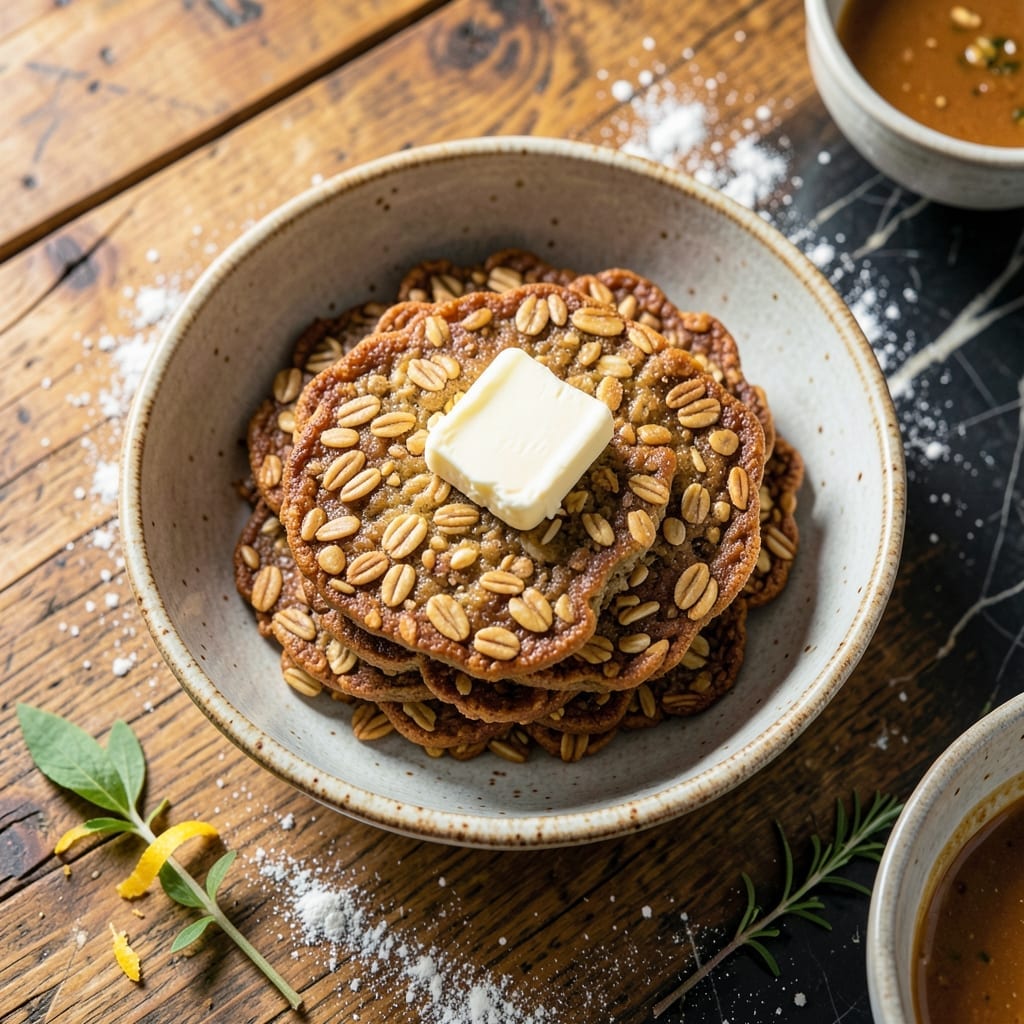
There’s a special satisfaction in baking a traditional Scottish oatcake that captures generations of comfort in every bite. This recipe delivers chewy texture with a rich, buttery depth that defines authentic Scottish baking.
I developed this version to honor the classic while making it accessible for modern kitchens. The oats provide hearty substance, while the butter creates a melt-in-your-mouth experience that’s hard to resist.
What emerges from the oven is a golden treat with crisp edges and a soft center—perfect with tea or as a sweet finish to any meal. The aroma alone will transport you to a cozy Scottish kitchen.
The beauty lies in its simplicity: basic ingredients transformed into something extraordinary through time-tested technique. This is baking at its most honest and rewarding.
Ingredients for Effies Oatcake
Simple pantry staples elevate to extraordinary with this Scottish classic’s signature texture and richness.
| Ingredient | Amount | Notes |
|---|---|---|
| Rolled Oats 🌾 | 3 cups | Old-fashioned, not quick oats |
| All-Purpose Flour 🌾 | 1 cup | Sifted for even texture |
| Granulated Sugar 🍚 | ½ cup | Fine white sugar preferred |
| Light Brown Sugar 🟤 | ½ cup | Packed firmly for moisture |
| Unsalted Butter 🧈 | 1 cup | Cold, cubed for cutting |
| Baking Soda 🧂 | 1 tsp | Ensures proper rise |
| Ground Cinnamon 🌿 | 1 tsp | Freshly ground if possible |
| Salt 🧂 | ½ tsp | Fine sea salt recommended |
| Vanilla Extract 🌿 | 1 tsp | Pure, not imitation |
| Large Egg 🥚 | 1 whole | Room temperature for binding |
The oats define this recipe. Old-fashioned rolled oats are non-negotiable—quick oats lack the chew. Look for Bob’s Red Mill or Quaker at any major supermarket. For the butter, European-style (like Plugrá) has higher fat content, which creates flakier layers. The brown sugar adds moisture, so don’t substitute white entirely. Sift the flour if it’s lumpy—King Arthur is my go-to for consistent results.
No rolled oats? Steel-cut oats pulsed in a food processor work in a pinch (but texture suffers). Swap the butter for coconut oil if avoiding dairy, though the flavor shifts. Out of brown sugar? Use all white sugar plus 1 tbsp molasses. For gluten-free, 1:1 GF flour blend replaces AP flour, but add 1/2 tsp xanthan gum for structure. Vanilla can be omitted, but it deepens the flavor.
Dough keeps 3 days refrigerated or freezes beautifully for 3 months. Baked oatcakes stay fresh in an airtight container for 5 days—if they last that long. Reheat briefly in a warm oven to revive crispness. The butter in the dough means these are best stored cool to prevent greasiness.
Why You’ll Love This Recipe
- Mix and Go: I just dump oats, flour, both sugars, and melted butter in one bowl—no mixer, no fuss.
- Buttery Sweetness: That brown sugar and butter combo gives it a caramel-like richness I can’t resist.
- Breakfast or Dessert: I serve it warm with jam for breakfast or à la mode for a quick dessert.
- Stays Fresh: Honestly, it tastes even better the next day, and it keeps for a week in an airtight container.
Step-by-Step Instructions for Effies Oatcake
Here is the tested method for achieving that signature chewy texture with rich buttery notes.
Step 1: Cream Butter and Sugars for a Fluffy Base
In a large mixing bowl, beat the 1 cup Unsalted Butter with the 0.5 cup Granulated Sugar and 0.5 cup Light Brown Sugar until light and fluffy. Use an electric mixer on medium speed for 3-4 minutes—this step is crucial for incorporating air, which contributes to the final texture.
The mixture should turn pale and increase in volume. Scrape down the sides of the bowl occasionally to ensure even mixing. The light brown sugar adds moisture and depth, so pack it firmly when measuring to maintain the recipe’s balance.
Step 2: Incorporate Egg and Vanilla for Binding
Add the 1 whole Large Egg and 1 tsp Vanilla Extract to the butter-sugar mixture. Beat on medium speed for an additional 1-2 minutes until fully combined. The egg provides structure, while the vanilla enhances the warm, spiced profile.
Ensure the egg is at room temperature to prevent the butter from seizing up. The mixture will look slightly emulsified, with no visible streaks of egg. This step sets the foundation for a cohesive dough that holds its shape during baking.
Step 3: Combine Dry Ingredients for Structure
In a separate bowl, whisk together the 3 cups Rolled Oats, 1 cup All-Purpose Flour, 1 tsp Baking Soda, 1 tsp Ground Cinnamon, and 0.5 tsp Salt. The baking soda ensures a proper rise, while the cinnamon adds a subtle warmth that complements the buttery richness.
Gradually add the dry mixture to the wet ingredients, mixing on low speed just until combined. Avoid overmixing to maintain a tender crumb. The rolled oats should remain intact, providing the characteristic chew that defines this traditional treat.
Step 4: Chill and Shape for Optimal Texture
Cover the dough and refrigerate for at least 30 minutes. Chilling firms up the butter, making the dough easier to handle and preventing excessive spreading during baking. This step also allows the flavors to meld, enhancing the depth of the final product.
Once chilled, divide the dough into 4 equal portions and shape each into a flat disc about ½-inch thick. Place the discs on a parchment-lined baking sheet, spacing them 2 inches apart to allow for slight expansion. Press the tops lightly with a fork for a classic touch.
Step 5: Bake to Golden, Chewy Perfection
Preheat the oven to 350°F. Bake the oatcakes for 15-18 minutes, or until the edges are golden brown and the centers look set but still slightly soft to the touch. The oatcakes should hold their shape but yield slightly when pressed.
Remove from the oven and let them cool on the baking sheet for 5 minutes before transferring to a wire rack. They’ll firm up as they cool, achieving that perfect balance of crisp edges and a chewy interior. Serve warm for the best experience.
Pro Tips For Making Effies Oatcake
- Chill the Dough: After mixing, refrigerate the dough for at least 30 minutes—I learned this the hard way when my oatcakes spread like pancakes without it.
- Brown the Butter: Take the extra 5 minutes to brown the unsalted butter before mixing; it adds a nutty depth that plain melted butter just can’t match.
- Skip the Overmixing: Stir the rolled oats and flour just until combined—overworking the dough makes the oatcakes tough instead of tender.
- Press, Don’t Roll: Instead of rolling the dough, press it directly into the pan with your fingers; it’s faster and gives a rustic, even thickness.
Best Sauces and Condiments for This Recipe
Classic Butter Pairing
Nothing beats serving these warm with a simple spread of salted butter melting across the surface. I use Kerrygold Irish Butter for its rich, grass-fed flavor that complements the oats beautifully. The contrast of warm oatcake and cool butter is irresistible. 💛
Honey Drizzle
A light drizzle of local honey adds natural sweetness that enhances the brown sugar notes. I prefer clover honey for its mild flavor, but any variety works. Use about 1 tsp per oatcake for the perfect balance without overpowering.
Whipped Cream Cheese
For a tangy contrast, spread 2 tbsp whipped cream cheese on each serving. The creaminess pairs wonderfully with the chewy texture. I like Philadelphia brand for its smooth consistency. Add a sprinkle of cinnamon on top for extra warmth.
Fruit Compote
A warm berry compote made with 1 cup mixed berries and 2 tbsp sugar adds a bright, fruity element. Simmer for 5-7 minutes until slightly thickened. The acidity cuts through the richness beautifully.
Vanilla Ice Cream
Serve as a dessert with 1 scoop vanilla ice cream on top. The cold cream against the warm oatcake creates a perfect contrast. I recommend Ben & Jerry’s for its dense, creamy texture. Drizzle with caramel for added decadence. ✨
Spiced Whipped Cream
Whip ½ cup heavy cream with 1 tbsp powdered sugar and ¼ tsp cinnamon until soft peaks form. This light topping adds a subtle spice that echoes the cinnamon in the recipe. Dollop generously on each serving.
Nutrition Facts
Frequently Asked Questions
Can I use quick oats instead of rolled?
No, old-fashioned rolled oats are essential for the right texture. Quick oats will make them too dense and less chewy.
How long should I chill the dough?
Chill for at least 30 minutes to firm up the butter. This prevents spreading and ensures a thicker, chewier result.
Why are my oatcakes crumbly?
Overmixing or under-chilling the dough can cause this. Also, measure flour correctly—too much makes them dry.
Can I make these gluten-free?
Yes, swap the flour for a 1:1 gluten-free blend and add ½ tsp xanthan gum for structure.

- 6 Egg Cake Recipe with Oil: Light as Air With Buttery Moisture - October 4, 2026
- 4 Bean Casserole Recipe: One-Pan Heartiness With Smoky Paprika Depth - October 4, 2026
- 3-Ingredient Keto Mug Cake Recipe: Microwave Magic in 2 Minutes - October 4, 2026