
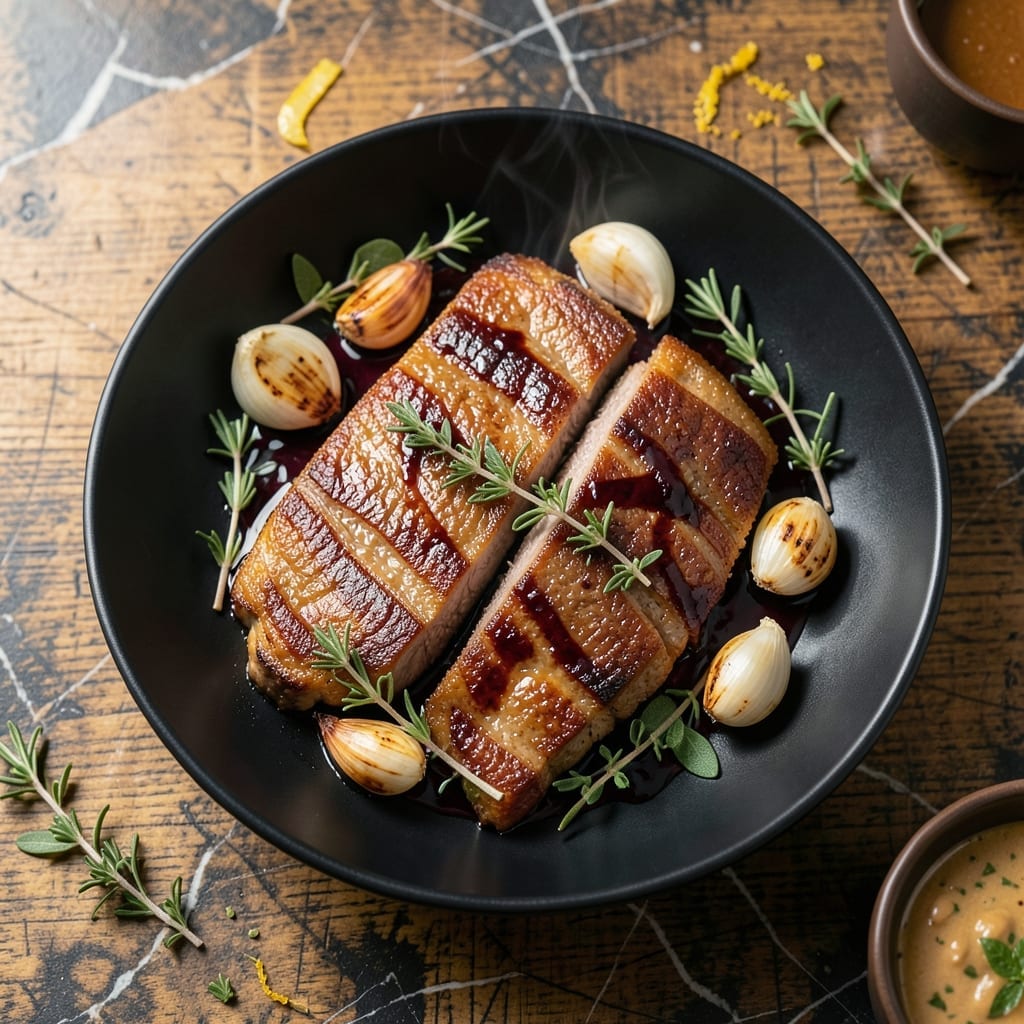
Achieving the ideal pork belly steak means balancing crispy edges with tender centers—no small feat. This method delivers both without fail, transforming rich, fatty cuts into restaurant-quality results at home.
The secret lies in a two-step cooking process: first, a hot sear to render the fat and create that coveted crunch. Then, a gentle finish ensures the meat stays juicy and fork-tender throughout.
What you’ll get is a dish with a deep, golden crust that gives way to layers of succulent pork. The contrast in textures makes every bite satisfying, while the rendered fat adds unmatched flavor.
Ready in under an hour, this recipe is straightforward but rewards precision. Serve with your favorite sides for a meal that feels special.
Ingredients for Pork Belly Steaks
Rich pork belly plus pantry spices. That’s all you need for this showstopper.
| Ingredient | Amount | Notes |
|---|---|---|
| Pork Belly 🥓 | 2 lb | Skin-on, cut into 1-inch strips |
| Kosher Salt 🧂 | 2 tsp | Diamond Crystal preferred |
| Black Pepper 🌶️ | 1 tsp | Freshly ground |
| Garlic Cloves 🧄 | 4 cloves | Minced for rub |
| Fresh Thyme 🌿 | 2 tsp | Chopped leaves (or 1 tsp dried) |
| Olive Oil 🫒 | 2 tbsp | For searing, high smoke point |
| Apple Cider Vinegar 🍏 | 1 tbsp | For acidity balance |
| Brown Sugar 🍚 | 1 tbsp | Light or dark works |
| Smoked Paprika 🌶️ | ½ tsp | For depth of flavor |
| Dijon Mustard 🟡 | 1 tbsp | For glaze adhesion |
| Fresh Rosemary 🌿 | 1 tsp | Chopped (or 0.5 tsp dried) |
| Butter 🧈 | 2 tbsp | Unsalted, for basting |
The pork belly is the star—look for skin-on cuts with even fat marbling. Asian markets often have the best selection, but Whole Foods or a good butcher will hook you up. Ask them to slice it into 1-inch strips if you’re not confident cutting it yourself (worth the extra minute). The fat should be creamy white, not yellowed—freshness matters here.
No fresh thyme or rosemary? Dried works at half the amount. Swap apple cider vinegar for rice wine vinegar if that’s what you’ve got. Brown sugar can be honey or maple syrup, but reduce by a quarter to avoid burning. The Dijon mustard is mostly for adhesion—regular yellow mustard in a pinch. For extra crunch, add a pinch of cornstarch to the rub.
Pork belly keeps in the fridge for 3-4 days before cooking, or freeze for 3 months. Once cooked, leftovers reheat surprisingly well—crisp them back up in a hot pan. The rendered fat? Save it for roasting potatoes (trust me on this).
Why You’ll Love This Recipe
- One Pan Wonder: I season the pork belly with salt, pepper, garlic, and thyme, then let the oven do the rest—hardly any cleanup.
- Crispy & Juicy: That first bite with the crackling skin and tender meat? Honestly, it’s ridiculous how good it is.
- Feeds a Crowd: I made these for a weekend BBQ and they disappeared faster than the burgers.
- Budget Friendly: Pork belly is cheaper than you’d think, and a little goes a long way—my wallet thanks me.
Step-by-Step Instructions for Pork Belly Steaks
Here’s how I get that perfect crispy exterior with melt-in-your-mouth centers every time.
Step 1: Season the Pork Belly Strips
Pat the 2 lb pork belly strips dry with paper towels. This step is non-negotiable—moisture prevents crisping. In a small bowl, combine the 2 tsp kosher salt, 1 tsp black pepper, 2 tsp fresh thyme, 0.5 tsp smoked paprika, 1 tsp fresh rosemary, 1 tbsp brown sugar, and 1 tbsp Dijon mustard.
Rub this mixture all over the pork belly strips, pressing it into the meat so it adheres well. Let them sit at room temperature for 15-20 minutes while you prep the rest. This allows the salt to penetrate and the flavors to meld.
Step 2: Sear the Strips to Golden Perfection
Heat a large skillet over medium-high heat and add the 2 tbsp olive oil. Once the oil shimmers (that’s your cue it’s hot enough), add the pork belly strips in a single layer. Don’t crowd the pan—work in batches if needed.
Sear undisturbed for 4-5 minutes per side until the edges are deep golden brown and crispy. The sugar in the rub will caramelize, creating that irresistible crust. If the pan starts to smoke, reduce the heat slightly—you want a steady sizzle, not a fire.
Step 3: Deglaze and Glaze with Tangy Sweetness
Once the pork belly is crispy, reduce the heat to medium and add the 1 tbsp apple cider vinegar to the skillet. It’ll sizzle and bubble—this is deglazing, lifting all those flavorful browned bits from the bottom of the pan.
Add the 2 tbsp butter and let it melt, swirling the pan so it coats the pork belly. Spoon the buttery, vinegary mixture over the strips for 1-2 minutes to create a glossy glaze. The vinegar cuts through the richness, balancing the sweetness from the brown sugar.
Step 4: Rest and Serve Immediately
Transfer the pork belly steaks to a plate and let them rest for 3-4 minutes. This is just long enough for the juices to redistribute without letting the crispy coating soften. Tent loosely with foil if you’re worried about keeping them warm.
Serve the steaks whole or sliced into ½-inch pieces. The contrast of crispy edges and tender centers is what makes this dish special. I like to drizzle any remaining pan sauce over the top for extra flavor. Dig in while they’re hot—the texture changes as they cool.
Pro Tips For Making Pork Belly Steaks
- Score the Fat: Use a sharp knife to cut 1/4-inch slits in the pork belly fat cap before seasoning—this helps render the fat and lets the salt, pepper, and thyme penetrate deeper.
- Dry the Belly: Pat the pork belly completely dry with paper towels before seasoning; excess moisture steams the meat instead of letting it sear properly.
- Low and Slow First: Start cooking the steaks on medium-low heat to render the fat gradually, then finish with a high-heat sear for that crispy exterior.
- Rest Before Slicing: Let the steaks rest for 5-10 minutes after cooking so the juices redistribute—cutting too soon loses all that rich flavor to the cutting board.
Essential Equipment for Perfect Results
Heavy Skillet
A cast iron skillet is my top choice for pork belly steaks—it retains heat beautifully and creates an unbeatable sear. I use my 12-inch Lodge because its weight prevents warping over medium-high heat. The even heat distribution ensures every strip gets crispy edges. 🔥
Tongs for Turning
Invest in 12-inch locking tongs—I prefer OXO Good Grips for their comfortable handles. They give you precise control when flipping the steaks without piercing the meat. You’ll avoid losing that precious crispy crust when turning.
Instant-Read Thermometer
While pork belly doesn’t need precise temp control like chicken, a ThermoWorks ThermoPop helps monitor doneness. I check a few strips to ensure the internal temp hits 145°F in the thickest parts. This prevents overcooking while guaranteeing safety.
Paper Towels
Pat the pork belly completely dry before seasoning—this is non-negotiable for crispiness. I use Bounty because it’s strong enough to handle the fatty surface without tearing. Moisture is the enemy of a good sear.
Silicone Brush
A heat-resistant silicone brush is perfect for basting with the butter-vinegar glaze. I like the Ateco brand because it won’t melt near hot pans. It helps coat every surface evenly without wasting a drop of that flavorful mixture.
Cooling Rack
Place your cooked steaks on a wire cooling rack set over a baking sheet. This allows air circulation underneath, preventing the bottoms from steaming and losing their crispiness while resting. I use a stainless steel rack for easy cleanup.
Nutrition Facts
Frequently Asked Questions
What thickness should pork belly strips be?
Cut strips 1-inch thick for the best texture. Thinner strips may overcook while thicker ones won’t crisp properly. This size ensures even cooking with a perfect crust-to-center ratio.
Can I use a different cooking oil?
Yes, any oil with a high smoke point works. Avocado or grapeseed oil are great substitutes for olive oil. Avoid butter for searing as it burns at these temperatures.
Why rest the steaks before serving?
Resting for 3-4 minutes lets juices redistribute. Skipping this makes the first bite dry while the rest steams on your plate. The crispy coating stays intact too.
What if my pan starts smoking?
Reduce heat slightly and open windows for ventilation. A little smoke is normal, but excessive smoke means the pan is too hot. Medium-high heat is ideal.

- 6 Egg Cake Recipe with Oil: Light as Air With Buttery Moisture - October 4, 2026
- 4 Bean Casserole Recipe: One-Pan Heartiness With Smoky Paprika Depth - October 4, 2026
- 3-Ingredient Keto Mug Cake Recipe: Microwave Magic in 2 Minutes - October 4, 2026