
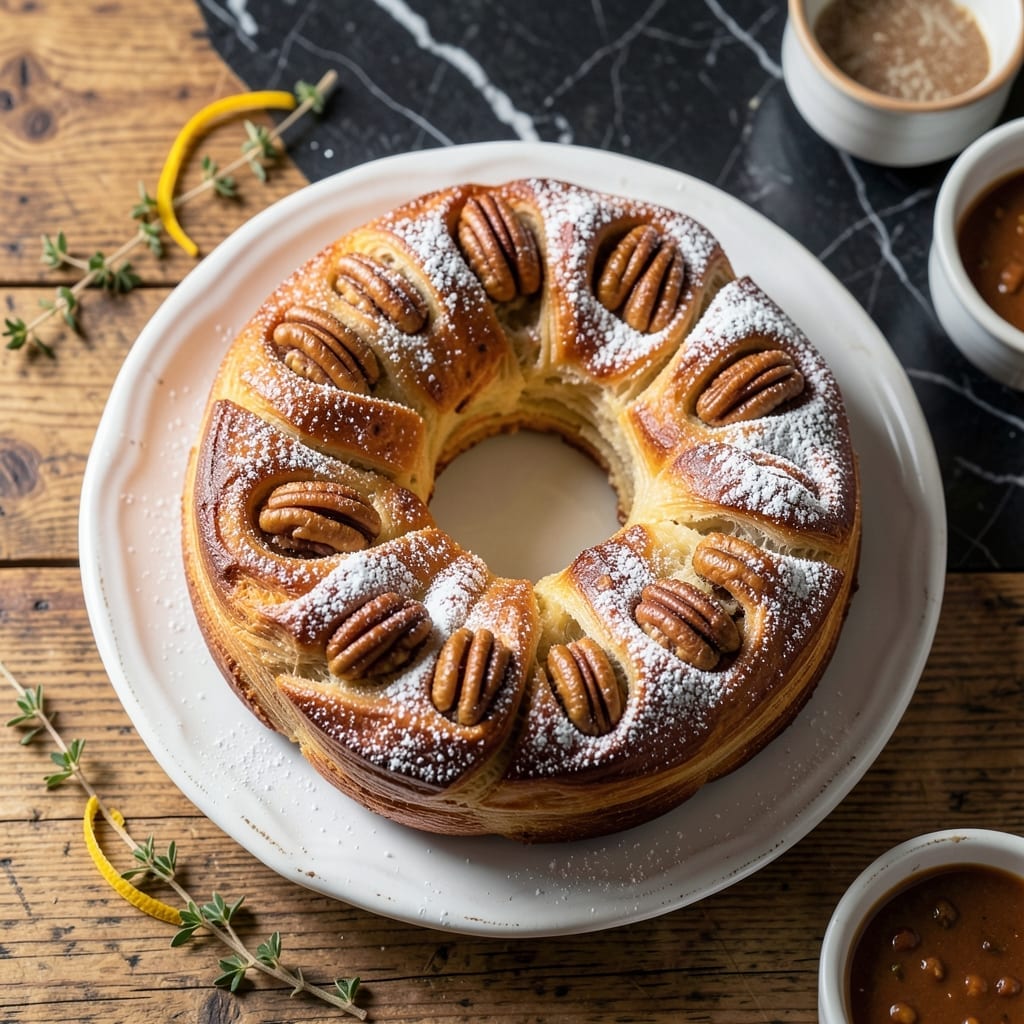
This bakery-style pecan danish ring delivers the flaky, buttery layers you love from Entenmann’s, right in your own kitchen. The process begins with a rich, sweet dough that’s rolled thin and layered with butter to create those signature pastry sheets.
Filled with a brown sugar-pecan mixture and topped with a simple vanilla glaze, this creation captures all the comfort of the classic treat. The dough requires a short proofing time to develop its light, airy texture before baking.
What emerges from the oven is a golden ring with perfectly crisp edges and a gooey, nutty center. Each slice offers multiple layers of pastry with a satisfying crunch from the toasted pecans.
The final touch of glaze adds just the right amount of sweetness to balance the rich, buttery pastry. This recipe makes it possible to enjoy that familiar danish taste anytime.
Ingredients for Entenmann’s Pecan Danish Ring
Rich dough, buttery layers, and a gooey pecan center make this irresistible.
| Ingredient | Amount | Notes |
|---|---|---|
| All-Purpose Flour 🌾 | 3 ½ cups | Plus extra for dusting |
| Granulated Sugar 🍚 | ¼ cup | Divided for dough and filling |
| Active Dry Yeast 🍞 | 1 package | 2 1/4 tsp per package |
| Warm Milk 🥛 | ¾ cup | 110°F, whole or 2% |
| Unsalted Butter 🧈 | 1 cup | Cold, cut into cubes |
| Large Egg 🥚 | 1 whole | Room temperature |
| Salt 🧂 | 1 tsp | For dough balance |
| Light Brown Sugar 🍯 | 1 cup | Packed for filling |
| Chopped Pecans 🌰 | 2 cups | Toasted for depth |
| Ground Cinnamon 🌿 | 2 tsp | For warm spice |
| Vanilla Extract 🌿 | 2 tsp | Pure for best flavor |
| Powdered Sugar 🍚 | 1 cup | For glaze |
| Heavy Cream 🥛 | 3 tbsp | Or milk for glaze |
The butter is everything here. Plugrá or European-style gives that authentic bakery flakiness—look for at least 82% fat. Most supermarkets carry it near the specialty cheeses. For the pecans, freshly toasted (350°F for 8-10 minutes) makes all the difference. I grab mine in bulk at Whole Foods so I can toast exactly what I need. The milk can be any fat percentage, but whole adds richness to the dough.
No pecans? Walnuts in a pinch—just chop them fine so they don’t overpower the layers. Out of brown sugar? White sugar plus molasses (1 tbsp per cup) works. The glaze can be thinned with more cream or milk if it’s too thick. For a quicker rise, set the dough in a slightly warm oven (80°F) with a bowl of hot water. Don’t rush the chilling between folds though—that’s what creates those layers.
The ring is best the day it’s made, but leftovers keep 2-3 days covered at room temp. Freeze unbaked rings for up to 1 month—thaw overnight in the fridge before baking. To reheat, 10 minutes at 300°F brings back that fresh-baked crispness. Always glaze just before serving.
Why You’ll Love This Recipe
- No-Knead Dough: I love that the yeast and warm milk do all the work—just mix, let it rise, and shape.
- Buttery Pecan Bliss: The brown sugar and butter create this caramelized pecan topping that’s ridiculously good.
- Brunch Showstopper: Between us, it looks fancy but takes minimal effort for weekend guests.
- Next-Day Magic: Honestly, it tastes even better the next morning with coffee.
Step-by-Step Instructions for Pecan Danish Ring
Here’s the method I use to create those flaky, buttery layers you love from the bakery.
Step 1: Activate the Yeast and Prepare the Dough
In a large mixing bowl, combine the 0.75 cup Warm Milk, 0.25 cup Granulated Sugar, and 1 package Active Dry Yeast. Let it sit for 5 minutes until the mixture becomes foamy—this tells you the yeast is active and ready to work.
Add the 1 whole Large Egg, 1 tsp Salt, and 2 tsp Vanilla Extract, then mix until combined. Gradually incorporate 3.5 cups All-Purpose Flour, stirring until a shaggy dough forms. The dough will be slightly sticky, but resist the urge to add more flour at this stage.
Step 2: Incorporate the Butter and Chill
Turn the dough out onto a lightly floured surface and knead for 3-4 minutes until smooth. Now, here’s the key to those buttery layers: gradually work in the 1 cup Unsalted Butter (cold and cubed) by folding and pressing it into the dough.
Once fully incorporated, shape the dough into a disk, wrap it in plastic, and refrigerate for 1 hour. This chilling step relaxes the gluten and firms up the butter, which creates the flaky texture we’re after. You’ll notice the dough becomes much easier to handle after this rest.
Step 3: Shape the Ring and Add the Filling
Roll the chilled dough into a 12×18-inch rectangle on a floured surface. Spread a mixture of the 1 cup Light Brown Sugar, 2 cups Chopped Pecans, and 2 tsp Ground Cinnamon evenly over the dough, leaving a 1-inch border along one long edge.
Starting from the filled long edge, tightly roll up the dough into a log. Use a sharp knife to cut the log lengthwise down the middle, almost but not all the way through, creating a “book” of layers. Twist the two halves around each other, then form into a ring on a parchment-lined baking sheet, pinching the ends together to seal.
Step 4: Bake to Golden Perfection
Cover the ring loosely and let it rise in a warm place for 45-60 minutes, or until doubled in size. You’ll know it’s ready when it looks puffy and the dough springs back slowly when lightly pressed.
Preheat your oven to 350°F. Bake the danish ring for 25-30 minutes until deep golden brown and the internal temperature reaches 190°F. The butter in the layers will create that beautiful, crisp texture on the outside while keeping the inside tender and flaky.
Step 5: Finish with the Glaze
While the danish ring cools slightly, whisk together the 1 cup Powdered Sugar and 3 tbsp Heavy Cream until smooth. Drizzle this glaze over the warm danish ring, allowing it to drip down the sides.
Let it set for 10 minutes before slicing. This gives the glaze time to firm up just enough to stay in place when you serve it. Each slice should reveal those beautiful, buttery layers with a sweet, nutty filling and a glossy finish.
Pro Tips For Making Entenmann’S Pecan Danish Ring
- Proof the Yeast: I learned this the hard way—always dissolve the active dry yeast in warm milk (about 110°F) with a pinch of sugar and wait 5-10 minutes for it to foam. If it doesn’t bubble, your dough won’t rise, and you’ll waste a batch.
- Chill the Butter: Sounds weird, but it works: keep your unsalted butter ice-cold when cutting it into the flour for the dough. It creates flaky layers that mimic the texture of Entenmann’s.
- Skip Overmixing: After burning three batches, I finally figured out that overworking the dough makes it tough. Mix just until the flour is incorporated—lumps are fine.
- Use Brown Sugar: Swap half the granulated sugar for brown sugar in the pecan filling. It adds a deeper caramel flavor that’s closer to the store-bought version.
Common Mistakes When Making Great entenmanns pecan danish ring
Overworking the Dough
When kneading the dough, stop after 3-4 minutes once it’s smooth. Overworking develops too much gluten, making the pastry tough instead of tender. The dough should feel slightly tacky but spring back when poked. 💡
Skipping the Chill
That 1-hour refrigeration isn’t optional. Cold butter creates steam during baking, which makes those signature flaky layers. If the butter softens too much, your ring will spread and lose its distinct layers.
Insufficient Proofing
Let the shaped ring rise until doubled in size—usually 45-60 minutes. Rushing this step results in a dense texture. I check by gently pressing the dough; it should spring back slowly.
Overfilling the Center
Use exactly 2 cups chopped pecans and 1 cup brown sugar. Too much filling can leak out during baking, burning on the pan and creating a messy bottom. Leave that 1-inch border for a clean seal.
Uneven Baking
Rotate your pan halfway through the 25-30 minute bake time. This prevents one side from browning too quickly. The ring is done at 190°F internal temperature with a deep golden color. ⚡
Glazing Too Soon
Wait until the ring is just warm before adding the glaze. If applied hot, it will melt and slide right off. Those 10 minutes of cooling make all the difference for a beautiful finish.
Nutrition Facts
Frequently Asked Questions
Can I make the dough the night before?
Yes! Prepare the dough through the chilling step, then refrigerate overnight. This actually enhances the flavor. Just let it warm slightly before shaping to make rolling easier.
What if my butter starts melting while shaping?
If the butter softens, return the dough to the fridge for 15-20 minutes to firm up. Working with cold dough is key to maintaining those flaky layers.
Can I substitute walnuts for pecans?
Use the same 2 cups measurement, but chop walnuts finely since they’re denser. Toast them first for the best flavor match.
How do I store leftovers?
Keep covered at room temperature for 2-3 days. For longer storage, freeze slices for up to 1 month. Reheat at 300°F for 10 minutes to restore crispness.

- 6 Egg Cake Recipe with Oil: Light as Air With Buttery Moisture - October 4, 2026
- 4 Bean Casserole Recipe: One-Pan Heartiness With Smoky Paprika Depth - October 4, 2026
- 3-Ingredient Keto Mug Cake Recipe: Microwave Magic in 2 Minutes - October 4, 2026