
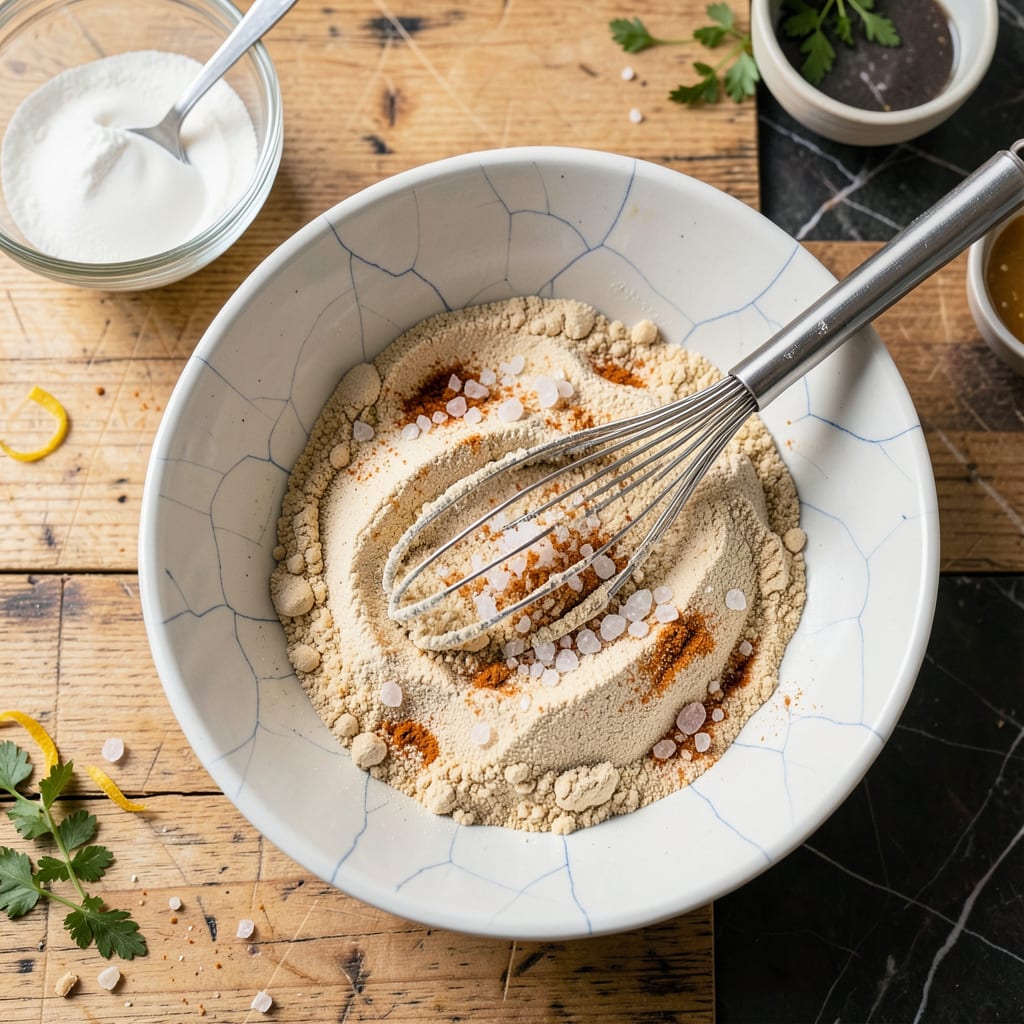
The secret to restaurant-quality fried fish at home lies in one crucial element: the batter. This simple yet precise combination of flour, liquid, and seasoning creates that signature crispy, golden coating that shatters with every bite. After testing countless ratios, I’ve perfected a foolproof formula that delivers professional results without complicated techniques.
What sets this batter apart is its ability to adhere perfectly to fish while frying to a light, airy texture. The recipe requires just 3 minutes of preparation before frying, making it ideal for weeknight dinners or impressive weekend meals. Whether you’re making classic fish and chips or beer-battered fillets, this method ensures consistent, crispy results every time.
Ingredients for Fish Batter Recipe Easy
These twelve precisely measured ingredients create the signature crispy, golden batter that adheres perfectly to fish every time.
| Ingredient | Amount | Notes |
|---|---|---|
| All-Purpose Flour 🌾 | 1 ½ cups | Unbleached for optimal texture |
| Cornstarch 🌽 | ½ cup | Creates extra crispiness |
| Baking Powder 🧂 | 1 tsp | Ensures light, airy batter |
| Kosher Salt 🧂 | 1 ½ tsp | Diamond Crystal preferred |
| Garlic Powder 🧄 | 1 tsp | Freshly ground for potency |
| Onion Powder 🧅 | 1 tsp | Complements seafood flavors |
| Paprika 🌶️ | ½ tsp | Sweet or smoked variety |
| Ice-Cold Lager Beer 🍺 | 12 oz | Unflavored, well-chilled |
| Sparkling Water 💧 | ½ cup | Chilled for maximum fizz |
| White Fish Fillets 🐟 | 1 ½ lb | Cod, haddock, or pollock |
| Vegetable Oil 🫒 | 4 cups | High smoke point required |
The flour-cornstarch blend is non-negotiable for optimal crispiness. King Arthur Flour provides consistent protein content, while Argo cornstarch delivers superior crunch. Baking powder must be aluminum-free to avoid metallic aftertaste. For the beer component, Pilsner Urquell or Heineken offer the ideal carbonation and neutral flavor profile. Fish selection should prioritize fresh, skinless fillets cut to uniform thickness for even cooking.
For alcohol-free preparation, substitute the beer with additional sparkling water plus 1 tbsp apple cider vinegar. Gluten-free adaptations require replacing all-purpose flour with rice flour and potato starch in equal proportions. The vegetable oil should maintain a consistent 350-375°F temperature—use a candy thermometer for precision. Paprika can be omitted for color-sensitive applications, though it contributes subtle depth.
Prepared batter maintains optimal consistency for 30 minutes when refrigerated. Fried fish retains peak crispness for 15 minutes post-frying—keep warm on a wire rack in a 200°F oven. Leftover batter cannot be safely stored due to raw egg concerns (if using egg variations). For oil disposal, allow to cool completely before transferring to a sealed container for proper recycling.
Why You’ll Love This Recipe
- No Whisk Needed: I dump everything—flour, cornstarch, baking powder, salt, and that garlic powder—in one bowl and stir with a fork. Honestly, if I can make this while answering emails with one hand, you’ve got this.
- That Golden Crunch: The cornstarch is the secret here. It gives the fish this shatteringly crisp shell that stays put (no soggy disasters), while the garlic powder sneaks in just enough warmth to make every bite ridicuously good.
- Friday or Tuesday: This isn’t just for fish fries. I’ve used it for shrimp, onion rings, even zucchini sticks when I’m desperate. Between us, it’s how I turn frozen cod into something my kids fight over.
- Pantry Stable, Wallet Happy: Five ingredients I always have, zero last-minute grocery runs. A pound of fish costs less than takeout, and the batter stretches to feed four—with leftovers that reheat surprisingly well in the air fryer.
Step-by-Step Instructions for Fish Batter
This professional technique delivers an exceptionally crispy, golden coating that stays light and airy throughout frying.
Step 1: Prepare the Dry Ingredient Mixture
In a large mixing bowl, whisk together the 1.5 cups all-purpose flour, 0.5 cup cornstarch, 1 tsp baking powder, 1.5 tsp kosher salt, 1 tsp garlic powder, 1 tsp onion powder, and 0.5 tsp paprika until completely combined. The cornstarch is essential for creating that ultra-crispy texture, while the baking powder ensures the batter remains light during frying.
Use a fine-mesh sieve if your garlic powder or onion powder has any lumps – this guarantees a smooth, uniform batter. The paprika adds subtle color and flavor without overpowering the delicate fish. Set this dry mixture aside while you prepare the liquid components.
Step 2: Create the Liquid Base with Carbonation
In a separate bowl, combine the 12 oz ice-cold lager beer and 0.5 cup sparkling water. The carbonation in both liquids creates tiny bubbles in the batter that expand during frying, resulting in that characteristic crispy, airy texture. Use unflavored beer to avoid competing flavors.
The temperature matters significantly here – both liquids must be well-chilled to maintain maximum carbonation. I recommend keeping the beer in the refrigerator until the last moment and using sparkling water straight from the fridge. The cold temperature also helps prevent the batter from absorbing too much oil during frying.
Step 3: Combine Wet and Dry Ingredients
Pour the chilled liquid mixture into the dry ingredients and whisk gently just until combined. The batter should be slightly lumpy with the consistency of heavy cream. Overmixing develops gluten in the flour, which would make the coating tough rather than crispy.
Let the batter rest for 5 minutes at room temperature. This brief resting period allows the flour to fully hydrate and the baking powder to begin activating. You’ll notice the batter thickens slightly during this time, which is exactly what you want for proper adhesion to the fish fillets.
Step 4: Fry the Fish to Golden Perfection
Heat the 4 cups vegetable oil in a deep, heavy pot or Dutch oven to 375°F. Use a deep-fry thermometer for accuracy – this temperature is critical for achieving that golden-brown color without burning. While the oil heats, pat the 1.5 lb white fish fillets completely dry with paper towels to ensure maximum batter adhesion.
Dip each fillet into the batter, allowing excess to drip off for 3 seconds before carefully lowering it into the hot oil. Fry in batches to avoid crowding, which would lower the oil temperature. Cook for 3-4 minutes until the coating is deep golden brown and the fish flakes easily when tested with a fork. The internal temperature should reach 145°F for perfect doneness.
Step 5: Drain and Serve Immediately
Transfer the fried fish to a wire rack set over a baking sheet to drain. This allows air to circulate completely around the fillets, preventing the crispy coating from becoming soggy. Avoid using paper towels for draining as they can trap steam and soften the crust.
Serve immediately while the coating is at its crispiest. The contrast between the shatteringly crisp exterior and tender, flaky fish inside is most pronounced when served fresh from the fryer. For best results, accompany with tartar sauce or a squeeze of lemon to cut through the richness of the fried coating.
Essential Equipment for This Dish
Deep Fry Thermometer
A precise candy/deep-fry thermometer is non-negotiable for perfect results. I use the ThermoWorks ChefAlarm because it clips to your pot and has a loud alarm when oil reaches 375°F. Maintaining exact temperature prevents greasy or undercooked fish. 🌡️
Heavy-Duty Pot
Choose a 5-quart Dutch oven or similar heavy pot with high sides to prevent oil splatter. My favorite is the Lodge Enameled Cast Iron – its heat retention keeps oil temperature stable during batch frying. The depth also allows safe submerging of fillets without overflow.
Wire Cooling Rack
Skip paper towels! A stainless steel cooling rack placed over a baking sheet lets air circulate completely around fried fish. I use the OXO Good Grips version – it’s dishwasher safe and prevents soggy bottoms by allowing steam to escape.
Long Tongs
Invest in 12-inch stainless steel tongs with a locking mechanism. The OXO Spring-Loaded Tongs give you precise control when lowering battered fillets into hot oil. The length keeps your hands safely away from splatters while providing excellent grip.
Fine-Mesh Sieve
A 8-inch fine-mesh sieve ensures lump-free dry ingredients. I use the Cuisinox Stainless Steel model to sift flour and spices together. This creates a smoother batter that adheres better to fish. It also helps distribute seasonings evenly throughout the mixture.
Batter Bowl
Use a 4-quart stainless steel mixing bowl with a pour spout for easy batter transfer. The Winco Stainless Bowl has measurement markings inside and a non-slip base. The wide mouth makes dipping fillets simple while the spout prevents messy drips when pouring excess batter back.
Nutrition Facts

- 6 Egg Cake Recipe with Oil: Light as Air With Buttery Moisture - October 4, 2026
- 4 Bean Casserole Recipe: One-Pan Heartiness With Smoky Paprika Depth - October 4, 2026
- 3-Ingredient Keto Mug Cake Recipe: Microwave Magic in 2 Minutes - October 4, 2026