
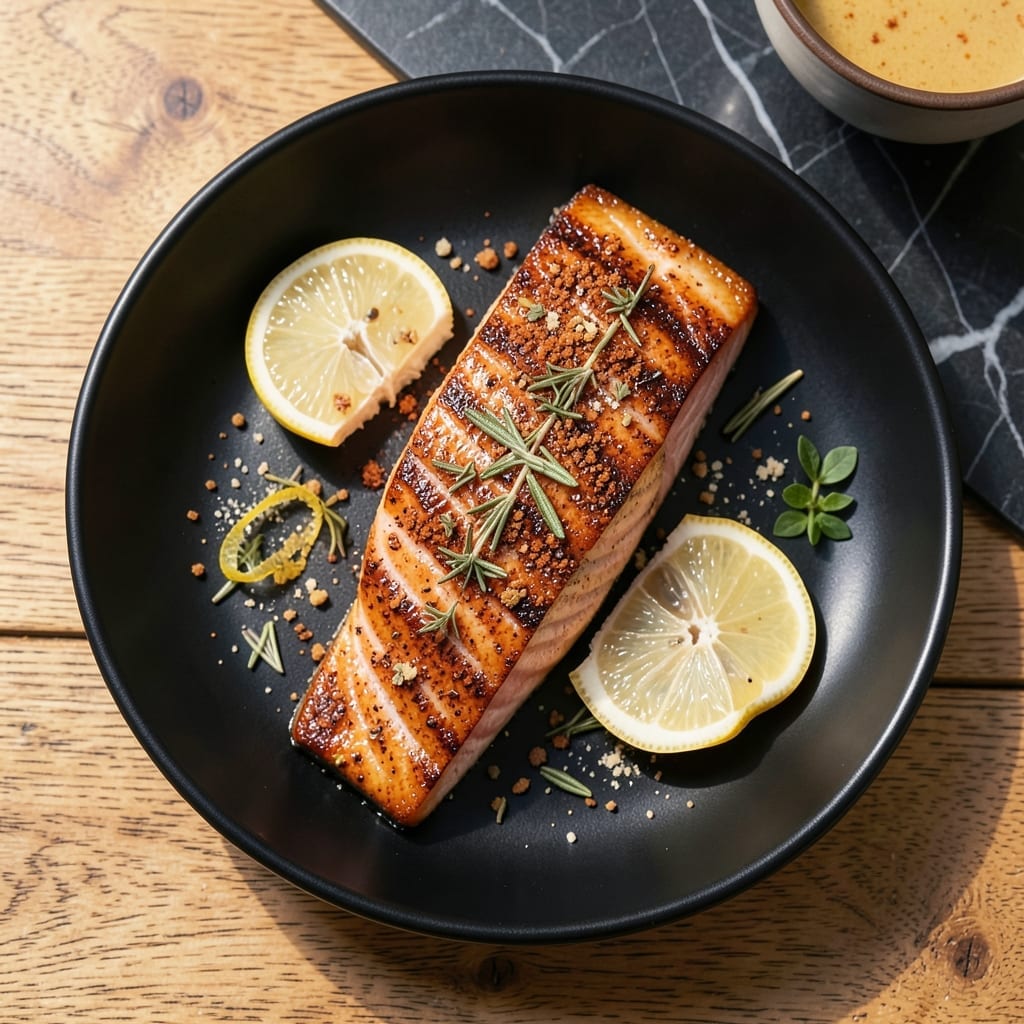
This perfect dry rub transforms ordinary salmon into a restaurant-worthy dish with minimal effort. The smoky, herby blend enhances natural flavors without overpowering the fish.
Mix it in minutes, store it for months, and use it on any seafood. A simple seasoning with maximum impact for perfectly flaked fillets every time.
Ingredients for Fish Rub Recipe Salmon
A perfectly balanced blend for salmon that elevates without overwhelming the natural flavor.
| Ingredient | Amount | Notes |
|---|---|---|
| Smoked Paprika 🌶️ | 2 tbsp | Sweet or hot variety |
| Dried Thyme 🍃 | 1 tbsp | Rubbed between fingers |
| Dried Rosemary 🌿 | 1 tbsp | Crushed to release oils |
| Garlic Powder 🧄 | 1 tbsp | Not garlic salt |
| Onion Powder 🧅 | 1 tbsp | Fine grain preferred |
| Ground Cumin 🌿 | 1 tsp | Toasted for depth |
| Brown Sugar 🍚 | 1 tbsp | Light or dark variety |
| Sea Salt 🧂 | 1 tbsp | Fine grain for even distribution |
| Black Pepper 🌶️ | 1 tsp | Freshly ground preferred |
| Cayenne Pepper 🔥 | ¼ tsp | Adjust to heat preference |
The smoked paprika forms the foundation here—Penzeys offers exceptional quality, but any well-stocked spice aisle will suffice. Freshness is critical; spices older than six months lose their potency. For the dried herbs, organic brands like Frontier Co-op provide superior aroma. The brown sugar adds a subtle caramelization, balancing the smoky notes without dominating the salmon’s natural richness.
No smoked paprika? Regular paprika plus a pinch of chipotle powder works in a pinch. Fresh rosemary or thyme can replace dried at a 3:1 ratio (use one-third the amount of dried). For a sweeter profile, coconut sugar substitutes well for brown sugar. If avoiding heat, simply omit the cayenne—its role is complementary, not essential.
Store in an airtight container away from light and heat. This blend retains optimal flavor for 6-12 months. For maximum freshness, make small batches—enough for 2-3 uses—and restock your spice cabinet regularly.
Why You’ll Love This Recipe
- 5-Minute Mix: I dump all the spices in a bowl, stir, and it’s ready—no chopping, no fuss.
- Smoky Depth: The smoked paprika and rosemary give the salmon this rich, almost campfire-like flavor I can’t get enough of.
- Freezer to Table: I rub it on frozen fillets, let them thaw in the fridge, and dinner’s half done before I get home.
- Pantry Staples: Between us, I always have these spices on hand, so it’s a last-minute lifesaver when I forget to plan.
Step-by-Step Instructions for Salmon Fish Rub
This method ensures an even coating that adheres perfectly to the fillets for maximum flavor impact.
Step 1: Activate the Dried Herbs
Begin by preparing the dried thyme and dried rosemary as specified. Rub the 1 tbsp Dried Thyme between your fingers directly over a mixing bowl to release its essential oils. Do the same with the 1 tbsp Dried Rosemary, crushing it to break up the needles.
This step is crucial—it transforms the herbs from mere seasoning to potent flavor agents. You’ll immediately notice the aroma intensify, a sign that the volatile compounds are being released. Skip this, and your rub will lack depth.
Step 2: Combine Dry Ingredients Thoroughly
In the same bowl, add the 2 tbsp Smoked Paprika, 1 tbsp Garlic Powder, 1 tbsp Onion Powder, 1 tsp Ground Cumin, 1 tbsp Brown Sugar, 1 tbsp Sea Salt, 1 tsp Black Pepper, and 0.25 tsp Cayenne Pepper. Use a whisk to blend everything uniformly.
The brown sugar will help caramelize the surface of the salmon, creating a glossy, slightly crisp crust. The sea salt should be fine grain to distribute evenly, while the cayenne pepper adds a subtle kick without overpowering the smoky-sweet balance.
Step 3: Apply the Rub to Salmon Fillets
Pat the salmon fillets completely dry with paper towels—this ensures the rub adheres rather than dissolving into excess moisture. Generously coat all sides of each fillet with the spice mixture, pressing gently to form an even layer.
Use about 1 to 1.5 tablespoons of the rub per 6-ounce fillet, adjusting based on size. The rub should fully encase the fish, with no bare spots. Let the seasoned fillets rest at room temperature for 10 minutes to allow the salt to begin penetrating the surface.
Step 4: Cook for Optimal Flavor Infusion
Heat a skillet over medium-high heat until hot, then add a thin layer of oil. Place the salmon fillets skin-side down in the pan. The rub will begin to sizzle and form a crust—this is the Maillard reaction at work, deepening the smoky, savory notes.
Cook for 4-5 minutes per side until the salmon flakes easily with a fork and the internal temperature reaches 145°F. The brown sugar in the rub will caramelize slightly, adding a glossy sheen and subtle sweetness that balances the smokiness of the smoked paprika.
Pro Tips For Making Fish Rub Recipe Salmon
- Pat Fish Dry: Always blot the salmon fillets with a paper towel before applying the rub—dry skin means a better sear and less steam under the spices.
- Bloom the Spices: Toast the smoked paprika, thyme, and rosemary in a dry pan for 30 seconds before mixing—it wakes up the flavors, especially in dried herbs.
- Skip the Salt: I learned this the hard way: garlic and onion powder already add saltiness, so go light on extra salt unless you’re using fresh ground.
- Rest Before Cooking: Let the rubbed salmon sit for 10 minutes at room temp—it lets the spices adhere better and cooks more evenly, no cold-center surprises.
Common Mistakes When Making fish rub recipe salmon
🔥 Overcooking the Salmon
Salmon can go from tender to dry in seconds if left too long on the heat. Overcooking ruins the flaky texture and turns the fish rubbery, wasting your perfectly crafted rub.
Fix: Cook salmon for 4-6 minutes per side on medium-high heat, or until it reaches 145°F internally. Use a meat thermometer for precision.
🍳 Skimping on the Rub
A light dusting of rub won’t deliver the bold, smoky flavor you’re aiming for. Salmon’s natural oils need a generous coating to create a crust that locks in moisture and taste.
Fix: Pat the salmon dry, then press at least 1 teaspoon of rub per fillet firmly into the flesh. Let it sit for 10-15 minutes before cooking.
⏰ Rushing the Resting Time
Cutting into salmon immediately after cooking causes the juices to spill out, leaving the fish dry. The rub’s flavors also need a moment to meld with the fish.
Fix: Tent the salmon with foil and let it rest for 5 minutes off the heat. This keeps it juicy and enhances the rub’s impact.
🌡️ Using a Cold Pan
Starting with a cold pan leads to uneven cooking and a weak sear. The rub won’t caramelize properly, and the salmon may stick, tearing the crust you worked hard to create.
Fix: Heat your pan (cast iron or stainless steel works best) on medium-high for 2-3 minutes before adding oil and the salmon.
Nutrition Facts

- 6 Egg Cake Recipe with Oil: Light as Air With Buttery Moisture - October 4, 2026
- 4 Bean Casserole Recipe: One-Pan Heartiness With Smoky Paprika Depth - October 4, 2026
- 3-Ingredient Keto Mug Cake Recipe: Microwave Magic in 2 Minutes - October 4, 2026