
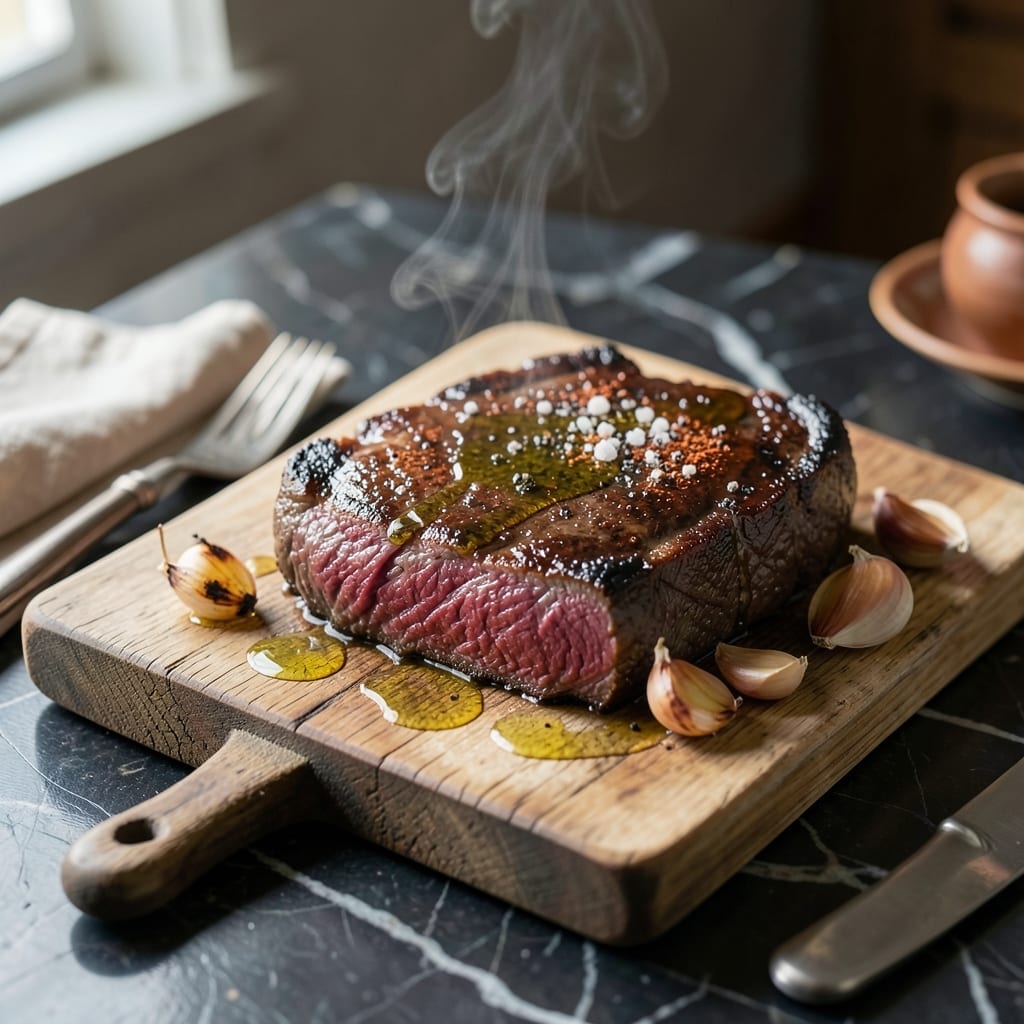
Mastering flat iron steak at home is simpler than you think with this professional method. The key lies in proper seasoning and achieving that signature crispy crust that locks in juices.
This cut benefits from high heat and precise timing. A cast iron skillet mimics Bobby Flay’s restaurant-quality results, creating a beautiful sear while maintaining a tender interior.
What emerges is a steak with a perfect balance of charred exterior and juicy center. The crust forms a flavorful barrier that keeps every bite succulent and rich.
Serve sliced against the grain for maximum tenderness. This technique delivers steakhouse results in your own kitchen.
Ingredients for Flat Iron Steak Recipe Bobby Flay
This professional cut requires minimal ingredients for maximum impact. Quality matters here.
| Ingredient | Amount | Notes |
|---|---|---|
| Flat Iron Steak 🥩 | 2 lb | 1-inch thick, well-marbled |
| Kosher Salt 🧂 | 2 tsp | Diamond Crystal preferred |
| Freshly Ground Black Pepper 🌶️ | 1 tsp | Coarse grind for crust |
| Garlic Powder 🧄 | 1 tsp | Not garlic salt |
| Smoked Paprika 🌶️ | 1 tsp | For depth of flavor |
| Olive Oil 🫒 | ¼ cup | High smoke point variety |
| Unsalted Butter 🧈 | 4 tbsp | For basting finish |
| Fresh Thyme Sprigs 🌿 | 4 whole | Optional for aroma |
| Fresh Rosemary Sprigs 🌿 | 2 whole | Optional for aroma |
| Garlic Cloves 🧄 | 2 cloves | Smashed, for basting |
The steak is everything. Flat iron offers the perfect balance of marbling and tenderness. Source from Whole Foods or a quality butcher—look for bright red color with visible fat streaking. Certified Angus Beef brand is a safe bet if you’re at the supermarket. Avoid pre-marinated cuts; you want to control the seasoning yourself. Thickness is critical: aim for 1 to 1.25 inches for even cooking.
No smoked paprika? Regular paprika with a pinch of cayenne works. Freshly ground pepper is non-negotiable—pre-ground lacks the bite needed for that signature crust. The butter must be unsalted (salted can make the exterior too salty as it reduces). For herb substitutions, sage or oregano can replace thyme. If you can’t find flat iron, flank steak is the closest alternative, though it benefits from marinating.
Dry the steak thoroughly before seasoning—paper towels work best. Seasoned steak can rest uncovered in the fridge for up to 24 hours before cooking. Leftovers (if any) keep 3-4 days in the fridge. Reheat gently in a skillet to avoid overcooking—microwaving ruins the texture.
Why You’ll Love This Recipe
- One Pan Wonder: I sear the flat iron in a single skillet—no fancy equipment, just salt, pepper, and a sprinkle of smoked paprika for that deep, smoky kick.
- Crave-Worthy Crust: The garlic powder and smoked paprika form this ridiculous crust that’s crispy outside, juicy inside. Honestly, it’s the reason I keep making it.
- Weeknight Friendly: From start to finish, it’s 20 minutes tops. I’ll be real: it’s faster than waiting for takeout.
- Leftovers Win: Cold flat iron slices? Perfect for sandwiches or salads the next day. Between us, it might taste even better.
Step-by-Step Instructions for Flat Iron Steak
Master the technique that transforms this affordable cut into a restaurant-quality masterpiece.
Step 1: Season the Steak for Maximum Flavor
Pat the 2 lb Flat Iron Steak completely dry with paper towels—this is non-negotiable for achieving a proper sear. I use a 1-inch thick, well-marbled piece for even cooking and optimal tenderness.
Combine the 2 tsp Kosher Salt, 1 tsp Freshly Ground Black Pepper, 1 tsp Garlic Powder, and 1 tsp Smoked Paprika in a small bowl. Apply this rub generously to all surfaces of the steak, pressing it in with your fingers to ensure it adheres. The coarse grind of the pepper creates that signature crust Iron Chef fans expect.
Step 2: Sear with Precision Control
Heat a heavy skillet or cast iron pan over medium-high heat until it’s screaming hot—about 400°F. Add the 0.25 cup Olive Oil and swirl to coat the pan evenly. The high smoke point variety is crucial here to prevent burning.
Lay the steak in the pan and don’t touch it for 2-3 minutes. You should see a deep, golden-brown crust forming along the edges. The steak will naturally release when it’s ready to flip. Use tongs—never a fork—to turn it, preserving those precious juices. Sear the other side for another 2-3 minutes until equally browned.
Step 3: Baste with Aromatic Butter
Reduce the heat to medium and add the 4 tbsp Unsalted Butter, 2 cloves Garlic Cloves (smashed), 4 whole Fresh Thyme Sprigs, and 2 whole Fresh Rosemary Sprigs to the pan. Tilt the pan slightly to pool the butter.
Using a spoon, baste the steak continuously for 2-3 minutes, ensuring the melted butter, garlic, and herbs coat every surface. The aroma will be intoxicating—this is where the Bobby Flay magic happens. For medium-rare, aim for an internal temperature of 130-135°F on an instant-read thermometer.
Step 4: Rest and Slice Properly
Transfer the steak to a cutting board and tent loosely with foil. Let it rest for 10 minutes—this is critical for redistributing the juices. Slicing too soon results in a dry, lackluster piece of meat.
Slice against the grain into ½-inch thick pieces. The flat iron steak has a distinct grain direction—cutting perpendicular to it shortens the muscle fibers, guaranteeing tenderness. Serve immediately while still warm, with any accumulated juices spooned over the top.
Pro Tips For Making Flat Iron Steak Recipe Bobby Flay
- Blot the Steak Dry: Pat the flat iron steak thoroughly with paper towels before seasoning—any moisture will steam it instead of searing, and you’ll lose that deep crust Bobby Flay’s known for.
- Season Generously Early: Salt the steak at least 40 minutes before cooking, or right before, but never in between—I learned this the hard way when my steak turned out bland despite the kosher salt and smoked paprika.
- Let It Rest: After pulling the steak off the heat, give it a solid 5-10 minutes under foil to redistribute the juices. Sounds tedious, but it’s the difference between a dry slice and a juicy one.
- Use High Heat: Crank your pan or grill to screaming hot before adding the steak—this ensures a quick sear without overcooking the inside, especially crucial for flat iron, which can get tough if left too long.
Health Benefits of This Dish
Protein Powerhouse
This dish delivers an impressive 50 grams of protein per serving, essential for muscle repair and growth. The flat iron cut is particularly rich in protein, making it a favorite among fitness enthusiasts and growing families. 💪
Iron and Zinc Boost
Beef is one of the best natural sources of heme iron, which your body absorbs more efficiently than plant-based iron. A serving provides about 20% of your daily iron needs, plus a healthy dose of zinc for immune support.
Rich in B Vitamins
You’ll get a full spectrum of B vitamins, including B12, B6, and riboflavin, which are vital for energy metabolism and brain function. These nutrients help convert food into fuel, keeping you energized throughout the day.
Healthy Fats
The marbling in flat iron steak provides monounsaturated fats, the same heart-healthy fats found in olive oil. These fats support cardiovascular health and help your body absorb fat-soluble vitamins like A, D, E, and K.
Low in Sodium
When you control the seasoning at home, you avoid the excessive sodium often found in restaurant steaks. This recipe uses just 2 tsp of kosher salt for the entire 2 lb steak, keeping it heart-friendly while maximizing flavor.
Minimal Additives
Unlike processed meats, this simple preparation contains no preservatives or artificial ingredients. You’re enjoying pure, wholesome beef with herbs and spices you can pronounce—a clean, nutritious meal for any occasion.
Nutrition Facts
Frequently Asked Questions
What’s the best way to dry the steak before cooking?
Pat it thoroughly with paper towels until no moisture remains. This step is crucial for achieving that perfect crispy crust. Even a little dampness will steam the meat instead of searing it.
Can I use a different cut if flat iron isn’t available?
Yes, flank steak is the closest substitute. It has similar texture but benefits from marinating first. Avoid cuts with less marbling, as they won’t develop the same rich flavor.
How do I know when to flip the steak?
Wait until it releases naturally from the pan, usually after 2-3 minutes. Forcing it too soon will tear the crust. Look for a deep golden-brown color before turning.
Why is resting so important after cooking?
Resting for 10 minutes allows juices to redistribute. Slicing too soon causes them to spill out, resulting in a dry steak. The temperature will also rise about 5°F during this time.

- 6 Egg Cake Recipe with Oil: Light as Air With Buttery Moisture - October 4, 2026
- 4 Bean Casserole Recipe: One-Pan Heartiness With Smoky Paprika Depth - October 4, 2026
- 3-Ingredient Keto Mug Cake Recipe: Microwave Magic in 2 Minutes - October 4, 2026