
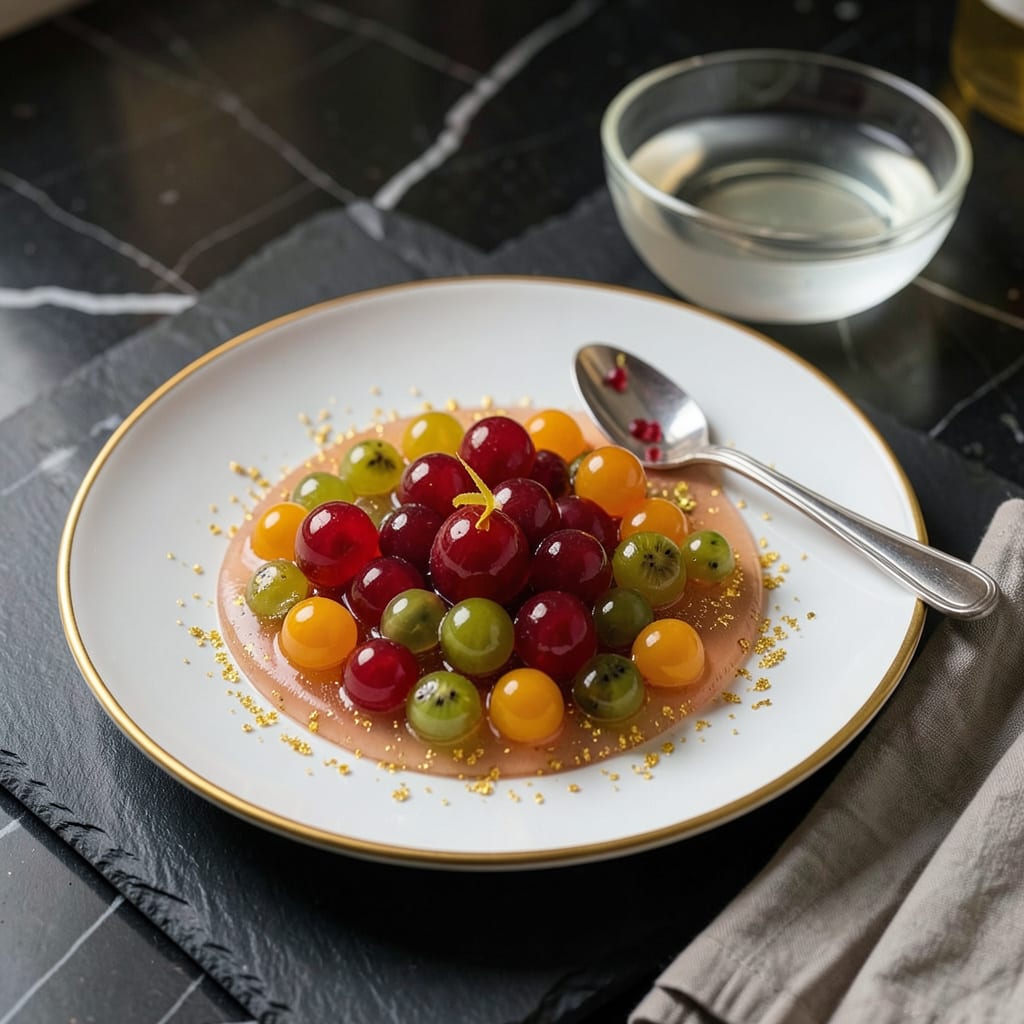
Transform ordinary desserts into restaurant-quality creations with this professional technique for making fruit caviar. These delicate, bursting juice pearls add sophisticated texture and vibrant color to any plate, elevating simple dishes into showstopping presentations. The process combines basic kitchen science with culinary artistry to produce results that impress every time.
Whether using sodium alginate for perfect spheres or agar-agar for a beginner-friendly approach, this method creates consistently beautiful caviar beads. Their liquid centers release intense fruit flavor with each bite, making them ideal for garnishing desserts, cocktails, or breakfast dishes. The visual impact alone makes this technique worth mastering for any home cook looking to expand their presentation skills.
Ingredients for Fruit Caviar
Eight precision ingredients transform fruit juice into professional-grade caviar pearls with scientific accuracy and culinary artistry.
| Ingredient | Amount | Notes |
|---|---|---|
| Sodium Alginate Powder 🧪 | 1 ½ tsp | Food-grade, molecular gastronomy quality |
| Calcium Chloride Powder 🧪 | 1 tsp | Food-safe, dissolved in water |
| Fresh Fruit Juice 🍊 | 2 cups | Strained, no pulp, high-acid preferred |
| Agar-Agar Powder 🌿 | 1 tsp | Beginner-friendly alternative to alginate |
| Distilled Water 💧 | 4 cups | For calcium bath and dilution |
| Granulated Sugar 🍬 | 2 tbsp | Optional, balances tartness |
| Citric Acid 🍋 | ¼ tsp | Preserves color, enhances shelf life |
| Vegetable Glycerin 🧴 | ½ tsp | Optional, improves texture stability |
The sodium alginate and calcium chloride must be food-grade molecular gastronomy quality—Modernist Pantry or MolecularRecipes.com are optimal sources. Fruit juice selection determines final flavor intensity; high-acid options (passionfruit, citrus, pomegranate) yield the most stable spheres. For the calcium bath, use distilled water to prevent mineral interference with gel formation. Professional kitchens standardize on 0.5% alginate concentration (1.5 tsp per 2 cups juice) for ideal membrane strength.
For agar-agar substitution, increase concentration to 2% (1 tsp per 1/2 cup juice) and adjust setting time—one-third the calcium bath duration suffices. Citric acid preserves vibrant color in delicate juices; omit for naturally stable options like mango. Vegetable glycerin (available at Whole Foods or baking supply stores) enhances shelf life by 24-48 hours when refrigerated. Sugar quantities may vary—reduce by half for naturally sweet juices to maintain osmotic balance.
Prepared caviar maintains structural integrity for 48 hours refrigerated in its setting bath. Transfer to fresh distilled water for extended storage up to 5 days, changing water daily. Freezing is not recommended—thawing disrupts membrane integrity. Optimal serving temperature is 40-45°F; room temperature causes premature bursting. Use within 1 hour of removing from calcium bath for maximum visual impact and texture contrast.
Why You’ll Love This Recipe
- No Blender Needed: I love that this comes together with just a whisk and a slotted spoon—no fancy equipment. The agar-agar sets the base in minutes, and the sodium alginate bath does the magic while you sip your coffee.
- Like Popping Sunshine: That first burst of concentrated mango or strawberry juice when you bite into one? It’s ridiculous how vibrant the flavor stays. The calcium chloride bath locks in the fruit’s natural sweetness without watering it down.
- Party Trick or Snack: I’ve served these on cheese boards, stirred into yogurt, and even frozen for a last-minute cocktail garnish. Kids think they’re edible confetti (and honestly, so do I).
- Zero Waste, All Reward: Leftovers? Toss them in a sealed container with a splash of their own juice—they keep for 3 days, and the texture stays perfect. One batch costs less than store-bought pearls and makes twice as much.
Step-by-Step Instructions for Fruit Caviar
This molecular gastronomy technique requires precision but yields professional-quality juice pearls with perfect texture.
Step 1: Prepare the Calcium Bath Solution
Begin by dissolving the 1 tsp Calcium Chloride Powder in 2 cups Distilled Water in a wide, shallow container. Stir vigorously for 1-2 minutes until completely dissolved—you should see no visible particles remaining in the solution. This creates the setting bath that will transform your juice droplets into caviar.
The container should be at least 3 inches deep to allow the pearls to form properly without touching the bottom. I recommend using a clear glass dish to better monitor the process. Set this bath aside while you prepare the juice mixture, ensuring it remains at room temperature throughout.
Step 2: Create the Juice-Alginate Mixture
In a separate bowl, whisk together the 2 cups Fresh Fruit Juice with the 1.5 tsp Sodium Alginate Powder until fully dissolved. This requires 3-5 minutes of continuous whisking to prevent clumping. The mixture should become slightly viscous, similar to thin syrup, with no visible powder particles.
For optimal results, add the 2 tbsp Granulated Sugar, 0.25 tsp Citric Acid, and 0.5 tsp Vegetable Glycerin at this stage. The sugar balances tartness, while citric acid preserves the vibrant color and glycerin improves texture stability. Let the mixture rest for 5 minutes to allow the alginate to fully hydrate before proceeding.
Step 3: Form the Caviar Pearls
Transfer the juice-alginate mixture to a squeeze bottle or pipette for precise droplet formation. Hold the bottle 1-2 inches above the calcium bath surface. Gently squeeze to create small droplets that fall into the bath—aim for ¼-inch diameter pearls for ideal texture.
The droplets should immediately begin forming a thin membrane upon contact with the calcium solution. Allow them to set undisturbed for 2-3 minutes until they develop a firm outer layer but remain liquid inside. You’ll notice the pearls become slightly opaque as the gelation occurs.
Step 4: Rinse and Store the Pearls
Using a fine-mesh strainer, carefully remove the pearls from the calcium bath and rinse them under cool running water for 30 seconds. This stops the gelation process and removes any residual calcium chloride, which could impart a bitter taste if left on the pearls.
Transfer the rinsed pearls to a clean container filled with fresh distilled water. They can be stored refrigerated in this water bath for up to 3 days, though I recommend using them within 24 hours for optimal texture and flavor. The pearls should maintain their spherical shape and burst immediately when bitten.
Step 5: Serve and Present
Drain the pearls just before serving and pat gently with a paper towel to remove excess moisture. They’re now ready to use as a garnish for desserts, cocktails, or plating presentations. Each pearl should have a delicate membrane that ruptures upon contact, releasing the concentrated fruit juice.
For best visual impact, arrange the pearls on chilled plates or in clear glasses where their translucent quality can be appreciated. The pearls work particularly well with contrasting textures like creamy panna cotta or crispy tuiles, where their bursting quality creates a dynamic eating experience.
Regional Styles of These Flavors
Spanish Citrus Caviar
In Andalusia, they transform this technique using bitter orange juice (like Seville oranges) for a sophisticated twist. The tartness pairs beautifully with sherry-infused desserts or as a garnish for seafood ceviche. I love adding 1/4 tsp saffron threads to the calcium bath for golden-hued pearls that scream Spanish elegance. 🌟
Japanese Yuzu Variation
Tokyo’s pastry chefs favor yuzu juice for its complex citrus aroma. They often mix it with 1 tsp matcha powder in the alginate solution, creating vibrant green pearls with layered flavors. These work wonderfully atop black sesame mousse or as a cocktail garnish for gin-based drinks.
Mexican Mango Habanero
Oaxacan cooks blend ripe mango purée with 1/2 tsp habanero powder for sweet-heat caviar. The contrast is incredible on tres leches cake or alongside spicy margaritas. I’ve found adding 1/8 tsp Tajín seasoning to the calcium bath enhances the flavor profile beautifully.
French Lavender Pearls
Provence-inspired versions infuse peach juice with 1/2 tsp culinary lavender steeped for 10 minutes. These delicate purple pearls elevate vanilla bean crème brûlée or champagne cocktails. The floral notes make them perfect for springtime presentations.
Tropical Passionfruit Style
Brazilian chefs prefer passionfruit pulp for its intense tropical flavor. They often add 1 tsp coconut water to the juice mixture for subtle creaminess. These bright yellow pearls pop against dark chocolate desserts or caipirinha cocktails. The high acidity makes them particularly stable. 💛
Nordic Lingonberry Approach
Scandinavian versions use lingonberry juice for tart, jewel-toned pearls. They’re traditionally served with cardamom-scented rice pudding or as a garnish for smoked salmon canapés. I recommend reducing the sugar to 1 tbsp to maintain the berry’s natural sharpness.
Nutrition Facts
Frequently Asked Questions
What’s the easiest fruit to start with for beginners?
Mango or peach juice works beautifully for first attempts. Their natural sweetness and moderate acidity create stable pearls without requiring perfect technique. Avoid high-acid fruits like lemon until you’re comfortable with the process.
Why did my pearls turn out hard instead of liquid-centered?
This usually happens when they sit too long in the calcium bath. The ideal setting time is 2-3 minutes—any longer and the gelation penetrates too deeply. Also check your alginate concentration; more than 0.5% can over-thicken the membrane.
Can I make this without special ingredients?
Yes! For a simplified version, mix 1 cup fruit juice with 1 tsp agar-agar, heat until dissolved, then drip into cold oil. The texture differs slightly but creates similar “caviar” effects. Chia seeds also work for a healthier, though less precise, alternative.
How far in advance can I prepare the pearls?
For best results, use within 24 hours of making. Store in fresh distilled water in the fridge, changing the water every 12 hours to maintain texture. The pearls will gradually absorb water and lose their burst effect after 48 hours.
What’s the secret to getting perfectly round pearls?
Use a pipette or squeeze bottle with a 1-2mm opening, held 1-2 inches above the bath. The surface tension does most of the work—don’t force the droplets. Practice with water first to master the consistent pressure needed.

- 6 Egg Cake Recipe with Oil: Light as Air With Buttery Moisture - October 4, 2026
- 4 Bean Casserole Recipe: One-Pan Heartiness With Smoky Paprika Depth - October 4, 2026
- 3-Ingredient Keto Mug Cake Recipe: Microwave Magic in 2 Minutes - October 4, 2026