
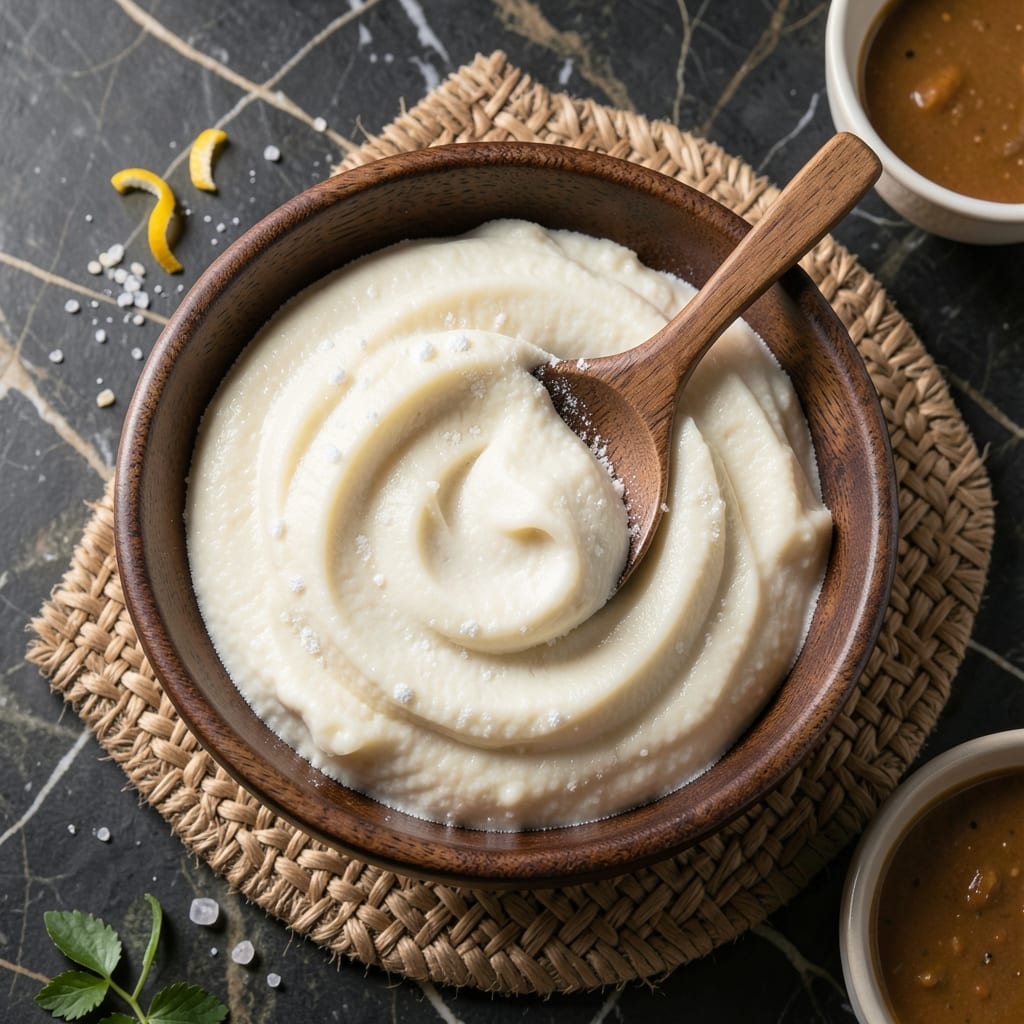
Making fufu with flour brings the smooth, stretchy texture of traditional West African fufu to your kitchen without cassava. This method delivers authentic results using simple ingredients and a straightforward technique.
The process involves mixing flour with hot water to create a dough that’s kneaded until perfectly elastic. I’ve refined this approach to ensure the right consistency every time, whether you’re serving it with soups or stews.
What you’ll achieve is a soft, slightly chewy fufu that holds its shape when formed into balls. It absorbs flavors beautifully, making it the ideal companion for your favorite African dishes.
Ready in 20 minutes, this version proves you don’t need special equipment to enjoy this staple.
Ingredients for Fufu Recipe with Flour
Simple pantry staples transform into this smooth, stretchy West African classic.
| Ingredient | Amount | Notes |
|---|---|---|
| All-Purpose Flour 🌾 | 2 cups | Plus extra for dusting |
| Water 💧 | 1 ½ cups | Hot, nearly boiling |
| Salt 🧂 | ½ tsp | Fine grain preferred |
| Neutral Oil 🫒 | 1 tbsp | Like vegetable or canola |
| Cornstarch 🌽 | 2 tbsp | For extra stretchiness |
| Baking Powder 🧂 | ¼ tsp | Helps with elasticity |
| Warm Water 💧 | ¼ cup | For adjusting consistency |
The flour is the foundation here—any all-purpose brand works, but I’ve had best results with King Arthur or Gold Medal. Hot water is key (not just warm), so bring it to a near boil. Cornstarch adds that signature stretchy texture you’d get from cassava. It’s in the baking aisle at Walmart or Target, no need for specialty stores.
No cornstarch? Tapioca starch at the same amount works just as well. Want it slightly denser? Skip the baking powder. The oil is just to keep the dough from sticking—any neutral oil (vegetable, canola, sunflower) is fine. If the dough feels too stiff, add the extra warm water 1 tbsp at a time until it’s smooth but not sticky.
Fufu is best served fresh and warm, but you can store it in an airtight container for 2 days. Reheat by steaming or microwaving with a damp towel over it. Doesn’t freeze well—it loses that perfect chewy texture.
Why You’ll Love This Recipe
- No-Fuss Mix: I just stir flour, water, salt, and a splash of oil—no special tools, no waiting.
- Crave-Worthy Texture: The cornstarch gives it that stretchy, smooth bite that makes every mouthful satisfying.
- Pairs with Anything: Honestly, it’s my blank canvas for soups, stews, or even a quick snack with peanut butter.
Step-by-Step Instructions for Fufu With Flour
This method delivers that signature smooth, stretchy texture without the traditional pounding.
Step 1: Combine Dry Ingredients
In a large mixing bowl, whisk together the 2 cups All-Purpose Flour, 2 tbsp Cornstarch, 0.5 tsp Salt, and 0.25 tsp Baking Powder until fully blended. I like to sift them first to break up any lumps, which helps create a uniform texture in the final product.
The cornstarch and baking powder are key here—they give the dish that elastic quality that makes it so satisfying to eat. Don’t skip this step; it’s the foundation of a good batch.
Step 2: Add Hot Water Gradually
Slowly pour in the 1.5 cups Water (hot, nearly boiling) while stirring continuously with a wooden spoon. You’ll notice the mixture start to come together into a shaggy dough. Keep stirring until all the liquid is absorbed.
This is where most people go wrong—they add all the water at once and end up with a sticky mess. The gradual addition lets you control the consistency. If it feels too dry, you can adjust later with the 0.25 cup Warm Water.
Step 3: Knead the Dough
Dust your work surface lightly with extra all-purpose flour and turn out the dough. Add the 1 tbsp Neutral Oil to your hands to prevent sticking, then knead vigorously for 8-10 minutes until the dough becomes smooth and elastic.
You’ll know it’s ready when it stops tearing and starts stretching smoothly when you pull it. The oil helps soften the dough and makes kneading easier. If it feels too stiff, add a tablespoon or two of the 0.25 cup Warm Water as you work.
Step 4: Rest and Shape
Cover the dough with a clean kitchen towel and let it rest for 10 minutes. This allows the gluten to relax and the flour to fully hydrate. After resting, divide the dough into 4 equal portions and roll each into a smooth ball.
I like to press my thumb into the top of each ball to create a small indentation—it’s traditional and makes for a nice presentation. The dough should be firm but pliable at this stage.
Step 5: Cook the Fufu Balls
Bring a pot of water to a rolling boil. Gently drop in the fufu balls and cook for 15-20 minutes until they float to the surface. They’re done when they’ve puffed up slightly and a toothpick inserted comes out clean.
Remove them with a slotted spoon and let them cool slightly before serving. The texture should be smooth and stretchy, with a slightly chewy exterior. Serve warm with your favorite soup or stew for the full experience.
Pro Tips For Making Fufu Recipe With Flour
- Knead While Hot: Start kneading the dough as soon as the flour-water mixture comes off the heat—waiting even 2 minutes makes it stiff and crumbly. I learned this the hard way after my first three batches turned into dense hockey pucks.
- Use Warm Water: Always mix the flour with water that’s about 110°F, like bathwater. Cold water makes the fufu gummy, and boiling water can cook the flour unevenly.
- Skip the Over-Flouring: Resist the urge to add extra flour when kneading—it dries out the fufu fast. If it’s sticky, wet your hands with a little oil instead.
- Rest Before Serving: Let the fufu sit covered for 5 minutes after shaping—this lets the starches set so it holds together when you serve it. My grandmother swore by this, and she was right.
Regional Styles of This Recipe
Nigerian Style
In Nigeria, this dough is often made slightly firmer for dipping into rich, spicy soups like egusi or okra. I use 2 cups all-purpose flour with just 1.25 cups hot water for a denser texture that holds up well to hearty stews.
Ghanaian Version
Ghanaians prefer a smoother, more elastic version. I add 1 extra tbsp cornstarch to the base recipe and knead for 12 minutes to achieve that signature stretch. The result pairs perfectly with light broths or tomato-based soups.
This variation often includes a touch of baking powder for extra softness, which I find enhances the eating experience. 🌟
Senegalese Approach
In Senegal, they sometimes incorporate 1 tbsp cassava flour alongside the all-purpose flour for authenticity. This adds a subtle nutty flavor. I mix it with 1.5 cups hot water and let the dough rest for 15 minutes before shaping.
Liberian Twist
Liberian cooks often use slightly less water—about 1.25 cups—for a chewier texture. I’ve found this works well when serving with pepper soups. The dough balls are typically smaller, about golf ball size, for individual portions.
Sierra Leonean Method
Here, they might add ½ tsp sugar to the dough mixture, balancing savory soups. I use warm water at 180°F for mixing, which helps activate the gluten better. The final texture is slightly sweeter but still maintains that classic stretch. 💛
Nutrition Facts
Frequently Asked Questions
Can I use self-rising flour instead?
Yes, but reduce the baking powder to 1/8 tsp. Self-rising flour already contains leavening agents, so too much baking powder can create a bitter taste.
Why did my dough turn out sticky?
This usually happens if the water was too cool or too much was added. Start with 1.25 cups hot water, then add more gradually until the right consistency is reached.
How do I know when the fufu is fully kneaded?
It should stretch smoothly without tearing when pulled. If it breaks easily, knead for another 2-3 minutes. The surface should look glossy.
Can I make this without cornstarch?
Yes, but the texture won’t be as stretchy. Use 1 tbsp tapioca starch as a substitute, or simply omit it for a denser result.

- 6 Egg Cake Recipe with Oil: Light as Air With Buttery Moisture - October 4, 2026
- 4 Bean Casserole Recipe: One-Pan Heartiness With Smoky Paprika Depth - October 4, 2026
- 3-Ingredient Keto Mug Cake Recipe: Microwave Magic in 2 Minutes - October 4, 2026