
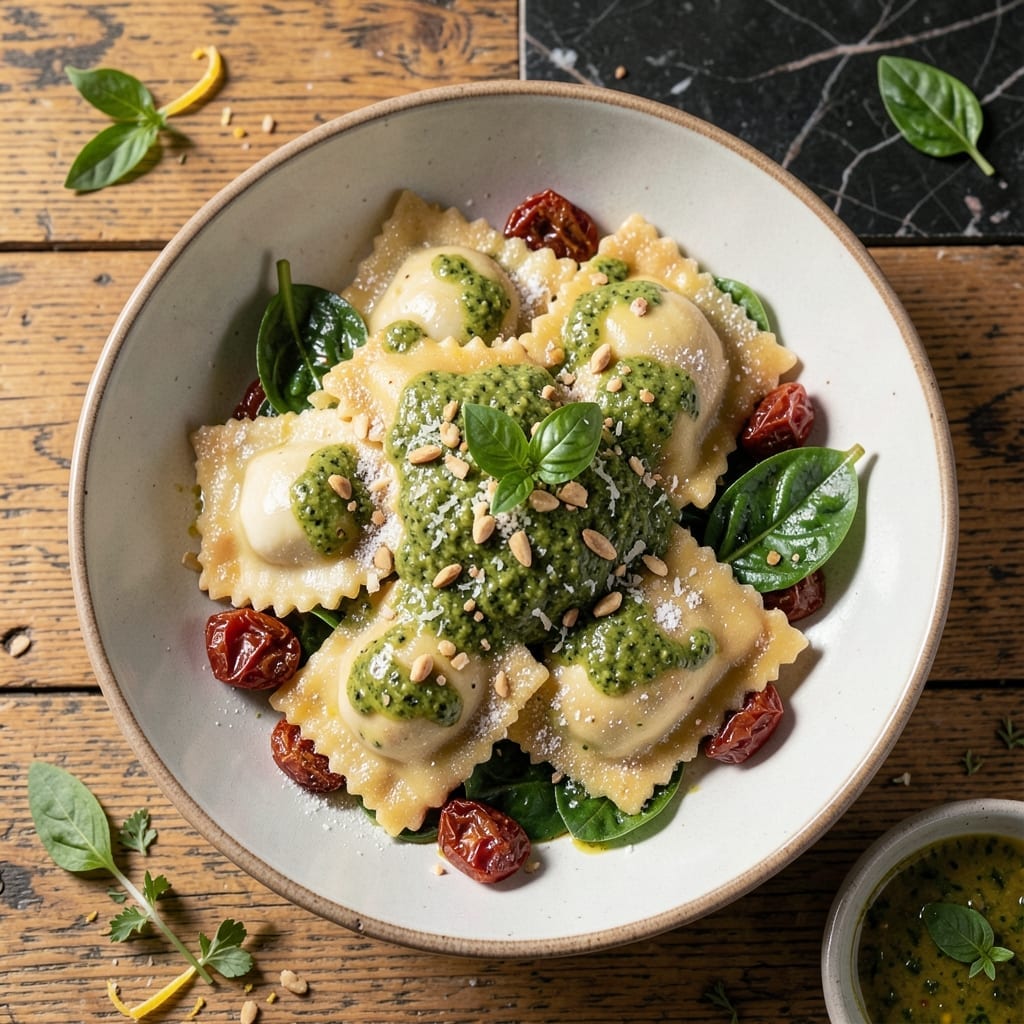
Making gluten-free ravioli that actually holds together is a game-changer for pasta lovers. This recipe delivers tender, pillowy pockets without the gluten.
With a simple herb-infused ricotta filling and a foolproof dough recipe, you’ll achieve restaurant-quality results at home. The key is precise mixing and resting time for the perfect texture.
Ingredients for Gluten Free Pasta Recipe for Ravioli
A precise blend of gluten-free flour and fresh ingredients creates restaurant-quality pasta at home.
| Ingredient | Amount | Notes |
|---|---|---|
| Gluten-Free All-Purpose Flour Blend 🌾 | 2 ½ cups | Plus extra for dusting |
| Xanthan Gum 🧪 | ½ tsp | Omit if blend includes it |
| Large Eggs 🥚 | 3 whole | Room temperature preferred |
| Ricotta Cheese 🧀 | 1 cup | Whole milk for creaminess |
| Parmesan Cheese 🧀 | ½ cup | Freshly grated from block |
| Fresh Basil Leaves 🌿 | ¼ cup | Finely chopped for filling |
| Fresh Spinach 🥬 | 1 cup | Blanched, drained, and chopped |
| Garlic Cloves 🧄 | 2 cloves | Minced for filling |
| Extra-Virgin Olive Oil 🫒 | 1 tbsp | For dough and filling |
| Salt 🧂 | 1 tsp | Divided between dough and filling |
| Black Pepper 🌶️ | ¼ tsp | Freshly ground for filling |
| Nutmeg 🌰 | 0.125 tsp | Freshly grated for depth |
| Water 💧 | 2 tbsp | As needed for dough consistency |
| Lemon Zest 🍋 | 1 tsp | Optional for brightness |
The gluten-free flour blend is critical—King Arthur or Bob’s Red Mill 1:1 are reliable choices. Xanthan gum is non-negotiable unless your blend already includes it (check the label). Room temperature eggs incorporate more smoothly into the dough. For the ricotta, whole milk from a quality brand like BelGioioso yields the creamiest filling. Fresh basil and spinach should be vibrant green without wilting.
No ricotta on hand? Cottage cheese blended smooth works in a pinch, though the texture differs slightly. Swap basil for fresh parsley or dill if needed. Skip the spinach entirely for a simpler filling, or add sautéed mushrooms for earthiness. The Parmesan can be replaced with Pecorino Romano for a sharper bite. Always taste the filling before assembling—adjust salt and pepper as needed.
The dough rests best covered at room temperature for 30 minutes, which improves elasticity. Store uncooked ravioli on a floured tray, not touching, in the fridge for up to 24 hours, or freeze for 1 month. Cooked ravioli keep in the fridge for 3-4 days—reheat gently in simmering water.
Why You’ll Love This Recipe
- I’ll be real: these freeze beautifully. Pop them in boiling water straight from the freezer for a quick meal.
- No Fuss Dough: Honestly, the gluten-free flour blend and xanthan gum do all the work—just mix, roll, and stuff.
- Cheesy Perfection: That ricotta and Parmesan filling? Ridiculously good. Like, I-could-eat-it-with-a-spoon good.
- Freezer Friendly: I’ll be real: these freeze beautifully. Pop them in boiling water straight from the freezer for a quick meal.
Step-by-Step Instructions for Gluten Free Pasta for Ravioli
Master the technique for creating delicate, pillowy pockets with herb-infused filling.
Step 1: Prepare the Herb-Infused Filling
In a mixing bowl, combine the 1 cup Ricotta Cheese, 0.5 cup Parmesan Cheese, minced 2 cloves Garlic Cloves, 0.25 cup Fresh Basil Leaves, and chopped 1 cup Fresh Spinach.
Season with 0.25 tsp Black Pepper, 0.125 tsp Nutmeg, and half of the 1 tsp Salt. Drizzle in 1 tbsp Extra-Virgin Olive Oil and fold everything together until fully incorporated.
The filling should be creamy yet thick enough to hold its shape when piped. Taste and adjust seasoning if needed—the Parmesan adds saltiness, so go easy on additional salt.
Step 2: Create the Gluten-Free Dough
On a clean surface, mound the 2.5 cups Gluten-Free All-Purpose Flour Blend and 0.5 tsp Xanthan Gum. Create a well in the center and add the 3 whole Large Eggs and remaining 1 tsp Salt.
Using a fork, gradually incorporate the flour into the eggs until a shaggy dough forms. Add 2 tbsp Water as needed, 1 tablespoon at a time, until the dough comes together. It should be soft but not sticky.
Knead the dough for 5-7 minutes until smooth and elastic. Wrap it in plastic and let it rest for 30 minutes at room temperature. This resting period allows the flour to hydrate fully, making the dough easier to roll.
Step 3: Roll and Shape the Dough
Divide the rested dough into 4 equal portions. Working with one portion at a time, roll it out on a lightly floured surface to about 1/16-inch thickness. Use a ravioli cutter or a sharp knife to cut into 3-inch squares.
Place 1 teaspoon of the filling in the center of each square, being careful not to overfill. Lightly brush the edges with water to help them seal, then top with another square of dough.
Press down around the filling to remove air pockets, then seal the edges firmly with your fingers or a fork. The sealed edges should look clean with no gaps to prevent the filling from leaking during cooking.
Step 4: Cook the Ravioli to Perfection
Bring a large pot of salted water to a gentle boil. Reduce the heat to maintain a simmer—aggressive boiling can cause the ravioli to burst. Carefully drop in the ravioli in batches to avoid overcrowding.
Cook for 3-4 minutes until the ravioli float to the surface and the dough is tender but still slightly firm to the bite. Use a slotted spoon to transfer them to a plate, draining well.
For an extra touch of flavor, toss the cooked ravioli with a drizzle of Extra-Virgin Olive Oil and a sprinkle of 1 tsp Lemon Zest before serving. This brightens the dish and complements the herb filling beautifully.
Pro Tips For Making Gluten Free Pasta Recipe For Ravioli
- Roll It Thin: Gluten-free dough needs to be rolled to about 1/16 inch thick—any thicker and your ravioli will turn out gummy. I learned this the hard way after my first few batches came out more like dumplings.
- Drain the Ricotta: Spread the ricotta on a paper towel for 10 minutes before mixing to remove excess moisture—this keeps your filling from turning the dough soggy and ruining the texture.
- Skip the Overmixing: Once you add the eggs to the flour blend, mix just until combined. Overworking the dough makes it tough, and gluten-free pasta can turn rubbery fast.
- Chill Before Cutting: After rolling, pop the dough in the fridge for 15 minutes before cutting. This makes it easier to handle and prevents the ravioli from falling apart when boiling.
Best Sauces and Condiments for This Recipe
Pairing your gluten free ravioli with the right sauce can elevate the dish from delicious to unforgettable 😋. Whether you prefer homemade or store-bought, these sauce recommendations will complement your pillowy pasta perfectly.
Spicy Options
For those who love a kick, arrabbiata sauce is a classic choice. This tomato-based sauce, spiced with red chili flakes, brings a fiery depth that balances the mildness of ricotta-filled ravioli. If you’re short on time, Newman’s Own Sockarooni offers a store-bought version with a satisfying heat. For a homemade twist, sauté garlic and crushed red pepper in olive oil, then blend with canned tomatoes and fresh basil.
Creamy and Rich
A velvety alfredo sauce is a decadent match for gluten free ravioli. The creamy texture pairs wonderfully with the soft pasta. Try Rao’s Homemade Alfredo for a quick, high-quality option, or make your own by whisking heavy cream, butter, and Parmesan cheese until smooth. Add a pinch of nutmeg for an extra layer of flavor.
Sweet and Tangy
If you enjoy a balance of sweet and savory, brown butter sage sauce is a must-try. Melt butter until it turns golden, then toss in fresh sage leaves for an aromatic, slightly nutty flavor. For a store-bought shortcut, Trader Joe’s Brown Butter Sauce works beautifully. Drizzle it over your ravioli and finish with a sprinkle of toasted pine nuts for crunch.
Nutrition Facts

- 6 Egg Cake Recipe with Oil: Light as Air With Buttery Moisture - October 4, 2026
- 4 Bean Casserole Recipe: One-Pan Heartiness With Smoky Paprika Depth - October 4, 2026
- 3-Ingredient Keto Mug Cake Recipe: Microwave Magic in 2 Minutes - October 4, 2026