
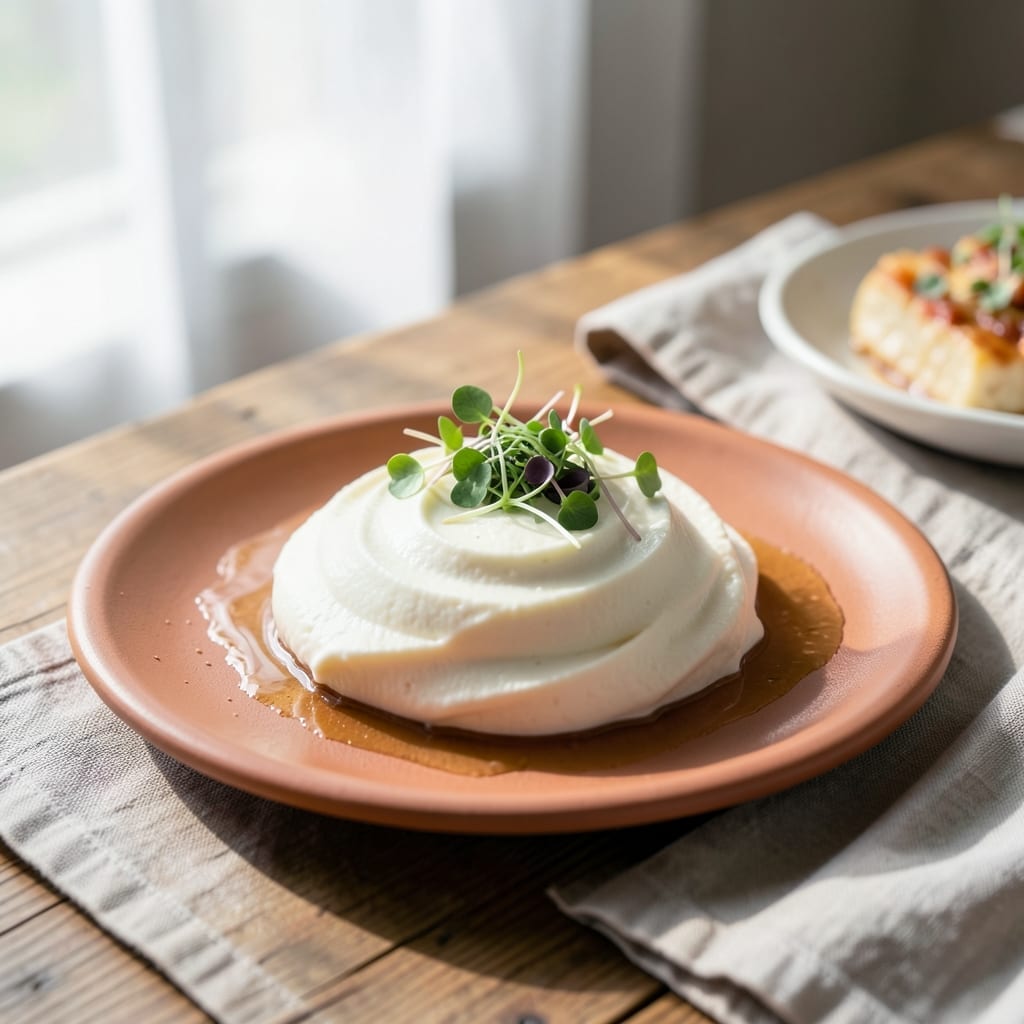
This frosting delivers silky smooth sweetness without powdered sugar by relying on a simple cooked sugar base. The technique transforms granulated sugar into a glossy, spreadable consistency that rivals traditional versions.
With just a few pantry staples and 10 minutes of cooking time, you can create a versatile frosting that pipes beautifully and holds its shape. It works perfectly for cakes, cupcakes, or cookies.
Ingredients for Frosting Recipe No Confectioners Sugar
Eight pantry staples create a glossy, spreadable frosting without powdered sugar.
| Ingredient | Amount | Notes |
|---|---|---|
| Granulated Sugar 🍚 | 2 cups | Fine white sugar preferred |
| Whole Milk 🥛 | ½ cup | Or 2% for lighter texture |
| Unsalted Butter 🧈 | ½ cup | Cubed, room temperature |
| All-Purpose Flour 🌾 | 2 tbsp | For thickening the base |
| Vanilla Extract 💧 | 1 tsp | Pure extract for best flavor |
| Salt 🧂 | ¼ tsp | Fine sea salt or table salt |
| Light Corn Syrup 🫙 | 2 tbsp | Prevents crystallization |
| Heavy Cream 🥛 | 2 tbsp | Optional for richer texture |
The sugar quality matters here—Domino or C&H granulated sugar dissolves evenly without cloudiness. Use whole milk for the creamiest texture, though 2% works in a pinch. Butter should be unsalted to control sweetness levels; Land O’Lakes or Plugra are reliable brands. The flour acts as a stabilizer—all-purpose is standard, but cake flour yields an even smoother finish.
Need a dairy-free version? Oat milk or coconut milk at a 1:1 ratio replaces the milk and cream. Vegan butter (like Miyoko’s) works for the butter. For a lighter frosting, half-and-half can stand in for heavy cream. Corn syrup substitutes include honey or agave at the same amount, though they may slightly alter the color.
Store in an airtight container at room temperature for up to 3 days. For longer storage, refrigerate for 1 week or freeze for 3 months. Rewhip briefly before using to restore the smooth, spreadable consistency.
Why You’ll Love This Recipe
- No Powder Needed: I love that I can skip the confectioners sugar and still get silky frosting with just granulated sugar and a quick stovetop cook.
- Buttery Vanilla Dream: The flour-thickened base with real butter and vanilla tastes richer than any shortcut frosting I’ve tried.
- Stir and Spread: Honestly, it’s one pot, five minutes, then straight onto cupcakes or cake—no mixer, no fuss.
- Budget Hero: Between us, it costs pennies compared to store-bought tubs and makes enough to frost a whole layer cake.
Step-by-Step Instructions for Frosting Without Powdered Sugar
Master this technique and you’ll produce a velvety frosting that rivals any traditional buttercream.
Step 1: Create the Flour and Milk Base
In a medium saucepan, whisk together the 2 tbsp All-Purpose Flour and 0.5 cup Whole Milk until smooth. This mixture forms the foundation of your frosting, replacing the need for confectioners sugar entirely.
Place the saucepan over medium heat and cook, stirring constantly with a silicone spatula, until the mixture thickens to the consistency of pudding. This should take 5-7 minutes. Watch for it to reach a temperature where it coats the back of a spoon and leaves a clear path when you run your finger through it on the spatula.
Remove from heat immediately once thickened to prevent overcooking. The mixture will continue to thicken slightly as it cools, so don’t be tempted to cook it longer.
Step 2: Cool the Base Completely
Transfer the cooked flour-milk mixture to a shallow bowl or plate and cover the surface directly with plastic wrap to prevent a skin from forming. Allow it to cool to room temperature, which typically takes 30-45 minutes.
This cooling step is critical—adding it to the butter while warm will melt the fat and ruin the frosting’s structure. I place the bowl in the refrigerator for the last 10 minutes to speed the process, but ensure it’s no longer warm to the touch before proceeding.
Step 3: Cream the Butter and Sugar
In a stand mixer fitted with the paddle attachment, beat the 0.5 cup Unsalted Butter on medium-high speed for 2-3 minutes until pale and fluffy. The butter should be at room temperature—soft enough to leave an indent when pressed but not greasy or melted.
Gradually add the 2 cups Granulated Sugar, mixing on low speed initially to avoid a cloud of sugar dust, then increase to medium-high once incorporated. Beat for an additional 4-5 minutes until the mixture is light, creamy, and nearly white in color. This step dissolves the sugar crystals and aerates the base for a smooth finish.
Step 4: Incorporate the Cool Base and Flavorings
With the mixer on low speed, add the cooled flour-milk mixture one spoonful at a time, allowing each addition to fully incorporate before adding more. This prevents splattering and ensures a uniform texture.
Once combined, increase the speed to medium-high and beat for 3-4 minutes until the frosting is fluffy and holds soft peaks. Add the 1 tsp Vanilla Extract, 0.25 tsp Salt, 2 tbsp Light Corn Syrup, and 2 tbsp Heavy Cream. The corn syrup enhances smoothness, while the cream adds richness and stability.
Step 5: Adjust Consistency and Use
Assess the frosting’s texture. If it’s too thick, beat in additional heavy cream, 1 tablespoon at a time. If it’s too thin, chill it for 10-15 minutes and rewhip. The ideal consistency should hold its shape when piped but still spread easily with a spatula.
Use immediately to frost cooled cakes or cupcakes. This frosting develops a slight crust over time, so for a pristine finish, apply it fresh. Store any leftovers in an airtight container at room temperature for up to 3 days or refrigerate for up to 1 week, bringing to room temperature and rewhipping before use.
Pro Tips For Making Frosting Recipe No Confectioners Sugar
- Cook the Flour: Whisk the flour into the milk over medium heat until thick—about 3-5 minutes—and let it cool completely before adding butter. I learned this the hard way after ending up with lumpy frosting because I rushed it.
- Use Room-Temp Butter: Take the butter out 30-60 minutes before starting so it creams smoothly with the sugar. Cold butter leaves streaks, and melted butter makes the frosting greasy.
- Skip the Shortcuts: Resist the urge to replace granulated sugar with honey or maple syrup—they add too much moisture and throw off the texture. Stick to the recipe’s ratios.
- Beat Longer: After everything’s combined, keep beating for another 2-3 minutes until it’s fluffy. Sounds tedious, but it makes a real difference in getting that light, spreadable consistency.
Dietary Considerations for This Recipe
Keto-Friendly Options
For a keto-friendly frosting, replace granulated sugar with a low-carb sweetener like erythritol or monk fruit. These substitutes maintain sweetness without spiking blood sugar. Use heavy cream or coconut cream for a rich, creamy texture while keeping carbs in check.
Gluten-Free Modifications
This frosting is naturally gluten-free if you use gluten-free vanilla extract and certified gluten-free ingredients. Always check labels on additives like flavorings or stabilizers to avoid hidden gluten. Enjoy worry-free indulgence!
Allergen Considerations
For those with dairy allergies, swap butter for coconut oil or dairy-free margarine. If avoiding eggs, use a flax or chia seed gel as a binder. Always verify allergen-free labels on sweeteners and flavorings.
Vegetarian Alternatives
To make this frosting vegetarian, ensure your sugar substitute is free of bone char (common in some refined sugars). Stick to plant-based fats like coconut oil or vegan butter for a cruelty-free treat.
Low-Sodium Options
Reduce sodium by using unsalted butter or coconut oil and omitting added salt. If your sweetener contains sodium, opt for a salt-free alternative to keep the frosting light and heart-healthy.
Nutrition Facts

- 6 Egg Cake Recipe with Oil: Light as Air With Buttery Moisture - October 4, 2026
- 4 Bean Casserole Recipe: One-Pan Heartiness With Smoky Paprika Depth - October 4, 2026
- 3-Ingredient Keto Mug Cake Recipe: Microwave Magic in 2 Minutes - October 4, 2026