
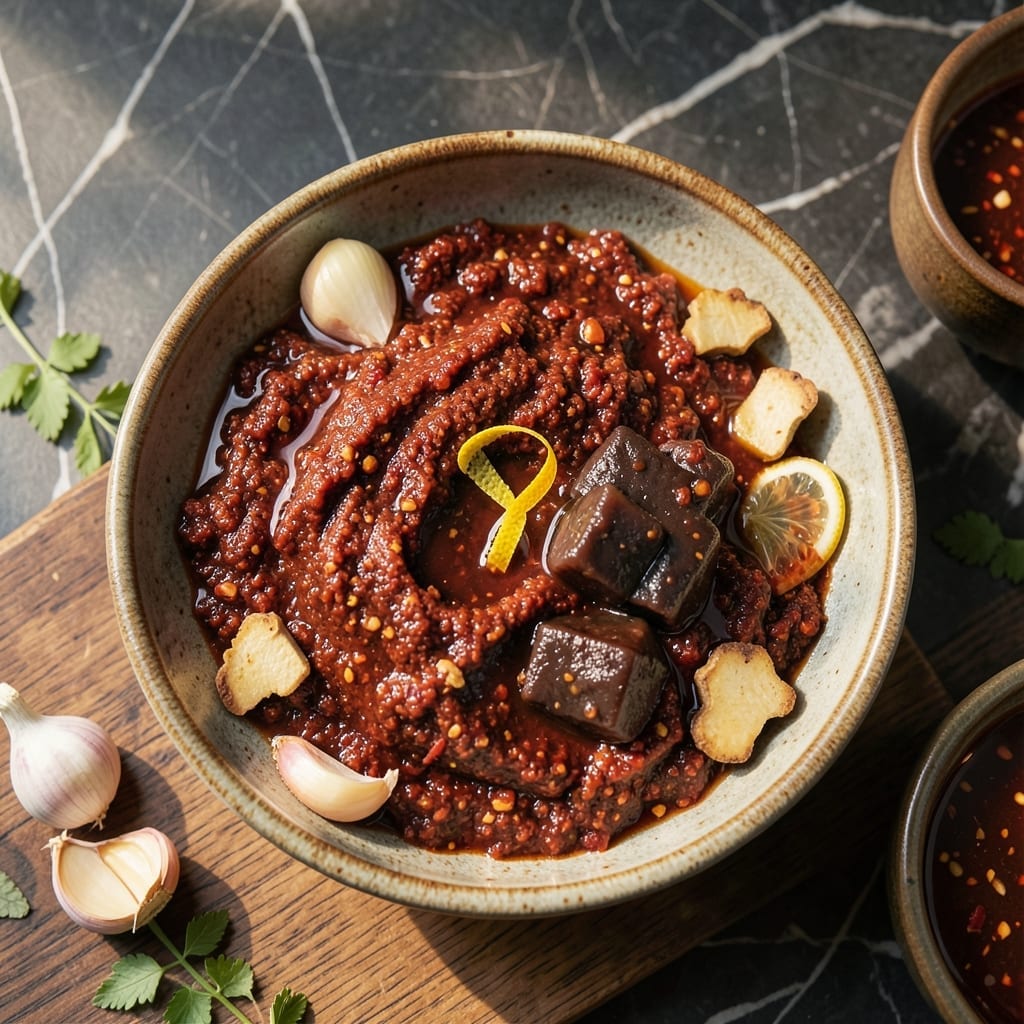
This homemade gochujang delivers the authentic sweet-spicy depth of Korean fermented chili paste without preservatives. The process transforms simple ingredients into a complex, umami-rich condiment that elevates any dish.
I developed this recipe to capture traditional flavors while making it accessible for home kitchens. The fermentation creates layers of heat, sweetness, and funk that store-bought versions struggle to match.
With just 7 ingredients and a week of patience, you’ll produce a thick, vibrant paste that’s perfect for marinades, soups, or dipping sauces. The balance between chili, rice, and sweetener is precise.
The result is a versatile condiment with deep flavor that improves with age. Use it sparingly at first—its intensity builds as it ferments.
Ingredients for Gochujang
Seven simple ingredients transform into a complex, umami-rich Korean condiment with authentic sweet-spicy depth.
| Ingredient | Amount | Notes |
|---|---|---|
| Gochugaru (Korean Red Pepper Flakes) 🌶️ | 1 cup | Fine to medium grind preferred |
| Glutinous Rice Flour 🌾 | ½ cup | Also called sweet rice flour |
| Brown Rice Syrup 🍯 | ½ cup | Or substitute with maple syrup |
| Fermented Soybean Paste (Doenjang) 🥜 | 2 tbsp | Or miso paste as alternative |
| Garlic Cloves 🧄 | 6 cloves | Minced finely for even distribution |
| Fresh Ginger 🌿 | 1 tbsp | Peeled and grated finely |
| Sea Salt 🧂 | 1 tsp | Fine grain for even mixing |
The gochugaru is non-negotiable—look for Korean markets or well-stocked Asian aisles at stores like H Mart or Assi Plaza. Avoid coarse flakes; the fine to medium grind dissolves better into the paste. Glutinous rice flour (not regular rice flour) creates the proper sticky texture. Bob’s Red Mill carries it if you can’t find it in specialty stores (worth the hunt).
No doenjang? White miso paste works as a substitute—use the same amount but expect a slightly milder funk. Brown rice syrup can be swapped for maple syrup or agave, though the flavor profile shifts slightly sweeter. If you’re missing fresh ginger, ground ginger at one-third the amount works in a pinch (but fresh is ideal for that bright, zingy kick).
This paste ferments at room temperature for 5-7 days, developing deeper flavor over time. Store in a clean glass jar in the fridge after opening—it’ll keep for up to 6 months. The paste thickens as it ages, so stir in a splash of water if needed before using.
Why You’ll Love This Recipe
- One Bowl Wonder: I mix everything right in the same pot—no fancy prep, just gochugaru, doenjang, and garlic coming together with minimal cleanup.
- Umami Bomb: The doenjang and garlic create this deep, savory richness that makes the gochujang taste way more complex than the effort required.
- Fridge Staple: I keep a jar in my fridge for weeks—it’s my shortcut to instant flavor for marinades, soups, or even a quick stir-fry sauce.
- Budget Blessing: Honestly, a little goes a long way, and the ingredients are affordable. One batch lasts me through countless meals.
Step-by-Step Instructions for Gochujang
Follow this method precisely to achieve the proper fermentation and complex flavor development.
Step 1: Create the Base with Gochugaru and Glutinous Rice Flour
In a large mixing bowl, combine the 1 cup Gochugaru (Korean Red Pepper Flakes) and 0.5 cup Glutinous Rice Flour thoroughly. The fine to medium grind of the gochugaru ensures a smooth texture while the rice flour acts as a binding agent.
Whisk the mixture until you achieve a uniform, vibrant red powder without any visible clumps. This base provides the foundation for the paste’s characteristic color and mild heat. The rice flour also contributes to the eventual fermentation process by providing starch for the beneficial bacteria.
Step 2: Incorporate the Wet Ingredients and Umami Base
Create a well in the center of your dry mixture. Add the 0.5 cup Brown Rice Syrup, 2 tbsp Fermented Soybean Paste (Doenjang), and 1 tsp Sea Salt to the well. The brown rice syrup adds natural sweetness that balances the heat, while the doenjang provides the essential umami depth.
Begin mixing from the center outward, gradually incorporating the dry ingredients into the wet. The mixture will transform from a loose powder to a thick, cohesive paste. The sea salt not only seasons but also helps regulate the fermentation process.
Step 3: Add Aromatics for Complex Flavor Layers
Finely mince the 6 cloves Garlic Cloves and peel and grate the 1 tbsp Fresh Ginger. These aromatics are crucial for developing the paste’s complex flavor profile. The garlic adds pungency while the ginger contributes a warm, slightly citrusy note.
Fold the minced garlic and grated ginger into your paste mixture. Ensure even distribution throughout the paste, as these ingredients will infuse their flavors during fermentation. The paste should now have a slightly sticky consistency with visible flecks of garlic and ginger.
Step 4: Ferment for Optimal Flavor Development
Transfer the paste to a clean, airtight glass jar. Press down firmly to remove any air pockets, which can inhibit proper fermentation. The paste should fill the jar with about 1 inch of headspace at the top to allow for expansion.
Seal the jar and let it ferment at room temperature, away from direct sunlight, for at least 3 days. For more developed flavors, extend the fermentation to 1 week. You’ll notice the paste darkening slightly and developing a more complex aroma as the fermentation progresses.
After the initial fermentation, store the gochujang in the refrigerator where it will continue to mature and develop deeper flavors over time. The paste will keep for up to 6 months refrigerated, though it’s often consumed within 2-3 months for peak flavor.
Pro Tips For Making Gochujang
- Toast the Gochugaru: Lightly dry-toast the gochugaru in a pan for 2-3 minutes before mixing—I learned this the hard way after my first batch tasted raw and bitter.
- Bloom the Flour: Whisk the glutinous rice flour into cold water first to prevent lumps, then heat it gently until it thickens to a thin paste.
- Balance the Doenjang: Use half the amount of doenjang you think you need, then adjust—its saltiness can overpower the gochugaru if you’re heavy-handed.
- Rest Overnight: After mixing, let the gochujang sit covered at room temperature for 12-24 hours before refrigerating—this deepens the flavors significantly.
Make-Ahead Tips for Leftovers
Prep Ahead Strategy
I always mix my dry ingredients (1 cup gochugaru and ½ cup glutinous rice flour) the night before. This saves 10 minutes on mixing day and ensures even distribution. Store the pre-mixed powder in an airtight container at room temperature. 💡
Fermentation Timing
Start fermentation on a Friday evening for optimal convenience. By Monday morning, you’ll have a lightly fermented paste ready for the fridge. This 3-day minimum develops enough complexity for most uses while fitting a weekend schedule.
Jar Preparation
Sterilize your glass jar by boiling it for 5 minutes or running through a dishwasher cycle. I use wide-mouth mason jars for easy access. Let cool completely before adding the paste to prevent condensation from diluting your mixture.
Batch Splitting
Divide your paste into 2 smaller jars if making the full recipe. This lets you open one jar at a time, keeping the second portion fresher. Label each with the date—fermentation continues in the fridge, deepening flavors over 6 months. ✨
Quick Start Option
For immediate use, you can ferment at room temperature for just 24 hours. The flavor won’t be as complex, but it works for testing. I did this once when I was impatient—still tasted great, just milder. The full 7 days is worth the wait.
Storage Location
Keep your fermenting jar in a dark pantry or cupboard. Temperature fluctuations can affect fermentation, so avoid spots near the stove or oven. My kitchen cupboard maintains a consistent 70°F, which is ideal for this process.
Nutrition Facts
Frequently Asked Questions
Can I use regular rice flour instead of glutinous?
No, regular rice flour won’t work. Glutinous rice flour creates the proper sticky texture that binds the paste together. Regular rice flour lacks the necessary starch content for fermentation and proper consistency.
Why does my paste taste too bitter?
This usually means over-fermentation or low-quality gochugaru. Ferment for only 3-7 days and use fresh, fine-ground Korean chili flakes. The bitterness develops when left too long or with stale ingredients.
How do I know when fermentation is complete?
The paste darkens slightly and develops a tangy aroma. After 3 days you’ll notice bubbles forming. By 1 week the flavor deepens significantly. Trust your nose—it should smell rich and complex, not harsh.
Can I reduce the spice level?
Yes! Cut the gochugaru to 3/4 cup and add 1/4 cup more rice flour. This maintains texture while reducing heat. You can also add extra 1-2 tbsp brown rice syrup to balance the spice.

- 6 Egg Cake Recipe with Oil: Light as Air With Buttery Moisture - October 4, 2026
- 4 Bean Casserole Recipe: One-Pan Heartiness With Smoky Paprika Depth - October 4, 2026
- 3-Ingredient Keto Mug Cake Recipe: Microwave Magic in 2 Minutes - October 4, 2026