
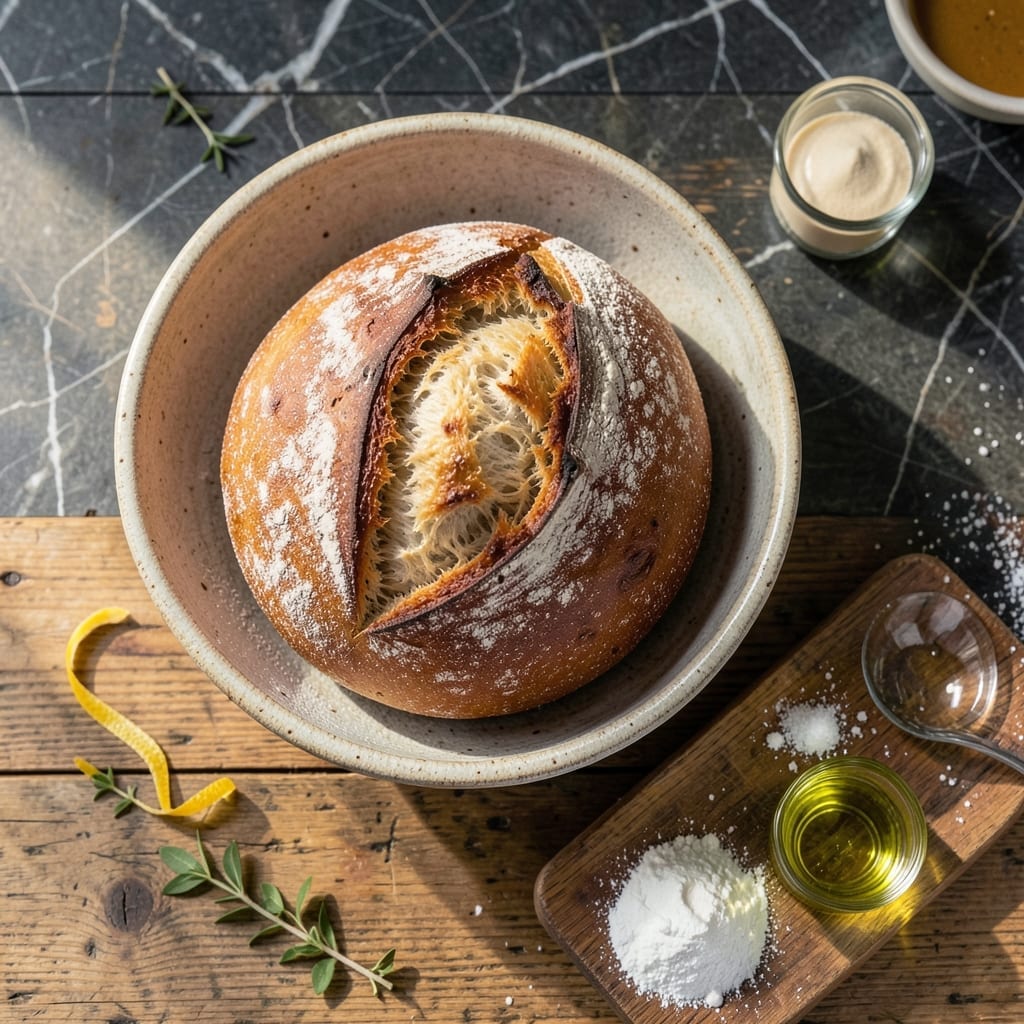
There’s a reason Italian bakery bread holds a special place at the dinner table—its crusty exterior and soft, airy interior are unmatched. This recipe brings that authentic bakery experience into your kitchen with minimal effort.
What sets this loaf apart is the balance of texture and flavor, achieved through a simple yet precise method. The dough comes together with basic ingredients but requires patience as it rises to develop its signature structure.
Once baked, you’ll have a golden, aromatic loaf with a chewy crumb and a crust that crackles with every slice. It’s the kind of bread that elevates soups, sandwiches, or even a humble spread of butter.
Perfect for beginners and seasoned bakers alike, this recipe delivers consistent results every time.
Ingredients for Gonnella Bread
Simple pantry staples create that bakery-style loaf you crave at home.
| Ingredient | Amount | Notes |
|---|---|---|
| Bread Flour 🌾 | 4 cups | High-protein for chewy texture |
| Active Dry Yeast 🍞 | 2 ¼ tsp | One packet, proofed in warm water |
| Warm Water 💧 | 1 ½ cups | 110°F, for yeast activation |
| Olive Oil 🫒 | 2 tbsp | Extra-virgin for richness |
| Sugar 🍚 | 1 tbsp | Feeds the yeast for rise |
| Salt 🧂 | 2 tsp | Fine sea salt for balance |
| Honey 🍯 | 1 tbsp | Adds subtle sweetness |
| Cornmeal 🌽 | ¼ cup | For dusting baking surface |
| All-Purpose Flour 🌾 | ½ cup | For dusting work surface |
| Egg White 🥚 | 1 whole | For glossy crust finish |
The flour is everything here. King Arthur Bread Flour is my go-to for its consistent high protein content—it gives that chewy interior you expect from a bakery loaf. Yeast needs to be fresh; check the expiration date on the packet. Fleet Farm or Costco are great for bulk yeast if you bake often. Warm water should feel like bathwater, not hot, or you’ll kill the yeast before it starts working.
No bread flour? All-purpose in a pinch, but add 1 tbsp vital wheat gluten per cup to boost protein. Honey can be swapped for maple syrup or sugar—just keep the amount the same. Olive oil adds richness, but vegetable oil works too. For the cornmeal, fine or medium grind both work (just avoid coarse). If you skip the egg wash, the crust won’t be as shiny.
Dough rises best in a warm, draft-free spot—75-80°F is ideal. Proofed dough can chill in the fridge overnight for slower fermentation. Baked loaves stay fresh 2-3 days at room temperature in a paper bag. Freeze slices for up to 3 months.
Why You’ll Love This Recipe
- 5-Minute Mix: I toss the yeast into warm water with sugar, and the dough comes together faster than my coffee brews.
- Pillowy Crust: The olive oil gives it that golden, crisp edge with a soft, airy center that disappears too fast.
- Sandwich Savior: Between us, this bread turns last night’s leftovers into today’s hero sandwich.
- Pantry Staples: Honestly, I always have these ingredients on hand—no last-minute grocery runs.
Step-by-Step Instructions for Italian Bakery-Style Loaf
Here’s the method. Straightforward, tested, works every time.
Step 1: Activate the Yeast and Prepare the Dough
In a large mixing bowl, combine the 2.25 tsp Active Dry Yeast, 1 tbsp Sugar, and 1.5 cups Warm Water at 110°F. Stir gently and let it sit for 5-10 minutes until the mixture becomes frothy—this confirms the yeast is active.
Add the 2 tbsp Olive Oil, 1 tbsp Honey, and 2 tsp Salt. Stir until the salt dissolves completely. Gradually incorporate the 4 cups Bread Flour, mixing until a shaggy dough forms. The dough should pull away from the sides of the bowl but still feel slightly sticky to the touch.
Step 2: Knead the Dough to Develop Gluten
Turn the dough onto a surface lightly dusted with 0.5 cup All-Purpose Flour. Knead for 8-10 minutes by hand, pushing the dough away with the heel of your hand and folding it back over itself. The dough will become smooth and elastic as the gluten develops.
You’ll know it’s ready when it springs back slowly when pressed with a finger. If the dough feels too sticky, add a small amount of the All-Purpose Flour from your work surface, but avoid adding too much—this can make the bread dense.
Step 3: First Rise Until Doubled in Size
Place the kneaded dough in a clean, lightly oiled bowl, turning it once to coat all sides. Cover with a damp kitchen towel or plastic wrap and let it rise in a warm, draft-free area for 1-1.5 hours, or until doubled in volume.
Here’s the thing—yeast activity depends on temperature. If your kitchen is cooler than 75°F, the rise may take longer. Be patient; rushing this step results in less flavor development. The dough should look puffy and jiggle slightly when gently shaken.
Step 4: Shape and Second Rise
Punch down the risen dough to release the air. On a surface dusted with 0.25 cup Cornmeal, shape the dough into a round loaf or an oval. Place it seam-side down on a baking sheet dusted with the remaining Cornmeal to prevent sticking.
Cover loosely and let it rise for another 45-60 minutes until it has puffed up noticeably. The loaf should spring back slowly when lightly pressed. Preheat your oven to 400°F during the last 15 minutes of this rise.
Step 5: Bake and Finish for a Glossy Crust
Just before baking, use a sharp knife or razor to score the top of the loaf in a decorative pattern. This allows the bread to expand properly in the oven. Bake at 400°F for 25-30 minutes until the crust is golden brown and the loaf sounds hollow when tapped on the bottom.
Remove from the oven and immediately brush the top with the 1 whole Egg White for a glossy finish. Return to the oven for 2-3 minutes to set the glaze. Transfer to a wire rack and let it cool for at least 30 minutes before slicing—this prevents a gummy texture.
Pro Tips For Making Gonnella Bread
- Test Your Yeast: I learned this the hard way—always proof your active dry yeast in the warm water with a pinch of sugar first. If it doesn’t bubble within 5 minutes, your bread won’t rise, no matter how long you wait.
- Use High-Protein Flour: Bread flour isn’t just a suggestion here—its higher protein content gives gonnella bread that chewy texture. Skip all-purpose, or you’ll end up with a denser loaf.
- Don’t Overheat the Water: Warm water should feel like a baby’s bath, around 110°F. Any hotter, and you’ll kill the yeast before it even gets started—I’ve ruined two batches this way.
- Oil the Bowl Well: Coat your rising bowl with about a tablespoon of olive oil before the first rise. Sounds small, but it prevents sticking and makes the dough easier to handle later.
Make-Ahead Tips for This Recipe
Overnight Dough Prep
After kneading, place the dough in a greased bowl, cover tightly with plastic wrap, and refrigerate for up to 16 hours. This slow fermentation develops deeper flavor. Let it sit at room temperature for 1 hour the next morning before shaping. 💡
Pre-Shape and Chill
Shape the dough into a loaf after the first rise, then wrap it in plastic and chill for 4-12 hours. This makes the final rise faster and improves texture. I often prep this before bed for fresh bread in the morning.
Freeze Unbaked Dough
After the first rise, punch down the dough, shape it, and freeze on a tray for 1 hour before wrapping in plastic and foil. It keeps for 1 month. Thaw overnight in the fridge before the second rise. ❄️
Baked Loaf Storage
Cool the bread completely, then store in a paper bag at room temperature for 2-3 days. For longer storage, slice and freeze in a ziplock bag for up to 3 months. Toast slices directly from frozen.
Reheating Slices
For fresh-tasting bread, sprinkle sliced loaves with water and warm in a 350°F oven for 5-10 minutes. Alternatively, toast slices in a toaster or air fryer at 375°F for 2-3 minutes. 🔥
Revive Stale Bread
Wrap the loaf in foil and warm in a 300°F oven for 10-15 minutes. Then unwrap and bake for another 5 minutes to crisp the crust. This trick works like magic every time.
Nutrition Facts
Frequently Asked Questions
Can I use all-purpose flour instead of bread flour?
Yes, but add 1 tbsp vital wheat gluten per cup to boost protein. This mimics bread flour’s structure for better chew. Without it, the loaf may be slightly denser.
Why does my bread have a dense texture?
Under-kneading or rushing the rise often causes this. Knead for 8-10 minutes and let dough double in size. Cool kitchens may need extra rise time.
How do I get a crispier crust?
Bake on a preheated pizza stone or steel at 400°F. Place a pan of water in the oven to create steam during the first 10 minutes.
Can I make this in a bread machine?
Yes! Use the dough setting, then shape and bake as directed. The machine handles kneading and first rise, saving time.

- 6 Egg Cake Recipe with Oil: Light as Air With Buttery Moisture - October 4, 2026
- 4 Bean Casserole Recipe: One-Pan Heartiness With Smoky Paprika Depth - October 4, 2026
- 3-Ingredient Keto Mug Cake Recipe: Microwave Magic in 2 Minutes - October 4, 2026