
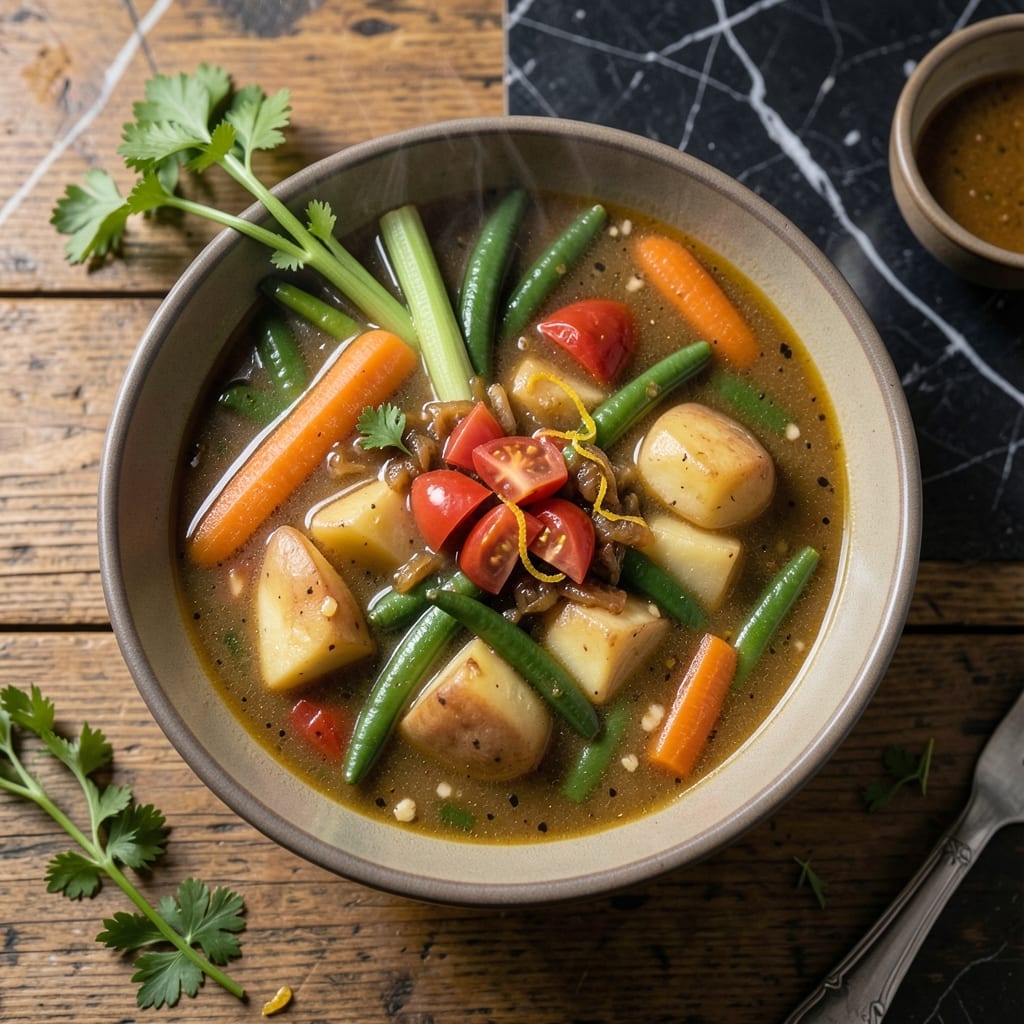
This vegetable soup captures the comforting essence of a garden harvest in every spoonful. A blend of fresh produce simmers together to create a dish that’s as nourishing as it is flavorful.
The beauty lies in its simplicity—carrots, celery, tomatoes, and green beans come together with a few aromatic herbs. No complicated techniques are needed, just a pot and a little patience.
What emerges is a hearty, savory broth brimming with tender vegetables and vibrant seasonings. Each bite delivers the warmth and satisfaction of a meal made with care.
Perfect for a cozy night in or a quick lunch, this soup proves that wholesome food doesn’t need to be complicated. Here’s how to make it.
Ingredients for Potbelly Vegetable Soup
Fresh garden vegetables and aromatic herbs create this nourishing, savory soup with minimal effort.
| Ingredient | Amount | Notes |
|---|---|---|
| Carrots 🥕 | 2 cups | Peeled, diced into 1/2-inch pieces |
| Celery Stalks 🌿 | 1 ½ cups | Diced, leaves included for flavor |
| Canned Diced Tomatoes 🍅 | 1 can | 14.5 oz, with juices retained |
| Green Beans 🌱 | 2 cups | Trimmed, cut into 1-inch pieces |
| Yellow Onion 🧅 | 1 whole | Medium-sized, finely diced |
| Garlic Cloves 🧄 | 4 cloves | Minced for aromatic base |
| Vegetable Broth 💧 | 6 cups | Low-sodium preferred for control |
| Dried Thyme 🌿 | 1 tsp | Crushed to release essential oils |
| Dried Bay Leaves 🍃 | 2 pieces | Whole, removed before serving |
| Fresh Parsley 🌿 | ¼ cup | Chopped, for finishing garnish |
| Olive Oil 🫒 | 2 tbsp | Extra-virgin for sautéing aromatics |
| Salt 🧂 | 1 tsp | Diamond Crystal kosher recommended |
| Black Pepper 🌶️ | ½ tsp | Freshly ground for best flavor |
| Zucchini 🥒 | 1 whole | Medium-sized, diced into 1/2-inch cubes |
| Russet Potatoes 🥔 | 2 whole | Peeled, diced into 1/2-inch cubes |
The foundation of this soup is the vegetable broth—Imagine Foods or Pacific Foods offer excellent organic options. For the tomatoes, San Marzano canned diced tomatoes provide superior flavor and texture (look for the DOP certification). The green beans and carrots should be fresh and firm; Whole Foods or your local farmers market will have the best selection. Potatoes add heartiness, so choose russets for their starchy quality that thickens the broth naturally.
No fresh parsley? Dried parsley at half the amount works in a pinch (though fresh is ideal). If you lack dried thyme, fresh thyme at triple the amount can substitute—just remove the woody stems. For a deeper umami flavor, add 1 tbsp of tomato paste when sautéing the aromatics. Zucchini not in season? Yellow squash or butternut squash (peeled and diced) are excellent alternatives.
This soup keeps beautifully in the fridge for 4-5 days and actually improves as flavors meld. Freeze portions for up to 3 months in airtight containers. The potatoes may soften upon reheating, but the overall hearty texture remains. For best results, cool completely before storing.
Why You’ll Love This Recipe
- One Pot Simplicity: I just dump everything in, simmer, and let the carrots and celery do their magic. No fancy techniques here.
- Rich Vegetable Depth: The diced tomatoes and green beans soak up all the flavor, making every bite ridicuously good.
- Meal Prep Hero: I make a big batch Sunday and it’s my lunch all week—no sad desk sandwiches.
- Budget Stretcher: Between us, five ingredients and a can of tomatoes feeds my family for two days without breaking the bank.
Step-by-Step Instructions for Hearty Vegetable Soup
This method ensures a rich, balanced soup with vegetables that retain their texture and flavor.
Step 1: Sauté Aromatics for Depth of Flavor
Heat the 2 tbsp olive oil in a large Dutch oven or soup pot over medium heat. Add the finely diced yellow onion and cook for 5-6 minutes until translucent and just beginning to caramelize at the edges.
Add the minced garlic cloves and stir for 30 seconds until fragrant. Be careful not to let the garlic brown—this would impart a bitter flavor. The onion and garlic form the aromatic foundation that builds complexity in the soup.
Step 2: Build the Base with Vegetables and Broth
Add the diced carrots, celery stalks, zucchini, and russet potatoes to the pot. Stir to coat the vegetables in the aromatic oil. Cook for 5 minutes to allow the vegetables to begin softening.
Pour in the 6 cups vegetable broth, then add the 1 can canned diced tomatoes with their juices, 2 cups green beans, 1 tsp dried thyme, and 2 pieces dried bay leaves. Stir well to combine all ingredients.
Step 3: Simmer to Perfection
Increase the heat to medium-high and bring the soup to a boil. Once boiling, reduce the heat to medium-low and let it simmer gently for 20-25 minutes. The soup should maintain a steady, gentle bubble.
The vegetables should be tender but not mushy—the russet potatoes and carrots will soften first, while the green beans and zucchini will retain a slight bite. This creates a pleasant texture contrast in every spoonful.
Step 4: Season and Finish
Stir in the 1 tsp salt and 0.5 tsp black pepper. Taste and adjust the seasoning if needed—remember that low-sodium broth may require additional salt to bring out the full flavor of the vegetables.
Remove the 2 pieces dried bay leaves from the soup before serving. Ladle the soup into bowls and garnish each serving with a sprinkle of the 0.25 cup fresh parsley. The parsley adds a fresh, bright note that balances the rich, hearty flavors of the soup.
Pro Tips For Making Potbelly Vegetable Soup
- Sauté the Onion First: Cook the yellow onion in the pot for 3-4 minutes until translucent before adding other veggies—this builds a flavor base that makes the whole soup taste richer.
- Cut Veggies Evenly: Dice carrots, celery, and green beans into similar-sized pieces (about ½ inch) so they cook at the same rate and every bite feels balanced.
- Skip the Overcooking: Add green beans and canned tomatoes only after the carrots and celery have softened for 5 minutes—otherwise they turn mushy and lose texture.
- Use Tomato Juice: Drain the canned diced tomatoes but pour in the juice from the can—it adds depth and saves you from needing extra broth.
Common Mistakes When Making potbelly vegetable soup
Overcooking Vegetables
One common mistake is letting the vegetables simmer too long. Potatoes and carrots only need 20-25 minutes to become tender. Beyond that, they turn mushy and lose their distinct texture. I check them at 20 minutes and stop as soon as they’re fork-tender. 🌡️
Skipping the Sauté
Never add raw onions and garlic directly to the broth. Sautéing them in 2 tbsp olive oil for 5-6 minutes first builds a flavor foundation. This step develops the aromatic base that makes the soup taste rich and complex.
Wrong Pot Size
Using a pot that’s too small causes uneven cooking and potential spills. A 5-6 quart Dutch oven is ideal for this volume. I learned this the hard way when my first batch boiled over on the stove.
Underseasoning the Broth
Low-sodium vegetable broth often needs more salt. Start with 1 tsp salt and taste before serving. The flavors in this dish need proper seasoning to shine. Remember, you can always add more, but you can’t take it out.
Adding Herbs Too Late
Dried thyme and bay leaves need time to infuse the broth. Add them with the broth at the beginning, not at the end. This ensures their flavors meld completely during the 20-25 minute simmer.
Ignoring Freshness
Old vegetables make a dull soup. Use the freshest carrots, celery, and green beans you can find. I always check the snap of the green beans—if they don’t break crisply, they’re past their prime.
Nutrition Facts
Frequently Asked Questions
Can I use frozen vegetables instead of fresh?
Yes, but add them later. Frozen veggies release more water, so wait until the last 10 minutes of simmering. This prevents mushiness while still infusing flavor. Thaw and drain them first for best results.
How do I make it thicker?
Blend 1 cup of the cooked soup until smooth, then stir it back in. Alternatively, mash a few potatoes against the pot’s side. Both methods naturally thicken without altering the taste.
Can I add pasta or rice?
Stir in 1 cup of uncooked pasta or rice during the last 10-12 minutes of cooking. Increase broth by 1 cup if needed. They’ll absorb flavors beautifully.
How long will leftovers keep?
Store in an airtight container in the fridge for up to 4-5 days. For longer storage, freeze for 3 months. Reheat gently to preserve texture.

- 6 Egg Cake Recipe with Oil: Light as Air With Buttery Moisture - October 4, 2026
- 4 Bean Casserole Recipe: One-Pan Heartiness With Smoky Paprika Depth - October 4, 2026
- 3-Ingredient Keto Mug Cake Recipe: Microwave Magic in 2 Minutes - October 4, 2026