
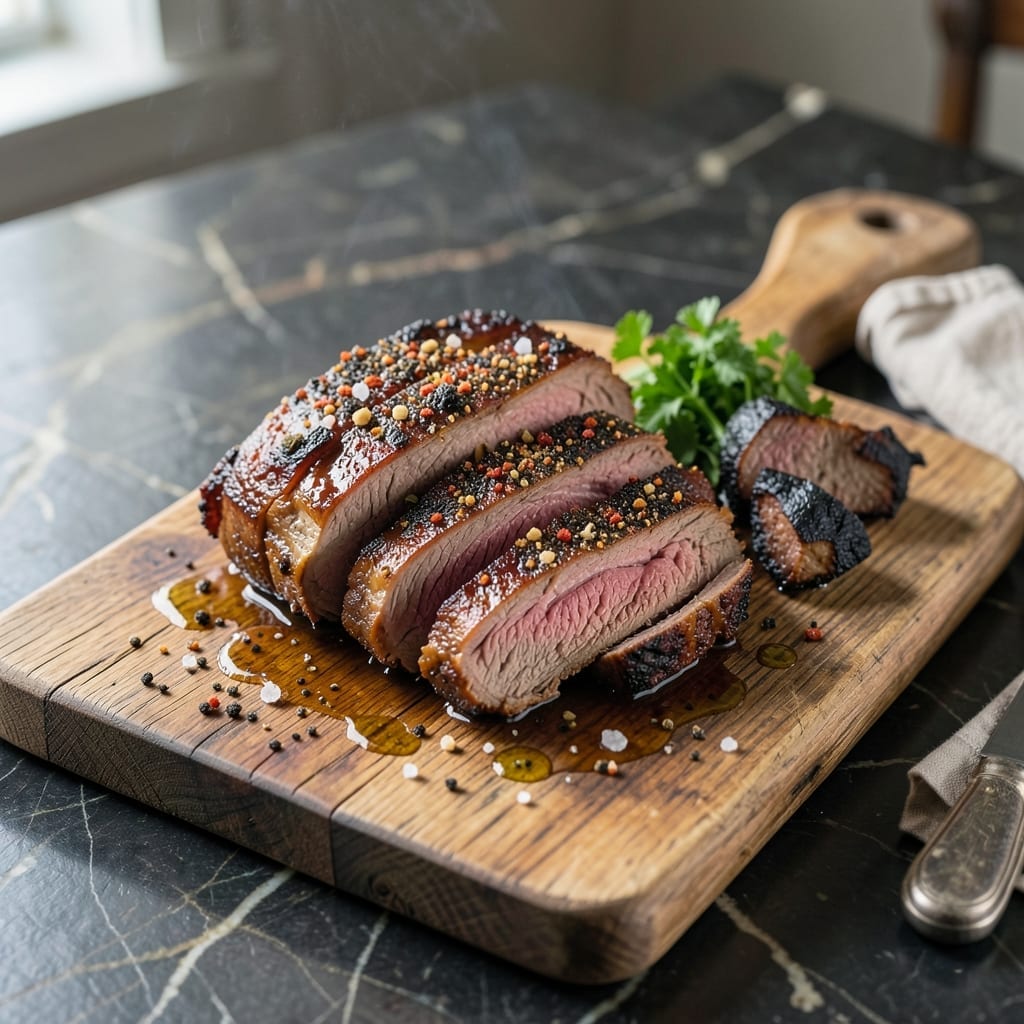
Achieving perfectly tender brisket with a smoky bark is a test of patience and technique. This method delivers the kind of results that would make any pitmaster proud, with meat so soft it nearly falls apart at the touch.
The secret lies in a long, slow cook at 225°F, allowing the tough fibers to break down while the rub forms that coveted dark crust. Every step, from trimming the fat cap to wrapping at the right moment, builds toward that ideal balance of texture and flavor.
What emerges is brisket with a deep mahogany bark and tender, juicy meat inside—smoky, rich, and infused with the bold flavors of the dry rub. The resting period is non-negotiable; it’s what locks in the moisture and ensures each slice is as good as the last.
Serve it sliced against the grain for maximum tenderness, with pickles and white bread to soak up every bit of the rendering juices.
Ingredients for Gordon Ramsay Brisket
Whole packer brisket plus a bold dry rub. Nothing less delivers that perfect bark and tenderness.
| Ingredient | Amount | Notes |
|---|---|---|
| Beef Brisket 🥩 | 5 lb | Whole packer cut, untrimmed |
| Coarse Kosher Salt 🧂 | ¼ cup | Diamond Crystal preferred |
| Coarse Black Pepper 🌶️ | ¼ cup | Freshly ground for best flavor |
| Paprika 🌶️ | 2 tbsp | Smoked or sweet variety |
| Garlic Powder 🧄 | 2 tbsp | Not garlic salt |
| Onion Powder 🧅 | 2 tbsp | Fine ground preferred |
| Brown Sugar 🍚 | ¼ cup | Light or dark variety |
| Cayenne Pepper 🔥 | 1 tsp | Adjust for heat preference |
| Yellow Mustard 🟡 | ½ cup | For binder in dry rub |
| Apple Cider Vinegar 🍏 | ¼ cup | For spritzing during cook |
| Hickory Wood Chunks 🪵 | 4 pieces | For smoking, soaked in water |
| Beef Tallow 🥩 | ¼ cup | For moisture and flavor |
The brisket cut is non-negotiable. Whole packer (untrimmed) gives you both the flat and point—essential for texture contrast. Look for good marbling and a thick fat cap (at least 1/4 inch). Costco or a trusted butcher are your best bets. Avoid pre-trimmed cuts; you need that fat for moisture during the long cook. Aim for 1 lb per person when serving a crowd.
No hickory? Oak or pecan wood work well too—just avoid softwoods like pine. Mustard binder can be swapped for olive oil or water, but mustard adheres the rub best. Out of brown sugar? White sugar plus 1 tsp molasses mimics the depth. The cayenne can be omitted for heat-sensitive palates, but the paprika is essential for that deep, smoky color.
Uncooked brisket keeps 3-4 days in the fridge, or freeze for 6 months. Once cooked, rest at least 1 hour before slicing (2 hours is ideal). Leftovers stay moist for 5 days refrigerated, or freeze sliced portions for 3 months.
Why You’ll Love This Recipe
- Set It and Forget: That paprika and garlic powder rub takes five minutes, then the oven does all the work for hours.
- Smoky Depth: The coarse salt and pepper create a crust that locks in juices while the paprika gives it that signature Ramsay richness.
- Crowd Pleaser: I’ve served this at Sunday dinners and game days—everyone from picky kids to foodie friends asks for seconds.
- Leftovers Gold: Honestly, it tastes even better the next day in tacos or sandwiches, and one brisket feeds my family for three meals.
Step-by-Step Instructions for Smoky Beef Brisket with Perfect Bark
Master the technique for fall-apart tender brisket with a dark, flavorful crust.
Step 1: Trim and Apply the Dry Rub
Begin by trimming the 5 lb Beef Brisket fat cap to about ¼ inch thickness, removing any hard fat or silver skin. This ensures even cooking and better smoke penetration.
In a bowl, combine the 0.25 cup Coarse Kosher Salt, 0.25 cup Coarse Black Pepper, 2 tbsp Paprika, 2 tbsp Garlic Powder, 2 tbsp Onion Powder, 0.25 cup Brown Sugar, and 1 tsp Cayenne Pepper. Rub this mixture generously over all sides of the brisket, pressing it in firmly so it adheres. Let it sit at room temperature for 1 hour to allow the rub to penetrate.
Step 2: Prepare the Smoker with Hickory Wood
Soak the 4 pieces Hickory Wood Chunks in water for at least 30 minutes before use. Preheat your smoker to 225-250°F using the soaked hickory for a clean, steady smoke.
Once the smoker reaches temperature, place a water pan inside to maintain moisture. The ideal setup produces thin, blue smoke—not thick white smoke, which can bitter the meat. This low-and-slow approach is critical for breaking down the brisket’s connective tissue.
Step 3: Smoke and Spritz the Brisket
Place the brisket fat-side up on the smoker grate. Smoke undisturbed for 6-8 hours, or until the internal temperature reaches 165-170°F. This is when the “stall” occurs—don’t rush it; the brisket needs time to tenderize.
Every 2-3 hours, spritz the brisket with a mixture of the 0.25 cup Apple Cider Vinegar and 0.25 cup Beef Tallow to keep the surface moist and enhance bark formation. Avoid opening the smoker unnecessarily to maintain consistent heat.
Step 4: Wrap and Finish the Cook
When the stall hits, wrap the brisket tightly in pink butcher paper (or foil) to push through the plateau. Return it to the smoker and continue cooking until the internal temperature reaches 200-205°F and a probe slides in like butter.
This usually takes another 4-6 hours, but the probe test is more reliable than temperature alone. The brisket is done when it feels as tender as room-temperature butter in the thickest part.
Step 5: Rest and Slice
Remove the brisket from the smoker and let it rest, still wrapped, in a cooler or warm oven for 1-2 hours. This resting period allows juices to redistribute, ensuring every slice is moist.
Unwrap the brisket and locate the grain direction. Slice against the grain into ¼-inch thick pieces. Serve immediately—the bark should be dark and crispy, with a smoke ring just beneath the surface and juices pooling slightly on the cutting board.
Pro Tips For Making Gordon Ramsay Brisket
- Dry the Brisket: Pat the brisket completely dry with paper towels before seasoning—I learned this the hard way after my first attempt had a steamed, pale crust instead of that deep brown bark.
- Season Overnight: Rub the coarse salt, pepper, paprika, and garlic powder into the meat at least 12 hours ahead; sounds tedious, but it actually changes the outcome by letting the flavors penetrate deep into the muscle.
- Skip the Rush: Resist the urge to crank the oven above 275°F (135°C)—after burning the edges on my second try, I finally accepted that low and slow is the only way to keep it tender.
- Rest Before Slicing: Tent the brisket with foil and let it rest for a full hour after cooking, even if you’re starving—my grandmother swore by this, and she was right: it stays juicy and slices clean.
Troubleshooting Perfect Results
Bark Too Dark
If your bark is turning black or bitter, your smoker is likely running too hot or producing thick white smoke. Thin, blue smoke at 225-250°F is ideal. Reduce heat, add more soaked hickory wood chunks, and ensure proper airflow. 🌡️
Meat Not Tender
Tough brisket usually means it didn’t cook long enough. The internal temperature needs to reach 200-205°F, and the probe should slide in like butter. If stalled, wrap in pink butcher paper and return to the smoker.
Dry Brisket
Dryness often comes from cooking past 205°F or not resting properly. Resting for 1-2 hours wrapped in a towel inside a cooler locks in juices. Spritzing every 2-3 hours with apple cider vinegar and beef tallow also helps.
Uneven Cooking
If one end is done before the other, rotate the brisket 180 degrees halfway through the cook. Also, ensure the fat cap is trimmed evenly to ¼ inch so heat penetrates uniformly.
Weak Smoke Flavor
For stronger smoke, use 4 soaked hickory chunks and maintain thin, blue smoke throughout. Avoid opening the smoker unnecessarily. If needed, add a fresh wood chunk when the smoke thins out. ✨
Stall Lasting Too Long
If the stall drags on beyond 6-8 hours, wrap the brisket in pink butcher paper at 165°F to power through. This traps moisture and speeds up the cook without sacrificing bark quality.
Nutrition Facts
Frequently Asked Questions
How long should I rest the brisket before slicing?
Rest it for 1-2 hours wrapped in a towel inside a cooler. This lets juices redistribute for maximum moisture. Slicing too soon can cause dryness.
What’s the ideal internal temperature?
Remove it when it hits 200-205°F. The probe should slide in like butter in the thickest part. Temperature alone isn’t enough—the texture test is key.
Can I use foil instead of butcher paper?
Yes, foil works but may soften the bark. Use pink butcher paper for a firmer crust. Wrap tightly at 165°F to push through the stall.
How often should I spritz the brisket?
Spritz every 2-3 hours with apple cider vinegar and beef tallow mix. This keeps the surface moist and enhances bark formation. Avoid over-spritzing.

- 6 Egg Cake Recipe with Oil: Light as Air With Buttery Moisture - October 4, 2026
- 4 Bean Casserole Recipe: One-Pan Heartiness With Smoky Paprika Depth - October 4, 2026
- 3-Ingredient Keto Mug Cake Recipe: Microwave Magic in 2 Minutes - October 4, 2026