
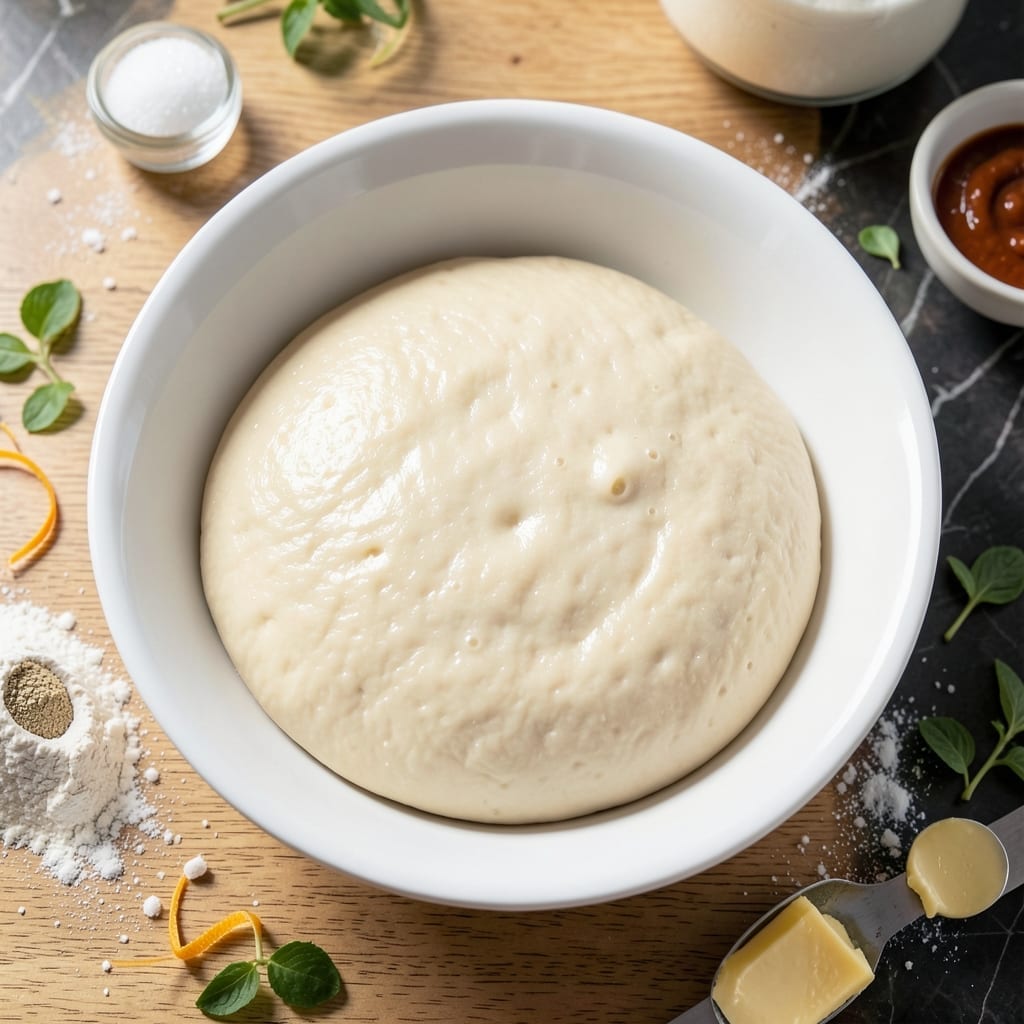
This dough recipe delivers pillowy softness that transforms any bread into a bakery-quality creation. The secret lies in proper kneading and generous proofing time to develop the perfect texture.
With just a handful of simple ingredients and precise technique, you’ll achieve a light, airy dough that rises beautifully. The process is straightforward but requires patience for the best results.
What emerges from your oven will be bread with a tender crumb and golden crust that’s impossible to resist. The versatility of this base makes it ideal for sandwich loaves, dinner rolls, or sweet breads.
Master this foundation, and you’ll have the building block for countless baked goods. Here’s everything you need to begin.
Ingredients for Fluffy Dough
Simple ingredients, precise technique. Pillowy softness guaranteed with these staples.
| Ingredient | Amount | Notes |
|---|---|---|
| Bread Flour 🌾 | 4 cups | High protein for structure |
| Warm Water 💧 | 1 ¼ cups | 110°F to 115°F ideal |
| Active Dry Yeast 🍞 | 2 ¼ tsp | One packet plus extra |
| Granulated Sugar 🧂 | 2 tbsp | Feeds the yeast |
| Salt 🧂 | 2 tsp | Fine sea salt preferred |
| Unsalted Butter 🧈 | ¼ cup | Softened to room temperature |
| Whole Milk 🥛 | ¼ cup | Warmed slightly |
| Large Egg 🥚 | 1 whole | Room temperature |
| Olive Oil 🫒 | 1 tbsp | For bowl greasing |
| Honey 🍯 | 1 tbsp | Optional for sweetness |
The flour is non-negotiable here. Bread flour (not all-purpose) gives you that perfect chew and rise—King Arthur is my go-to, but any high-protein brand works. Yeast freshness matters more than you think: check the expiration date and store it in the freezer if you won’t use it within a month. Milk and butter should be at room temp (leave them out 30-60 minutes before starting) for even mixing.
No bread flour? All-purpose in a pinch, but add 1 tbsp vital wheat gluten per cup to compensate. Swap milk for warm water if needed, though you’ll lose some richness. Honey can be maple syrup or omitted entirely. The egg adds softness but isn’t critical—use 1 extra tbsp milk if you’re out. Yeast substitutions? Instant yeast works too—use 1.75 tsp instead of active dry.
Dough keeps 2-3 days in the fridge (punch down if it doubles) or freezes beautifully for 1 month. Portion into balls before freezing for easy roll-out later. Always bring cold dough to room temp before shaping—prevents dense spots.
Why You’ll Love This Recipe
- Five Ingredients Only: I love that this comes together with just bread flour, warm water, yeast, sugar, and salt—no hunting for specialty items.
- Pillowy Softness: The yeast does its magic, creating that airy, cloud-like texture I crave in every bite.
- Endless Possibilities: I use this dough for dinner rolls, cinnamon buns, even pizza—honestly, it’s my kitchen MVP.
- Budget Stretcher: A bag of bread flour and a packet of yeast make multiple batches, saving me a trip to the bakery.
Step-by-Step Instructions for Fluffy Dough
This method guarantees a light, airy texture with minimal effort and maximum payoff.
Step 1: Activate the Yeast Properly
In a stand mixer bowl, combine the 1.25 cups Warm Water, 2 tbsp Granulated Sugar, and 2.25 tsp Active Dry Yeast. Whisk gently and let it sit for 5-7 minutes until the mixture becomes foamy and cloudy.
This foaming action confirms the yeast is active and ready to work. If you don’t see bubbles, your water might have been too hot or the yeast might be old. The sugar here isn’t just for sweetness—it kickstarts the yeast’s fermentation process.
Step 2: Mix and Knead the Dough
Add the 4 cups Bread Flour, 2 tsp Salt, 0.25 cup Unsalted Butter, 0.25 cup Whole Milk, 1 whole Large Egg, and 1 tbsp Honey to the yeast mixture. Using the dough hook attachment, mix on low speed until the ingredients come together.
Increase to medium speed and knead for 6-8 minutes until the dough is smooth, elastic, and pulls away from the sides of the bowl. The dough should feel tacky but not sticky. If it’s too wet, add flour 1 tablespoon at a time; if too dry, drizzle in warm water 1 teaspoon at a time.
Step 3: First Rise to Double the Volume
Lightly grease a large bowl with the 1 tbsp Olive Oil. Transfer the dough to the bowl, turning once to coat all sides. Cover with a clean kitchen towel or plastic wrap and place in a warm, draft-free spot.
Let it rise for 1 to 1.5 hours or until it has doubled in size. The ideal rise happens at 75-80°F—I often turn on my oven light to create a warm environment. The dough should spring back slowly when gently pressed with a finger.
Step 4: Punch Down and Shape
Once doubled, punch down the dough to release the air. This step redistributes the yeast and strengthens the gluten structure for an even better texture. Transfer the dough to a lightly floured surface and shape it into your desired form.
Whether you’re making loaves, rolls, or buns, handle the dough gently to maintain the air pockets that create fluffiness. Cover and let it rest for 15-20 minutes before the final rise or baking.
Step 5: Second Rise and Bake
After shaping, allow the dough to rise again until puffy. This second rise, or “proofing,” usually takes 30-45 minutes depending on the room temperature. The dough should look noticeably larger and feel light to the touch.
Bake according to your specific recipe’s temperature and time guidelines. The dough is ready when it sounds hollow when tapped on the bottom and has a golden brown crust. Let it cool on a wire rack before slicing to preserve the fluffy texture.
Pro Tips For Making Fluffy Dough
- Test Your Yeast: I learned this the hard way—always bloom your yeast in warm water (110°F) with a pinch of sugar first. If it doesn’t foam within 5 minutes, your dough won’t rise, no matter how long you wait.
- Use Bread Flour: Sounds obvious, but all-purpose just won’t cut it here. Bread flour’s higher protein content (12-14%) gives that chewy, airy structure you’re after.
- Skip Cold Water: Warm water is non-negotiable—cold water slows yeast activation, and too hot (above 115°F) kills it. Aim for bathwater-warm, about 110°F, and use a thermometer if you’re unsure.
- Let It Double: Resist the urge to rush the first rise. Cover the dough and give it a full 1-2 hours in a warm spot until it’s actually doubled in size—underproofed dough means dense, sad loaves.
Creative Variations of This Dish
Sweet Cinnamon Swirl
Transform this base into a cinnamon roll dough by adding 1 extra tbsp sugar to the mixture. After the first rise, roll the dough into a rectangle, brush with melted butter, and sprinkle with ¼ cup brown sugar and 2 tbsp cinnamon. Roll tightly and slice. 🌟
Herb Dinner Rolls
For savory rolls, mix 2 tbsp chopped fresh rosemary or thyme into the dough during kneading. Shape into 12 equal balls, place in a buttered pan, and let rise until puffy. The herbs infuse the dough with aromatic flavor.
Garlic Bread Loaf
After shaping into a loaf, let it rise, then make deep diagonal slashes across the top. Brush with garlic butter before baking for a fragrant, crispy crust. I add 1 minced garlic clove per 2 tbsp butter for maximum flavor.
Whole Wheat Option
Replace 1 cup bread flour with whole wheat flour for a nuttier, heartier version. Add 1 tbsp vital wheat gluten to maintain fluffiness. The dough will be slightly denser but still soft and delicious.
Sour Cream Twist
Add ¼ cup sour cream to the wet ingredients for an extra-tender crumb. This variation works beautifully for soft sandwich bread or dinner rolls. The tang complements sweet and savory toppings alike.
Cheesy Pull-Apart
After the first rise, roll the dough into a rectangle, sprinkle with 1 cup shredded cheddar, and cut into squares. Stack in a loaf pan, cover, and let rise again. Bake until golden and gooey. 🧀
Nutrition Facts
Frequently Asked Questions
Why is my dough not rising properly?
Check your yeast first—it may be expired. Also ensure water is 110-115°F and dough rises in a warm 75-80°F spot. Cold temps slow yeast activity.
Can I use all-purpose flour instead?
Yes, but add 1 tbsp vital wheat gluten per cup to compensate for lower protein. Bread flour gives the best rise and chew.
How do I know when it’s kneaded enough?
After 6-8 minutes it should be smooth, elastic, and pull from the bowl. Test by stretching a piece—it should be thin enough to see light through.
Can I make this ahead of time?
Refrigerate after kneading up to 2-3 days or freeze for 1 month. Thaw in fridge overnight before shaping.

- 6 Egg Cake Recipe with Oil: Light as Air With Buttery Moisture - October 4, 2026
- 4 Bean Casserole Recipe: One-Pan Heartiness With Smoky Paprika Depth - October 4, 2026
- 3-Ingredient Keto Mug Cake Recipe: Microwave Magic in 2 Minutes - October 4, 2026