
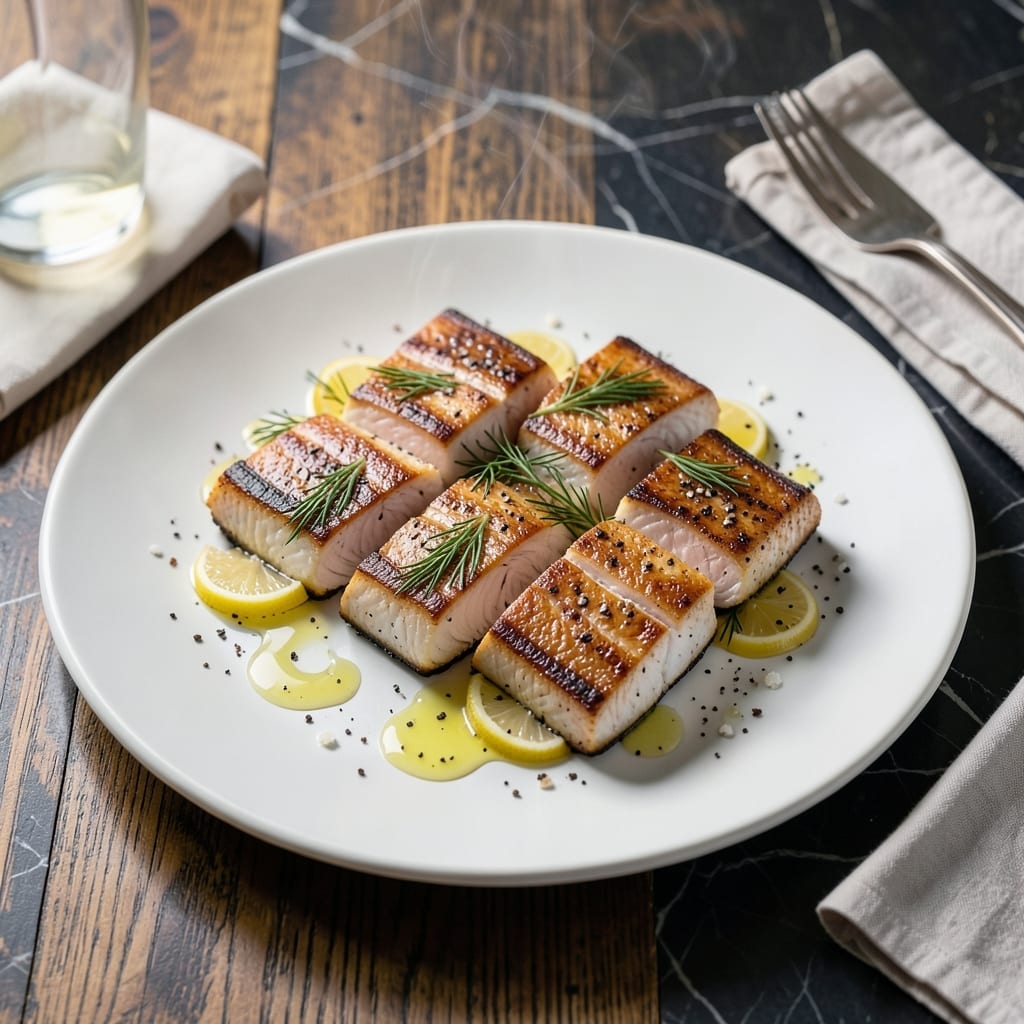
This pan-seared halibut delivers restaurant-quality results with a technique perfected by professional chefs. The key is achieving a golden crust while keeping the delicate fish moist and tender inside.
I’ve adapted this method for home cooks, focusing on precise timing and proper pan temperature. The lemon-caper butter sauce adds a bright, tangy finish that elevates the dish without overpowering the fish’s natural flavor.
You’ll end up with perfectly cooked halibut that flakes easily with a fork, topped with a velvety butter sauce that ties everything together. It’s elegant enough for a dinner party but simple enough for a weeknight.
Serve immediately with your favorite sides for a meal that impresses every time.
Ingredients for Gordon Ramsay Halibut
Elegant yet approachable ingredients for a dish that wows every time.
| Ingredient | Amount | Notes |
|---|---|---|
| Halibut Fillets 🐟 | 4 pieces | Skin-on, about 6 oz each |
| Kosher Salt 🧂 | 1 ½ tsp | Diamond Crystal preferred |
| Freshly Ground Black Pepper 🌶️ | 1 tsp | Coarse grind for texture |
| All-Purpose Flour 🌾 | ½ cup | For dusting fillets |
| Unsalted Butter 🧈 | 6 tbsp | Divided for cooking and sauce |
| Olive Oil 🫒 | 2 tbsp | High smoke point variety |
| Garlic Cloves 🧄 | 3 cloves | Minced for sauce |
| Fresh Lemon Juice 🍋 | 3 tbsp | About 1 large lemon |
| Capers 🌿 | 2 tbsp | Drained and rinsed |
| Fresh Parsley 🍃 | 2 tbsp | Chopped, for garnish |
| Shallot 🧅 | 1 whole | Finely diced for sauce |
| White Wine 🍷 | ¼ cup | Dry variety like Sauvignon Blanc |
| Heavy Cream 🥛 | 2 tbsp | Optional for richer sauce |
The halibut is non-negotiable here—wild-caught from a trusted fishmonger or the seafood counter at Whole Foods. Look for fillets that are firm, translucent, and smell like the ocean (not fishy). Thickness matters: aim for 1 to 1.5 inches so they cook evenly without drying out. I always ask for skin-on when possible; it crisps up beautifully and holds the fish together during searing.
No halibut? Cod or sea bass work well, but adjust cooking time—thinner fillets cook faster. Swap the white wine for extra lemon juice or chicken stock if you’re avoiding alcohol. The capers add a briny punch, but chopped green olives can stand in. For the butter sauce, ghee works in a pinch (higher smoke point), though you’ll lose some richness. Skip the cream if you prefer a lighter version.
Cook the fish the same day you buy it for best texture. Leftovers? Rarely an issue—this is a serve-immediately dish. But if you must, store in the fridge for up to 1 day and reheat gently in a warm oven. The butter sauce doesn’t reheat well, so make it fresh. Always bring halibut to room temp 15-20 minutes before cooking.
Why You’ll Love This Recipe
- Minimal Effort: I just dust the halibut in flour, season, and sear—no marinating, no complicated steps.
- Buttery Perfection: That crispy flour crust with the rich butter? It’s the kind of flavor that makes you close your eyes with every bite.
- Date Night Ready: I’ve served this for both casual dinners and special occasions—it feels fancy without the stress.
- Budget Luxury: Halibut’s a splurge, but with just five simple ingredients, it feels like a restaurant meal at home.
Step-by-Step Instructions for Pan-Seared Halibut With Lemon-Caper Butter
Master this restaurant-quality technique with precise timing and expert finishing touches.
Step 1: Season and Dredge the Halibut Fillets
Pat the 4 pieces halibut fillets completely dry with paper towels—this is crucial for achieving that perfect sear. Season both sides generously with the 1.5 tsp kosher salt and 1 tsp freshly ground black pepper, pressing the seasoning into the flesh.
Dredge each fillet lightly in the 0.5 cup all-purpose flour, shaking off any excess. The flour creates a delicate crust that locks in moisture while promoting even browning. Set the dredged fillets aside on a clean plate while you heat the pan.
Step 2: Sear the Halibut to Golden Perfection
Heat the 2 tbsp olive oil and 2 tbsp unsalted butter in a large skillet over medium-high heat until the butter foams and just begins to brown. Add the fillets skin-side down first, pressing gently with a fish spatula for 10 seconds to prevent curling.
Cook for 4-5 minutes per side until the skin is crisp and golden brown and the flesh flakes easily when tested with a fork. The halibut is done when it reaches an internal temperature of 145°F. Transfer the cooked fillets to a warm plate and tent loosely with foil.
Step 3: Build the Lemon-Caper Butter Sauce
In the same skillet, reduce heat to medium and add the 1 whole shallot (finely diced). Sauté for 2 minutes until translucent, then add the 3 cloves garlic cloves (minced) and cook for 30 seconds until fragrant.
Deglaze the pan with the 0.25 cup white wine, scraping up all the browned bits from the bottom. Let it simmer for 2 minutes until reduced by half. Stir in the remaining 4 tbsp unsalted butter, 3 tbsp fresh lemon juice, and 2 tbsp capers. Cook for 1 minute until the sauce thickens slightly.
Step 4: Finish with Cream and Serve
Remove the skillet from heat and stir in the 2 tbsp heavy cream if using—this adds a luxurious silkiness to the sauce. Taste and adjust seasoning if needed, though the capers and lemon provide plenty of brightness.
Spoon the sauce over the halibut fillets, garnish with the 2 tbsp fresh parsley (chopped), and serve immediately. The sauce should pool slightly around the fish, with each bite delivering crispy skin, tender flakes, and that vibrant lemon-caper punch.
Pro Tips For Making Gordon Ramsay Halibut
- Dry the Fillets: Pat the halibut fillets bone dry with paper towels before dredging in flour—I learned this the hard way after my first batch steamed instead of seared.
- Hot Pan, Quick Flip: Get the pan screaming hot before adding the butter and halibut, then flip after exactly 2-3 minutes for that golden crust.
- Season the Flour: Mix a teaspoon of kosher salt and a pinch of pepper into the flour before coating—it sticks better than seasoning the fish directly.
- Baste with Butter: Tilt the pan and spoon that browned butter over the halibut as it cooks—sounds like extra work, but it adds a ridiculous amount of flavor.
Pro Cooking Tips for This Dish
Pan Temperature Control
Heat your skillet to medium-high before adding oil and butter. The butter should foam but not burn—350-375°F is ideal. I use a cast iron skillet for even heat distribution, which helps achieve that perfect golden crust on the halibut. 🌡️
Perfect Searing Technique
Press the fillets gently with a fish spatula for 10 seconds after adding them to the pan. This prevents curling and ensures full contact with the hot surface. Don’t move the fish until it releases naturally—this guarantees a crisp, non-stick sear.
Internal Temperature Check
Use an instant-read thermometer to check doneness. Halibut is perfect at 145°F internal temperature. I pull mine at 140°F and let it rest—the residual heat brings it to temp without overcooking. Over 150°F and it dries out quickly.
Sauce Emulsion Tip
Whisk the butter into the sauce off-heat to create a stable emulsion. The white wine reduction helps bind the butter, but don’t let it boil after adding or it may separate. A silicon whisk works best for smooth, velvety results. 💫
Resting the Fish
Let the halibut rest for 2-3 minutes before serving. This allows the juices to redistribute throughout the fillet. Cover loosely with foil to keep warm while you finish the sauce—never skip this step for restaurant-quality texture.
Plating Like a Pro
Spoon the sauce around the fish, not over it, to preserve the crispy skin. A quick garnish of fresh parsley adds color and freshness. Serve on warmed plates for that final professional touch.
Nutrition Facts
Frequently Asked Questions
What’s the best pan for searing halibut?
A heavy cast iron skillet works best for even heat distribution. Stainless steel is a good alternative if properly preheated to medium-high. Avoid nonstick pans as they don’t develop the same crust.
Can I substitute another fish for halibut?
Yes! Try cod or sea bass with similar thickness. Adjust cooking time for thinner fillets—they’ll cook faster. The sauce pairs well with any mild white fish.
How do I prevent the skin from sticking?
Ensure the pan is very hot before adding fish and don’t move it for 4-5 minutes. Press gently with a spatula for 10 seconds when first adding to prevent curling.
Can I make the sauce ahead of time?
Best made fresh as the emulsion may separate when reheated. However, you can prep ingredients in advance. The sauce comes together in 5 minutes while fish rests.

- 6 Egg Cake Recipe with Oil: Light as Air With Buttery Moisture - October 4, 2026
- 4 Bean Casserole Recipe: One-Pan Heartiness With Smoky Paprika Depth - October 4, 2026
- 3-Ingredient Keto Mug Cake Recipe: Microwave Magic in 2 Minutes - October 4, 2026