
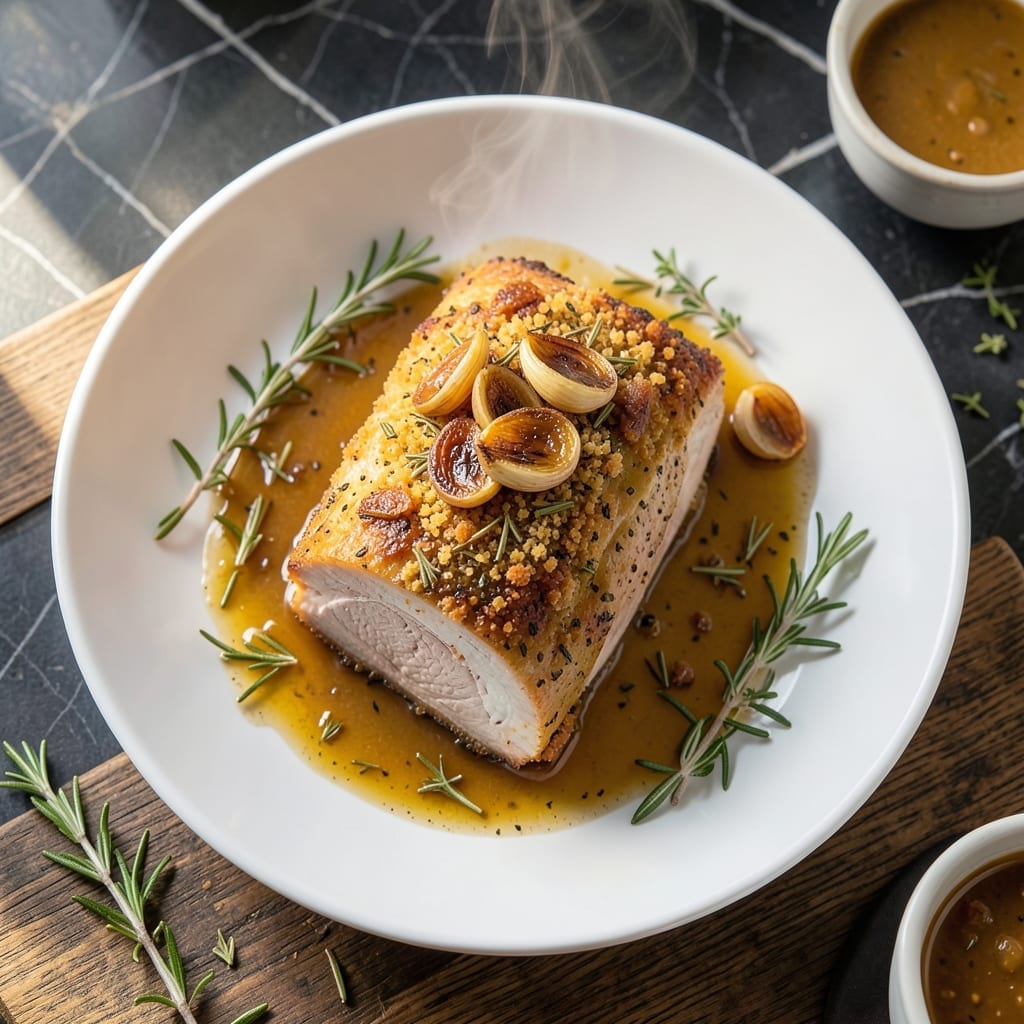
This herb-crusted pork loin delivers restaurant-quality results with a surprisingly simple technique. The secret is in the crust—a mix of fresh herbs, garlic, and breadcrumbs that forms a golden, flavorful seal around the tender meat.
I’ve tested this method repeatedly, and the key is achieving a perfect sear before transferring to the oven. This locks in juices while creating that signature crispy exterior. The pork stays succulent, with every slice revealing moist, aromatic meat.
The herb crust adds layers of flavor without overpowering the natural taste of the pork. A quick rest after cooking ensures the juices redistribute, so each bite is as tender as the last. This dish is ideal for impressing guests or elevating a weeknight meal.
Serve with roasted vegetables or a light salad to balance the richness. Here’s how to master it.
Ingredients for Gordon Ramsay Pork Loin
Restaurant-quality ingredients for a showstopping herb-crusted centerpiece at home.
| Ingredient | Amount | Notes |
|---|---|---|
| Pork Loin 🥩 | 2 lb | Boneless, center-cut preferred |
| Fresh Rosemary 🌿 | 2 tbsp | Finely chopped, stems removed |
| Fresh Thyme 🍃 | 2 tbsp | Leaves only, finely chopped |
| Garlic Cloves 🧄 | 4 cloves | Minced to fine paste |
| Dijon Mustard 🟡 | 3 tbsp | Whole grain or smooth |
| Panko Breadcrumbs 🍞 | 1 cup | Japanese-style for crispiness |
| Olive Oil 🫒 | 3 tbsp | Extra-virgin, divided use |
| Kosher Salt 🧂 | 1 ½ tsp | Diamond Crystal preferred |
| Freshly Ground Black Pepper 🌶️ | 1 tsp | Coarse grind recommended |
| Unsalted Butter 🧈 | 2 tbsp | Cold, cubed for crust |
| Shallot 🧅 | 1 whole | Finely minced for depth |
| Dry White Wine 🍷 | ¼ cup | For deglazing pan |
The pork loin must be center-cut for even cooking and consistent thickness. Whole Foods or ButcherBox offer excellent quality, but any reputable grocer will suffice. Look for vibrant pink color with visible marbling—this ensures moisture. For herbs, fresh is non-negotiable; dried simply won’t deliver the required aromatic intensity for this crust.
No fresh rosemary or thyme? Double the quantity of dried (but rehydrate in warm water first). Panko substitution? Fresh breadcrumbs work, though the texture will be less crisp. For the wine, chicken stock with a splash of lemon provides similar acidity. The Dijon mustard is key—skip the yellow variety as it lacks the depth required to balance the crust’s richness.
Store pork in the coldest part of your refrigerator for up to 3 days. Fresh herbs keep 1 week wrapped in damp paper towels. The crust mixture can be prepped 1 day ahead and refrigerated—this actually enhances flavor development as the herbs meld with the mustard and butter.
Why You’ll Love This Recipe
- One Pan Wonder: I love that this comes together in a single roasting pan—just sear, rub with Dijon and herbs, and let the oven do the work.
- Herb-Crusted Perfection: The rosemary and thyme crust with garlic and mustard gives every bite that restaurant-quality depth. Honestly, it’s the reason I make this weekly.
- Feeds a Crowd: A whole pork loin means I can stretch this into sandwiches, tacos, or salads for days. Between us, leftovers taste even better.
- Budget-Friendly Centerpiece: Pork loin is lean but flavorful, and a little goes a long way. I’ll be real: it’s my go-to for impressive dinners that won’t break the bank.
Step-by-Step Instructions for Herb-Crusted Pork Loin
Master this technique for a perfectly seared crust and tender, juicy meat every time.
Step 1: Prepare the Herb Crust Mixture
In a small bowl, combine the 2 tbsp Fresh Rosemary, 2 tbsp Fresh Thyme, 4 cloves Garlic Cloves, 3 tbsp Dijon Mustard, 1 cup Panko Breadcrumbs, and 1.5 tsp Kosher Salt. Stir until the mixture resembles a coarse paste with visible herb flecks.
The panko provides the necessary crispiness, while the Dijon mustard acts as the binding agent to ensure the crust adheres to the pork loin. I use the back of a spoon to press the mixture together, which helps distribute the herbs evenly.
Step 2: Sear the Pork Loin to Lock in Juices
Pat the 2 lb Pork Loin dry with paper towels and season generously with the 1 tsp Freshly Ground Black Pepper. Heat 2 tbsp Olive Oil in a large oven-safe skillet over medium-high heat until shimmering. Sear the pork loin on all sides for 2-3 minutes per side until golden brown.
This creates a flavorful fond in the pan that will enhance the final sauce. Don’t rush the searing—you want a deep, even color on every surface. The pork should release easily from the pan when it’s ready to turn.
Step 3: Apply the Herb Crust and Roast
Brush the seared pork loin generously with the remaining 1 tbsp Olive Oil, then press the herb crust mixture onto the top and sides, ensuring it adheres completely. Dot the crust with the 2 tbsp Unsalted Butter, allowing it to melt slightly into the topping.
Transfer the skillet to a preheated 400°F oven and roast for 25-30 minutes, or until the internal temperature reaches 145°F. The crust should be deep golden brown and the butter fully melted into the breadcrumbs.
Step 4: Rest and Prepare the Pan Sauce
Remove the pork loin from the oven and transfer it to a cutting board. Tent loosely with foil and let it rest for 10 minutes. Meanwhile, place the skillet on the stovetop over medium heat and add the finely minced 1 whole Shallot. Sauté for 1-2 minutes until softened.
Deglaze the pan with the 0.25 cup Dry White Wine, scraping up any browned bits from the bottom. Simmer for 2-3 minutes until the liquid reduces slightly and the shallots are translucent. This sauce adds a bright, tangy contrast to the rich, herby crust.
Slice the pork loin into ½-inch thick pieces and serve immediately with the pan sauce drizzled over the top.
Pro Tips For Making Gordon Ramsay Pork Loin
- Sear It Hard: I learned this the hard way—get your pan screaming hot before adding the pork loin so the mustard-herb crust develops properly. A pale sear means flavor left behind.
- Score the Fat: Cut 1/4-inch slits in the fat cap every inch or so to prevent curling and help the rosemary and garlic penetrate deeper.
- Skip Cold Pork: After burning the ends of a cold loin once, I now let it sit at room temp for 30 minutes before cooking—more even doneness, less stress.
- Rest Under Foil: Tent it loosely with foil and wait a solid 10 minutes before slicing. Sounds tedious, but it keeps the juices from pooling on your cutting board.
Pro Cooking Tips for Perfect Results
Perfect Searing Technique
Pat the pork loin completely dry with paper towels before seasoning. This ensures a proper sear and prevents steaming. Heat your pan over medium-high heat until the oil shimmers—test by flicking a drop of water that should dance across the surface. 💡
Crust Adhesion Secret
Press the herb mixture firmly onto the pork, using the flat side of a knife to create even pressure. The Dijon mustard in the crust acts as glue, but you need to work it into every crevice. I find chilling the crust mixture for 10 minutes before applying helps it hold together better.
Oven Temperature Control
Use an oven thermometer to verify your 400°F setting—many home ovens run 25-50°F off. Rotate the pan halfway through cooking for even browning. The butter on top should melt and bubble gently, creating that golden finish Ramsay is famous for.
Resting is Non-Negotiable
Tent the pork loosely with foil during the 10-minute rest. This keeps it warm while allowing steam to escape, preventing a soggy crust. The internal temperature will rise to 150°F during resting—perfect for juicy, medium-done pork.
Pan Sauce Pro Tips
After removing the pork, immediately lower the heat to medium to prevent burning the fond. Use a wooden spoon to scrape up every browned bit—this is pure flavor. Simmer the wine until it reduces by half for maximum intensity.
Slicing Like a Chef
Slice against the grain into ½-inch thick pieces using a long, sharp knife. Wipe the knife between cuts for clean slices. Arrange on a warm platter and spoon the pan sauce over just before serving to maintain the crust’s crispness. 🔥
Nutrition Facts
Frequently Asked Questions
What’s the ideal internal temperature for pork loin?
Remove from oven at 145°F—it will rise to 150°F during the 10-minute rest. This ensures juicy, perfectly cooked meat.
Can I use regular breadcrumbs instead of panko?
Yes, but panko gives the crust its signature crispiness. If substituting, toast regular breadcrumbs in a dry pan for 3-4 minutes first to achieve similar texture.
How do I prevent the herb crust from burning?
Dot the crust with cold butter cubes and tent with foil after 20 minutes of roasting. The butter melts into the crust, protecting it from over-browning.
What if I don’t have white wine for the pan sauce?
Substitute with ¼ cup chicken stock plus 1 tbsp lemon juice. The acidity mimics wine’s brightness while deglazing the pan effectively.

- 6 Egg Cake Recipe with Oil: Light as Air With Buttery Moisture - October 4, 2026
- 4 Bean Casserole Recipe: One-Pan Heartiness With Smoky Paprika Depth - October 4, 2026
- 3-Ingredient Keto Mug Cake Recipe: Microwave Magic in 2 Minutes - October 4, 2026