
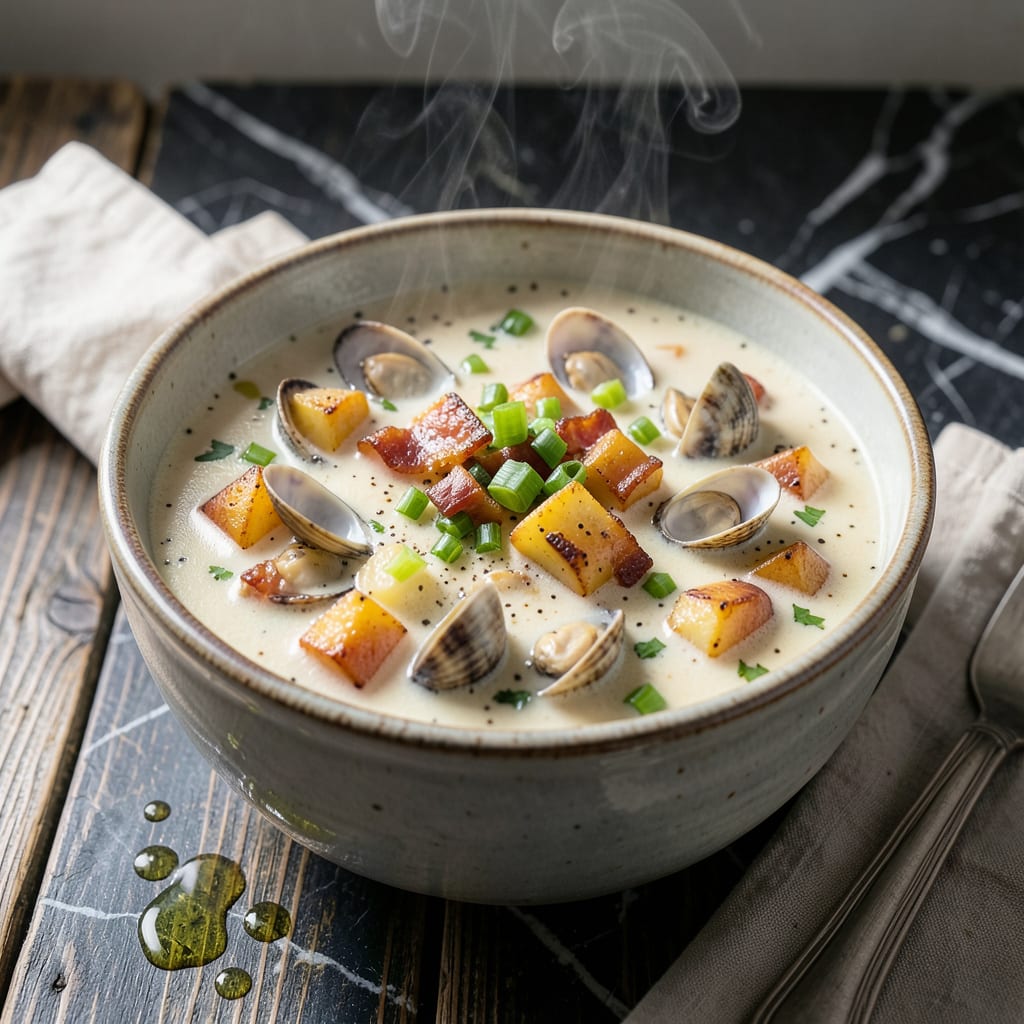
This chowder captures the essence of New England with its creamy base and briny clam flavor. A traditional dish that warms the soul on chilly evenings.
I’ve refined this recipe to balance richness with the ocean’s freshness. The key is using fresh clams and a slow simmer to extract maximum depth of flavor.
Ingredients for Gracie’s Sea Hag Clam Chowder
Fresh clams, smoky bacon, and creamy potatoes come together for this New England classic.
| Ingredient | Amount | Notes |
|---|---|---|
| Fresh Littleneck Clams 🦪 | 2 lb | In shell, cleaned and purged |
| Bacon 🥓 | ½ lb | Thick-cut, diced for smokiness |
| Yellow Onion 🧅 | 1 whole | Medium, finely diced |
| Celery Stalks 🥬 | 3 pieces | Diced, leaves reserved for garnish |
| Russet Potatoes 🥔 | 1 ½ lb | Peeled and cubed |
| Clam Juice 💧 | 2 cups | Bottled for extra briny flavor |
| Heavy Cream 🥛 | 2 cups | Full-fat for creaminess |
| Whole Milk 🥛 | 1 cup | Whole for richness |
| Unsalted Butter 🧈 | ½ cup | For sautéing and richness |
| All-Purpose Flour 🌾 | ¼ cup | For thickening the chowder |
| Bay Leaves 🍃 | 2 pieces | Dried, for aromatic depth |
| Fresh Thyme Sprigs 🌿 | 3 pieces | Or 1 tsp dried thyme |
| Salt 🧂 | 1 tsp | Adjust to taste with clam brininess |
| Black Pepper 🌶️ | ½ tsp | Freshly ground preferred |
| Fresh Parsley 🌿 | ¼ cup | Chopped, for garnish |
The clams are non-negotiable here. Littleneck or cherrystone clams work best—they’re sweet and tender. Find them at local fish markets or the seafood counter at Whole Foods. Ask for them to be purged (sand removed) to save time. The bacon adds that signature smoky backbone—thick-cut from a good butcher renders better than pre-diced.
No fresh clams? Canned clams with their juice work in a pinch (use 4-5 cans, drained but reserve liquid). Short on clam juice? Fish stock plus a pinch of salt gets you close. Want it thicker? Mash a few potatoes. Thinner? Add a splash of milk. The thyme can be dried at one-third the amount, but fresh brings that bright note.
Chowder tastes even better the next day once flavors meld. Stores in the fridge for 3-4 days—reheat gently to avoid curdling. Freezes well for up to 3 months. Always discard any clams that didn’t open during cooking.
Why You’ll Love This Recipe
- I’ll be real: the flavors deepen overnight. That second-day bowl tastes like it cooked for hours.
- One Pot Meal: I love that everything—clams, bacon, potatoes—simmers together in a single pot. No extra pans to scrub.
- Smoky Ocean Depth: The bacon and fresh littleneck clams create this rich, smoky-sweet broth that’s ridiculous with crusty bread.
- Feeds My Crew: Between us, this chowder stretches easily for a weeknight dinner or a cozy weekend lunch with friends.
Step-by-Step Instructions for New England Clam Chowder
This method ensures rich, creamy results with perfectly tender clams and potatoes every time.
Step 1: Render Bacon and Sauté Aromatics
Heat a large pot or Dutch oven over medium heat. Add the 0.5 lb Bacon and cook for 8-10 minutes until crispy and the fat has rendered. Remove the bacon with a slotted spoon, leaving the fat in the pot—this adds essential smoky depth to the chowder.
In the same pot, add the finely diced 1 whole Yellow Onion and 3 pieces Celery Stalks. Sauté for 5-6 minutes until the onion becomes translucent and the celery softens. The vegetables should release their moisture and begin to caramelize slightly at the edges.
Step 2: Build the Roux and Add Potatoes
Reduce heat to medium-low and add the 0.5 cup Unsalted Butter. Once melted, whisk in the 0.25 cup All-Purpose Flour to form a smooth roux. Cook for 2-3 minutes until the mixture turns a light golden color—this removes the raw flour taste and creates a sturdy base for thickening.
Gradually pour in the 2 cups Clam Juice and 1 cup Whole Milk, whisking constantly to prevent lumps. Add the 1.5 lb Russet Potatoes, 2 pieces Bay Leaves, and 3 pieces Fresh Thyme Sprigs. Bring to a gentle simmer and cook for 10-12 minutes until the potatoes are tender when pierced with a fork.
Step 3: Add Clams and Finish the Chowder
Increase heat to medium and add the 2 lb Fresh Littleneck Clams. Cover the pot and steam for 5-7 minutes until the clams open fully. Discard any clams that remain closed after this time—they’re unsafe to eat. Using a slotted spoon, transfer the clams to a bowl to cool, then remove the meat from the shells, chopping any larger pieces.
Return the clam meat to the pot and stir in the 2 cups Heavy Cream. Add the 1 tsp Salt and 0.5 tsp Black Pepper, adjusting seasoning to taste—the clams and juice contribute natural brininess, so go easy on the salt initially. Simmer for 3-4 minutes until the chowder thickens slightly and the flavors meld.
Step 4: Garnish and Serve
Discard the bay leaves and thyme sprigs. Stir in the reserved crispy bacon. Ladle the chowder into bowls and garnish with the 0.25 cup Fresh Parsley, finely chopped. The chowder should have a velvety texture with visible chunks of potato, clams, and bacon.
Let the chowder rest for 5 minutes before serving to allow the flavors to fully develop. The ideal serving temperature is just below boiling, ensuring the cream remains smooth and the clams stay tender. Serve with crusty bread to soak up every last drop.
Pro Tips For Making Gracie’S Sea Hag Clam Chowder
- Steam Clams First: I learned this the hard way—open the clams in a separate pot with white wine first, then strain the broth. You’ll avoid gritty chowder and get cleaner, sweeter clam flavor.
- Render Bacon Slow: Cook the bacon on medium-low until crisp, then use the fat to sauté onions and celery. Sounds obvious, but rushing this step leaves the base greasy instead of rich.
- Skip Pre-Cut Potatoes: Russets turn to mush if they sit in water too long. Cut them right before adding to the pot—about 1-inch cubes so they hold shape but still get tender.
- Reserve Some Clam Broth: After steaming, save a cup of the liquid before adding everything to the chowder. If it thickens too much later, you’ve got pure clam flavor to loosen it without thinning the taste.
Essential Equipment for Perfect Results
Heavy-Duty Pot
A 5-6 quart Dutch oven is my go-to—enamel-coated cast iron like Le Creuset or Lodge distributes heat evenly and prevents scorching. The heavy base handles long simmering without hot spots. 🔥
Wooden Spoon
Use a flat-edged wooden spoon for stirring the roux and scraping the pot bottom. It won’t scratch your cookware and helps monitor the roux color as it develops. I keep mine within reach at all times.
Slotted Spoon
A stainless steel slotted spoon is essential for removing bacon and clams without losing precious liquid. Look for one with a long handle to avoid steam burns. I prefer the OXO Good Grips model.
Whisk
For the roux, a balloon whisk ensures smooth incorporation of flour into fat. A 10-inch whisk gives you reach in deep pots. I find the Cuisinox brand withstands high heat without warping.
Clam Shucking Tool
If using fresh clams in shell, a clam knife makes opening them safer. The R. Murphy Knife Co. version has a curved blade that fits the shell contour. Always wear a cut-resistant glove for protection.
Instant-Read Thermometer
To ensure your chowder stays in the safe zone, use a digital instant-read thermometer. I trust my ThermoWorks ThermoPop—it gives readings in 3-4 seconds and prevents overcooking the cream. 🌡️
Nutrition Facts
Frequently Asked Questions
Can I use canned clams instead of fresh?
Yes! Use 4-5 cans of chopped clams with their juice. Drain the clams but reserve the liquid to replace some of the bottled clam juice in the recipe.
How do I prevent the chowder from curdling?
Avoid boiling after adding cream. Keep heat at a gentle simmer and stir frequently. Adding a splash of milk if it looks too thick also helps stabilize the mixture.
What’s the best way to store leftovers?
Store in an airtight container in the fridge for up to 3-4 days. Reheat slowly on the stove over low heat to maintain the creamy texture.
Can I freeze this chowder?
It freezes well for up to 3 months. Thaw overnight in the fridge and reheat gently, adding a splash of milk if needed to restore creaminess.

- 6 Egg Cake Recipe with Oil: Light as Air With Buttery Moisture - October 4, 2026
- 4 Bean Casserole Recipe: One-Pan Heartiness With Smoky Paprika Depth - October 4, 2026
- 3-Ingredient Keto Mug Cake Recipe: Microwave Magic in 2 Minutes - October 4, 2026