
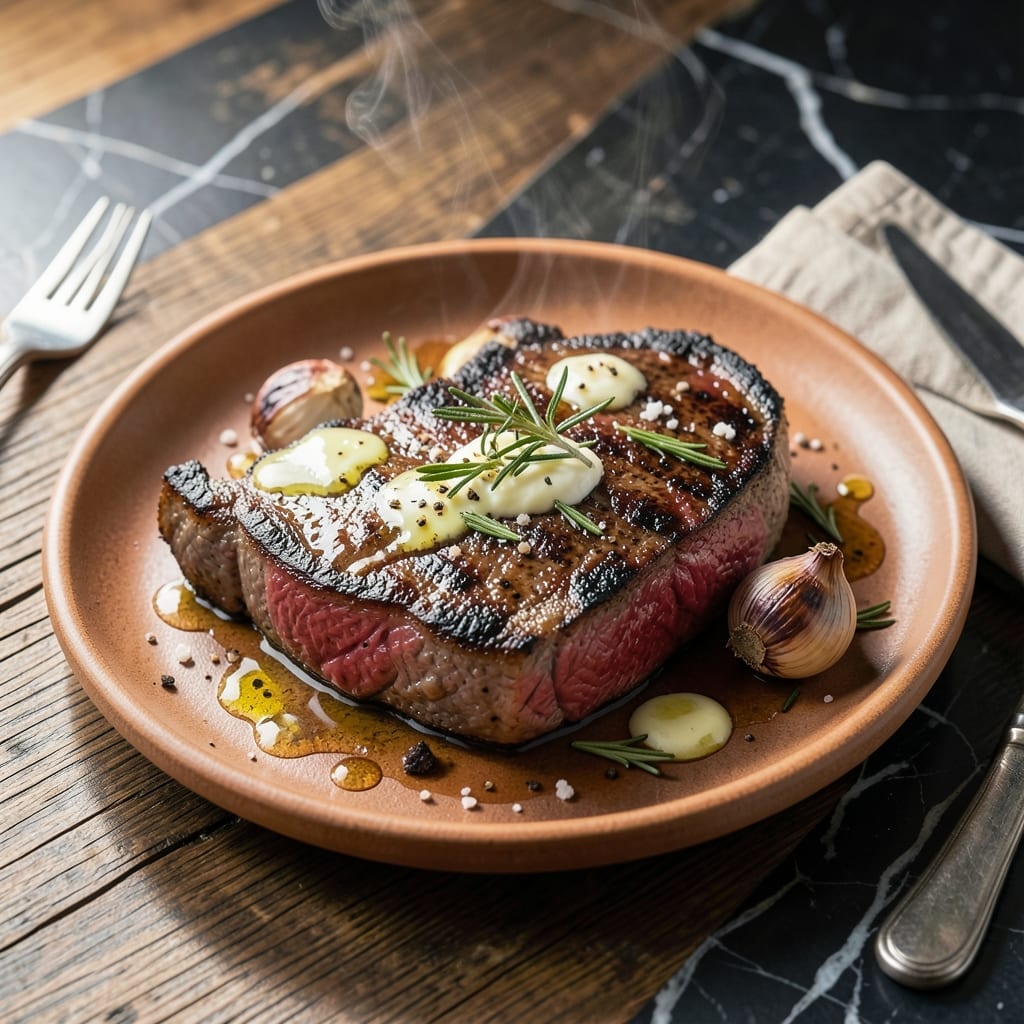
Grass-fed sirloin demands respect—it’s leaner, more flavorful, and rewards precision. This method delivers a charred crust and buttery finish without overcooking the tender interior.
High heat is key. A screaming-hot cast iron or grill sears the exterior while keeping the inside juicy. The steak’s natural richness shines when paired with simple seasoning and a touch of compound butter.
Let it rest after cooking. This ensures the juices redistribute, guaranteeing a moist, flavorful bite every time. Slice against the grain for maximum tenderness.
Serve with roasted vegetables or a bold red wine to complement the steak’s robust flavor. Perfect for a dinner that feels special but stays effortless.
Ingredients for Grass Fed Sirloin Steak
High-quality grass-fed sirloin plus simple, bold seasonings create this restaurant-worthy steak.
| Ingredient | Amount | Notes |
|---|---|---|
| Grass-Fed Sirloin Steak 🥩 | 2 lb | About 1.5 inches thick |
| Kosher Salt 🧂 | 2 tsp | Diamond Crystal preferred |
| Freshly Ground Black Pepper 🌶️ | 1 tsp | Coarse grind recommended |
| Garlic Cloves 🧄 | 4 cloves | Smashed, peeled |
| Unsalted Butter 🧈 | ½ cup | For compound butter |
| Fresh Rosemary Sprigs 🌿 | 2 whole | Finely chopped for butter |
| Fresh Thyme Sprigs 🍃 | 4 whole | Leaves stripped for butter |
| Extra-Virgin Olive Oil 🫒 | 2 tbsp | High smoke point preferred |
| Shallot 🧅 | 1 whole | Minced for compound butter |
| Lemon 🍋 | ½ whole | Zested for brightness |
| Flaky Sea Salt 🧂 | ½ tsp | For finishing |
The steak quality is non-negotiable here. Grass-fed sirloin from Whole Foods or ButcherBox delivers the lean, mineral-rich flavor essential for this dish. Look for bright red color with good marbling—avoid anything gray or with dry edges. The thickness matters: aim for 1.5 inches to achieve that perfect charred crust while maintaining a juicy interior. Bring it to room temperature before cooking for even doneness.
No fresh herbs? Dried at one-third the amount works, but fresh delivers the aromatic punch this deserves. For the butter, European-style (like Plugrá) has higher fat content for better searing. Out of shallots? Red onion at half the quantity is a fine substitute. The olive oil can be any neutral variety if you’re out of extra-virgin, but don’t skip the compound butter—it’s the buttery finish that elevates.
Cook immediately or refrigerate the steak (unseasoned) for up to 2 days. Compound butter keeps in the fridge for 1 week or can be frozen for 3 months. Let the steak rest 10 minutes before slicing to retain every juicy drop.
Why You’ll Love This Recipe
- I’ll be real: cold slices of this sirloin make the next day’s salad or sandwich taste like a deliberate masterpiece.
- One Pan Wonder: I sear the steak in a hot pan, toss in garlic and butter, and it’s done in 15 minutes flat.
- Buttery Garlic Bliss: The melt of unsalted butter with crushed garlic cloves creates a rich, aromatic bath that soaks into every bite.
- Fancy Enough for Guests: Honestly, it feels restaurant-worthy but I’ve served it on paper plates at backyard BBQs.
Step-by-Step Instructions for Grass Fed Sirloin Steak
Master the technique for a perfect char and buttery finish with these precise steps.
Step 1: Prepare the Compound Butter
Finely chop the 2 whole fresh rosemary sprigs and strip the leaves from the 4 whole fresh thyme sprigs. Mince the 1 whole shallot and zest the 0.5 whole lemon.
In a small bowl, combine the 0.5 cup unsalted butter (softened), chopped rosemary, thyme leaves, minced shallot, and lemon zest. Mix thoroughly until all ingredients are evenly distributed. This compound butter will add layers of aroma to your steak.
Shape the mixture into a log on plastic wrap, roll tightly, and refrigerate. The butter needs at least 30 minutes to firm up before using.
Step 2: Season and Rest the Steak
Pat the 2 lb grass-fed sirloin steak completely dry with paper towels. Even moisture prevents proper searing. Season both sides generously with the 2 tsp kosher salt and 1 tsp freshly ground black pepper.
Press the seasoning into the meat to ensure it adheres well. Let the steak rest at room temperature for 45-60 minutes before cooking. This allows the salt to penetrate the surface and the meat to cook more evenly.
While the steak rests, remove the compound butter from the refrigerator and slice it into 4 equal portions for easy topping later.
Step 3: Sear to Perfection
Heat a heavy skillet (cast iron preferred) over high heat until very hot. Add the 2 tbsp extra-virgin olive oil and swirl to coat the pan. The oil should shimmer but not smoke.
Place the steak in the pan and sear undisturbed for 3-4 minutes until a deep, dark crust forms. Flip the steak and add the 4 cloves garlic cloves (smashed, peeled) to the pan. Sear the second side for another 3-4 minutes.
For medium-rare, aim for an internal temperature of 130-135°F. Use a meat thermometer for accuracy—the color test can be misleading with grass-fed beef.
Step 4: Baste and Finish
Reduce heat to medium. Add the compound butter portions to the pan. Tilt the skillet slightly and use a spoon to baste the steak with the melting butter, garlic, and oil for 1-2 minutes.
This basting technique infuses the steak with flavor and helps achieve an even cook on the edges. The butter should foam but not burn—if it starts to brown too quickly, remove the pan from heat temporarily.
Transfer the steak to a cutting board when it reaches 5°F below your desired final temperature (accounting for carryover cooking).
Step 5: Rest and Serve
Let the steak rest uncovered for 10-15 minutes. This allows the juices to redistribute throughout the meat. Tenting with foil can make the crust soggy.
Slice against the grain into ½-inch thick pieces. The grain runs in one direction—cutting perpendicular to these fibers shortens them, resulting in more tender bites.
Arrange the slices on a platter, spoon any remaining pan juices over the top, and finish with a pinch of the 0.5 tsp flaky sea salt for texture contrast. Serve immediately while hot.
Pro Tips For Making Grass Fed Sirloin Steak
- Pull at 125°F: Grass-fed sirloin cooks faster than grain-fed—use a meat thermometer and pull it at 125°F for medium-rare, then let it rest. I learned this the hard way after overcooking a $20 steak.
- Salt Aggressively: Grass-fed beef needs more salt to bring out its natural flavor—don’t be shy, especially since you’re using unsalted butter. Coat both sides generously at least 40 minutes before cooking.
- Skip Cold Butter: Let your unsalted butter sit out for 10 minutes so it melts evenly when basting. After burning garlic in cold butter twice, I finally started prepping it first.
- Rest Under Foil: Tent the steak with foil and give it a full 10 minutes to rest—this keeps it warm while the juices redistribute. Sounds tedious, but it actually changes the outcome.
Essential Equipment for This Recipe
Cast Iron Skillet
A heavy 12-inch cast iron skillet is non-negotiable for achieving that charred crust. I use my Lodge—it retains heat perfectly and develops an unbeatable sear. Make sure it’s well-seasoned and preheated until smoking hot. 🔥
Meat Thermometer
Grass-fed beef cooks differently than grain-fed, so a reliable instant-read thermometer is essential. I trust my ThermoWorks MK4 for accuracy within 1°F. Aim for 130-135°F for medium-rare perfection.
Tongs
Use 12-inch locking tongs for flipping and handling the steak. Avoid piercing the meat with forks, which releases precious juices. I prefer OXO’s stainless steel tongs for their grip and durability.
Cutting Board
A large, stable cutting board gives you room to rest and slice the steak properly. I recommend a wooden board (like Teakhaus) to avoid dulling your knife. The juices won’t pool like they do on plastic.
Sharp Chef’s Knife
Slice cleanly through the steak with an 8-inch chef’s knife. My go-to is the Wüsthof Ikon—its razor-sharp blade glides through the meat with minimal effort. A dull knife crushes the fibers, ruining texture.
Basting Spoon
A heat-resistant silicone basting spoon lets you scoop up the melting compound butter and pan juices for even coating. I keep one dedicated to my steak nights—it’s a small tool that makes a big difference. 💡
Nutrition Facts
Frequently Asked Questions
Why is grass-fed steak tougher than grain-fed?
Grass-fed beef has less marbling, which means less fat to keep it tender. Cook it to medium-rare (130-135°F) and slice against the grain for best texture.
Can I use a grill instead of a skillet?
Preheat the grill to high heat and sear for 3-4 minutes per side. Use the compound butter while grilling for that same buttery finish.
How do I know when it’s done without a thermometer?
Press the steak: rare feels soft, medium-rare slightly firm. But grass-fed cooks faster, so a thermometer is best for accuracy.
Can I make this ahead of time?
Cook and rest the steak, then refrigerate for up to 2 days. Reheat gently in a low oven (250°F) to avoid overcooking.

- 6 Egg Cake Recipe with Oil: Light as Air With Buttery Moisture - October 4, 2026
- 4 Bean Casserole Recipe: One-Pan Heartiness With Smoky Paprika Depth - October 4, 2026
- 3-Ingredient Keto Mug Cake Recipe: Microwave Magic in 2 Minutes - October 4, 2026