
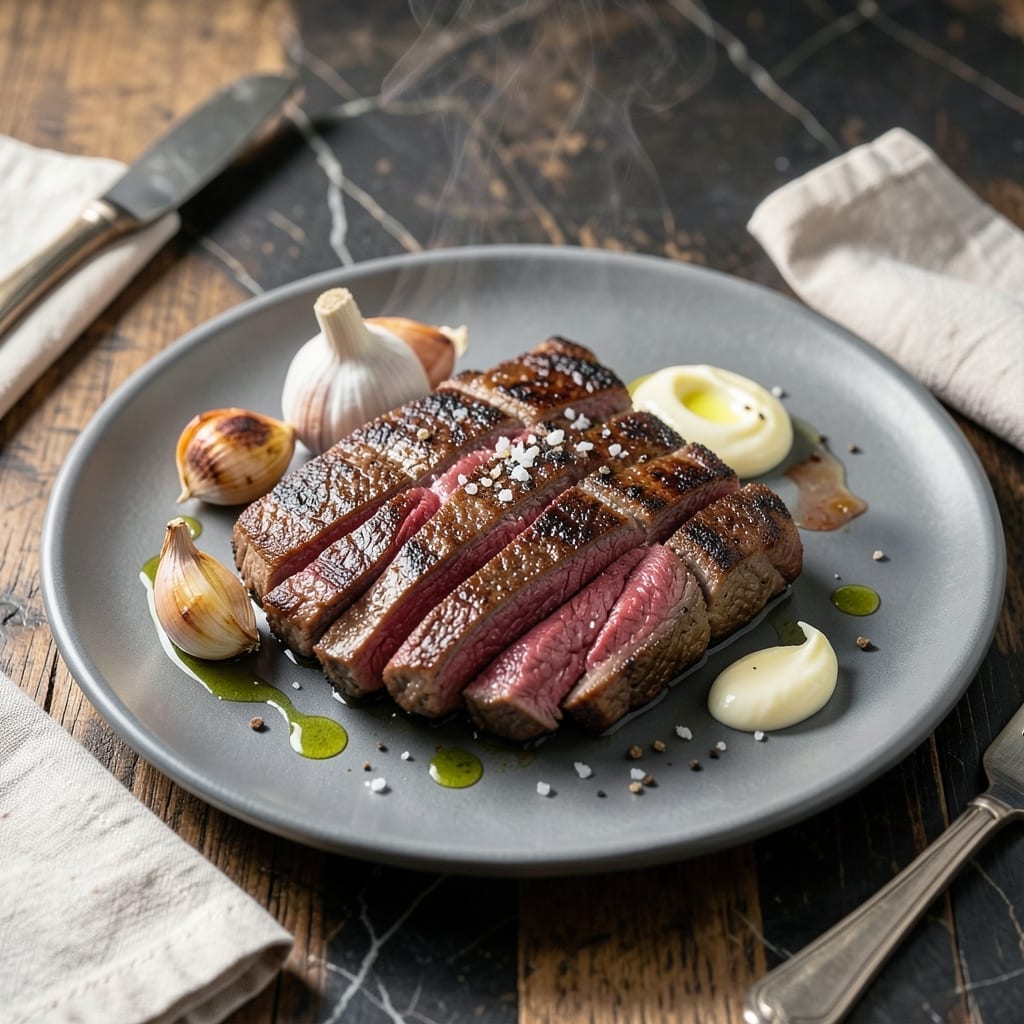
There’s a misconception that perfect steak requires thick cuts and hours of prep, but this thin ribeye delivers steakhouse quality in under 10 minutes. The key is extreme heat and precise timing.
High heat sears the outside quickly while keeping the inside tender and juicy. A hot cast-iron skillet and minimal handling prevent toughness. The result is a caramelized crust with a pink, flavorful center.
This method works because thin cuts cook through before the exterior burns. Resting the meat briefly ensures the juices redistribute, so every bite stays moist.
Serve immediately with simple sides—this steak deserves to be the star. Here’s how to nail it every time.
Ingredients for Thin Cut Ribeye
Just a few quality ingredients deliver restaurant-worthy steak in minutes with this method.
| Ingredient | Amount | Notes |
|---|---|---|
| Ribeye Steak 🥩 | 1 ½ lb | Thin-cut, about 1/4-inch thick |
| Kosher Salt 🧂 | 1 tsp | Diamond Crystal preferred |
| Black Pepper 🌶️ | ½ tsp | Freshly ground for best flavor |
| Garlic Powder 🧄 | ½ tsp | Optional for dry rub |
| Olive Oil 🫒 | 2 tbsp | High smoke point, divided |
| Unsalted Butter 🧈 | 2 tbsp | For basting steak |
| Fresh Rosemary 🌿 | 2 sprigs | Optional for aroma |
| Fresh Thyme 🍃 | 2 sprigs | Optional for aroma |
| Garlic Cloves 🧄 | 2 cloves | Smashed for basting |
| Vegetable Oil 🫒 | 1 tbsp | For high-heat searing |
The ribeye is non-negotiable here—thin-cut from a trusted butcher or high-end grocery like Whole Foods ensures even cooking. Look for good marbling (those white fat streaks) for maximum flavor and tenderness. Ask your butcher to slice a whole ribeye roast into 1/4-inch steaks if thin-cut isn’t available. USDA Choice or Prime grades work best for this quick method.
No ribeye? New York strip at 1/4-inch thickness is the closest substitute. Skip the garlic powder if you prefer just salt and pepper. For extra richness, add a splash of beef stock to the pan when basting. The fresh herbs are optional but add restaurant flair—dried won’t work the same. Always pat the steaks completely dry before seasoning.
Cook immediately after seasoning—don’t let salted steaks sit, or they’ll draw out moisture. Leftovers (if any) keep 3-4 days in the fridge but are best reheated gently in a pan. For longer storage, freeze raw steaks for up to 6 months.
Why You’ll Love This Recipe
- I’ll be real: cold slices make the next day’s salad or sandwich taste like a second victory.
- Weeknight Fast: I can season and sear these thin ribeyes in the time it takes to set the table—just salt, pepper, garlic powder, and a hot pan.
- Buttery Crust: The olive oil and garlic powder create this ridiculous crust that makes every bite taste like a steakhouse splurge.
- Feeds Picky Eaters: Honestly, even my nephew who only eats chicken nuggets devours these—thin cuts cook fast and stay tender for all ages.
Step-by-Step Instructions for Thin Cut Ribeye
Here’s the method. Straightforward, tested, works every time.
Step 1: Season the Ribeye for Maximum Flavor
Pat the 1.5 lb Ribeye Steak completely dry with paper towels. This removes surface moisture that would otherwise steam the steak instead of searing it. Season both sides generously with 1 tsp Kosher Salt, 0.5 tsp Black Pepper, and 0.5 tsp Garlic Powder.
Use your fingers to press the seasoning into the meat so it adheres well. Let the seasoned steak sit at room temperature for 20-30 minutes while you prepare the rest of your ingredients. This brings the meat to even temperature for consistent cooking.
Step 2: Prep Aromatics and Heat the Pan
Smash the 2 cloves Garlic Cloves with the flat side of your knife—no need to mince them, as they’ll infuse the butter during basting. Strip the leaves from the 2 sprigs Fresh Rosemary and 2 sprigs Fresh Thyme, discarding the stems.
Place a heavy skillet (cast iron works best) over high heat and add 1 tbsp Vegetable Oil. You want the pan screaming hot—when you flick a drop of water in, it should dance and evaporate immediately.
Step 3: Sear the Steak to Perfection
Add the ribeye to the hot pan and sear undisturbed for 2-3 minutes. Resist the urge to move it—you want a deep, golden crust to form. Flip the steak and immediately add 2 tbsp Unsalted Butter, the smashed garlic, rosemary, and thyme to the pan.
Tilt the pan slightly and baste the steak with the melted butter and aromatics for the remaining 2-3 minutes of cooking. For thin-cut ribeye, you’re aiming for medium-rare at 130-135°F internal temperature. The steak will continue cooking slightly as it rests.
Step 4: Rest and Slice for Serving
Transfer the steak to a cutting board and tent loosely with foil. Let it rest for 5-10 minutes—this allows the juices to redistribute. The internal temperature will rise about 5 degrees during this time, bringing it to the perfect 135-140°F for medium-rare.
Slice against the grain into ½-inch thick strips. The meat should be pink and juicy in the center with a beautifully browned crust. Serve immediately while hot, with any pan juices spooned over the top.
Pro Tips For Making Thin Cut Ribeye
- Blot the Steak: Pat the ribeye dry with paper towels before seasoning—moisture is the enemy of a good sear, and thin cuts need all the help they can get.
- High Heat, Fast Cook: Crank the pan to smoking hot before adding the steak; thin ribeyes cook in 2-3 minutes per side, so you need that heat to develop a crust without overcooking.
- Skip the Cold Steak: Pull the ribeye out of the fridge 30 minutes before cooking—cold steaks cook unevenly, and with thin cuts, you’ll end up with gray meat before you get a proper sear.
- Rest Under Foil: Let the steak rest for 5 minutes under foil after cooking; it keeps the thin cut from drying out and lets the juices redistribute—I learned this the hard way after slicing into one too soon.
Essential Equipment for Perfect Results
Cast Iron Skillet
I swear by my Lodge 12-inch cast iron skillet for this recipe—its even heat distribution and retention create that perfect sear. Preheat it for 5 minutes on high to get it screaming hot. Avoid nonstick pans; they can’t handle the high heat needed here. 🔥
Meat Thermometer
A Thermoworks Instant Read is my go-to for accuracy. Thin cuts cook fast, so you need to check temp often. Aim for 130-135°F internal for medium-rare. Don’t guess—this ensures perfect results every time.
Tongs for Handling
Use 12-inch locking tongs to flip the steak without piercing it. I prefer OXO’s stainless steel for durability and control. Avoid forks—they release precious juices that keep your steak moist.
Butter Basting Spoon
A heat-resistant silicone spoon helps baste the steak with melted butter and aromatics. I use Le Creuset’s for its deep bowl and long handle. Tilt the pan slightly to pool the butter for easy spooning.
Cutting Board
Rest your steak on a wooden cutting board—it’s gentler on knives than plastic. I love Teakhaus edge grain boards for their durability. Let the steak rest 5-10 minutes before slicing to retain juices.
Chef’s Knife
Slice with a sharp 8-inch chef’s knife. My Wüsthof Classic glides through the steak effortlessly. Cut against the grain in ½-inch thick strips for maximum tenderness. A dull knife tears meat—keep yours sharp!
Nutrition Facts
Frequently Asked Questions
What’s the best pan for searing?
Use a cast iron skillet for even heat distribution. Preheat it for 5 minutes on high to achieve a perfect crust.
How do I avoid overcooking?
Cook thin cuts for only 2-3 minutes per side. Use a meat thermometer to pull at 130-135°F for medium-rare. The temp rises while resting.
Can I use frozen steak?
Thaw completely in the fridge overnight first. Never cook from frozen—it leads to uneven cooking and a tough texture.
Why rest the steak before slicing?
Resting for 5-10 minutes lets juices redistribute. Slicing too soon causes them to spill out, leaving dry meat.

- 6 Egg Cake Recipe with Oil: Light as Air With Buttery Moisture - October 4, 2026
- 4 Bean Casserole Recipe: One-Pan Heartiness With Smoky Paprika Depth - October 4, 2026
- 3-Ingredient Keto Mug Cake Recipe: Microwave Magic in 2 Minutes - October 4, 2026