
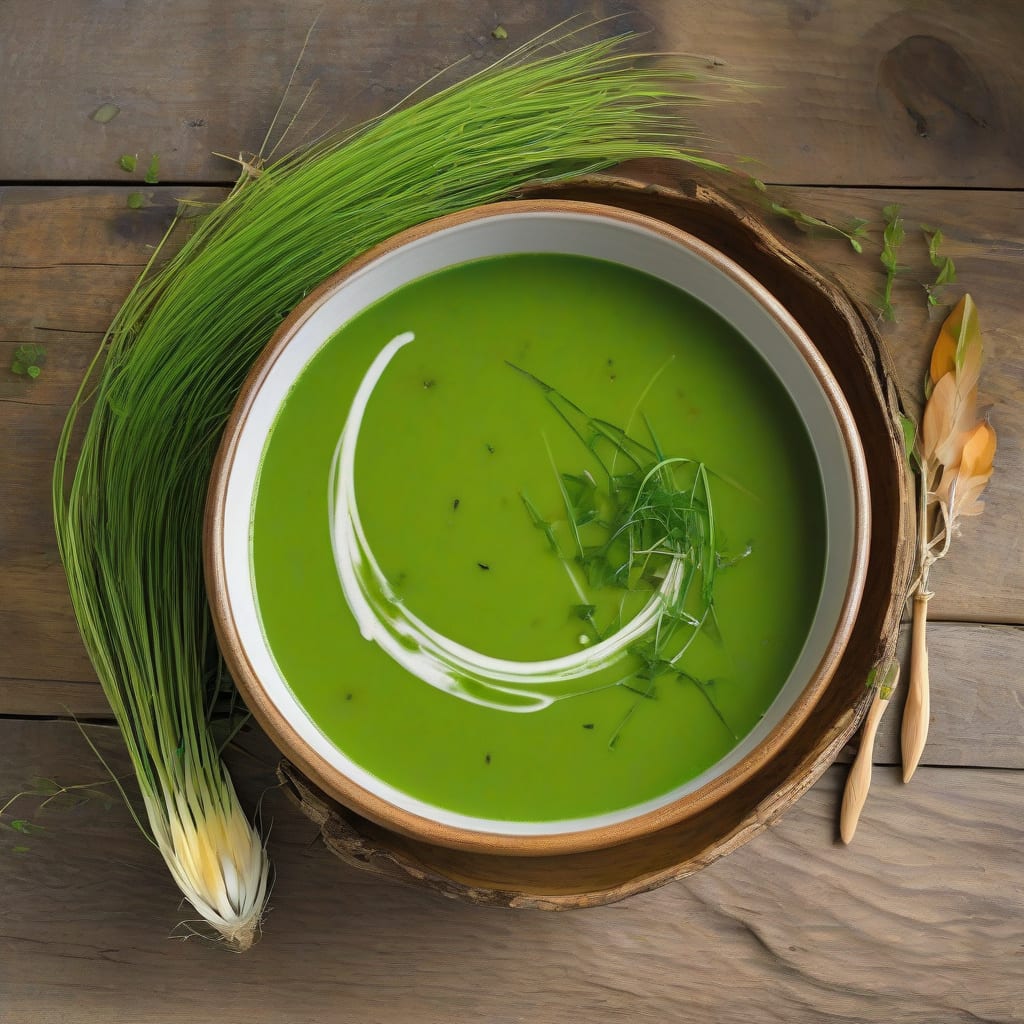
I’ve discovered a refreshing twist on traditional soups with this grass soup recipe, featuring fresh wheatgrass for a vibrant flavor. Using simple ingredients and straightforward techniques, you’ll create a nourishing bowl that’s perfect for any season.
This recipe brings the essence of the garden to your table, combining wheatgrass with complementary herbs and vegetables for a delicious, healthy meal. With basic cooking techniques and readily available ingredients, you’ll achieve a creamy texture and rich flavor in just 30 minutes.
Ingredients for Grass Soup
Simple ingredients come together to create this nourishing grass soup in just 30 minutes.
| Ingredient | Amount | Notes |
|---|---|---|
| Fresh Wheatgrass 🌿 | 2 cups | Chopped, for vibrant flavor |
| Olive Oil 🫒 | 2 tbsp | Extra-virgin for richness |
| Onion 🧅 | 1 whole | Chopped, for depth |
| Garlic Cloves 🧄 | 3 cloves | Minced for flavor |
| Potato 🥔 | 1 whole | Peeled, diced for creaminess |
| Vegetable Broth 🧋 | 4 cups | Low-sodium preferred |
| Fresh Parsley 🌿 | ¼ cup | Chopped, for garnish |
| Fresh Dill 🌿 | ¼ cup | Chopped, for freshness |
| Lemon Juice 🍋 | 2 tbsp | Freshly squeezed |
| Salt 🧂 | 1 tsp | Kosher or sea salt |
| Black Pepper 🌶️ | ½ tsp | Freshly ground preferred |
| Heavy Cream 🥛 | ½ cup | Optional for creaminess |
Fresh wheatgrass is essential here—farmers markets or specialty grocery stores usually carry it. If you’re growing your own, make sure it’s pesticide-free. The potatoes add creaminess without overpowering the wheatgrass flavor. I like using Yukon Gold for their buttery taste.
No fresh wheatgrass? Wheatgrass powder is a decent substitute (start with 1 tsp and adjust). For a dairy-free version, swap heavy cream for coconut cream. The parsley and dill can be swapped with other fresh herbs like cilantro or chives if that’s what you have on hand. If using dried herbs, reduce the amount to one-third.
This soup keeps well in the fridge for 3-4 days. Reheat gently to avoid separating the cream. You can also freeze it for up to 3 months—just thaw and reheat. I like to portion it into individual containers so I can grab a quick lunch or dinner.
Why You’ll Love This Recipe
- Quick Start: I can get this grass soup recipe on the table in under 30 minutes, which is a lifesaver on busy weeknights.
- Fresh Flavor Boost: The combination of fresh wheatgrass and garlic cloves gives this soup an incredibly vibrant taste that I just can’t get enough of.
- Meal Prep Magic: I love that I can make a big batch of this soup on Sunday and enjoy it throughout the week – it’s perfect for meal prep.
- Budget Friendly: This recipe is ridiculously budget-friendly since it uses simple ingredients like potatoes and onions that I usually have on hand.
Step-by-Step Instructions for Grass Soup
Here’s the method to create this vibrant, garden-fresh soup that’s perfect for any season.
Step 1: Sauté the Aromatics
Heat the 2 tbsp Olive Oil in a large pot over medium heat. Add the 1 whole Onion, chopped, and cook for 5-7 minutes until it becomes translucent and starts to caramelize. You’ll know it’s ready when the onion releases its fragrance and turns a light golden brown.
Next, add the 3 cloves Garlic Cloves, minced, and sauté for another 1-2 minutes. Be careful not to let the garlic burn, as it can quickly become bitter. Stir constantly until it becomes fragrant.
Step 2: Add the Potato and Broth
Add the 1 whole Potato, peeled and diced, to the pot. Pour in the 4 cups Vegetable Broth and bring the mixture to a boil. Once boiling, reduce the heat to low-medium and let it simmer for 15-20 minutes, or until the potato is tender when pierced with a fork.
The potato should be soft and easily mashed against the side of the pot. This step is crucial as it adds creaminess to the soup without needing excessive cream.
Step 3: Blend in the Wheatgrass and Herbs
Add the 2 cups Fresh Wheatgrass, chopped, to the pot along with the 0.25 cup Fresh Parsley and 0.25 cup Fresh Dill, both chopped. Stir well to combine. Use an immersion blender to puree the soup until smooth, or allow it to cool and blend it in batches using a countertop blender.
The wheatgrass will give the soup its vibrant green color and fresh, grassy flavor. Ensure the herbs are evenly distributed throughout the soup for the best flavor.
Step 4: Season and Finish
Stir in the 2 tbsp Lemon Juice, 1 tsp Salt, and 0.5 tsp Black Pepper. Taste the soup and adjust the seasoning as needed. If the soup is too thick, you can add a bit more Vegetable Broth to reach your desired consistency.
For an extra creamy version, stir in the 0.5 cup Heavy Cream and heat the soup gently until warmed through. Be careful not to let it boil once the cream is added.
Step 5: Serve
Ladle the soup into bowls and garnish with additional Fresh Parsley or Fresh Dill if desired. Serve immediately while hot, enjoying the fresh, garden-like flavors in every spoonful.
The soup should have a vibrant green color and a smooth, creamy texture. The flavors should be balanced, with the freshness of the wheatgrass and herbs complemented by the richness of the potato and cream.
Pro Tips For Making Grass Soup
- Sauté Onions Slow: Take your time sautéing the onions in olive oil until they’re translucent and starting to caramelize – it makes a real difference in the depth of flavor. I learned this the hard way—rushing this step results in a less complex soup.
- Blanch Wheatgrass First: Briefly blanching the fresh wheatgrass before adding it to the soup helps preserve its vibrant color and prevents bitterness from overpowering the dish. Just 30 seconds in boiling water, then shock it in ice water.
- Don’t Overcook Potatoes: Keep an eye on your potatoes while they’re cooking – you want them tender but still holding their shape. Overcooking makes the soup unpleasantly thick and starchy.
- Use Potato Cooking Water: Instead of discarding the potato cooking water, use it as a base for your soup to retain all the nutrients and flavor. It adds body to the soup without needing extra broth or cream.
Regional Styles of grass soup
Traditional Grass Soup Variations
Different cultures have their own takes on grass-based soups. In some Asian traditions, wild grasses are used to create nourishing broths. For example, dandelion greens and wild garlic might be added for their medicinal properties. 🌿
Modern Twists on Grass Soup
Contemporary chefs are experimenting with various greens in their soup creations. Some popular additions include kale, spinach, and nettle leaves. These ingredients not only enhance the nutritional value but also add depth to the flavor profile.
Regional Inspirations
Regional variations of grass soup can be found worldwide. In Eastern Europe, soups made with sour grass or sorrel are common. These soups are often served chilled during summer months, providing a refreshing respite from the heat. The tangy flavor of sorrel adds a unique twist to the traditional grass soup.
Seasonal Adaptations
Adapting grass soup to seasonal ingredients can elevate its flavor. In spring, fresh wheatgrass and herbs are at their peak. Summer versions might include cucumber and mint for a cooling effect. Autumn and winter variations could incorporate heartier ingredients like root vegetables and warm spices.
Global Flavor Profiles
Grass soup can be customized with various global flavor profiles. For instance, adding coconut milk and Thai basil can give it a Southeast Asian flair. Alternatively, incorporating smoked paprika and sour cream can lend it a European twist. These variations showcase the versatility of grass soup.
Personalizing Your Grass Soup
Nutrition Facts
Frequently Asked Questions
Can I use frozen wheatgrass instead of fresh?
While fresh wheatgrass is preferred for the best flavor and texture, you can use frozen wheatgrass as a substitute in a pinch. Simply thaw it first and pat dry with paper towels to remove excess moisture before chopping. Keep in mind that frozen wheatgrass may be slightly softer and less vibrant than fresh.
How can I store leftover grass soup?
Store leftover grass soup in an airtight container in the refrigerator for up to 3-4 days. Reheat gently over low heat, adding a splash of vegetable broth if needed to achieve the desired consistency. You can also freeze it for up to 3 months – just thaw overnight in the fridge before reheating.
Can I make this soup without the heavy cream?
Absolutely! The heavy cream adds richness, but you can omit it or substitute with a dairy-free alternative like coconut cream for a lighter version. The potato helps maintain a creamy texture even without the cream. For an extra creamy version without dairy, try adding a mashed potato or a splash of coconut milk.
What other herbs can I use besides parsley and dill?
You can experiment with various herbs to change up the flavor. Cilantro, chives, or basil work well in grass soup. Start with a small amount (about 1 tablespoon chopped) and adjust to taste, as different herbs have varying potency.

- 6 Egg Cake Recipe with Oil: Light as Air With Buttery Moisture - October 4, 2026
- 4 Bean Casserole Recipe: One-Pan Heartiness With Smoky Paprika Depth - October 4, 2026
- 3-Ingredient Keto Mug Cake Recipe: Microwave Magic in 2 Minutes - October 4, 2026