
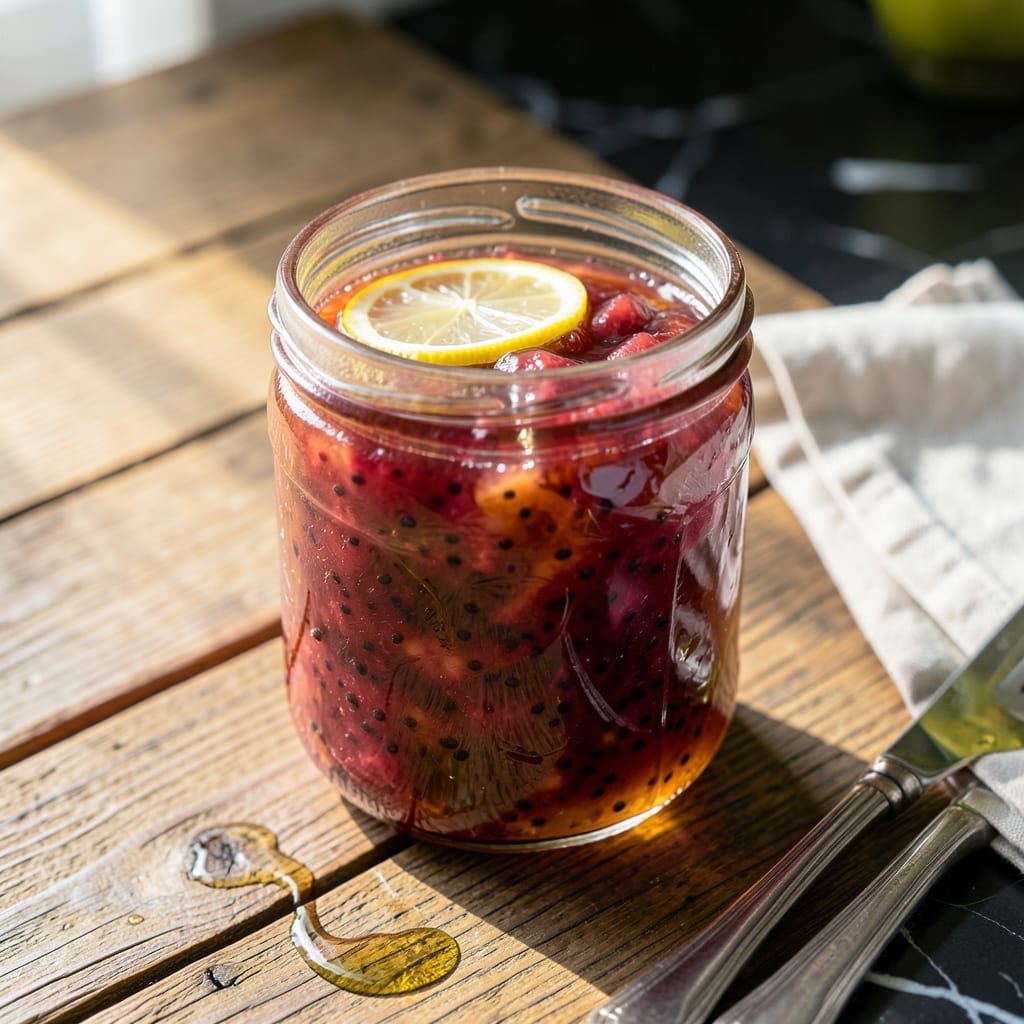
There’s something deeply satisfying about making jam from scratch, especially when you can achieve that perfect thick spread without artificial pectin. This method relies on the natural pectin in underripe guavas and a precise cooking technique to create a luscious, glossy jam.
The process is simpler than you might think—just guavas, sugar, and lemon juice simmered until the fruit breaks down and the mixture thickens. The lemon juice not only brightens the flavor but also helps activate the natural pectin for a smooth, gel-like consistency.
What you’ll end up with is a vibrant, fruity jam that captures the tropical essence of guava. It’s versatile enough to spread on toast, swirl into yogurt, or even glaze meats for a sweet-savory twist.
This recipe yields about 2 cups and keeps well in the refrigerator for up to 3 weeks, or you can process it for longer storage.
Ingredients for Guava Jam Recipe Without Pectin
Six simple ingredients create a naturally thick, tropical jam everyone loves.
| Ingredient | Amount | Notes |
|---|---|---|
| Guavas 🍈 | 2 lb | Underripe for natural pectin |
| Granulated Sugar 🍚 | 2 cups | Adjust for sweetness preference |
| Lemon Juice 🍋 | ¼ cup | Freshly squeezed for pectin activation |
| Water 💧 | ½ cup | To start the cooking process |
| Vanilla Extract 🌿 | 1 tsp | Optional for depth of flavor |
| Salt 🧂 | ¼ tsp | Enhances fruit flavor |
The guavas are everything here. Underripe ones have the natural pectin you need—look for firm fruit that’s still pale green. Most Latin markets carry them, or check Whole Foods if you’re in a pinch. Avoid overripe guavas; they’ll give you syrup, not jam. I usually grab a few extra since they’re not always easy to find. Wash them well, but don’t peel—the skin has pectin too.
No underripe guavas? Add a green apple or lime juice for extra pectin. Short on sugar? Half the amount works but expect a softer set. The lemon juice isn’t optional—it’s doing double duty with flavor and pectin. Vanilla is my little secret (okay, not so secret now), but skip it if you want pure guava flavor. The salt balances sweetness, so don’t leave it out.
This keeps for 3 weeks in the fridge in a clean jar. For longer storage, process in a water bath for 10 minutes. Jars seal better if you let the jam sit 5 minutes before filling. Always use a clean spoon to avoid mold.
Why You’ll Love This Recipe
- No Pectin Needed: I love that this recipe skips the pectin entirely—just guavas, sugar, and a squeeze of lemon juice to thicken naturally.
- Tropical Sweetness: The vanilla extract adds this warm depth that makes the guava taste even richer, like sunshine in a jar.
- Endless Uses: I spread it on toast, swirl it into yogurt, or even gift it in little jars—it’s my secret weapon for quick, thoughtful presents.
- Budget Friendly: Guavas are often cheaper than berries, and this makes a big batch that keeps for weeks in the fridge.
Step-by-Step Instructions for Guava Jam Without Pectin
Here’s the simple method that guarantees a thick, naturally set jam every time.
Step 1: Prep and Cook the Guavas
Wash the 2 lb guavas thoroughly and trim off the ends. You don’t need to peel them—the skins contain natural pectin that helps thicken the jam. Chop them into small chunks, removing any hard seeds you encounter.
In a large, heavy-bottomed pot, combine the chopped guavas with the 0.5 cup water and 0.25 cup lemon juice. Bring this mixture to a boil over medium-high heat, stirring occasionally to prevent sticking. The guavas will soften in about 10-12 minutes.
Step 2: Mash and Sweeten the Fruit
Once the guavas are completely soft, use a potato masher or the back of a wooden spoon to mash them into a pulpy consistency. This helps release more pectin from the fruit and ensures a smooth texture in the final jam.
Add the 2 cups granulated sugar and 0.25 tsp salt to the pot. Stir well to combine, making sure all the sugar dissolves. The mixture will look watery at this stage, but don’t worry—it will thicken as it cooks.
Step 3: Simmer to Thicken Naturally
Reduce the heat to medium and let the mixture simmer uncovered for 40-50 minutes. Stir frequently, especially as it begins to thicken, to prevent scorching. You’ll notice the color deepen and the mixture become glossier as the water evaporates.
The jam is ready when it reaches 220°F on a candy thermometer or when a small spoonful placed on a chilled plate wrinkles when pushed with your finger. This is the natural pectin in the guavas working its magic.
Step 4: Add Vanilla and Finish
Remove the pot from heat and stir in the 1 tsp vanilla extract. This adds a warm depth of flavor that complements the bright guava taste. Let the jam sit for 5 minutes to cool slightly—it will thicken a bit more as it cools.
Give it a final stir to distribute the vanilla evenly. The jam should coat the back of a spoon thickly and drip off slowly. If it seems too thin, return it to the heat for another 5-10 minutes of simmering.
Step 5: Jar and Store
Ladle the hot jam into clean, sterilized jars, leaving about ¼ inch of headspace at the top. Seal with lids while still hot to create a vacuum seal as it cools. The jam will continue to thicken as it cools to room temperature.
Once completely cool, store in the refrigerator for up to 3 weeks, or process in a water bath for longer shelf life. The natural thickness from the guavas means you’ll have a beautiful, spreadable jam without any added pectin.
Pro Tips For Making Guava Jam Recipe Without Pectin
- Test for Ripeness: Press the guava gently—it should give slightly like a ripe avocado. I learned this the hard way after using rock-hard guavas that never softened in the jam.
- Skim the Foam: As the jam boils, a pink foam will rise to the top. Skim it off with a spoon—it keeps the jam clear and prevents a bitter aftertaste.
- Use a Wide Pan: A broad, shallow pan evaporates water faster than a deep pot, cutting cook time by half. My grandmother swore by her old stainless steel skillet for this.
- Add Vanilla Last: Stir in the vanilla extract only after removing the jam from heat. Sounds weird, but it works—high heat can make the vanilla taste harsh.
Pro Cooking Tips for Perfect Results
Guava Selection Matters
I always hunt for underripe guavas at my local Latin market—they’re firmer with pale green skin and packed with natural pectin. Overripe ones will give you syrup, not jam. Wash them well, but don’t peel; the skin adds body to your final product. 💡
Perfect Pot Choice
Use a wide, heavy-bottomed pot like my trusty Le Creuset Dutch oven. The broad surface helps evaporate water faster, and the heavy base prevents scorching. Avoid thin aluminum pots—they’ll burn your jam before it thickens.
Temperature Control
Maintain a steady medium heat during simmering. Too high and it’ll scorch; too low and it’ll take forever. I use a candy thermometer clipped to the pot—220°F is the magic number for perfect set.
Test for Doneness
The plate test is foolproof: place a spoonful on a chilled plate, let it cool for 1 minute, then push it with your finger. If it wrinkles, it’s ready. If not, cook for another 5-10 minutes and test again.
Skim the Foam
As it cooks, you’ll see pink foam rise to the top. Skim it off with a metal spoon—this prevents cloudiness in your final jam. I keep a small bowl nearby for the foam; it’s amazing how much cleaner the jam looks without it.
Rest Before Jarring
Let your jam rest for 5 minutes off the heat before jarring. This allows the fruit to settle and the syrup to thicken slightly, preventing floating fruit in your jars. The wait is tough, but worth it!
Nutrition Facts
Frequently Asked Questions
Why use underripe guavas for jam?
Underripe guavas contain more natural pectin, which helps the jam thicken without added ingredients. Their firm texture and pale green skin are perfect for achieving that ideal spreadable consistency.
How can I tell when the jam is done?
Use the plate test: place a spoonful on a chilled plate and let it cool for 1 minute. If it wrinkles when pushed with your finger, it’s ready. A candy thermometer should read 220°F.
Can I reduce the sugar in this recipe?
Yes, you can cut the sugar by half, but expect a softer set. Sugar helps with thickening and preservation, so reducing it too much may affect the texture and shelf life.
How long does homemade guava jam last?
Stored in a clean jar in the refrigerator, it keeps for up to 3 weeks. For longer storage, process the jars in a water bath for 10 minutes.

- 6 Egg Cake Recipe with Oil: Light as Air With Buttery Moisture - October 4, 2026
- 4 Bean Casserole Recipe: One-Pan Heartiness With Smoky Paprika Depth - October 4, 2026
- 3-Ingredient Keto Mug Cake Recipe: Microwave Magic in 2 Minutes - October 4, 2026