
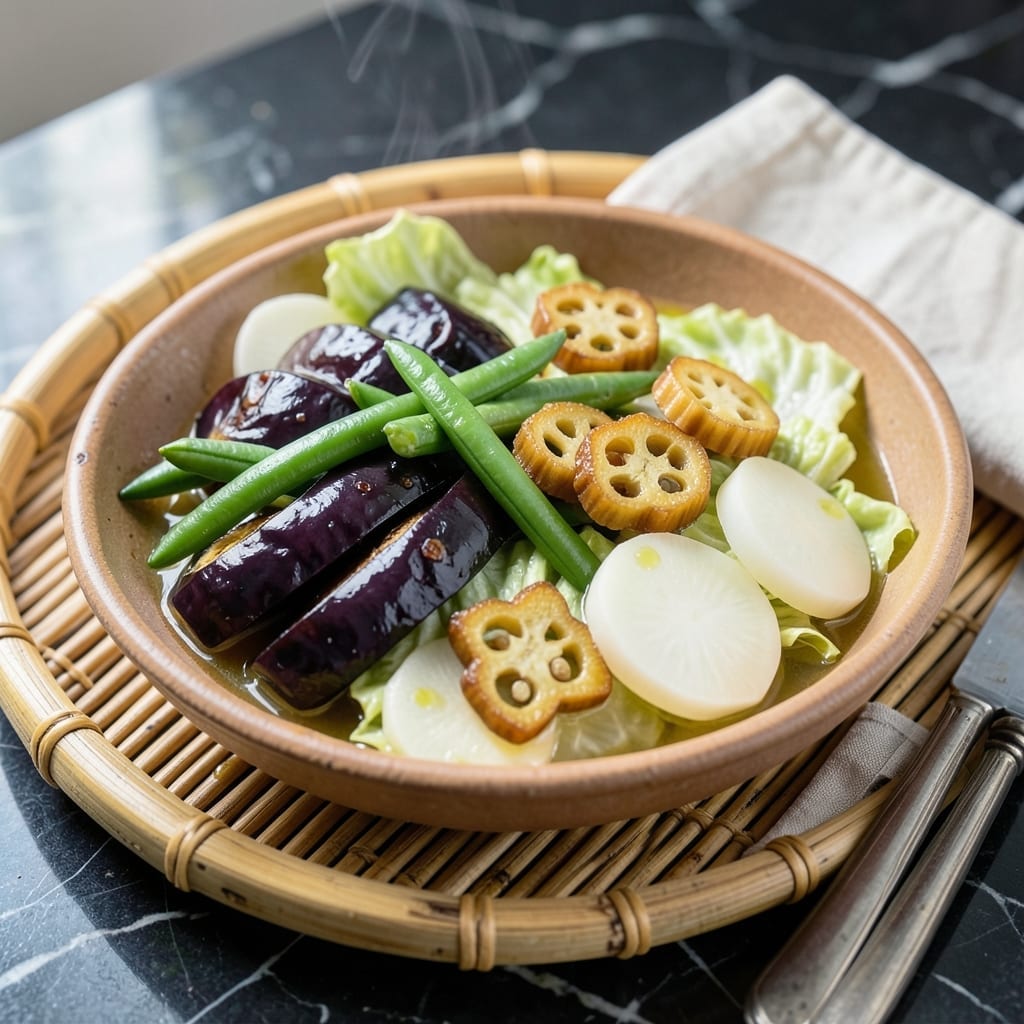
This Filipino vegetable stew brings together the vibrant flavors of local produce in a comforting, hearty dish. Traditional gulay highlights the natural sweetness of fresh vegetables through simple, time-honored techniques.
I’ve refined this version to balance tender textures with bold seasoning, using accessible ingredients that stay true to its roots. The result is a nutritious one-pot meal that’s both satisfying and versatile.
The stew simmers until the vegetables absorb the savory broth, creating layers of flavor in every bite. It’s a dish that celebrates simplicity while delivering restaurant-quality taste at home.
Serve it over rice or enjoy it on its own for a wholesome, flavorful experience. Here’s how to make it right.
Ingredients for Gulay
Fresh vegetables and bold Filipino flavors make this stew a comforting one-pot meal.
| Ingredient | Amount | Notes |
|---|---|---|
| Eggplant 🍆 | 1 lb | Asian or Italian variety, cubed |
| Bitter Melon 🥒 | 1 whole | Sliced thin, seeds removed |
| String Beans 🌿 | 8 oz | Trimmed, cut into 2-inch pieces |
| Okra 🌱 | 6 pieces | Fresh, stems trimmed |
| Daikon Radish 🥕 | ½ lb | Peeled, sliced into rounds |
| Cabbage 🥬 | ½ whole | Cored, cut into wedges |
| Tomatoes 🍅 | 2 whole | Ripe, quartered |
| Onion 🧅 | 1 whole | Yellow or red, sliced |
| Garlic Cloves 🧄 | 4 cloves | Minced finely |
| Ginger Root 🌿 | 1 whole | Peeled, sliced into matchsticks |
| Vegetable Broth 💧 | 4 cups | Low-sodium preferred |
| Soy Sauce 🫒 | 2 tbsp | Regular or light variety |
| Fish Sauce 🫒 | 1 tbsp | Vegan fish sauce alternative |
| Salt 🧂 | 1 tsp | Sea salt or kosher salt |
| Black Pepper 🌶️ | ½ tsp | Freshly ground preferred |
The eggplant and bitter melon are key here. Asian markets usually have the best selection, but check the international aisle at Walmart or H-Mart if you’re not near one. Look for firm eggplant without bruises and bitter melon with a bright green skin. Daikon radish should feel heavy for its size—it’s sweeter when fresh. Don’t skip the okra, even if it’s slimy (that’s normal).
No bitter melon? Zucchini or green bell pepper work in a pinch (just add a squeeze of lime for tang). Swap daikon for turnips or even potatoes if needed. Vegetable broth at double the amount replaces fish sauce for a fully vegetarian version. Fresh ginger is ideal, but ground ginger at a quarter-teaspoon gets you close. The cabbage can be subbed with bok choy or spinach.
This stew tastes even better the next day. Stores in the fridge for 4-5 days—reheat gently to keep the veggies tender. Freezes well for up to 3 months (thaw overnight before reheating). Prep the veggies ahead, but don’t chop them until you’re ready to cook.
Why You’ll Love This Recipe
- I’ll be real: this gulay stretches easily for family dinners or meal prep—leftovers taste even better the next day.
- One Pot Wonder: I toss all the veggies—eggplant, bitter melon, string beans—into a single pot and let them simmer. Cleanup’s a breeze.
- Umami Rich: The daikon radish soaks up the savory broth, and the okra adds this subtle thickness that’s just right.
- Feeds a Crowd: I’ll be real: this gulay stretches easily for family dinners or meal prep—leftovers taste even better the next day.
Step-by-Step Instructions for Filipino Vegetable Stew
Here’s my trusted method for building layers of flavor in this comforting dish.
Step 1: Build the Aromatic Foundation
Heat a large pot over medium heat and add a splash of water to prevent sticking. Sauté the onion until translucent, about 3 minutes, stirring occasionally. The edges should start to soften and turn slightly golden.
Add the 4 cloves garlic cloves and ginger root, stirring constantly for 1 minute until fragrant. This is the moment that matters: don’t let the garlic brown or it’ll turn bitter. The aroma should fill your kitchen with a warm, pungent scent.
Step 2: Layer in the Hearty Vegetables
Increase heat to medium-high and add the 0.5 lb Daikon Radish and 0.5 whole Cabbage. Stir to coat in the aromatics and cook for 3-4 minutes until the cabbage starts to wilt at the edges. You’ll notice the daikon beginning to soften slightly.
Add the 1 lb Eggplant, 1 whole Bitter Melon, 8 oz String Beans, and 6 pieces Okra. Stir everything together gently to avoid breaking the more delicate vegetables. Cook for 2 minutes until the bitter melon starts to release its juices.
Step 3: Add Liquids and Seasonings
Pour in the 4 cups Vegetable Broth, 2 tbsp Soy Sauce, and 1 tbsp Fish Sauce. Stir well to distribute the seasonings evenly. Bring to a gentle boil, then reduce heat to medium-low to maintain a steady simmer.
Add the 2 whole Tomatoes, 1 tsp Salt, and 0.5 tsp Black Pepper. The tomatoes should start to break down as they cook, releasing their juices into the broth. You’ll see the liquid turn a richer color as the vegetables release their flavors.
Step 4: Simmer to Perfection
Cover the pot and let it simmer for 15-20 minutes, stirring occasionally. The vegetables should be tender but still holding their shape. The eggplant will absorb much of the liquid, while the cabbage and string beans will soften beautifully.
Real talk: if the stew looks too thick, add a splash of water. The consistency should be hearty but still soupy enough to soak into rice. Taste and adjust seasoning if needed—sometimes a pinch more salt brings all the flavors together.
Step 5: Final Touches and Serving
Remove from heat and let it sit covered for 5 minutes. This resting time allows the flavors to meld together completely. The okra will have released its natural thickening properties, giving the stew a slightly velvety texture.
Serve hot over steamed rice, making sure each bowl gets a good mix of all the vegetables. The bitter melon should be tender with a pleasant bitterness that balances the sweetness of the daikon and the umami from the sauces. This is the kind of dish that tastes even better the next day.
Pro Tips For Making Gulay
- Salt the Eggplant: Sprinkle sliced eggplant with salt and let sit for 10 minutes to draw out bitterness—after burning a few batches, I realized this step keeps them from turning mushy in the stew.
- Soak the Bitter Melon: Soak bitter melon slices in salted water for 15 minutes to mellow the harshness; I was skeptical until I tried it and noticed the difference in flavor.
- Add Daikon Last: Daikon radish cooks faster than the rest, so toss it in during the last 5-7 minutes to keep it from turning to mush.
- Trim Okra Stems: Cut just the very tip of the okra stems—any more and the pods split open during cooking, turning your gulay into a slimy mess.
Essential Equipment for Perfect Results
Large Heavy Pot
A 5-6 quart Dutch oven or heavy-bottomed stockpot is essential for even heat distribution. I use my Le Creuset for this—it retains heat beautifully and prevents burning. Look for one with a tight-fitting lid to trap steam.
Quality Knives
A sharp 8-inch chef’s knife makes quick work of all the vegetables. I recommend Wüsthof or Victorinox for durability. A paring knife helps with delicate tasks like trimming okra stems. 💪
Cutting Board
Use a large wooden or plastic cutting board (at least 12×18 inches) to give yourself plenty of space. Wood is gentler on knife edges, while plastic is dishwasher-safe. I keep one exclusively for vegetables to avoid cross-contamination.
Wooden Spoon
A sturdy wooden spoon won’t scratch your pot and is perfect for stirring without breaking delicate vegetables. Look for one with a long handle to keep your hands away from the heat. I’ve had my OXO wooden spoon for years.
Measuring Tools
Accurate measurements matter for the broth and seasonings. I use OXO measuring cups and tablespoons for consistency. A 1-tablespoon measure is particularly helpful for the fish sauce and soy sauce. 🌟
Ladle for Serving
A 1-cup ladle makes serving this stew over rice easy and mess-free. I prefer stainless steel for durability. The long handle keeps your hands safe from the hot liquid while portioning.
Nutrition Facts
Frequently Asked Questions
Can I add meat to this vegetable stew?
Yes, you can add chicken or pork for extra protein. Brown the meat first, then set aside before sautéing the aromatics. Return it to the pot when adding the broth.
How do I reduce the bitterness of bitter melon?
Soak sliced bitter melon in salted water for 10 minutes, then rinse before adding to the stew. This helps mellow its strong flavor while keeping its texture.
Can I use frozen vegetables?
Fresh is best, but frozen can work in a pinch. Thaw and drain them first to avoid excess water in your stew. Adjust cooking time as frozen veggies may soften faster.
How long can I store leftovers?
Store in an airtight container in the fridge for up to 4-5 days. Reheat gently on the stove with a splash of water to restore the broth.

- 6 Egg Cake Recipe with Oil: Light as Air With Buttery Moisture - October 4, 2026
- 4 Bean Casserole Recipe: One-Pan Heartiness With Smoky Paprika Depth - October 4, 2026
- 3-Ingredient Keto Mug Cake Recipe: Microwave Magic in 2 Minutes - October 4, 2026